
Texas Roadhouse Rice Pilaf Copycat Recipe

This Texas Roadhouse rice pilaf recipe brings that buttery, savory side dish home in about 30 minutes, no special equipment needed. It’s the one that disappears first at the table, and once you see how straightforward it is, you’ll stop saving it for restaurant nights.
The secret is toasting the rice in butter before any liquid goes in. That one step gives you the nutty depth that sets this pilaf apart from plain steamed rice.
Why I Love This Recipe
The butter-toasted rice gives every grain a slightly firm, separate texture that holds up even after sitting on the table for a while.
It’s a genuinely useful side because it goes with almost any protein without competing with it. The flavor is savory and a little rich, but not heavy.
This is the version I keep coming back to when I need something reliable that looks like I put in more effort than I actually did.
Recipe Ingredients
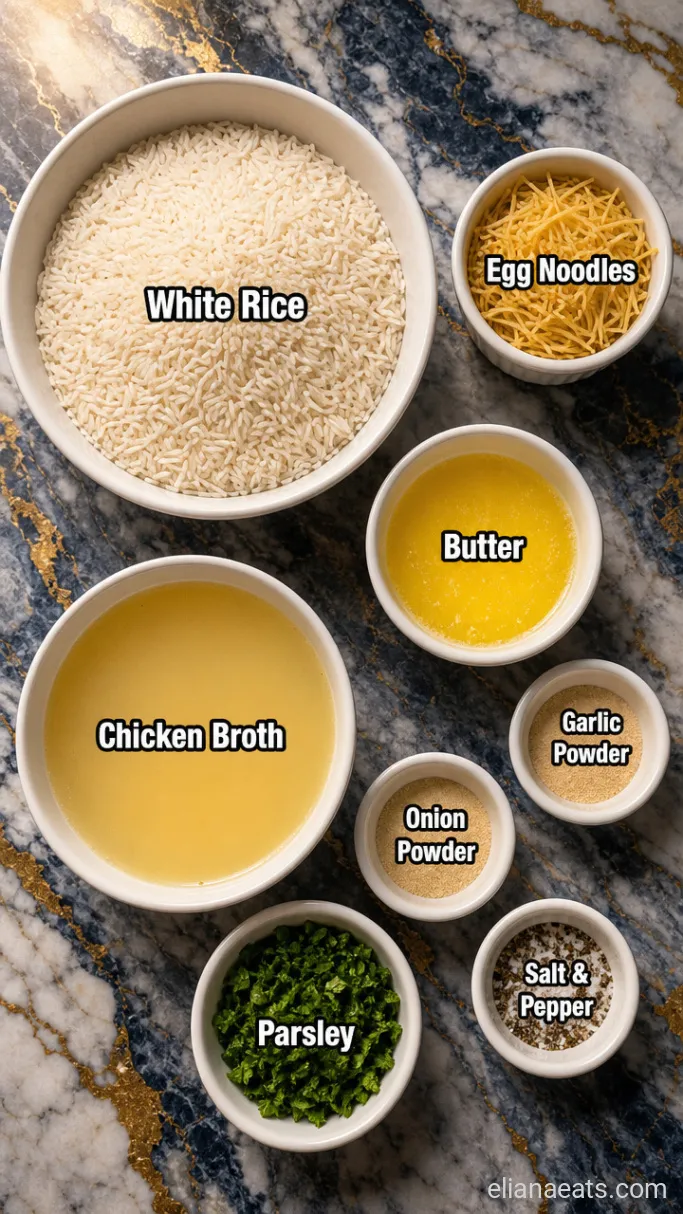
- 2 tbsp unsalted butter – Toasting the rice in butter is what builds the base flavor; unsalted lets you control the salt
- 1 cup long-grain white rice – Long-grain stays fluffy and separate; avoid short-grain or jasmine here
- 1/4 cup thin egg noodles (orzo or broken vermicelli) – This is what makes it a pilaf; it toasts alongside the rice and adds a subtle nuttiness
- 2 cups chicken broth – Low-sodium preferred so you can adjust salt at the end
- 1/2 tsp garlic powder – Adds background savoriness without overpowering
- 1/2 tsp onion powder – Rounds out the savory base
- 1/2 tsp salt – Start here and adjust after tasting
- 1/4 tsp black pepper – Freshly ground if you have it
- 1 tbsp fresh parsley, chopped – Stirred in at the end; brightens the whole dish
Variations / Substitutions
- Vegetable broth instead of chicken broth – Works well and keeps the dish vegetarian; the flavor is slightly lighter but still savory.
- Orzo instead of vermicelli – Orzo toasts a little more evenly and is easier to find; the texture is slightly chewier but it works great.
- Brown rice instead of white – You’ll need to add about 1/2 cup more broth and extend the simmer time to around 40 minutes; the nuttiness actually works in the pilaf’s favor.
- Smoked paprika instead of garlic powder – Use 1/4 tsp for a mild, smoky background note without making it taste like a completely different dish.
- Dried parsley instead of fresh – Use 1 tsp dried; it blends into the rice rather than sitting on top, so the finish is more subtle.
If you like this style of simple, buttery side dishes, you might also enjoy trying the Texas Roadhouse rice recipe at home.
How To Make Rice Pilaf
Step 1: Toast the Rice and Noodles
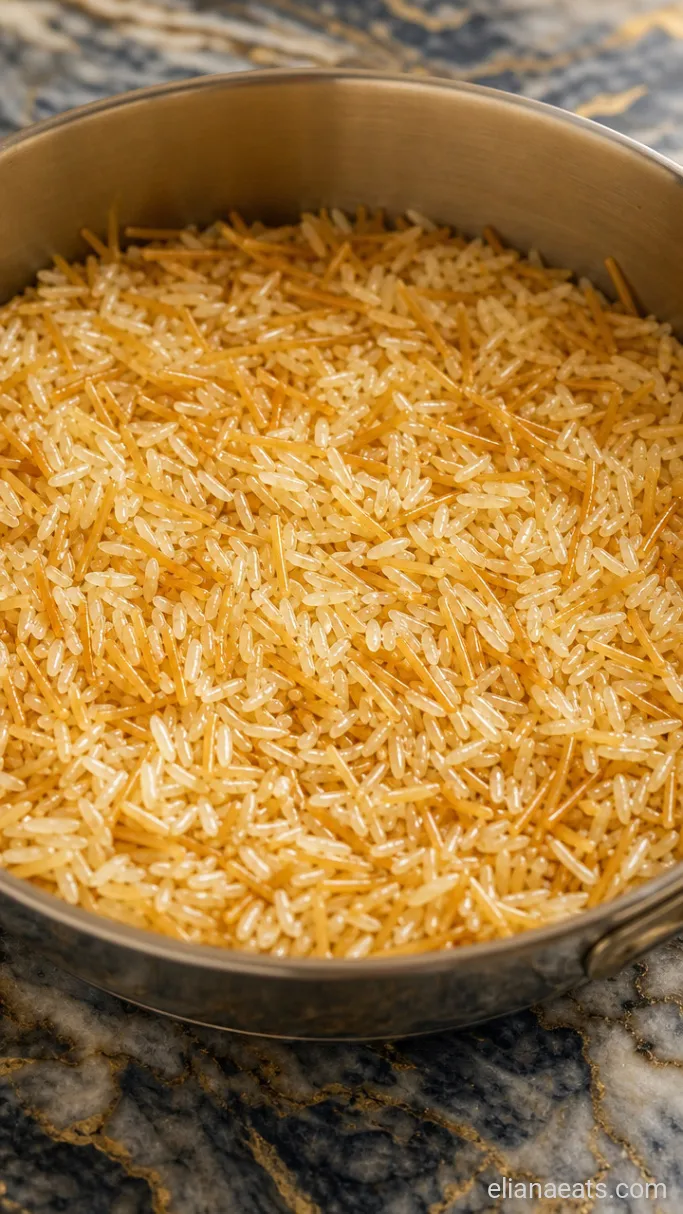
Melt the 2 tbsp unsalted butter in a medium saucepan over medium heat. Add the 1 cup long-grain white rice and the 1/4 cup thin egg noodles, then stir constantly for about 3 to 4 minutes, until both the rice and noodles turn a light golden brown.
You’ll smell a nutty, almost popcorn-like aroma when they’re ready. The noodles toast faster than the rice, so keep stirring and watch the edges of the pan where things move slower.
Don’t rush this step by cranking the heat. High heat will scorch the noodles before the rice has a chance to color evenly, and scorched noodles make the whole dish taste bitter.
Step 2: Simmer in Broth
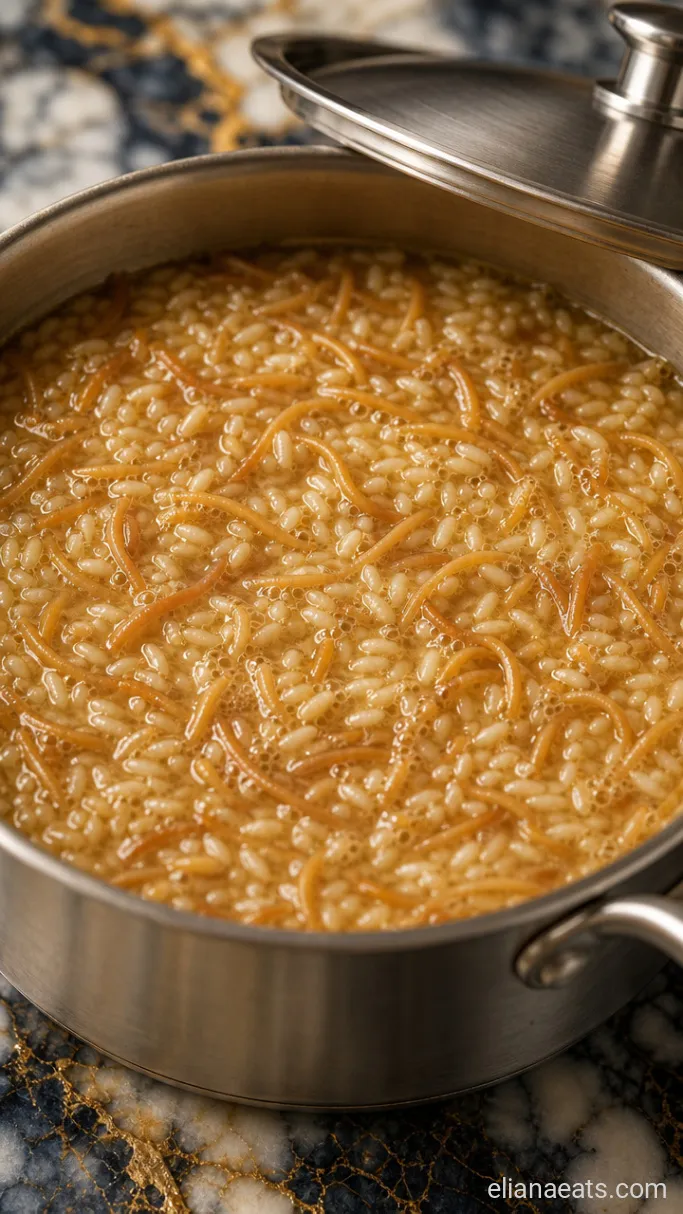
Pour in the 2 cups chicken broth, then add the 1/2 tsp garlic powder, 1/2 tsp onion powder, 1/2 tsp salt, and 1/4 tsp black pepper. Stir once to combine, then bring everything to a boil over medium-high heat.
Once it boils, drop the heat to low, put the lid on, and let it simmer undisturbed for 18 minutes. Resist the urge to lift the lid; every peek lets steam escape and you’ll end up with unevenly cooked rice.
Step 3: Rest and Fold in the Parsley
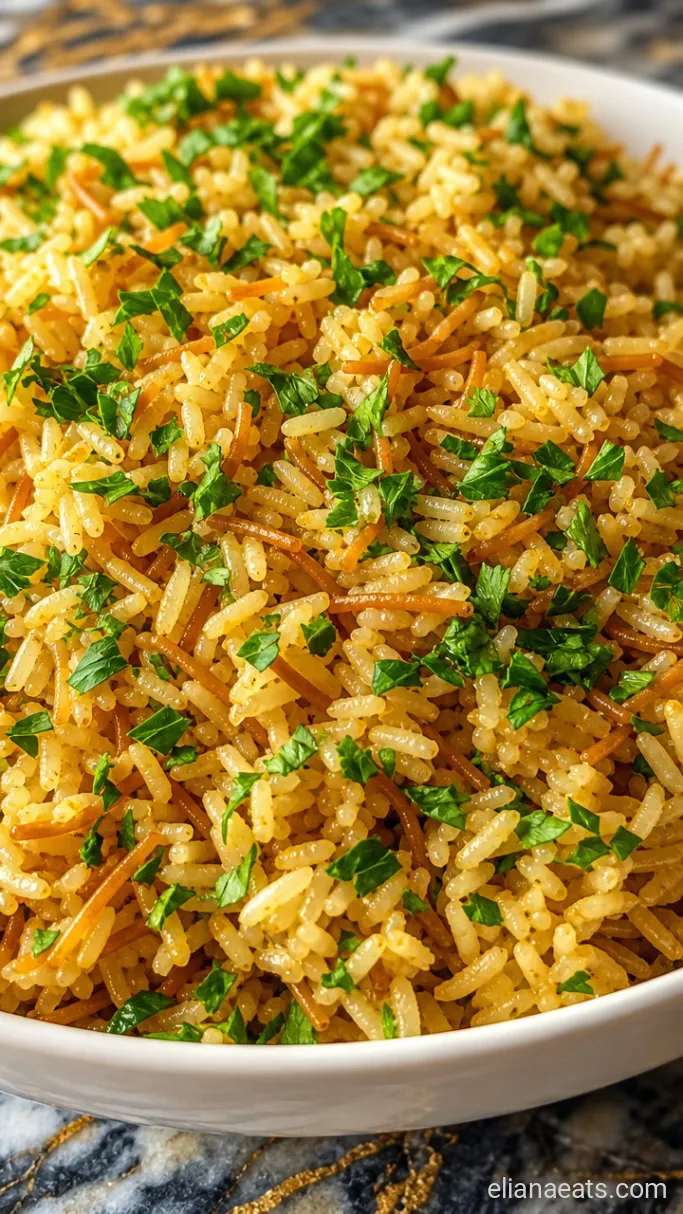
After 18 minutes, pull the pan off the heat and let it sit with the lid still on for 5 minutes. Then remove the lid, add the 1 tbsp fresh chopped parsley, and use a fork to gently fluff the rice from the bottom up.
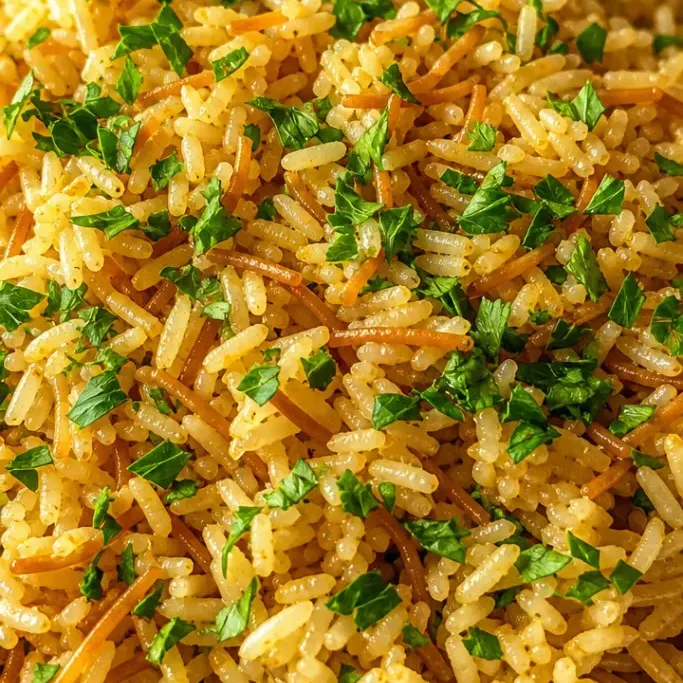
Spoon the pilaf into a serving bowl and scatter a pinch of extra parsley on top. The rice should look fluffy and separate, with the toasted noodles dotted throughout and a golden color running through it.
Recipe Tips
- Use a tight-fitting lid. If your lid has a loose fit, lay a sheet of foil across the pot before setting the lid on top. It traps the steam that cooks the rice evenly.
- Measure your broth cold. If you add hot broth to the toasted rice, it can seize and clump before you’ve had a chance to stir the spices in.
- The resting time matters. Those 5 minutes off the heat let the last bit of moisture absorb without overcooking the bottom layer.
- Leftovers reheat well. Splash in 2 tbsp of water before microwaving, covered, on medium power for about 90 seconds. It brings the texture back without drying it out.
Cook times by pan size and type:
| Pan Type | Size | Simmer Time |
|---|---|---|
| Stainless saucepan | 2-quart | 18 mins |
| Nonstick saucepan | 2-quart | 16 to 17 mins |
| Enameled Dutch oven | 3-quart | 15 to 16 mins |
How To Store
- Refrigerate – Store in an airtight container for up to 4 days. The noodles soften slightly but the flavor holds up well.
- Reheating – Add 2 tbsp water, cover loosely, and microwave on medium power for 90 seconds. Stir once halfway through. You can also reheat it in a skillet over low heat with a splash of broth, stirring gently for about 3 minutes.
What To Serve With Rice Pilaf
This pilaf is a natural fit alongside grilled or pan-seared chicken because the buttery, savory rice soaks up any pan juices without muddying the flavors. It also works well next to a browned pork tenderloin, where the slight nuttiness of the toasted rice bridges the mild sweetness of the pork. If you want to go full Texas Roadhouse at home, pair it with a grilled sirloin and a simple green salad with a sharp vinaigrette, which cuts through the richness of both the steak and the butter in the rice.
Frequently Asked Questions
Can I make this pilaf ahead of time?
Yes. Cook it fully, let it cool, then refrigerate for up to 4 days. The texture is best the first day, but it reheats well with a splash of water.
Can I double the recipe?
Yes, use a larger saucepan, at least a 4-quart, so the rice has room. Keep the simmer time the same at 18 minutes; the main risk with a bigger batch is uneven heat, so use the lowest setting your burner has.
Why is my rice mushy?
Almost always too much liquid or too high a heat during the simmer. Make sure you measured 2 cups broth exactly and that the heat was genuinely low, barely a whisper of bubbling, for the full 18 minutes.
Can I use rice from a rice cooker instead?
The toasting step is what defines this dish, so a standard rice cooker won’t give you the same result. You need the stovetop method to build that color and flavor before the liquid goes in.
Texas Roadhouse Rice Pilaf Recipe
Ingredients
Method
- Melt 2 tbsp butter in a medium saucepan over medium heat. Add 1 cup rice and 1/4 cup noodles, stirring constantly for 3 to 4 minutes until both are light golden brown.
- Add 2 cups chicken broth, 1/2 tsp garlic powder, 1/2 tsp onion powder, 1/2 tsp salt, and 1/4 tsp black pepper. Stir, bring to a boil, then reduce heat to low, cover, and simmer undisturbed for 18 minutes.
- Remove from heat and rest, covered, for 5 minutes. Uncover, add 1 tbsp chopped parsley, fluff with a fork, and transfer to a serving bowl with a pinch of extra parsley on top.
