
Texas Roadhouse Pork Chops Copycat Recipe

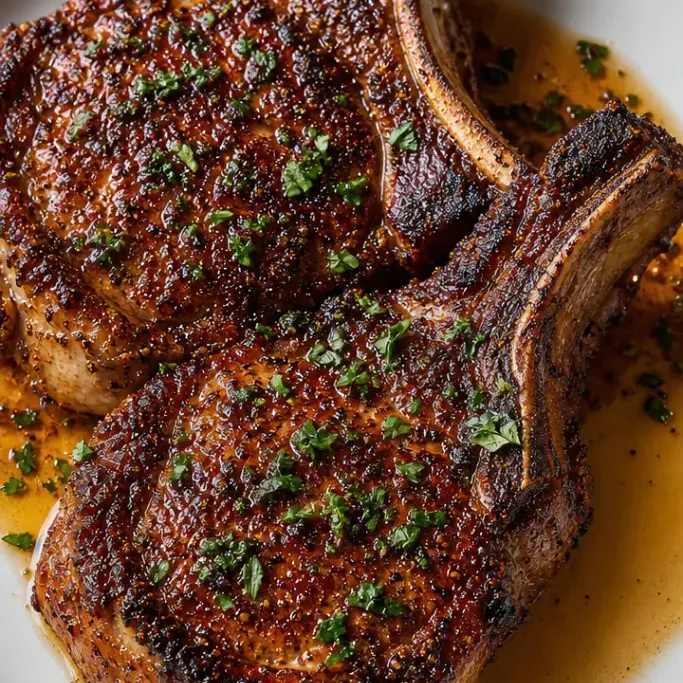
Texas Roadhouse pork chops are thick, bone-in chops with a smoky, seasoned crust and a juicy center, and this copycat gets you there with a cast iron pan and a hot oven. If you want that same steakhouse-style sear at home on a weeknight, this is the recipe to have on hand.
The whole thing comes together in about 30 minutes. No special equipment, no hard-to-find ingredients.
Why I Love This Recipe
The crust is the reason I keep coming back to this one. The smoked paprika and garlic in the rub build a dark, savory bark on the outside while the pork stays tender inside because of the quick sear-to-oven method.
It also scales without any fuss. Two chops or six, the timing stays the same.
Recipe Ingredients
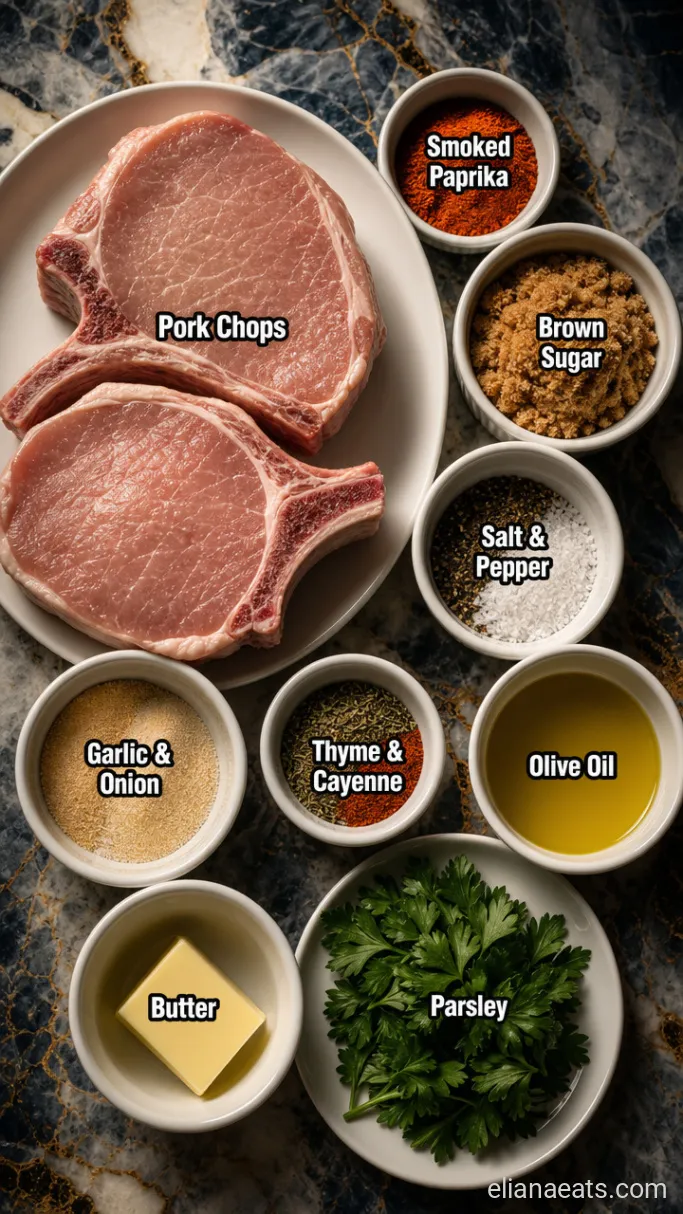
- 2 bone-in pork chops (about 1 inch thick, 10 to 12 oz each) – Bone-in holds moisture better than boneless during high-heat cooking
- 2 tsp smoked paprika – Gives the crust its deep, barbecue-adjacent color and flavor
- 1 tsp garlic powder – Adds savory depth without burning the way fresh garlic can
- 1 tsp onion powder – Rounds out the rub; don’t skip it
- 1 tsp brown sugar – Helps the crust caramelize in the pan; light or dark both work
- 1 tsp kosher salt – Use kosher, not table salt; the coarser grain seasons more evenly
- ½ tsp black pepper – Freshly cracked gives a sharper bite
- ½ tsp dried thyme – Earthy note that ties the rub together
- ¼ tsp cayenne pepper – A mild, background heat; reduce to ⅛ tsp if you prefer none at all
- 1 tbsp olive oil – For coating the chops before the rub goes on
- 1 tbsp unsalted butter – Goes into the pan at the end of the sear for basting
- Fresh parsley, chopped – For garnish; flat-leaf or curly both work
Variations / Substitutions
- Boneless chops – They work fine but cook 2 to 3 minutes faster, so check the internal temp early.
- No smoked paprika – Regular sweet paprika plus a small pinch of cumin gets close, though the smoke flavor will be lighter.
- No cast iron – A stainless steel pan holds heat well enough; avoid non-stick because it won’t give you the same dark sear at high heat.
- Maple syrup instead of brown sugar – Brush a thin layer on the chops right before they go into the oven; it caramelizes nicely and adds a faint sweetness.
- Dairy-free – Skip the butter baste and use a second tablespoon of olive oil instead; the crust still forms well.
- Add acid – A squeeze of lemon over the plated chops brightens everything and cuts through the richness of the rub.
If you enjoy this style of seasoning on pork, you’ll love this similar ribeye recipe, as the Texas Roadhouse Ribeye Copycat Recipe uses a very similar rub and the same sear-to-oven technique.
How To Make Texas Roadhouse Pork Chops
Step 1: Rub the Chops
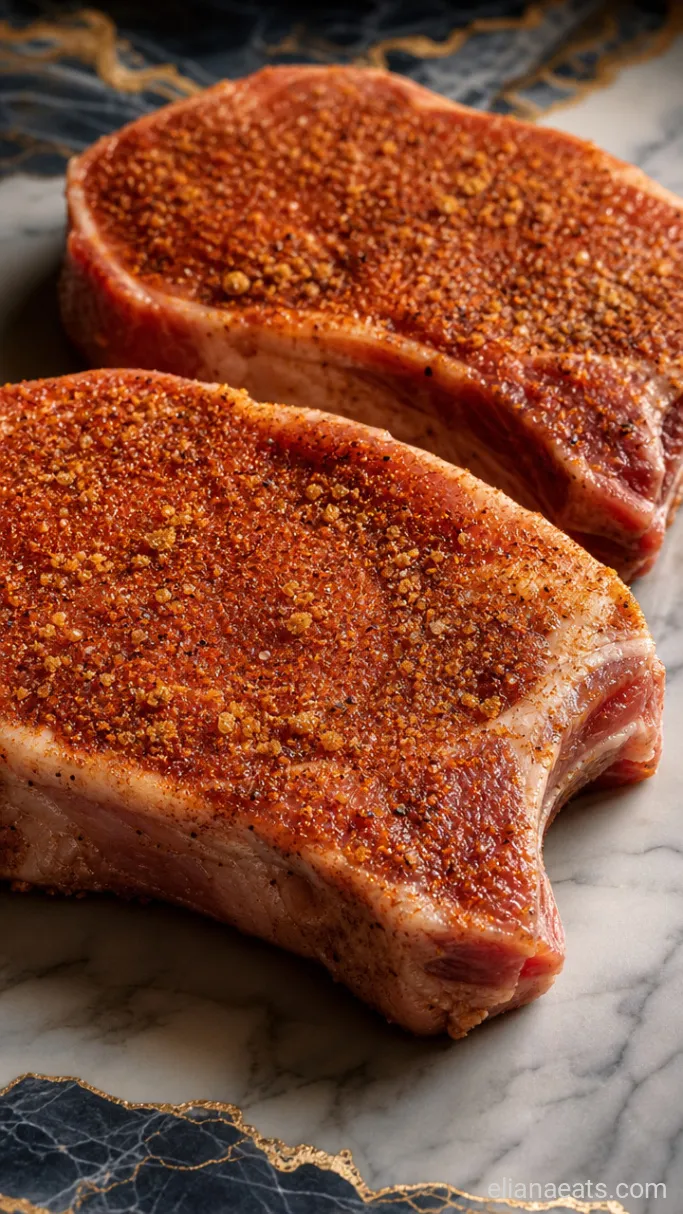
Preheat your oven to 400°F (200°C) while you work on the pork. Pat the 2 bone-in pork chops completely dry with paper towels, then coat each one with the 1 tbsp olive oil, just a thin, even layer on all sides.
In a small bowl, mix together the 2 tsp smoked paprika, 1 tsp garlic powder, 1 tsp onion powder, 1 tsp brown sugar, 1 tsp kosher salt, ½ tsp black pepper, ½ tsp dried thyme, and ¼ tsp cayenne pepper. Press the rub firmly onto both sides and the edges of each chop. You want it packed on, not dusted.
Drying the meat first is the step most people skip, and it is the reason the rub sticks and the crust actually forms. Wet pork steams instead of searing.
Step 2: Sear the Pork
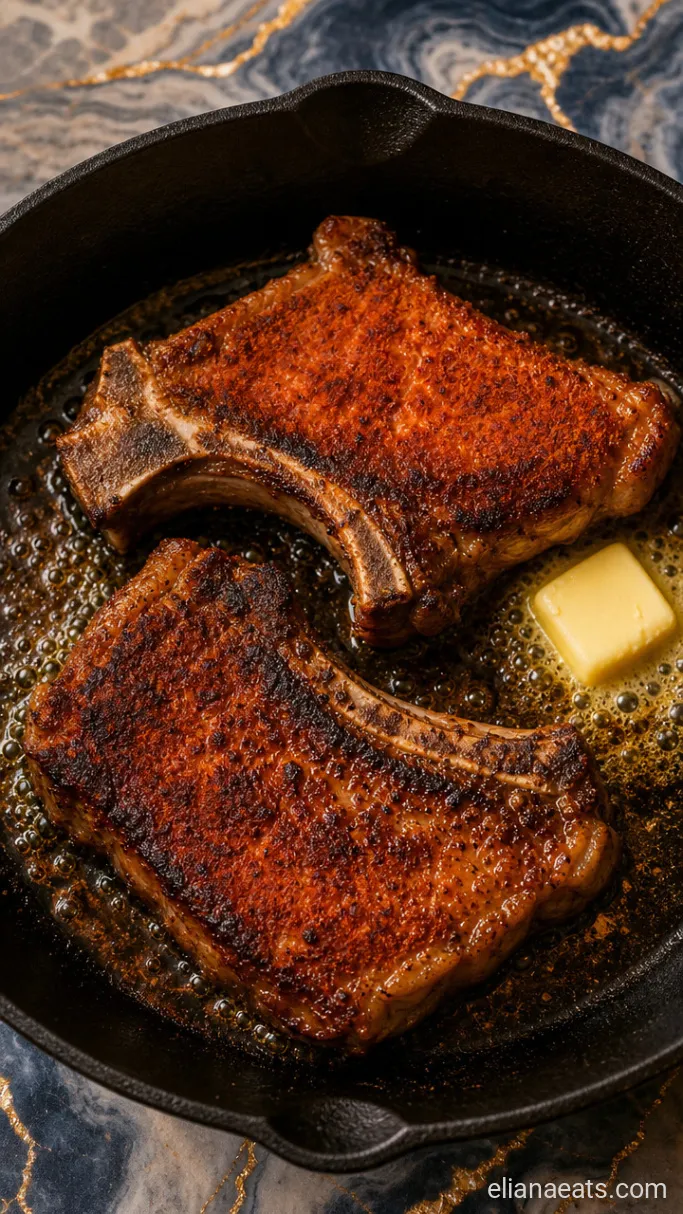
Heat a cast iron skillet over high heat for about 2 minutes until it is very hot, then add the rubbed chops. Sear them for 3 minutes without moving them, until the bottom crust is deep brown at the edges and releases cleanly from the pan.
Flip the chops, add the 1 tbsp unsalted butter to the pan, and tilt it slightly so the butter pools. Spoon the foaming butter over the top of the chops 3 or 4 times over about 1 minute. This is your baste.
The butter will turn a light amber color and smell nutty. That is fine, and it adds flavor. If it starts to go dark brown very quickly, reduce the heat to medium-high before you finish basting.
Step 3: Roast the Chops
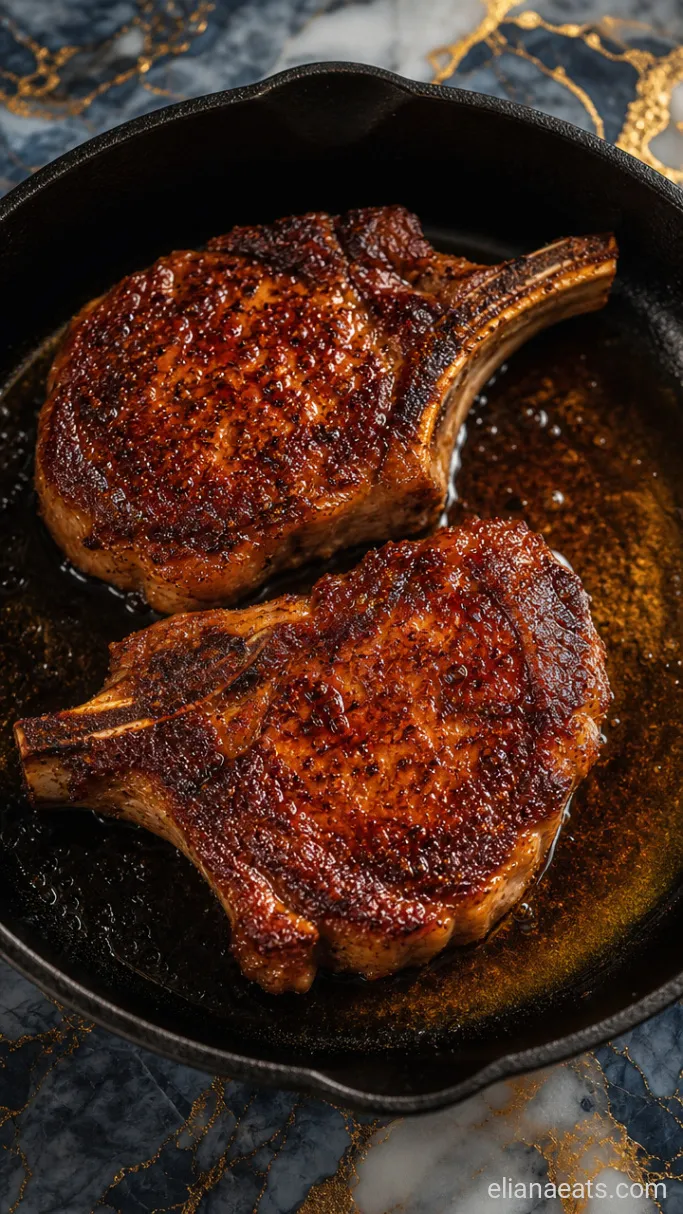
Slide the entire skillet into the 400°F (200°C) oven. Roast for 8 to 10 minutes, until a meat thermometer inserted into the thickest part reads 145°F (63°C). Pull the pan out at 145°F even if the chops look like they could go longer.
Pork at 145°F is safe, slightly pink in the center, and still juicy. Cooking past 160°F is the most common reason pork chops turn dry, so use a thermometer if you have one.
Step 4: Plate and Garnish the Chops
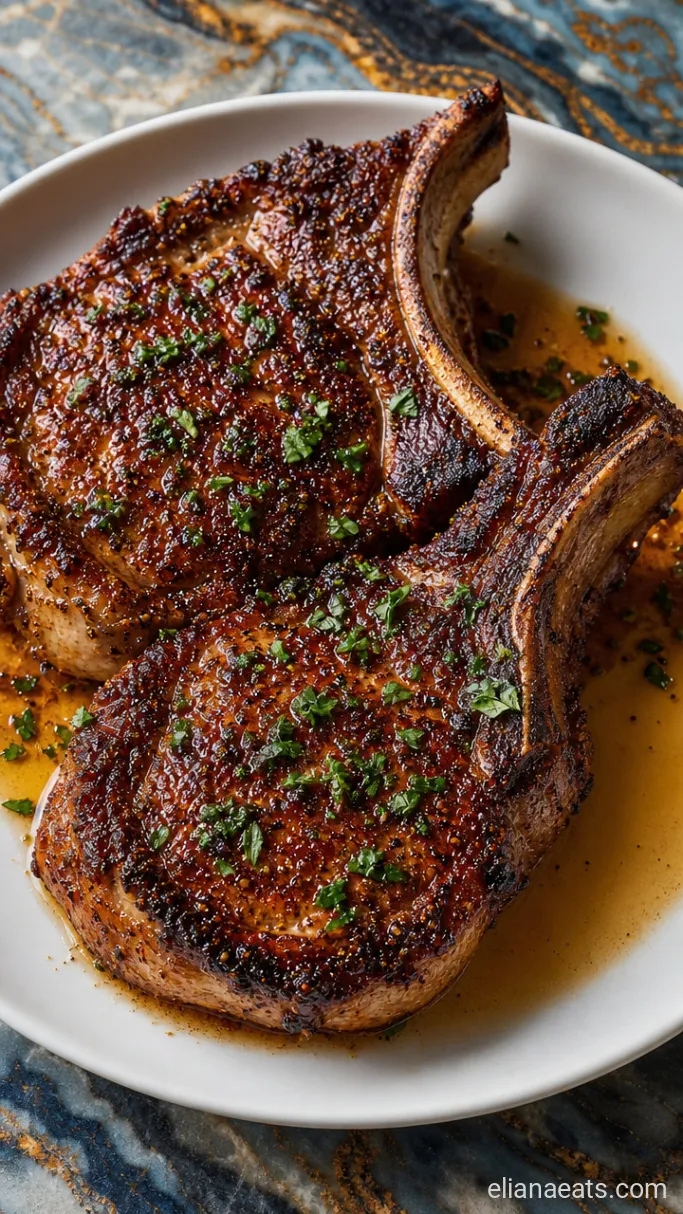
Let the chops rest in the pan for 3 minutes, then transfer them to a cutting board or warm plate. Spoon any pan drippings left in the skillet over the top of each chop, scatter the chopped fresh parsley over both, and serve immediately.
Recipe Tips
- Let the rub sit if you have time. If you can season the chops and leave them uncovered in the fridge for 30 minutes before cooking, the salt draws a little moisture to the surface and then reabsorbs, which seasons the meat deeper than the crust.
- Choose chops that are close to the same thickness. Uneven chops cook unevenly. If one is noticeably thicker, give it a 30-second head start in the pan.
- The pan must be hot before the chops go in. A lukewarm pan causes the rub to stick and tear instead of forming a crust. Two full minutes on high heat is not too long.
- Save the pan drippings. The fond and butter left in the skillet after you rest the chops makes a fast pan sauce if you add a splash of chicken stock and let it reduce for 2 minutes over medium heat.
Sear times by chop thickness (oven temp 400°F / 200°C, finish time assumes a cold start from room temp):
| Chop Thickness | Pan Sear Per Side | Oven Time | Target Internal Temp |
|---|---|---|---|
| ¾ inch | 2 min | 6 to 7 min | 145°F (63°C) |
| 1 inch | 3 min | 8 to 10 min | 145°F (63°C) |
| 1¼ inch | 3 min | 11 to 13 min | 145°F (63°C) |
How To Store
- Refrigerate – Store leftover chops in an airtight container for up to 3 days. Keep any pan drippings separately and spoon them over when reheating.
- Reheating – Warm the chops in a 300°F (150°C) oven for 10 to 12 minutes covered loosely with foil, or in a skillet over low heat with a splash of water and the lid on. High heat when reheating will dry them out fast.
What To Serve With Pork Chops
Mashed potatoes are the natural call here because the starchy creaminess balances the smoky, slightly spiced crust. A simple wedge salad with a tangy dressing works well because the acidity cuts through the richness of the butter-basted pork. If you want something green, roasted green beans with garlic and a little lemon juice hold up to the bold rub without competing with it.
Frequently Asked Questions
Can I make the rub ahead of time?
Yes. Mix the dry rub and store it in a small jar for up to 3 months. It keeps at room temperature away from heat and light.
Do I have to use a cast iron skillet?
No, but it is the best tool for this because it holds heat evenly at high temperatures. A stainless steel pan is the next best option.
Can I cook these entirely on the stovetop without the oven?
You can, but you will need to drop the heat to medium after the sear and cover the pan for 6 to 8 minutes to cook the center through without burning the crust.
How do I know when the pork is done without a thermometer?
Press the center with your finger. It should feel firm but still have a slight give, similar to the base of your thumb when you touch your index finger to it. That said, a cheap instant-read thermometer takes the guesswork out entirely and is worth having.
—
Texas Roadhouse Pork Chops Recipe
Ingredients
Method
- Preheat the oven to 400°F (200°C). Pat the chops dry, coat with the 1 tbsp olive oil, then mix all dry rub ingredients together and press firmly onto both sides and edges of each chop.
- Heat a cast iron skillet over high heat for 2 minutes. Sear the chops for 3 minutes per side. After flipping, add the 1 tbsp butter and baste the chops with the foaming butter for 1 minute.
- Transfer the skillet to the oven and roast for 8 to 10 minutes until the internal temperature reaches 145°F (63°C).
- Rest the chops in the pan for 3 minutes, then plate, spoon pan drippings over the top, and scatter chopped fresh parsley over both chops to serve.
