
Texas Roadhouse Italian Dressing Copycat Recipe

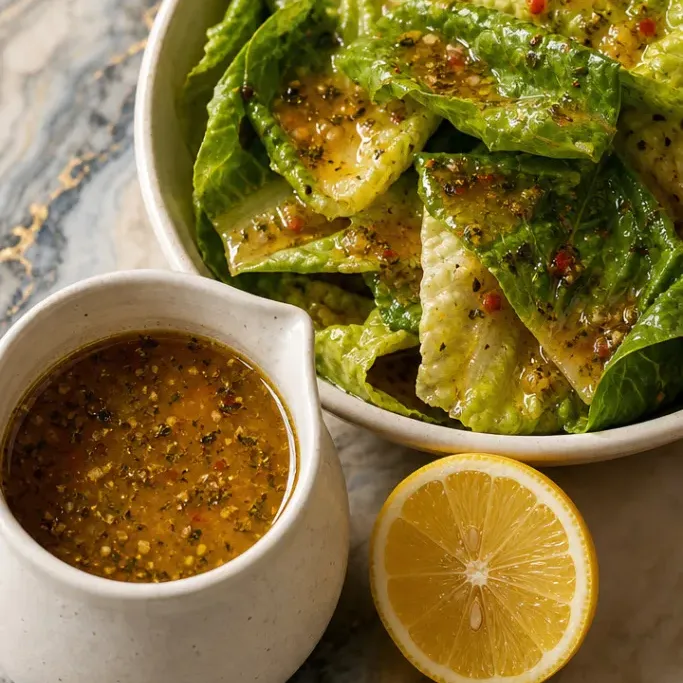
This Texas Roadhouse Italian dressing recipe gives you that tangy, herb-forward dressing straight from the restaurant’s salad bar, made entirely in your own kitchen. It comes together in about 5 minutes with pantry staples, so it’s a real weeknight win when you want a from-scratch dressing without any fuss.
It works on a simple house salad, but it’s also strong enough to double as a marinade for chicken.
Why I Love This Recipe
The balance here is what keeps me coming back to it. It’s bright from the red wine vinegar, a little savory from the garlic and oregano, with just enough sweetness to round out the acidity.
The olive oil keeps it full-bodied without feeling heavy, and because you’re making it fresh, there’s none of that flat, slightly stale taste that bottled dressings tend to have after a week in the fridge.
It’s also genuinely fast. One jar, one shake, done.
Recipe Ingredients
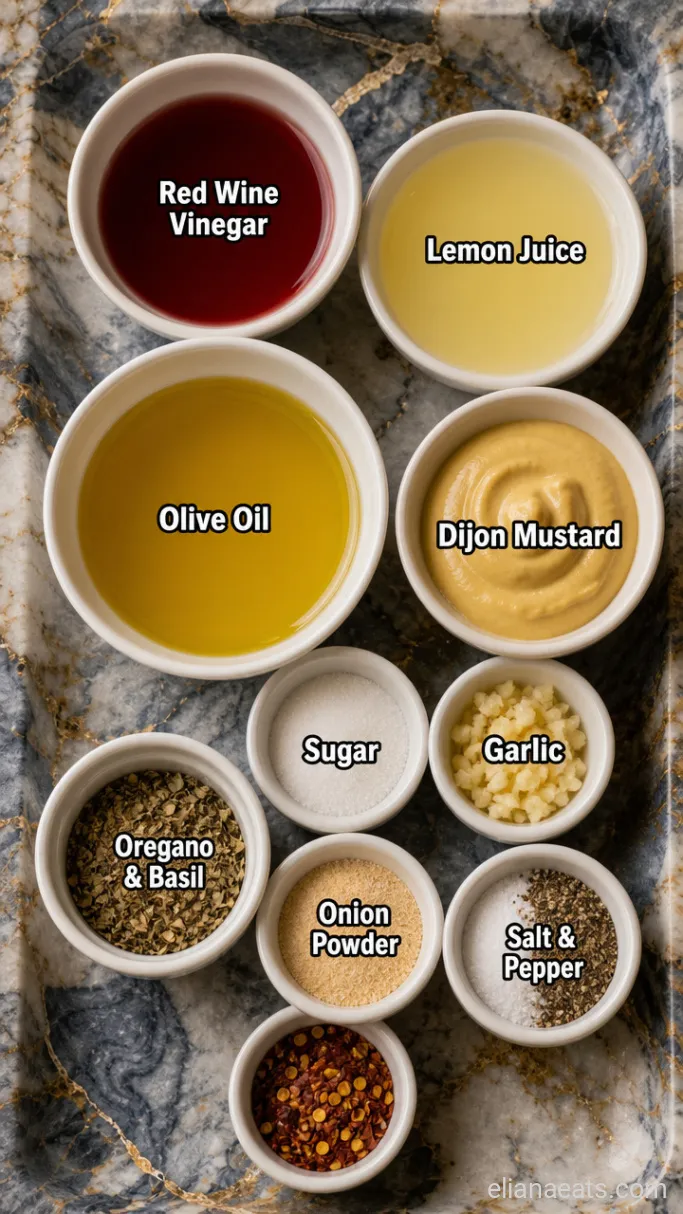
- 3 tbsp red wine vinegar – The main acid; gives it that sharp, tangy backbone
- 1 tbsp lemon juice – Freshly squeezed brightens it more than bottled
- ½ cup olive oil – Use a mild extra-virgin or a light olive oil so it doesn’t overpower
- 1 tsp Dijon mustard – Helps the oil and vinegar stay emulsified and adds a subtle bite
- 1 tsp sugar – Balances the acidity; honey works too
- 1 clove garlic, minced – About ½ tsp if using jarred minced garlic
- 1 tsp dried oregano – The dominant herb here; don’t skip it
- ½ tsp dried basil – Rounds out the Italian herb profile
- ½ tsp onion powder – Adds depth without the texture of raw onion
- ¼ tsp red pepper flakes – A gentle warmth, not heat; reduce if cooking for kids
- ½ tsp salt – Kosher salt preferred
- ¼ tsp black pepper – Freshly ground if you have it
Variations / Substitutions
- Apple cider vinegar for red wine vinegar – Slightly sweeter and less sharp; the dressing will taste milder overall.
- Avocado oil for olive oil – Neutral flavor and still gives you a good body; worth it if you prefer a lighter taste.
- Maple syrup for sugar – Adds a faint earthiness that works well if you’re leaning into the herb notes.
- ½ tsp garlic powder for fresh garlic – Good swap if you want a more consistent, less pungent garlic flavor.
- Fresh herbs for dried – Use 1 tbsp fresh oregano and 1½ tsp fresh basil, chopped fine; the dressing will be brighter but won’t keep as long.
- Skip the red pepper flakes – The dressing stays just as flavorful without the warmth, making it more kid-friendly.
- Extra lemon juice for more acid – Add up to 1 tbsp more if you like a sharper dressing on heartier greens.
If you like making your own dressings, the Texas Roadhouse Ranch Dressing Copycat Recipe is worth trying next.
How To Make Italian Dressing
Step 1: Whisk the Base
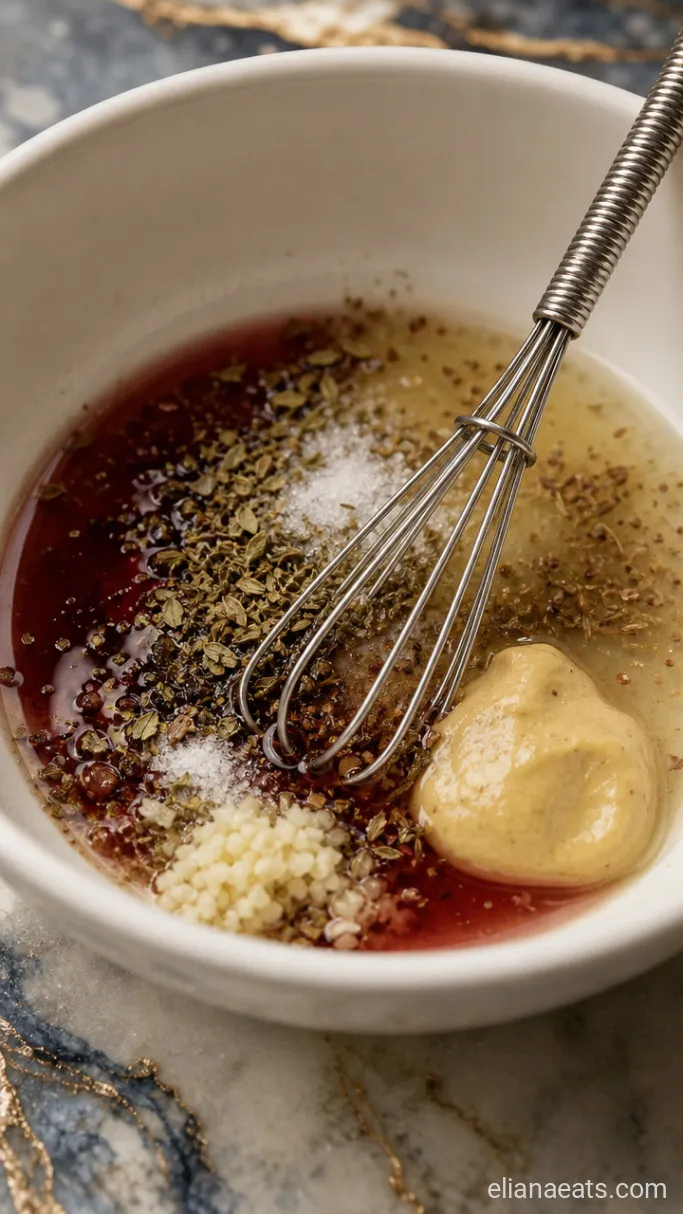
In a small bowl or a jar with a tight-fitting lid, combine the 3 tbsp red wine vinegar, 1 tbsp lemon juice, 1 tsp Dijon mustard, 1 tsp sugar, 1 clove minced garlic, 1 tsp dried oregano, ½ tsp dried basil, ½ tsp onion powder, ¼ tsp red pepper flakes, ½ tsp salt, and ¼ tsp black pepper. Whisk or stir until the sugar dissolves completely, about 30 seconds.
The mustard and vinegar will look slightly thick and pale at this point. That’s what you want — the mustard is doing the work of holding the emulsion together once the oil goes in.
Step 2: Stream in the Olive Oil
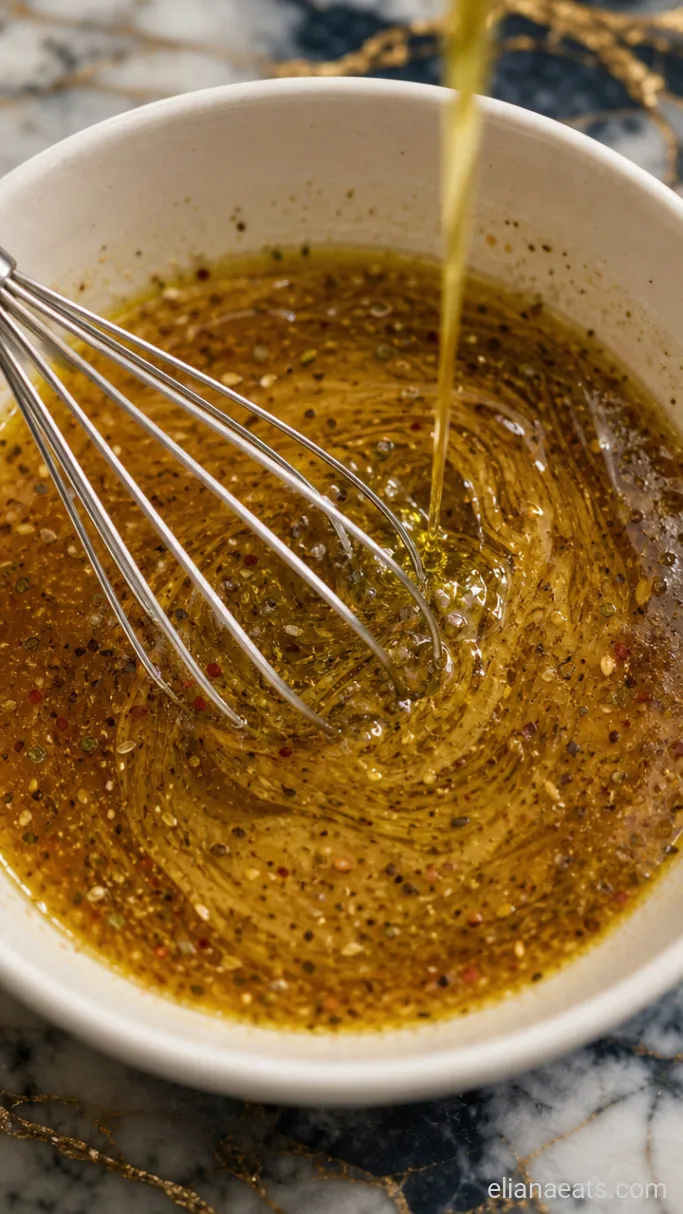
With the whisk moving steadily, slowly pour in the ½ cup olive oil in a thin, steady stream. If you’re using a jar, add the oil, seal the lid tightly, and shake hard for about 20 seconds.
The dressing will turn creamy-looking and slightly opaque right after mixing. It won’t stay permanently emulsified the way a commercial dressing does, and that’s fine. A quick shake before each use is all it needs.
Step 3: Taste and Adjust
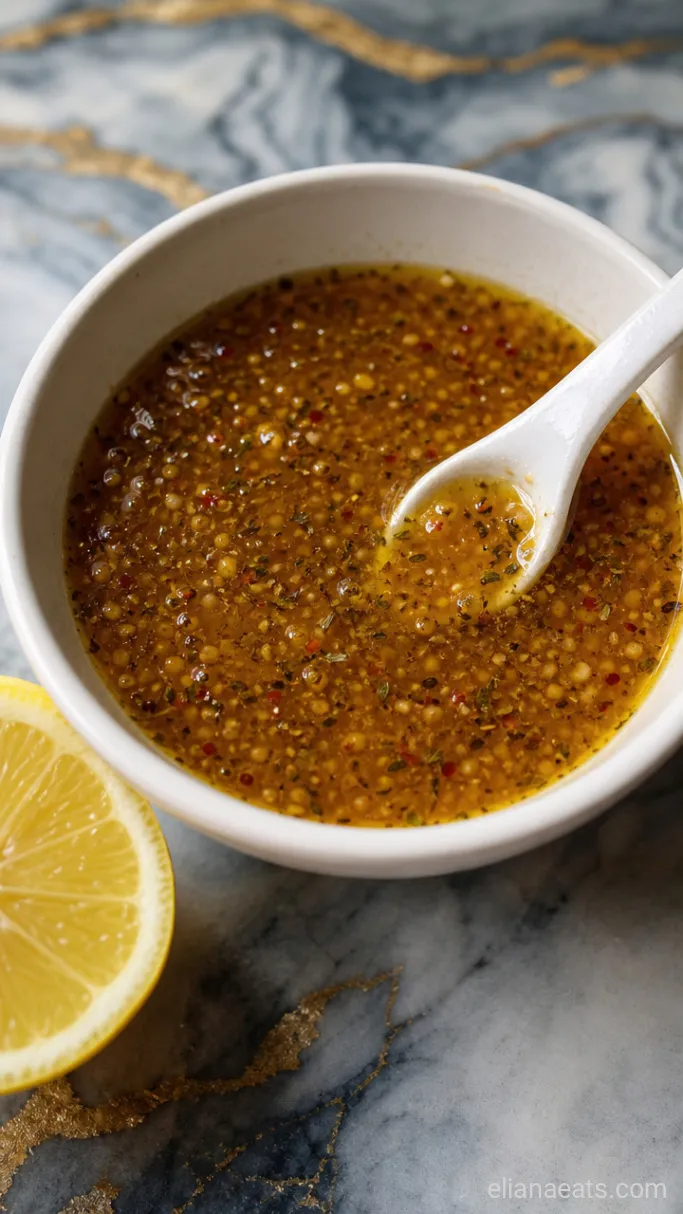
Dip a lettuce leaf or a small spoon in and taste the dressing at this point. If it tastes flat, add a pinch more salt. If it’s too sharp, add another pinch of sugar and stir for 10 seconds.
Getting the balance right is the one step worth slowing down for. The ratio of acid to oil is already calibrated, but garlic cloves vary in strength, and your olive oil may be more or less bitter than mine. Trust your palate here, not the numbers alone.
Step 4: Dress the Salad and Serve
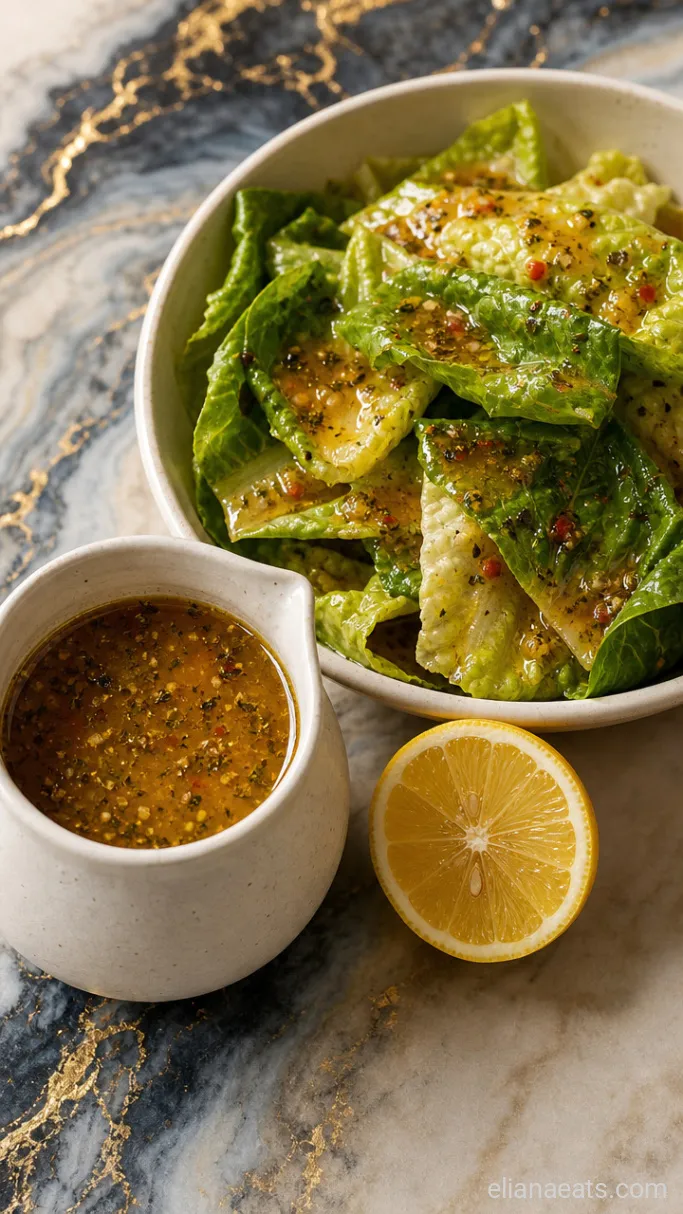
Pour the dressing over your salad greens and toss to coat evenly, or transfer it to a small pitcher for the table. A light drizzle of about 2 tbsp per serving is plenty. Garnish the salad with a pinch of dried oregano and a crack of fresh black pepper over the top before bringing it to the table.
Recipe Tips
- Let it sit for 10 minutes before serving. The dried herbs need a few minutes to rehydrate and bloom in the vinegar. The flavor is noticeably better if you give it that short rest.
- Room temperature olive oil emulsifies better. If your olive oil has been sitting in a cold pantry, the dressing can look grainy. Give it a minute at room temperature before mixing.
- Minced garlic gives a stronger flavor the longer it sits. If you’re making this ahead, you might want to use ½ tsp garlic powder instead so the garlic taste doesn’t get too sharp overnight.
- Don’t overdress. This dressing is bold, and a little goes a long way. Start with 2 tbsp for a 2-person salad and add more from there.
Shake times by container:
| Container | Method | Time |
|---|---|---|
| Mason jar (8 oz) | Shake | 20 seconds |
| Bowl | Whisk | 30 to 45 seconds |
| Blender bottle | Shake | 15 seconds |
How To Store
- Refrigerate – Store in a sealed jar or airtight container for up to 7 days. The oil will solidify slightly in the fridge, which is normal.
- Serve Cold – Take it out of the fridge about 5 minutes before using, then shake or whisk to re-combine before pouring.
What To Serve With Italian Dressing
A simple romaine salad with cucumber, cherry tomatoes, red onion, and croutons is the classic pairing — the crunch of the croutons against the tangy dressing is the combination Texas Roadhouse is known for. It’s also a strong marinade for chicken breast: coat the chicken and let it sit for at least 30 minutes before grilling, since the vinegar and herbs tenderize the meat and leave the outside with good color. Drizzled over roasted vegetables like zucchini or bell peppers right before serving, it acts almost like a vinaigrette, cutting through the sweetness that roasting brings out.
Frequently Asked Questions
Can I make this dressing ahead of time?
Yes. It actually tastes better after a few hours once the herbs have had time to steep in the vinegar. Make it up to 2 days ahead and keep it sealed in the fridge.
Why does my dressing separate so quickly?
Homemade dressings without stabilizers always separate. The Dijon mustard slows it down but won’t stop it entirely. A hard shake for about 10 seconds right before pouring is all you need.
Can I use this as a pasta salad dressing?
Yes, and it works well. Toss it with the pasta while the pasta is still slightly warm so it absorbs more of the flavor. Use about ⅓ cup dressing per 8 oz dry pasta.
Is this dressing gluten-free?
Every ingredient in this recipe is naturally gluten-free, but check your Dijon mustard label since some brands add wheat as a thickener.
Italian Dressing Recipe
Ingredients
Method
- Combine the red wine vinegar, lemon juice, Dijon mustard, sugar, minced garlic, dried oregano, dried basil, onion powder, red pepper flakes, salt, and black pepper in a jar or bowl and whisk or stir until the sugar dissolves, about 30 seconds.
- Stream in the olive oil while whisking steadily, or add it to the jar, seal, and shake hard for 20 seconds until the dressing looks opaque and combined.
- Taste and adjust with a pinch of salt if flat, or a pinch of sugar if too sharp.
- Pour over salad greens, toss, and garnish with a pinch of dried oregano and fresh black pepper before serving.
