
Starbucks Lemon Loaf Copycat Recipe

This Starbucks lemon loaf recipe brings that thick, glossy-glazed lemon cake straight to your kitchen, and it tastes just as bright and citrusy as the one in the pastry case. It’s a one-bowl batter that takes about 15 minutes to pull together, so it works on a weeknight just as well as a lazy Sunday morning.
The glaze sets into a firm, opaque white coat that cracks slightly when you slice it. That’s the part everyone is here for.

Why I Love This Recipe
The crumb is tender and dense in the way a good pound cake should be, and the sour cream is what makes that happen. It keeps the loaf moist for a couple of days without going gummy.
What really makes this version work is using both lemon zest and fresh lemon juice in the batter, not just one or the other. You get a sharp, clean lemon flavor all the way through, not just a hint.
The glaze is thick and sweet and slightly tangy, and it sets firm enough that you can slice without it sliding off. That balance is why I keep coming back to this one.
Recipe Ingredients
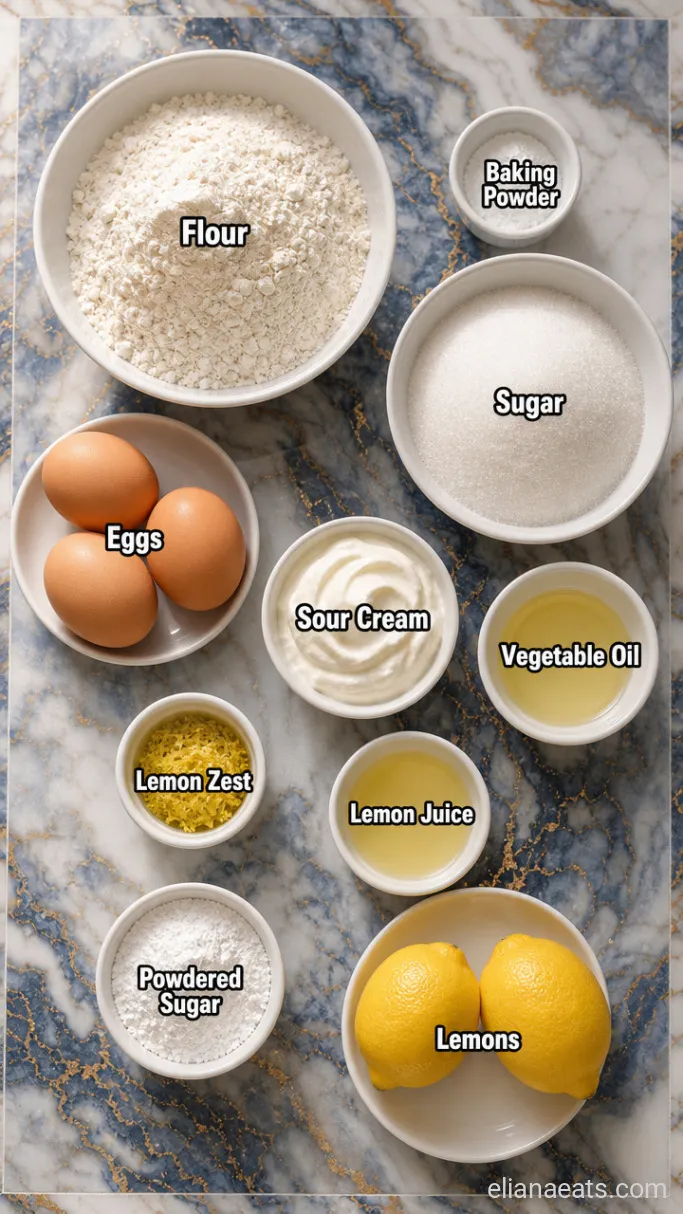
- 2 cups all-purpose flour – Spooned and leveled, not packed, for a tender crumb
- 2 tsp baking powder – Gives the loaf its lift without making it taste like cake mix
- 1/2 tsp salt – Balances the sweetness in the batter
- 1 cup granulated sugar – Standard white sugar works best here for a clean, sweet base
- 3 large eggs – Room temperature, so the batter comes together smoothly
- 1/2 cup sour cream – Full-fat; this is what keeps the crumb moist and slightly dense
- 1/2 cup vegetable oil – Neutral oil keeps the lemon flavor front and center
- 2 tbsp lemon zest – About 2 large lemons; zest before juicing
- 3 tbsp fresh lemon juice – From those same lemons; bottled juice won’t give you the same brightness
- 1 tsp vanilla extract – Just enough to round out the citrus without competing with it
- 1 1/2 cups powdered sugar – Sifted, for a lump-free glaze
- 3 tbsp fresh lemon juice (for glaze) – Keeps the glaze tangy and helps it set opaque
Variations / Substitutions
- Greek yogurt instead of sour cream – Full-fat Greek yogurt works almost identically; the crumb is very slightly less rich but still moist.
- Lemon extract instead of zest – Use 1 tsp lemon extract if you don’t have fresh lemons, but the flavor will be sharper and more artificial-tasting.
- Gluten-free flour – A 1-to-1 gluten-free baking flour swap works here; the loaf will be a little denser but still slices cleanly.
- Add poppy seeds – Stir in 2 tbsp poppy seeds with the dry ingredients for a lemon-poppy version that has a slightly nutty bite.
- Dairy-free – Swap the sour cream for a plain, full-fat coconut yogurt; the coconut flavor is subtle once baked.
- Orange version – Replace the lemon zest and juice with orange zest and juice for a different citrus angle that’s sweeter and more floral.
If you enjoy citrus baked goods, you might also like a Starbucks Lemon Pound Cake Loaf with Cream Cheese Frosting recipe.
How To Make Lemon Loaf
Step 1: Whisk the Dry Ingredients
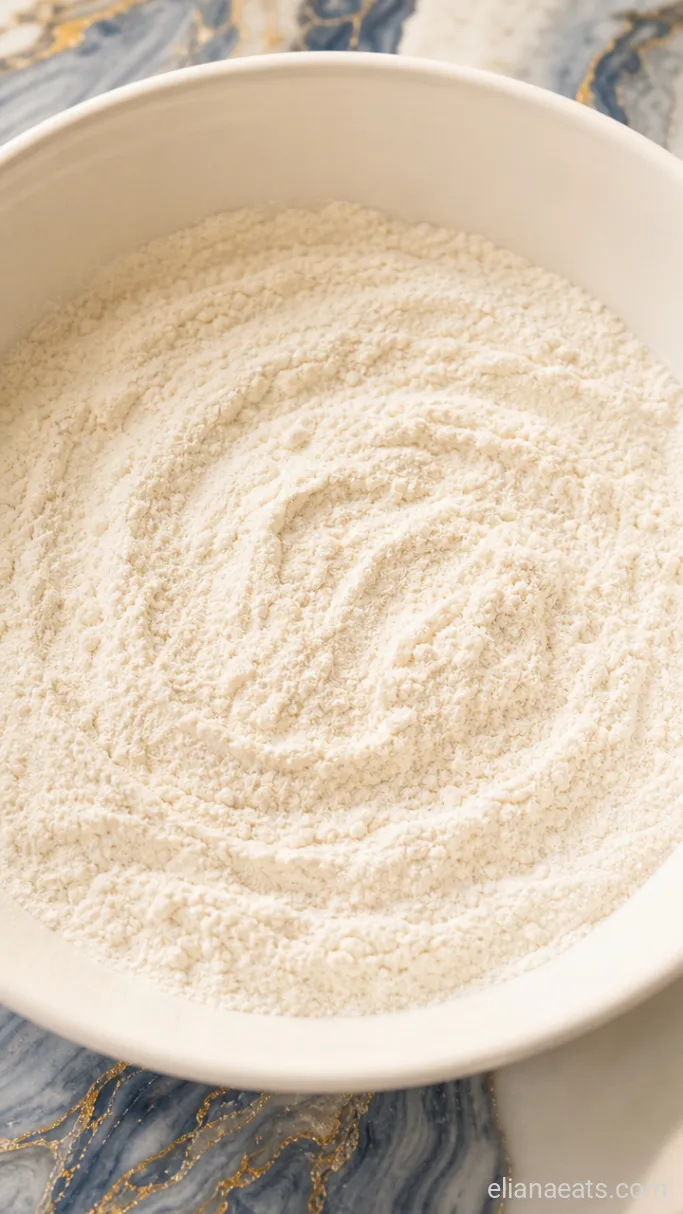
Preheat your oven to 350°F (175°C) and grease a 9×5-inch loaf pan, then line it with parchment paper with a little overhang on the long sides. In a large bowl, whisk together the 2 cups all-purpose flour, 2 tsp baking powder, and 1/2 tsp salt until evenly combined, about 20 seconds of whisking.
This dry mix takes less than a minute, but getting the leavening evenly distributed now means you won’t end up with any dense or gummy pockets in the final loaf.
Step 2: Beat the Wet Ingredients

In a separate medium bowl, whisk the 1 cup granulated sugar and 3 large eggs together vigorously for about 1 minute until the mixture looks slightly paler and thickens just a bit. Add the 1/2 cup sour cream, 1/2 cup vegetable oil, 2 tbsp lemon zest, 3 tbsp fresh lemon juice, and 1 tsp vanilla extract, then whisk again until everything is smooth and uniform.
The batter should smell very strongly of lemon at this point, and the oil will make it look glossy. That’s exactly where you want it.
Step 3: Fold the Batter Together
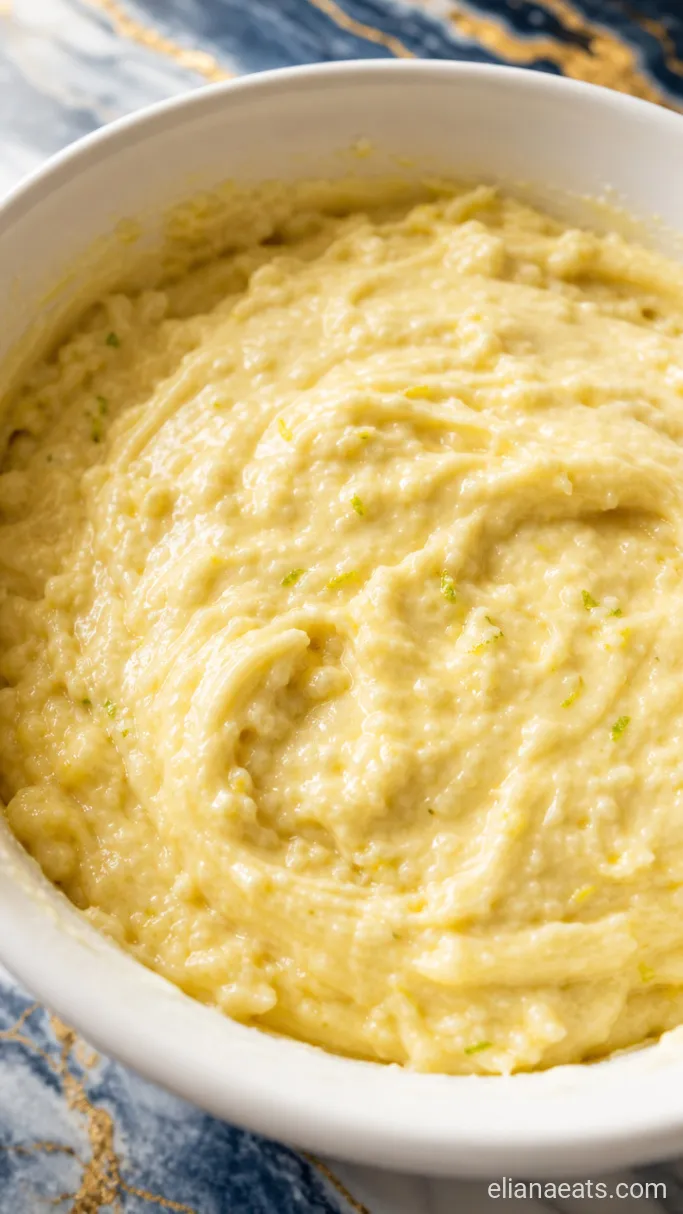
Pour the wet ingredients into the bowl with the dry ingredients and fold with a rubber spatula until just combined. Stop as soon as you no longer see dry flour streaks. A few small lumps in the batter are fine.
Overmixing is the most common reason a lemon loaf comes out tough. Once the flour is in, use a gentle hand and resist the urge to keep stirring until it’s perfectly smooth.
Step 4: Bake the Loaf

Pour the batter into your prepared pan and spread it level. Bake at 350°F (175°C) for 50 to 55 minutes, until a toothpick inserted in the center comes out clean and the top is deep golden with a crack running down the middle.
If the top is browning too fast around the 35-minute mark, lay a loose piece of foil over it for the rest of the bake time. Let the loaf cool in the pan for 15 minutes, then lift it out using the parchment overhang and set it on a wire rack to cool fully before glazing, about 1 hour.
Step 5: Glaze and Slice the Loaf

In a small bowl, whisk the 1 1/2 cups sifted powdered sugar and 3 tbsp fresh lemon juice together until smooth and thick. The glaze should fall off the whisk in a slow, steady ribbon. If it’s too thick to pour, add lemon juice 1 tsp at a time; if it’s too thin and runs immediately, stir in a bit more powdered sugar.
Pour the glaze over the fully cooled loaf, letting it run down the sides naturally. Let it stand for 20 minutes at room temperature until the glaze firms up and turns opaque, then slice and serve. The top will be bright white and slightly crackled, and the crumb inside will be a pale, even yellow.
Recipe Tips
- Zest before you juice. It’s nearly impossible to zest a juiced lemon. Do both lemons first, measure the zest, then juice them for the batter and glaze.
- Room temperature eggs matter. Cold eggs can cause the oil and sour cream to seize slightly and look curdled in the bowl. It still bakes fine, but a smooth emulsified batter gives a more even crumb.
- Don’t skip lining the pan. Lemon loaves stick. The parchment overhang makes lifting the loaf out clean and keeps the glaze coat intact on the sides.
- Sift the powdered sugar. One unsifted lump will create a streak in your glaze that won’t smooth out.
Bake time by pan size (done at an internal temp of 200 to 205°F / 93 to 96°C):
| Pan Size | Material | Approximate Bake Time |
|---|---|---|
| 9×5 inch | Light aluminum | 50 to 55 minutes |
| 8×4 inch | Light aluminum | 55 to 60 minutes |
| 9×5 inch | Dark nonstick | 45 to 50 minutes |
| Mini loaf (4×2 inch) | Light aluminum | 28 to 32 minutes |
How To Store
- Refrigerate – Store in an airtight container in the fridge for up to 5 days. The glaze stays intact and doesn’t get sticky.
- Reheating – A 10-second burst in the microwave brings back the soft crumb if you prefer it slightly warm. The glaze softens a little but resets as it cools.
- Serve Cold – This loaf actually slices more cleanly straight from the fridge, and the glaze is firmer and easier to photograph cold.
What To Serve With Lemon Loaf
A slice works well alongside a cup of strong black coffee or an Americano because the bitterness cuts through the sweetness of the glaze and makes the lemon flavor taste even sharper. If you’re serving it as a brunch spread, a plain Greek yogurt with a drizzle of honey on the side adds a creamy, tangy contrast to the dense crumb. It also makes for an excellent citrusy beverage pairing with a cold glass of iced tea, where the tannins in the tea play off the citrus in the same way lemon does in a traditional cup.
Frequently Asked Questions
Can I use bottled lemon juice instead of fresh?
You can, but the flavor will be noticeably flatter. Fresh juice has a brightness that bottled juice loses in processing, and you really notice it in a simple batter like this one.
Can I make this loaf ahead of time?
Yes. Bake and cool it fully, then wrap it unglazed and store it at room temperature overnight. Add the glaze the next morning, let it set for 20 minutes, and it’s ready to serve.
Why did my loaf sink in the middle?
The most likely cause is underbaking. If the toothpick comes out with wet batter (not just a moist crumb), give it 5 more minutes and test again. Opening the oven before the 40-minute mark can also cause a collapse.
Can I double the recipe and bake it in a bundt pan?
Yes, a doubled batter fills a standard 10 to 12 cup bundt pan well. Bake at 350°F (175°C) for 55 to 65 minutes, checking with a toothpick at 55 minutes. Drizzle the glaze over the cooled bundt rather than pouring it.
Lemon Loaf Recipe
Ingredients
Method
- Preheat oven to 350°F (175°C), grease and line a 9×5-inch loaf pan with parchment paper. Whisk together the 2 cups flour, 2 tsp baking powder, and 1/2 tsp salt in a large bowl.
- In a separate bowl, whisk the 1 cup granulated sugar and 3 large eggs for 1 minute until slightly pale, then add the 1/2 cup sour cream, 1/2 cup vegetable oil, 2 tbsp lemon zest, 3 tbsp fresh lemon juice, and 1 tsp vanilla extract and whisk until smooth.
- Pour the wet ingredients into the dry ingredients and fold with a spatula until just combined with no dry streaks. Stop as soon as the flour disappears.
- Pour the batter into the prepared pan, spread level, and bake at 350°F (175°C) for 50 to 55 minutes until a toothpick comes out clean. Cool in the pan for 15 minutes, then lift onto a wire rack and cool fully, about 1 hour.
- Whisk the 1 1/2 cups sifted powdered sugar and 3 tbsp fresh lemon juice into a smooth, thick glaze. Pour over the cooled loaf, let it set for 20 minutes until opaque, then slice and serve.
