
Starbucks Lemon Pound Cake Copycat Recipe

This Starbucks lemon pound cake recipe gives you that dense, bright, glazed loaf you’ve probably grabbed a dozen times from the pastry case. It’s the kind of thing that’s actually worth making at home, because a full loaf costs a fraction of what you’d spend slice by slice.
The crumb is tight and moist, the lemon flavor is sharp enough to notice without being tart, and the white glaze sets into a thin, crackly shell on top.

Why I Love This Recipe
The balance here is what keeps me coming back to it. Real lemon zest in the batter and lemon juice in the glaze means the citrus comes through at two different moments.
Sour cream is the ingredient that makes the texture work. It keeps the crumb close and damp without making it heavy, and the loaf stays that way for a couple of days after baking.
This version skips any extracts beyond pure vanilla. The zest does the heavy lifting, so you get actual lemon flavor instead of something that tastes like furniture polish.
Recipe Ingredients
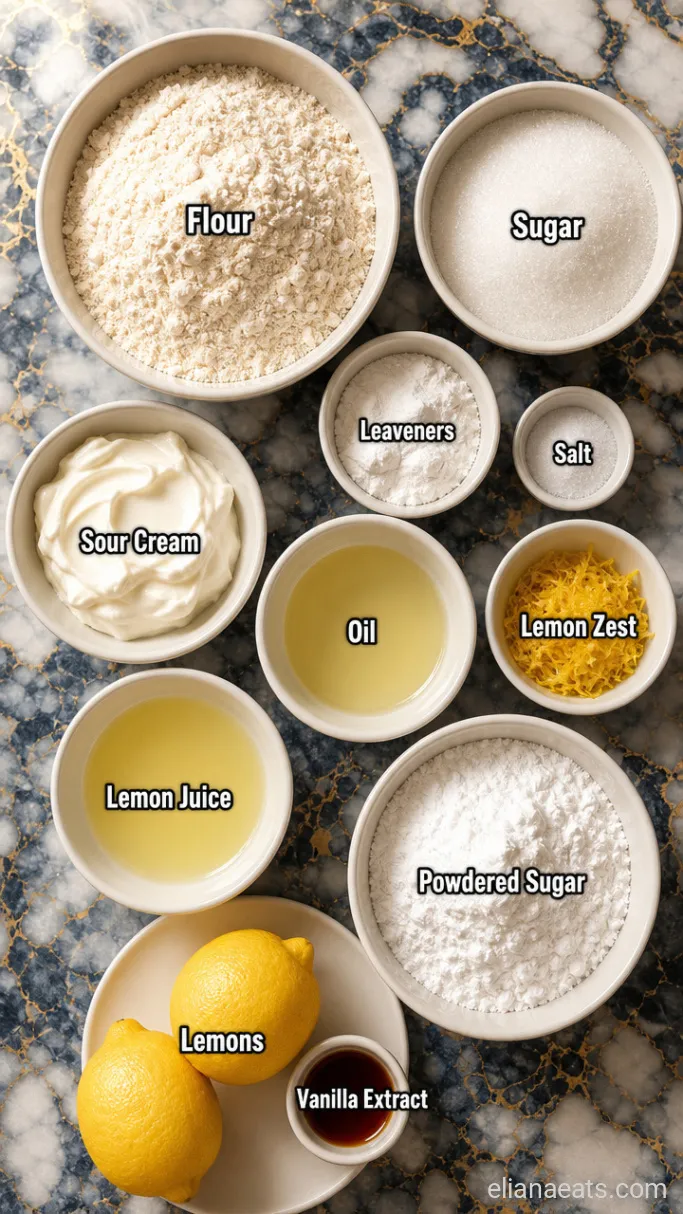
- 1 1/2 cups all-purpose flour – Spoon and level it; packing the cup makes the loaf dense
- 1/2 tsp baking soda – Helps the loaf rise evenly without doming too much
- 1/2 tsp baking powder – Works with the soda for a level, sliceable top
- 1/2 tsp fine salt – Rounds out the sweetness; don’t skip it
- 3 large eggs – Room temperature so they blend smoothly into the batter
- 1 cup granulated sugar – Standard white sugar; the lemon needs this sweetness as a backdrop
- 1/2 cup sour cream – Full-fat keeps the crumb moist; low-fat works but the texture is slightly looser
- 1/2 cup neutral oil – Vegetable or canola; oil keeps the loaf softer than butter over time
- 2 tbsp fresh lemon zest – About 2 large lemons; this is where most of the flavor comes from
- 2 tbsp fresh lemon juice – For the batter; adds a subtle brightness
- 1 tsp pure vanilla extract – Rounds out the lemon without competing with it
- 1 cup powdered sugar – Sifted, for the glaze
- 2 tbsp fresh lemon juice – For the glaze; keeps it bright and slightly tangy
- 1 tbsp whole milk – Thins the glaze to a pourable, glossy consistency
Variations / Substitutions
- Gluten-free flour – A 1:1 gluten-free baking blend works; the texture is slightly more crumbly but still holds together for slicing.
- Greek yogurt for sour cream – Full-fat plain Greek yogurt swaps in equally; the tang is similar and the crumb stays close.
- Meyer lemon – Sweeter and more floral than standard lemons; use the same amounts and expect a gentler citrus flavor.
- Dairy-free – Use a dairy-free yogurt (coconut or oat-based) in place of sour cream and oat milk in the glaze; the loaf bakes and sets normally.
- Orange variation – Swap the lemon zest and juice for orange; the loaf leans sweeter and the glaze takes on a warmer flavor.
- Extra heat or spice – A pinch of ground cardamom in the batter pairs well with lemon if you want something a little different.
If you like citrus baked goods, you might also enjoy a Starbucks lemon loaf recipe with cream cheese filling.
How To Make Lemon Pound Cake
Step 1: Whisk the Dry Ingredients
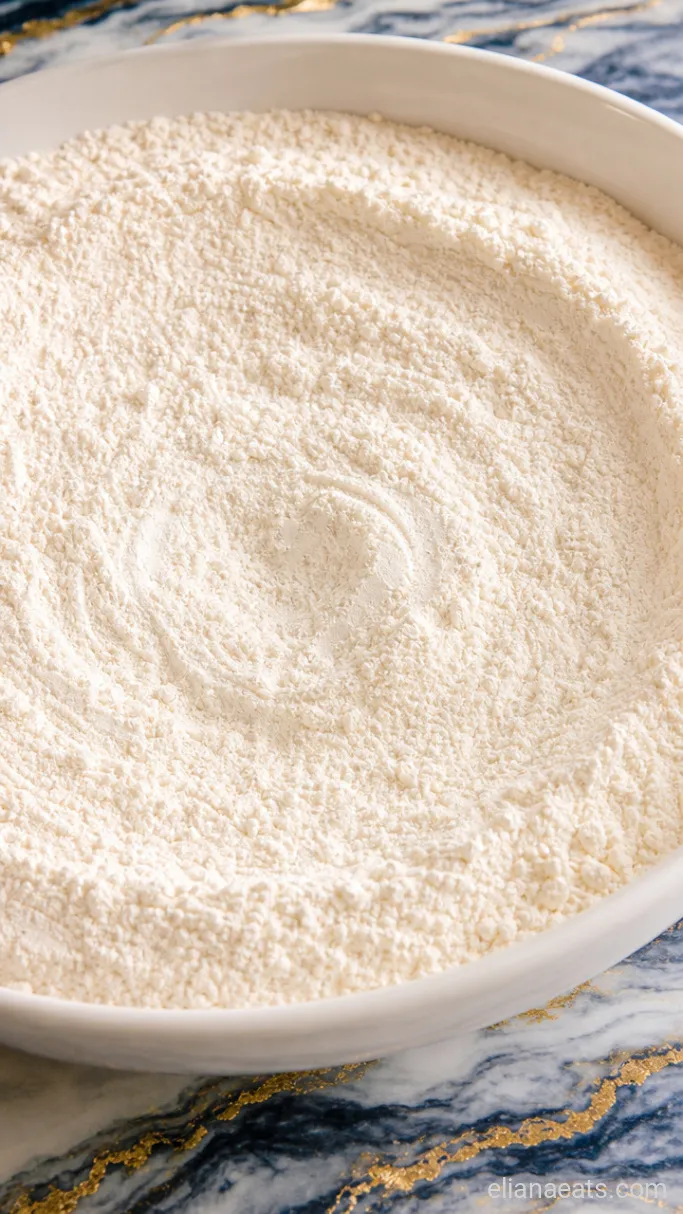
Preheat your oven to 350°F (175°C) and grease a 9×5-inch loaf pan, then line it with a strip of parchment paper so you can lift the loaf out cleanly. In a medium bowl, whisk together the 1 1/2 cups all-purpose flour, 1/2 tsp baking soda, 1/2 tsp baking powder, and 1/2 tsp fine salt for about 20 seconds until they’re evenly combined.
The parchment strip doesn’t need to cover the whole pan, just the long sides with a little overhang. That overhang is what lets you pull the loaf out without wrestling it.
Step 2: Beat the Wet Ingredients
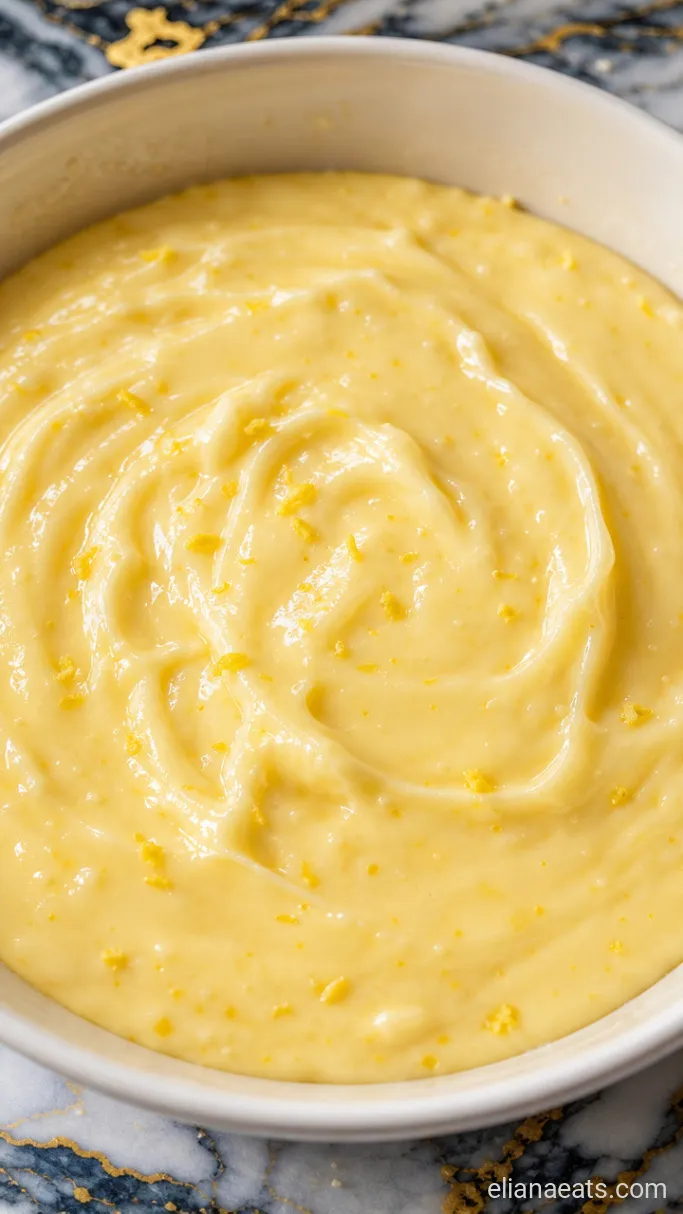
In a large bowl, whisk together the 3 large eggs and 1 cup granulated sugar for about 1 minute until the mixture is pale yellow and slightly thickened. Add the 1/2 cup sour cream, 1/2 cup neutral oil, 2 tbsp fresh lemon zest, 2 tbsp fresh lemon juice, and 1 tsp pure vanilla extract. Whisk again for about 30 seconds until everything is smooth and uniform.
The batter will look glossy and a little loose at this point. That’s exactly right. The oil and sour cream together mean you don’t need a stand mixer; a regular whisk handles it.
Step 3: Fold in the Flour
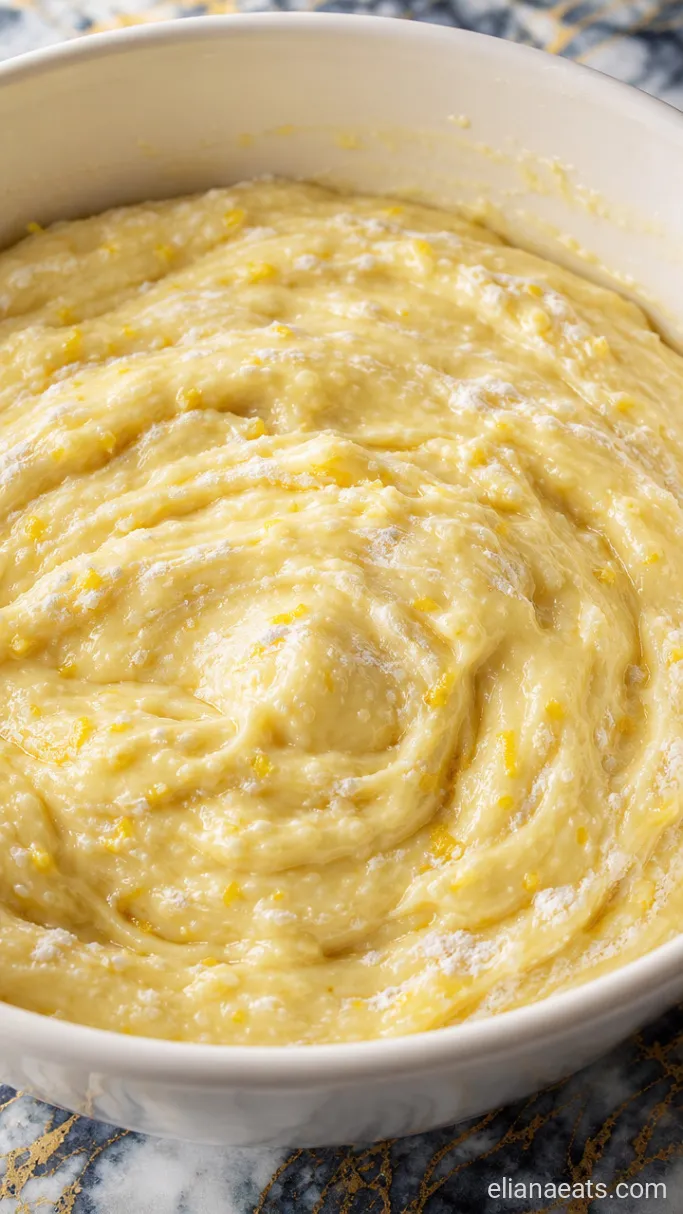
Add the dry ingredients to the wet bowl all at once. Switch to a rubber spatula and fold gently, using wide strokes from the bottom of the bowl, until just combined. Stop when you can’t see any dry flour streaks. This should take about 15 to 20 folds.
Overmixing at this stage develops gluten and tightens the crumb more than you want. A few small lumps are fine. The batter is thick enough to ribbon off the spatula slowly.
Step 4: Bake the Loaf
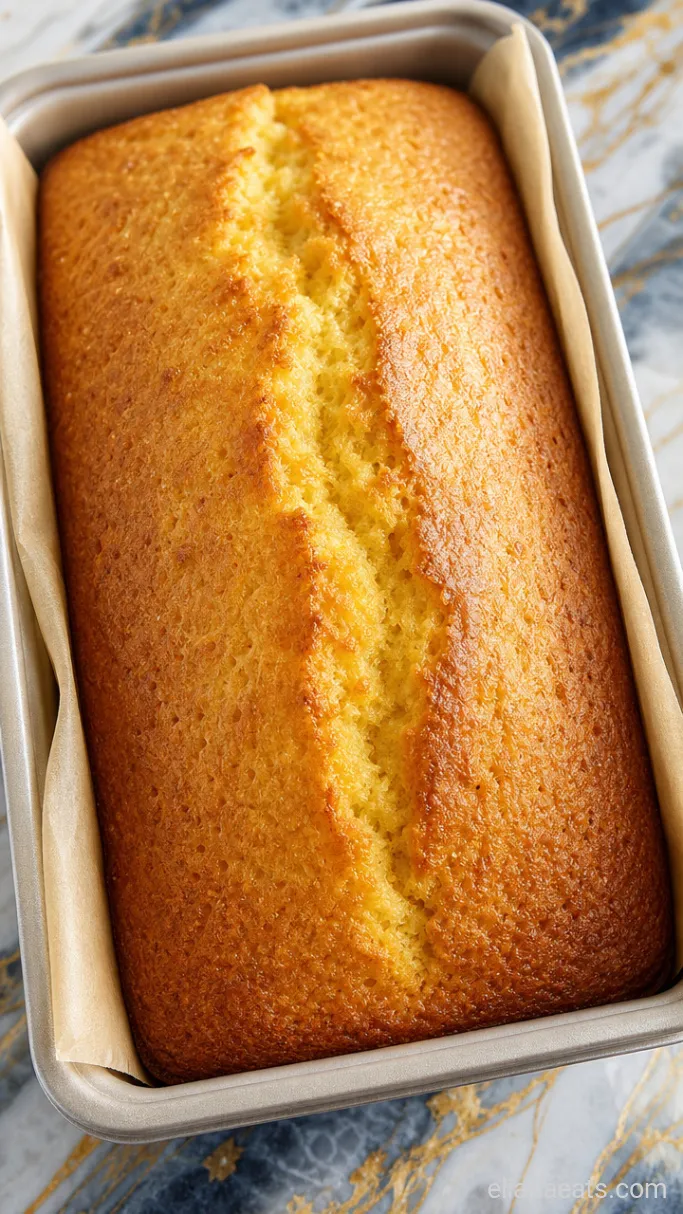
Pour the batter into the prepared loaf pan and smooth the top with your spatula. Bake at 350°F (175°C) for 50 to 55 minutes, until a toothpick inserted in the center comes out clean and the top is a deep golden brown. If the top is browning too fast after 35 minutes, lay a loose piece of foil over it for the remaining time.
Let the loaf cool in the pan for 15 minutes, then use the parchment overhang to lift it onto a wire rack. It needs to be fully cool, about 1 hour at room temperature, before you glaze it. A warm loaf will drink the glaze instead of letting it set on the surface.
Step 5: Glaze and Serve

In a small bowl, stir together the 1 cup sifted powdered sugar, 2 tbsp fresh lemon juice, and 1 tbsp whole milk until the glaze is smooth and falls off the spoon in a slow, thick ribbon. Pour it over the top of the cooled loaf and let it run down the sides naturally. Leave the glaze to set for 15 minutes at room temperature until it firms into a thin, matte-white shell.
Slice and serve with the glaze cracking slightly under the knife and the pale yellow crumb visible inside.
Recipe Tips
- Zest before you juice. It’s much easier to zest a whole lemon than one you’ve already squeezed flat. Do all your zesting first, then cut and juice.
- Room temperature eggs matter. Cold eggs don’t emulsify as smoothly into the oil and sour cream, which can leave small streaks of fat in the batter. Set them out 30 minutes before you start.
- The toothpick test needs to hit the center. The edges of a loaf cake always set faster than the middle. Aim the toothpick straight into the very center of the loaf, not the side.
- Sift the powdered sugar for the glaze. Unsifted sugar often has small hard lumps that don’t dissolve fully, leaving a gritty finish on the top of the loaf.
Bake times by pan (done when internal temperature reaches 200°F / 93°C and a toothpick comes out clean):
| Pan Size | Material | Approximate Bake Time |
|---|---|---|
| 9×5 inch | Light metal | 50 to 55 minutes |
| 8×4 inch | Light metal | 55 to 60 minutes |
| 9×5 inch | Dark metal or glass | 45 to 50 minutes |
How To Store
- Refrigerate – Wrap the loaf tightly in plastic wrap or store slices in an airtight container. It keeps well for up to 5 days. The glaze softens slightly in the fridge but firms back up at room temperature.
- Reheating – A slice at room temperature for 20 minutes tastes better than a microwaved one, but 10 seconds on medium power works if you’re in a hurry.
Frequently Asked Questions
Can I make this as muffins instead of a loaf?
Yes. Fill a standard 12-cup muffin tin about two-thirds full and bake at 350°F (175°C) for 18 to 22 minutes. Glaze them the same way once they’re fully cool.
Can I freeze the baked loaf?
Yes, but freeze it before glazing. Wrap the cooled bare loaf tightly in plastic and then foil, and freeze for up to 3 months. Thaw overnight at room temperature, then glaze fresh before serving.
My glaze soaked into the loaf instead of setting on top. What went wrong?
The loaf was still warm when you glazed it. A warm crumb absorbs the sugar syrup before it can set. Make sure the loaf is fully cool to the touch, which takes at least 1 hour on a wire rack.
Can I use bottled lemon juice?
You can, but the flavor is noticeably flatter. Fresh zest is where the real lemon flavor comes from anyway, so if you have the lemons for zest, you already have the juice.
—
Lemon Pound Cake Recipe
Ingredients
Method
- Preheat the oven to 350°F (175°C). Grease and line a 9×5-inch loaf pan with parchment. Whisk together the flour, baking soda, baking powder, and salt in a medium bowl.
- In a large bowl, whisk the eggs and granulated sugar for 1 minute until pale. Add the sour cream, oil, lemon zest, lemon juice, and vanilla extract, and whisk until smooth.
- Add the dry ingredients to the wet and fold with a spatula until just combined, about 15 to 20 folds. Stop when no dry streaks remain.
- Pour the batter into the prepared pan, smooth the top, and bake for 50 to 55 minutes until a toothpick comes out clean and the top is deep golden. Cool in the pan for 15 minutes, then lift onto a wire rack and cool completely, about 1 hour.
- Stir together the powdered sugar, lemon juice, and whole milk until smooth. Pour over the cooled loaf, let it run down the sides, and allow it to set for 15 minutes before slicing and serving.
