
Popeyes Spicy Chicken Copycat Recipe

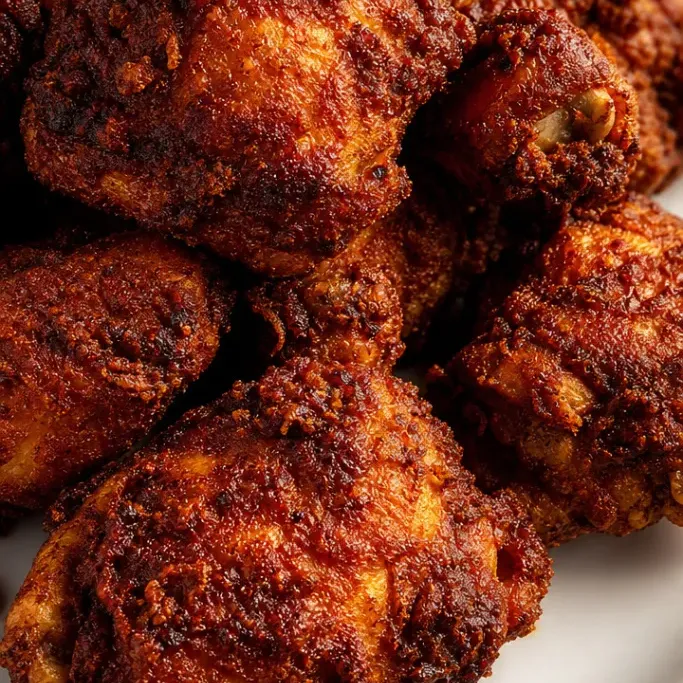
This Popeyes spicy chicken copycat gets you that iconic crunchy, fiery crust at home, and it’s genuinely close to the real thing. If the nearest Popeyes is a drive away or the line is out the door, this is the recipe to have on hand.
It takes a little patience for the soak and rest, but the hands-on time is short. Most of a weeknight is spent doing nothing while the chicken sits in the buttermilk.
Why I Love This Recipe
The crust on this chicken has real crunch, the kind that stays crisp for several minutes on the plate, because the double-dredge builds up a thick, shaggy coating that fries up hollow and crunchy.
The heat level is serious but not punishing. You get the burn on the back of your throat from cayenne and a low smoky warmth from the paprika, which is exactly what makes the original so addictive.
This is the version I keep coming back to when I want fried chicken that actually tastes like something.
Recipe Ingredients
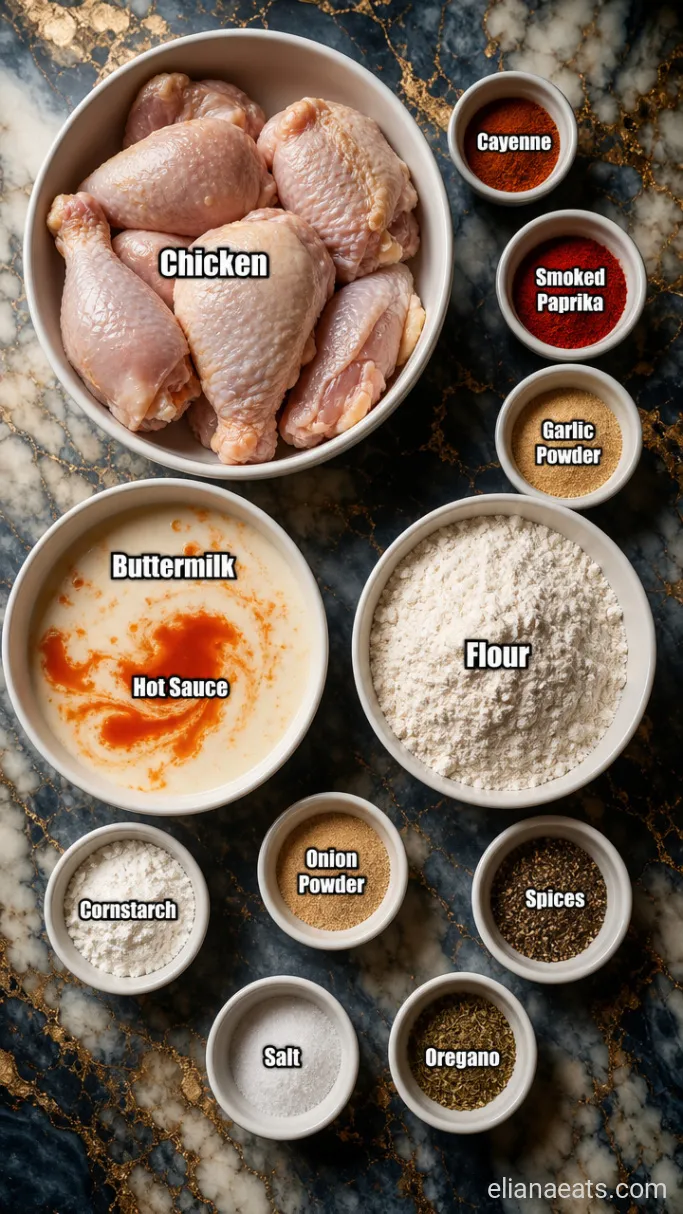
- 2 lbs bone-in, skin-on chicken pieces – Thighs and drumsticks stay juicier than breasts in a hot fry; use whatever mix you like
- 2 cups buttermilk – The acid tenderizes the meat and helps the coating stick; whole-milk buttermilk works best
- 1 tbsp hot sauce – Louisiana-style (Crystal or Frank’s) keeps it tangy without overpowering
- 2 cups all-purpose flour – The base of the dredge; spooned and leveled, not packed
- 3 tbsp cornstarch – Adds extra crunch to the crust
- 2 tsp salt – Divided between the marinade and the dredge
- 2 tsp cayenne pepper – The main source of heat; reduce to 1 tsp if you want mild
- 2 tsp smoked paprika – Brings the smoky depth that separates this from basic fried chicken
- 1 tsp garlic powder – Background savory note
- 1 tsp onion powder – Rounds out the seasoning without adding moisture
- 1 tsp black pepper – Freshly ground has noticeably more bite
- 1 tsp dried oregano – A small amount adds an earthy, slightly bitter backbone
- Vegetable oil for frying – You need enough to submerge the chicken at least halfway, about 4 to 5 cups in a Dutch oven
Variations / Substitutions
- Boneless thighs instead of bone-in – They fry faster (about 7 to 8 minutes per side at 325°F / 163°C) and make great sandwiches.
- Gluten-free swap – Replace the 2 cups all-purpose flour with a 1:1 gluten-free flour blend; the crust is a little more delicate but still crunchy.
- Lower heat version – Cut the cayenne to 1/2 tsp and omit the hot sauce from the buttermilk soak; you keep the flavor without the burn.
- Air fryer option – Spray the coated pieces generously with oil, air fry at 390°F (200°C) for 20 to 22 minutes, flipping once; the crust won’t be quite as craggy but it’s a decent weeknight shortcut.
- Pickle brine in the soak – Swap 1/2 cup of the buttermilk for dill pickle brine; it adds a faint tang that works really well with the heat.
- Extra crispy skin – After dredging, let the coated chicken rest on a rack for 15 minutes before frying; the coating dries slightly and fries up even crunchier.
If you like this style of coating, the Popeyes Chicken Sandwich Copycat Recipe uses the same dredge on a brioche bun with pickles and mayo.
How To Make Popeyes Spicy Chicken
Step 1: Soak the Chicken in Buttermilk
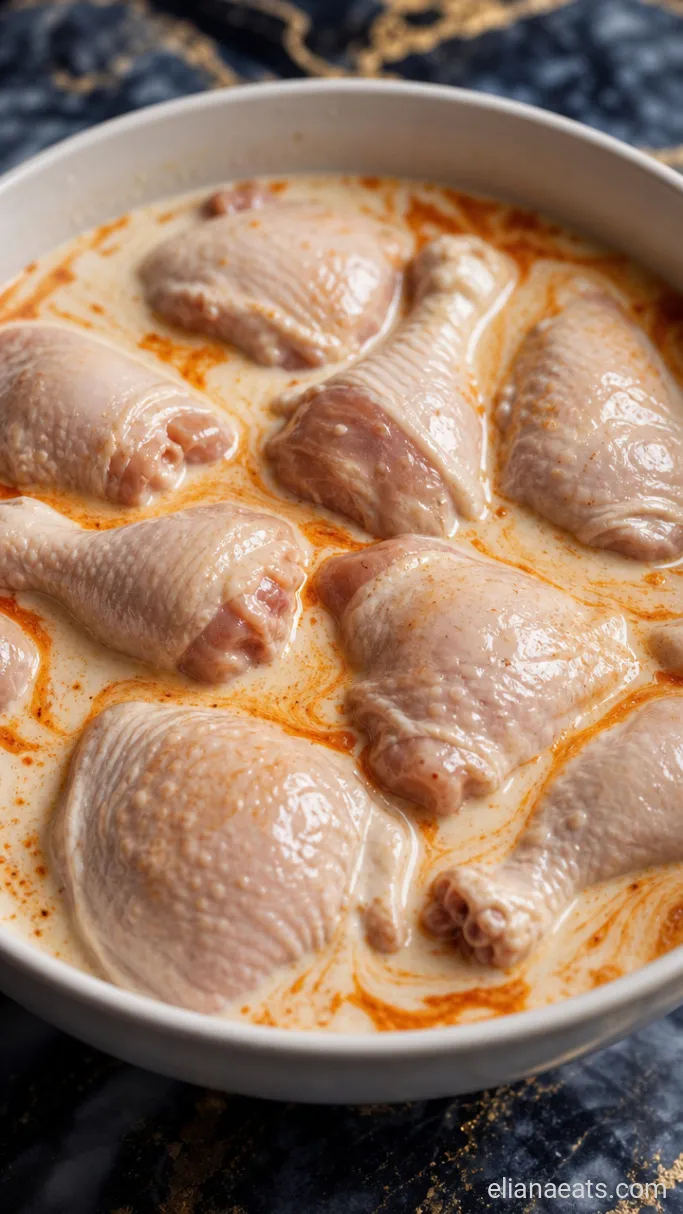
In a large bowl, combine the 2 cups buttermilk, 1 tbsp hot sauce, 1 tsp salt, and 1 tsp of the cayenne pepper. Add the 2 lbs chicken pieces, turning to coat. Cover the bowl and refrigerate for at least 4 hours, or overnight for the best result.
The buttermilk will look slightly thicker and pinkish after it sits with the chicken. That’s fine. The longer soak really does make a difference to how tender the meat feels when you bite through the crust.
Don’t skip salting the marinade. Seasoning from the inside out is what keeps the meat from tasting flat under all that coating.
Step 2: Build the Spice Dredge
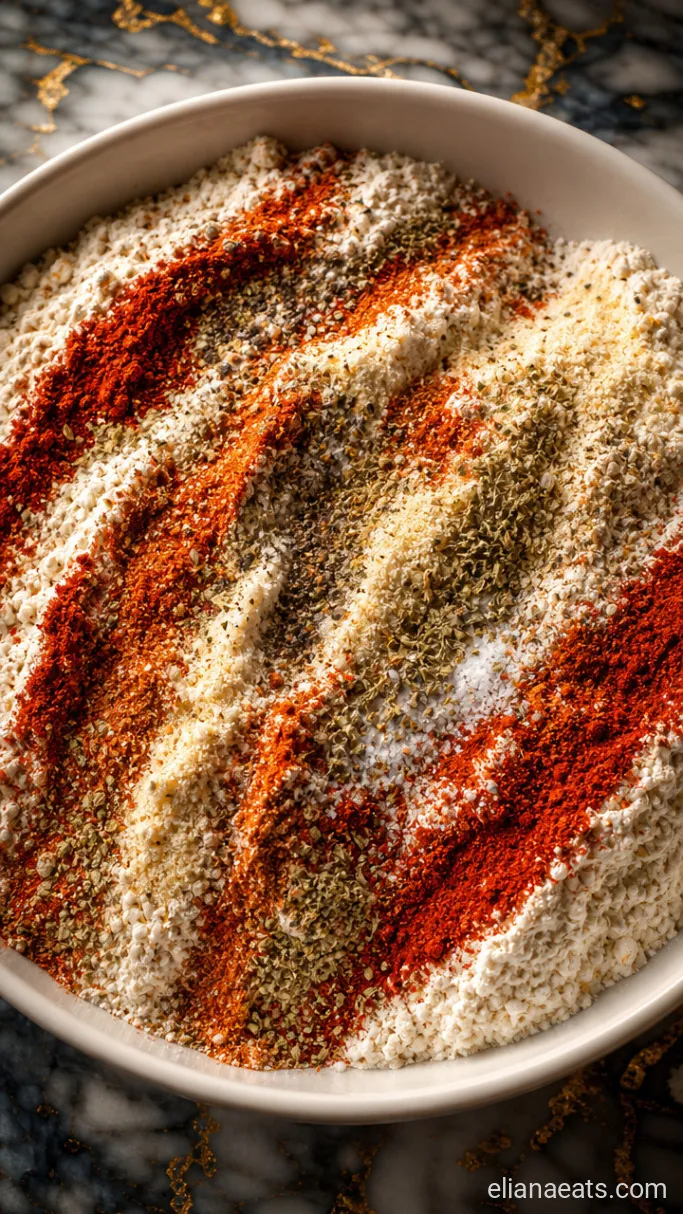
In a wide, shallow dish, whisk together the 2 cups all-purpose flour, 3 tbsp cornstarch, 1 tsp salt, remaining 1 tsp cayenne pepper, 2 tsp smoked paprika, 1 tsp garlic powder, 1 tsp onion powder, 1 tsp black pepper, and 1 tsp dried oregano until everything is evenly combined.
The mixture should look rust-colored from the paprika. Give it one more stir before you start dredging to make sure the spices aren’t sitting in pockets.
A wide, shallow dish matters here. A narrow bowl makes it hard to press the coating firmly onto the chicken, and firm pressure is what creates those thick, uneven patches that fry up crunchy.
Step 3: Dredge the Chicken Twice
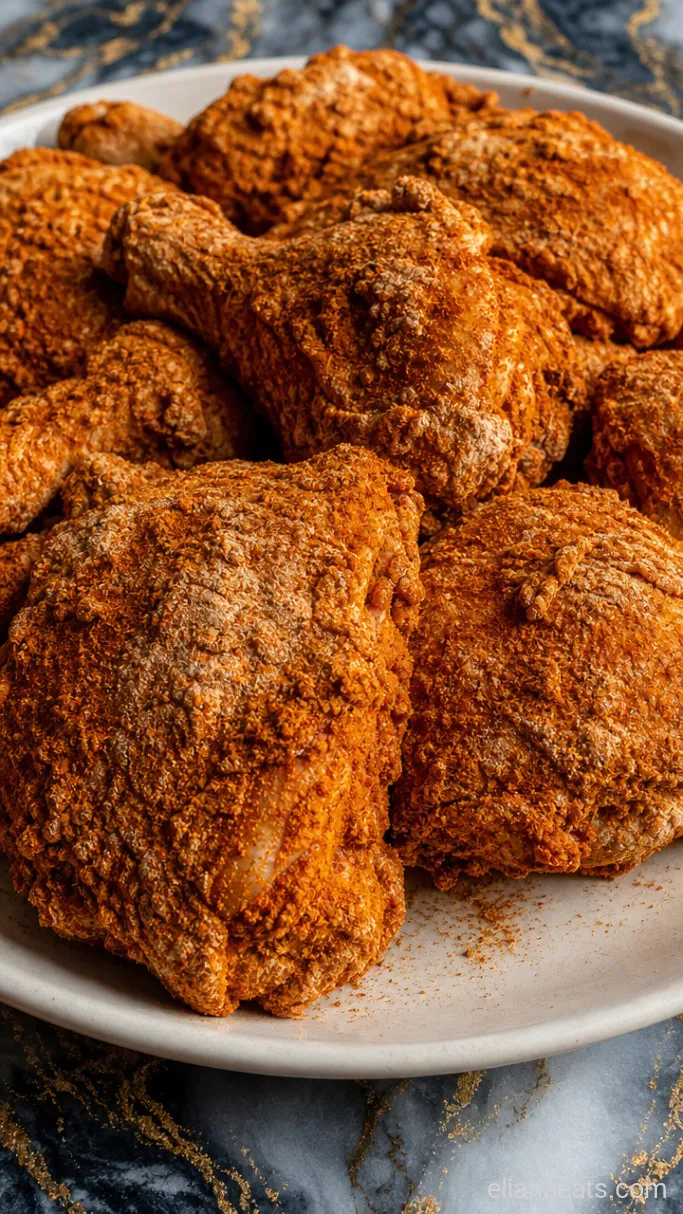
Pull 1 piece of chicken from the buttermilk, let the excess drip off for a few seconds, then press it firmly into the flour mixture. Flip and press again. Shake off any loose flour, dip the piece back into the buttermilk briefly, then dredge a second time, pressing firmly. Set on a wire rack. Repeat with all pieces.
After the second dredge, the coating should look thick and shaggy, with visible clumps. Those clumps become the crunchy bits. If the surface looks smooth and even, the crust will be thin.
Step 4: Fry the Chicken to 165°F
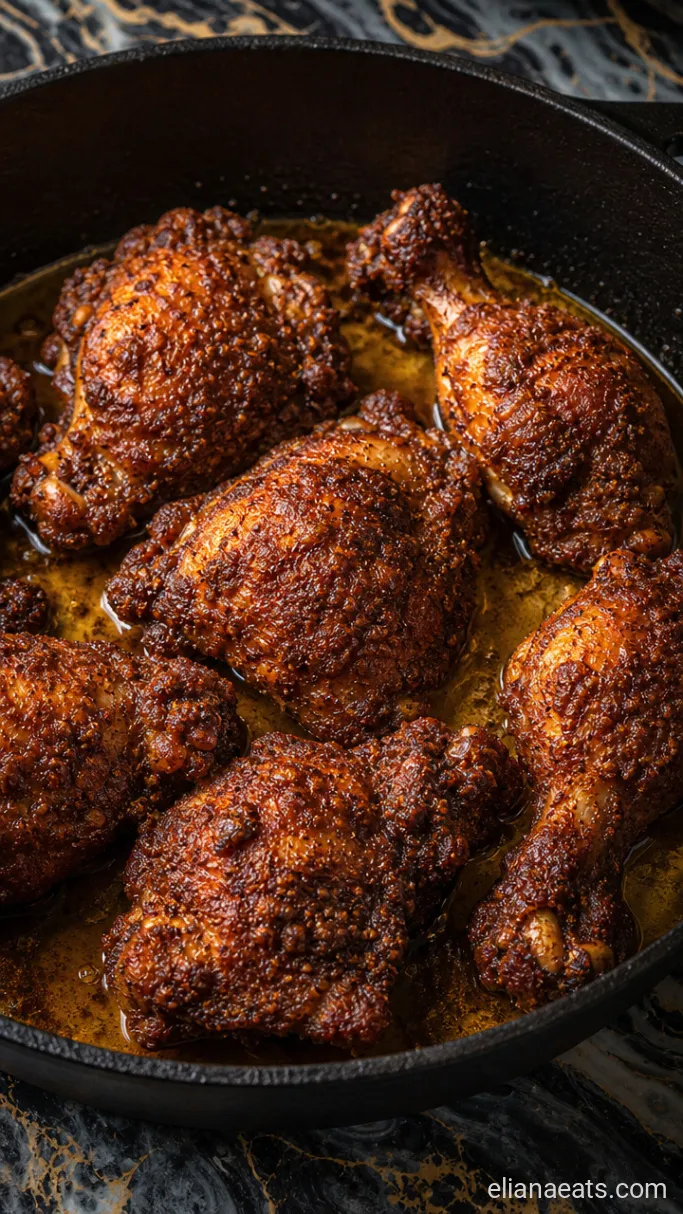
Pour enough vegetable oil into a Dutch oven or deep heavy pot to come up about 3 inches. Heat over medium-high to 325°F (163°C) on an instant-read thermometer. Carefully lower 2 to 3 pieces into the oil (do not crowd the pot) and fry for 12 to 15 minutes, turning once halfway through, until the internal temperature reaches 165°F (74°C).
The oil temperature will drop when you add the chicken. That’s expected. Keep the heat at medium-high to bring it back up and maintain it between 300°F and 325°F (149°C and 163°C) throughout the fry. If the oil runs hotter, the crust burns before the inside cooks.
Transfer the finished pieces to a clean wire rack set over a baking sheet. Never drain fried chicken on paper towels; the steam gets trapped and softens the crust.
Step 5: Plate and Garnish
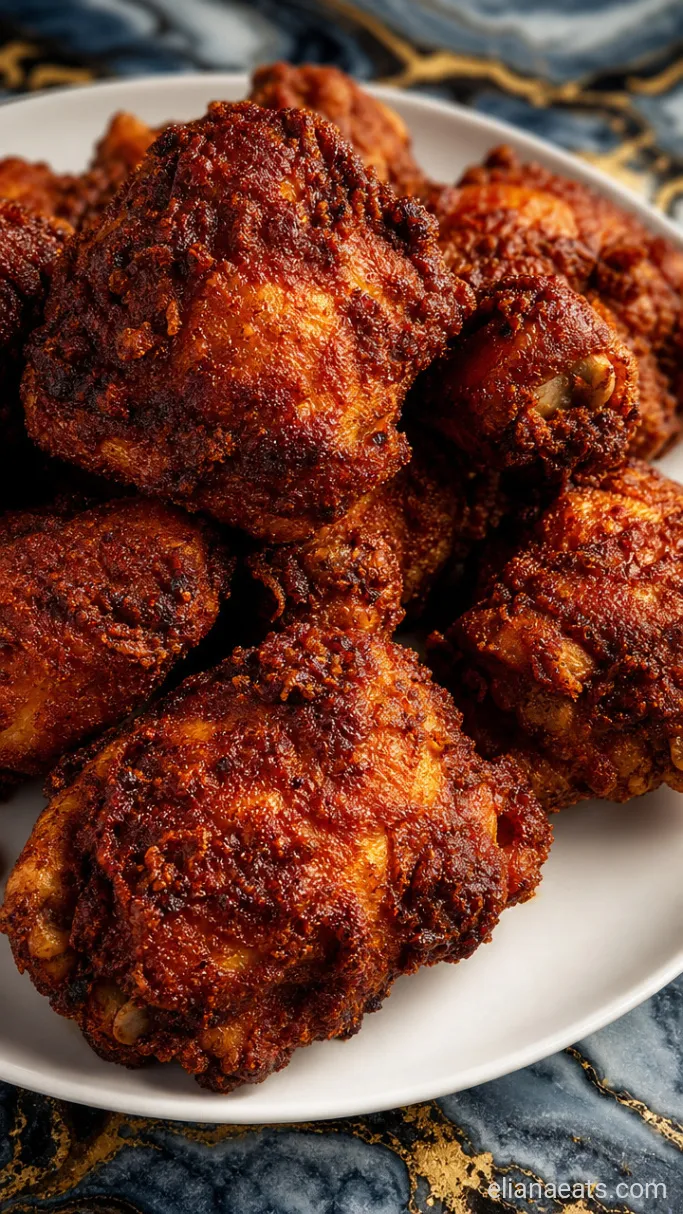
Arrange the fried chicken on a serving platter and scatter a pinch of cayenne and a few pinches of smoked paprika over the top while the crust is still hot and the oil is slightly glossy. Add a small pile of sliced pickles alongside and serve immediately.
Recipe Tips
- Use a thermometer for the oil. Guessing the temperature is the most common reason the crust comes out pale and greasy or burnt on the outside and raw in the middle. A cheap clip-on candy thermometer works fine.
- Fry in small batches. Adding too many pieces at once drops the oil temperature sharply, which means the chicken absorbs oil instead of crisping. Two or three pieces per batch is the limit for a standard Dutch oven.
- Rest the coated chicken before frying. After the second dredge, let the pieces sit on the rack for 10 to 15 minutes. The coating dries out slightly and sticks better once it hits the oil.
- Bone-in pieces need more time than you think. The coating can look done at 10 minutes while the meat near the bone is still pink. Always check the internal temp at the thickest point, away from the bone.
Cook times by piece type at 325°F (163°C):
| Piece | Approximate Fry Time | Target Internal Temp |
|---|---|---|
| Drumstick | 12 to 14 mins | 165°F (74°C) |
| Thigh (bone-in) | 14 to 16 mins | 165°F (74°C) |
| Breast (bone-in) | 16 to 18 mins | 165°F (74°C) |
| Boneless thigh | 7 to 8 mins | 165°F (74°C) |
How To Store
- Refrigerate – Let the chicken cool to room temperature, then store in an airtight container for up to 3 days.
- Reheating – The oven is the best option: place pieces on a wire rack over a baking sheet and heat at 375°F (190°C) for 12 to 15 minutes. This gets the crust reasonably crisp again. The microwave works in a hurry but the coating goes soft.
What To Serve With Popeyes Spicy Chicken
A scoop of creamy coleslaw is the natural pairing because the cold, slightly sweet crunch cuts through the heat and richness of the fried coating. Cajun rice or red beans and rice adds starchy substance that balances the spice without competing with it. Buttery, slightly sweet biscuits round out the plate the same way they do at the restaurant, giving you something mild to come back to between spicy bites.
Frequently Asked Questions
Can I marinate the chicken for less than 4 hours?
You can go as short as 2 hours and still get decent results, but the meat won’t be as tender and the coating won’t adhere as well. Overnight is genuinely worth it if you can plan ahead.
Can I use chicken breasts instead of thighs and drumsticks?
Yes, bone-in breasts work, but they take 16 to 18 minutes to reach 165°F and the meat is leaner, so it can dry out faster if the oil temperature drops too low.
What oil is best for frying this chicken?
Any neutral oil with a high smoke point works well: vegetable, canola, or peanut oil. Avoid olive oil or butter; both will burn long before the chicken cooks through.
Why is my coating falling off in the oil?
The most common cause is skipping the second dredge or not pressing the coating firmly enough onto the chicken. Letting the coated pieces rest on a rack for 10 to 15 minutes before frying also helps the coating bond.
—
Popeyes Spicy Chicken Recipe
Ingredients
Method
- Whisk together the 2 cups buttermilk, 1 tbsp hot sauce, 1 tsp salt, and 1 tsp cayenne in a large bowl. Add the 2 lbs chicken pieces, cover, and refrigerate for at least 4 hours or overnight.
- In a wide, shallow dish, whisk together the 2 cups flour, 3 tbsp cornstarch, remaining 1 tsp salt, remaining 1 tsp cayenne, 2 tsp smoked paprika, 1 tsp garlic powder, 1 tsp onion powder, 1 tsp black pepper, and 1 tsp dried oregano.
- Remove each chicken piece from the buttermilk, let the excess drip off, press firmly into the flour mixture on both sides, dip briefly back in the buttermilk, then dredge a second time. Set on a wire rack for 10 to 15 minutes.
- Heat 3 inches of vegetable oil in a Dutch oven to 325°F (163°C). Fry 2 to 3 pieces at a time for 12 to 15 minutes, turning once, until the internal temperature reads 165°F (74°C). Transfer to a clean wire rack.
- Arrange on a serving platter, dust with a pinch of cayenne and smoked paprika, and serve immediately with sliced pickles alongside.
