
Popeyes Chicken Tenders Copycat Recipe

That crispy, spiced crust on Popeyes chicken tenders is hard to forget once you’ve had it.
This copycat gets you the same thick, crunchy coating and juicy interior at home, and it comes together in about 45 minutes with pantry staples.
Why I Love This Recipe
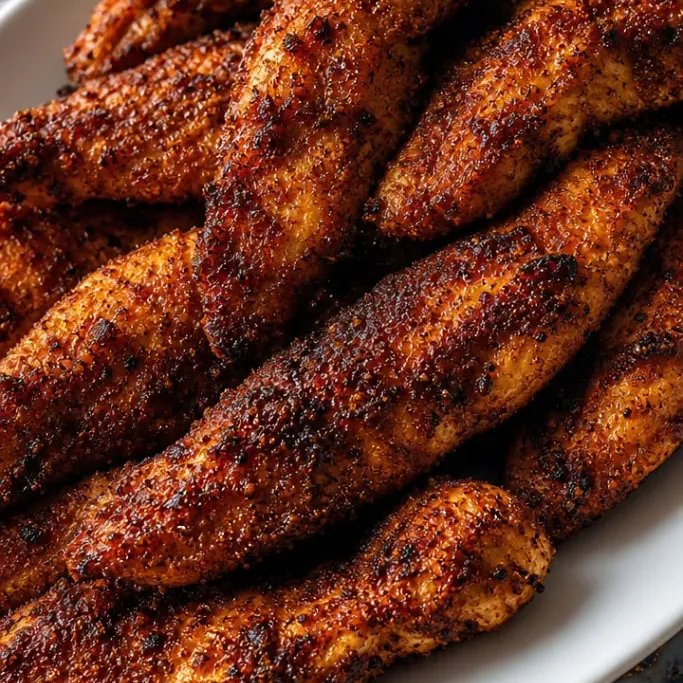
The crust here has real bite to it. A double dredge in seasoned flour gives you those thick, shaggy edges that shatter when you bite through them, and the buttermilk soak keeps the chicken from going dry under all that heat.
The spice blend is the part I keep coming back to. Smoked paprika, cayenne, and garlic powder hit the same warm, savory notes as the original without needing anything unusual.
Recipe Ingredients
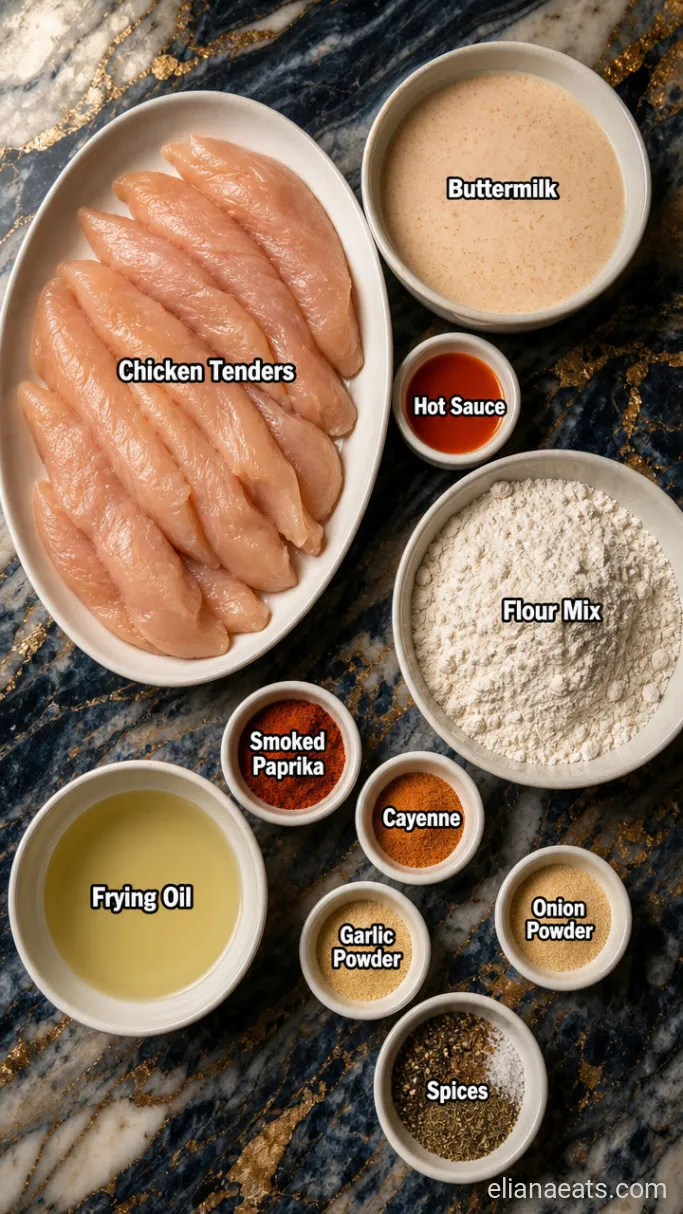
- 1.5 lbs chicken tenders – Strips work best here; if you can only find chicken breasts, slice them lengthwise into 1-inch-wide strips
- 1 cup buttermilk – Keeps the chicken moist and helps the coating stick; see substitution note below
- 1 tsp hot sauce – Stir into the buttermilk; Louisiana-style works best
- 1.5 cups all-purpose flour – The base of the coating
- 1/4 cup cornstarch – Mixed into the flour; this is what makes the crust shatter rather than just crunch
- 2 tsp smoked paprika – Adds the characteristic reddish color and a mild smoky depth
- 1 tsp garlic powder – Savory backbone of the spice blend
- 1 tsp onion powder – Rounds out the garlic
- 1 tsp cayenne pepper – Adjust down to 1/2 tsp for less heat
- 1 tsp fine salt – Seasons the coating from the outside in
- 1/2 tsp black pepper – Ground, not cracked
- 1/2 tsp dried oregano – Adds a faint herbal note that cuts through the richness
- Neutral oil for frying – Vegetable, canola, or peanut oil; you need about 2 inches in the pan
Variations / Substitutions
- No buttermilk – Mix 1 cup whole milk with 1 tbsp white vinegar, let it sit for 5 minutes, and it behaves the same way in the soak.
- Less heat – Drop the cayenne to 1/4 tsp and skip the hot sauce in the buttermilk for a mild version that still has plenty of flavor from the paprika and garlic.
- Gluten-free – Swap the all-purpose flour for a 1:1 gluten-free flour blend and increase the cornstarch to 1/3 cup; the crust will be slightly more delicate but still crisp.
- Air fryer – Spray the coated tenders generously with oil and cook at 400°F (200°C) for 12 to 14 minutes, flipping once at the halfway point; the crust will be thinner than deep-fried but still satisfying.
- Extra smoky – Replace 1 tsp of the smoked paprika with chipotle powder for a deeper, earthier heat.
- Dairy-free – Use unsweetened oat milk with 1 tbsp apple cider vinegar in place of the buttermilk; the soak still tenderizes the chicken and helps the coating grip.
If you like this style of spiced coating, Popeyes Cajun Fries Copycat Recipe is worth making alongside it.
How To Make Chicken Tenders
Step 1: Soak the Chicken in Buttermilk
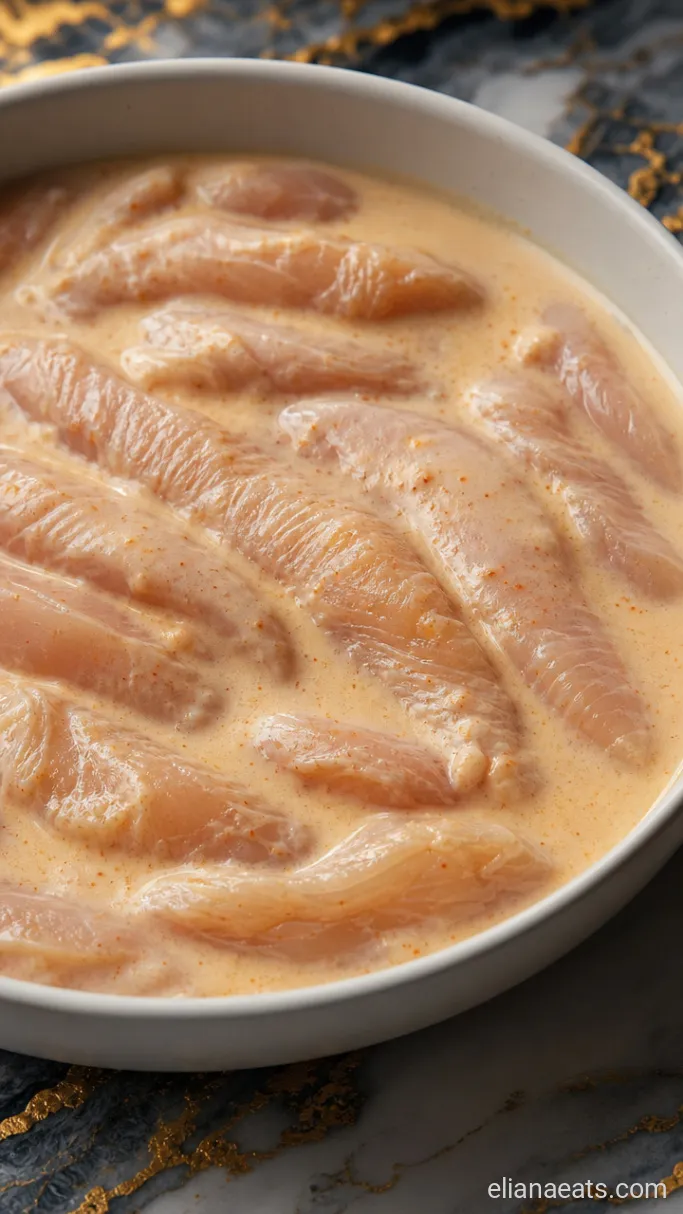
In a large bowl, whisk together the 1 cup buttermilk and 1 tsp hot sauce. Add the 1.5 lbs chicken tenders, press them down so every piece is submerged, and cover the bowl. Let them soak for at least 30 minutes at room temperature, or up to 8 hours in the fridge.
The buttermilk breaks down the surface of the meat just enough to keep it tender when it hits the hot oil. If you are going straight to frying after 30 minutes, that is fine. Longer is better, but shorter still works.
Don’t skip the soak entirely. A dry tender going into hot oil seizes up fast, and no amount of good seasoning fixes tough chicken.
Step 2: Mix the Coating
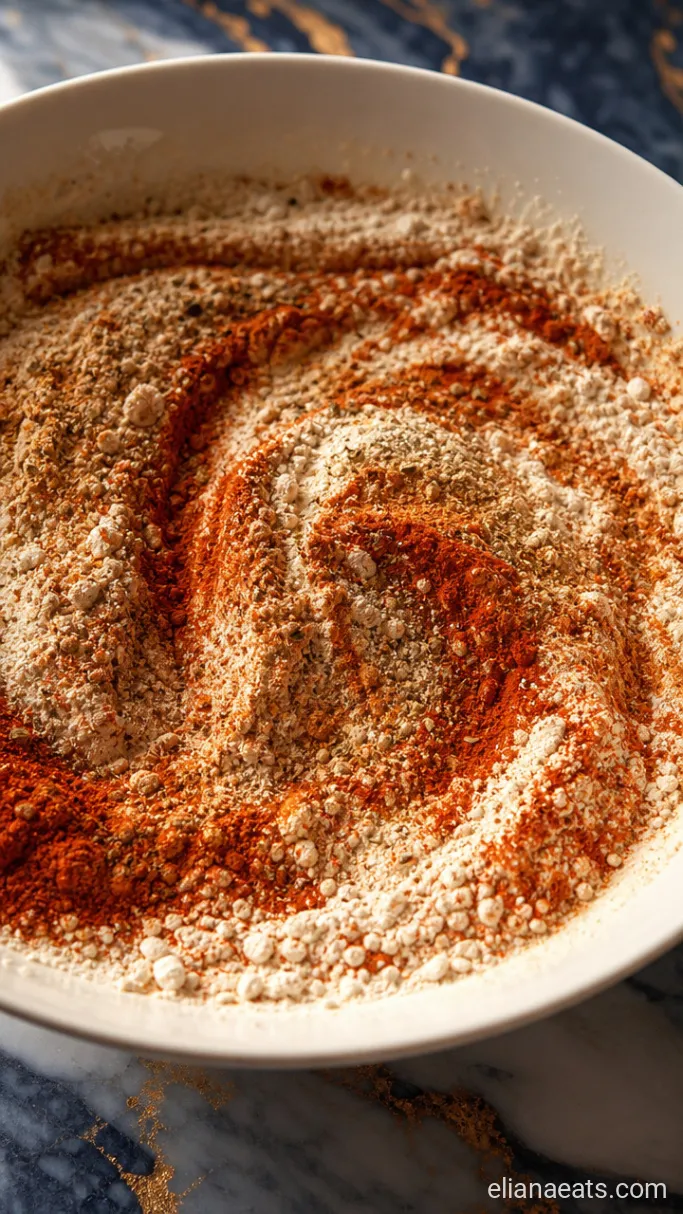
In a shallow dish or wide bowl, whisk together the 1.5 cups all-purpose flour, 1/4 cup cornstarch, 2 tsp smoked paprika, 1 tsp garlic powder, 1 tsp onion powder, 1 tsp cayenne pepper, 1 tsp fine salt, 1/2 tsp black pepper, and 1/2 tsp dried oregano until the color is uniform throughout the flour.
The mixture should look evenly orange-red with no white streaks. Whisking for about 30 seconds is enough. This is also the point to taste a tiny pinch of the dry mix and adjust the cayenne if you want less heat.
Step 3: Dredge the Tenders
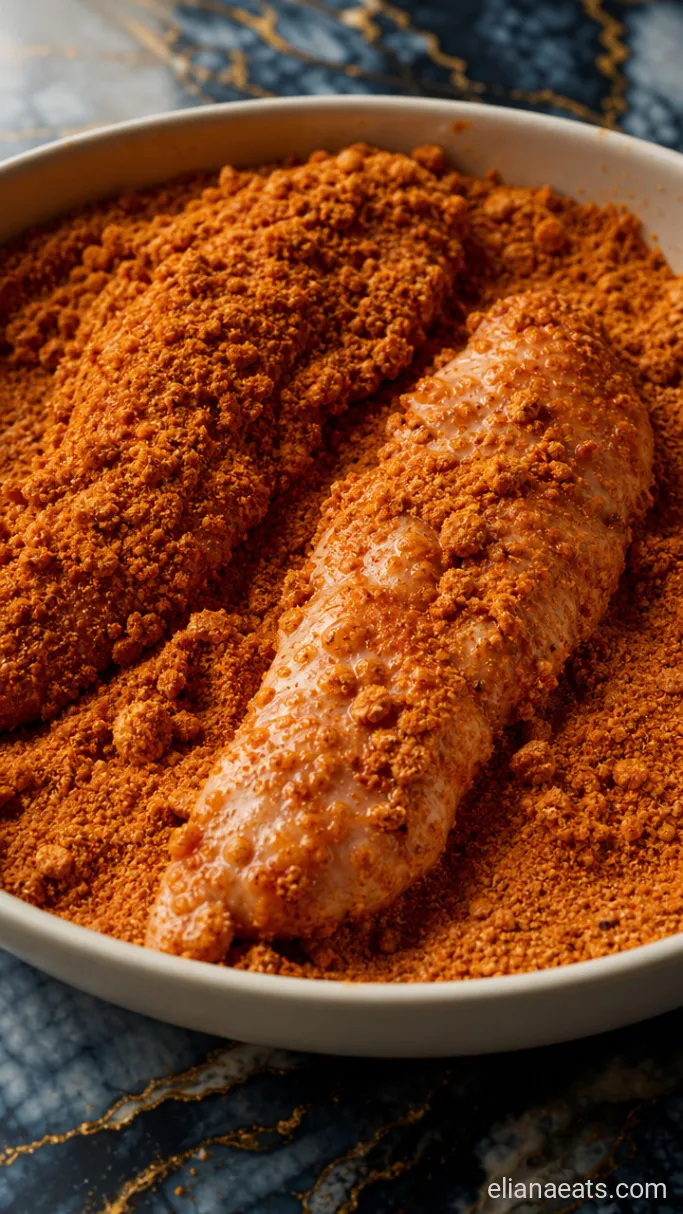
Lift a tender from the buttermilk and let the excess drip off for a second or two. Press it firmly into the flour mixture, flip it, and press again. Then dip it back into the buttermilk briefly, and press it into the flour a second time. Set it on a wire rack while you repeat with the rest.
That double dredge is what creates the thick, uneven crust with the shaggy, craggy edges. Press hard both times so the flour really grips. If the crust looks smooth and thin, it will fry up flat instead of giving you those chunky fried bits.
Let the coated tenders rest on the rack for 5 minutes before frying. The coating firms up slightly and clings better in the oil.
Step 4: Fry the Tenders
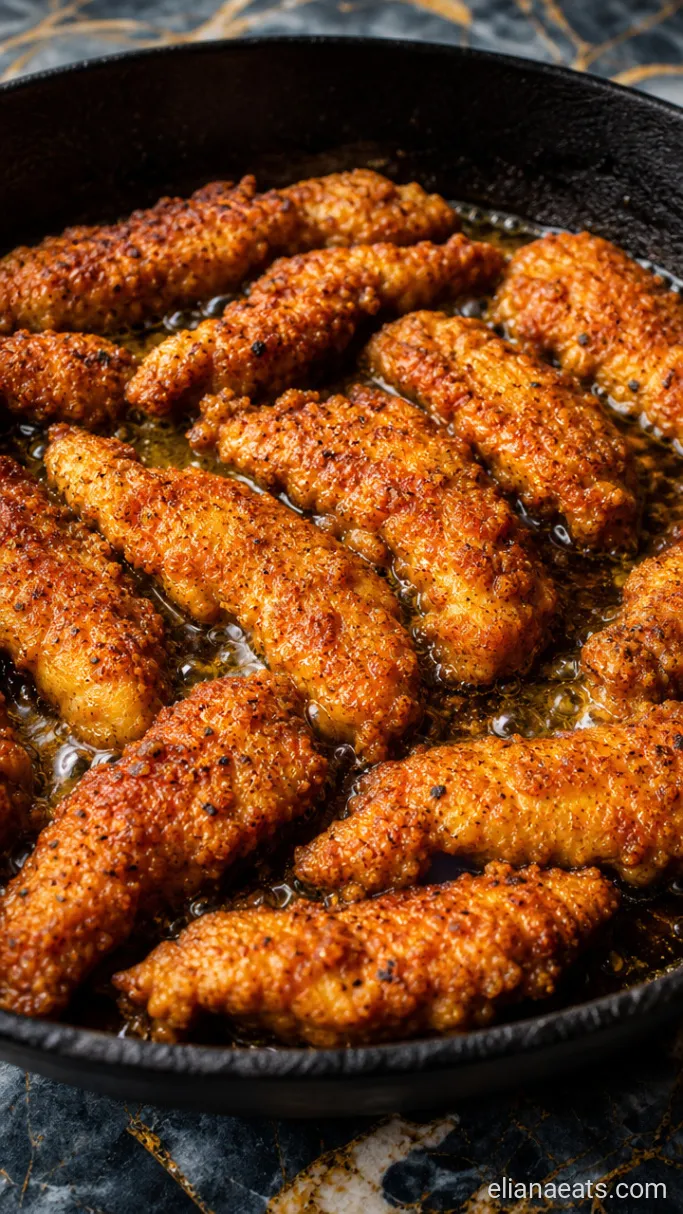
Pour enough neutral oil into a heavy skillet or Dutch oven to reach about 2 inches up the side. Heat it over medium-high until it reaches 350°F (175°C) on an instant-read thermometer. Working in batches of 3 or 4 pieces, lower the tenders carefully into the oil and fry for 4 to 5 minutes per side, keeping the oil temperature between 325°F and 350°F (165°C and 175°C) throughout.
The crust should be a deep amber-brown and visibly thick by the time you flip. If it is pale after 4 minutes, your oil was not hot enough. Do not crowd the pan; too many pieces drop the oil temperature and the crust turns greasy instead of crisp.
The internal temperature of the chicken should hit 165°F (74°C) before it comes out. Cut into the thickest piece if you are unsure — the meat should be white through to the center with no translucent pink.
Step 5: Drain and Plate the Tenders
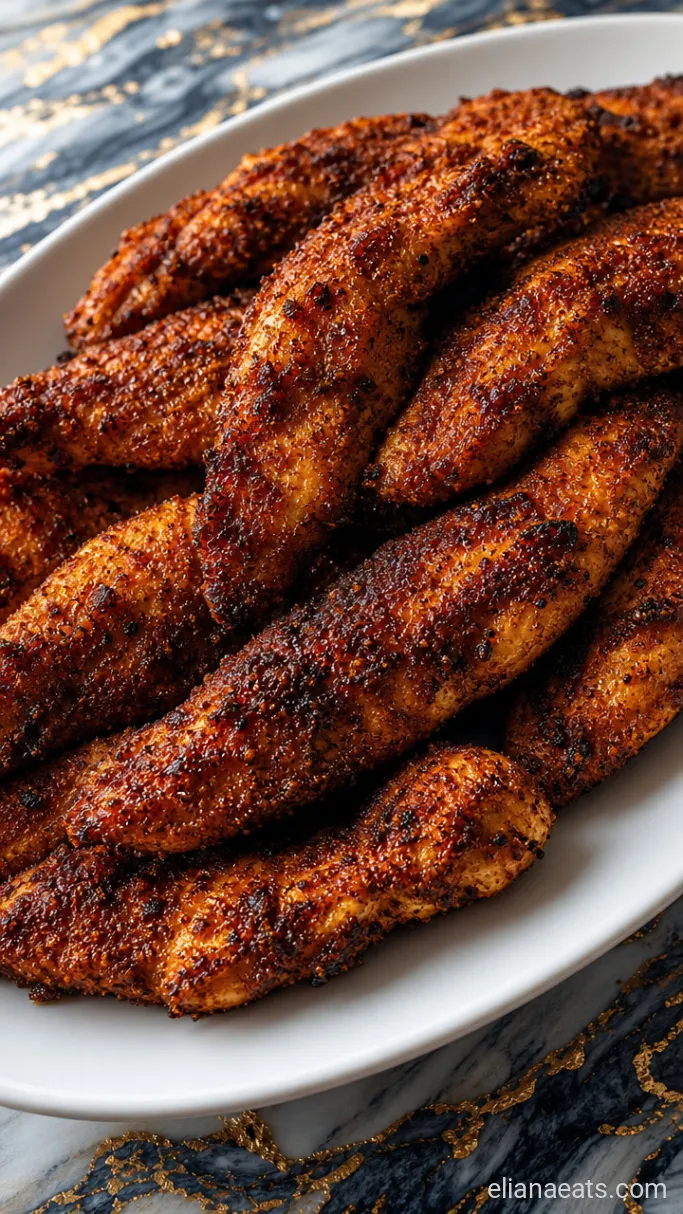
Transfer the fried tenders to a clean wire rack set over a sheet pan and let them sit for 2 minutes so the steam escapes from the bottom. Arrange them on a plate, sprinkle lightly with a pinch of extra salt while they are still hot, and serve with your dipping sauce alongside.
Recipe Tips
- Oil temperature is everything. A thermometer is not optional here. Oil that is too cool makes the coating absorb grease before it sets; oil that is too hot burns the outside before the chicken cooks through. Get it to 350°F (175°C) before the first tender goes in.
- Use a wire rack, not paper towels. Draining on paper towels traps steam under the crust and softens it within minutes. A rack lets air circulate all the way around.
- Cornstarch is what separates a crunchy crust from a brittle one. Don’t swap it out or skip it — it changes the texture in a way that flour alone cannot.
- Batch-fry with intention. Let the oil return to 350°F (175°C) between batches. It only takes about 90 seconds and the difference in crust quality is noticeable.
Frying times vary by tender size:
| Tender thickness | Time per side | Target internal temp |
|---|---|---|
| Thin (under 1/2 inch) | 3 to 4 mins | 165°F (74°C) |
| Standard (1/2 to 3/4 inch) | 4 to 5 mins | 165°F (74°C) |
| Thick (over 3/4 inch) | 5 to 6 mins | 165°F (74°C) |
How To Store
- Refrigerate – Store cooled tenders in an airtight container for up to 3 days.
- Reheating – A 400°F (200°C) oven for 8 to 10 minutes on a wire rack brings most of the crunch back. A microwave reheats the chicken but the crust goes soft, so only go that route if you don’t care about texture.
What To Serve With Chicken Tenders
A creamy coleslaw balances the heat in the spice blend and adds a cool crunch between bites of fried chicken. Mashed potatoes with a pool of gravy make a natural pairing because the richness of the gravy fills the same role that a dipping sauce does, just a heavier one. Corn on the cob is a classic alongside fried chicken because the sweetness genuinely tempers the cayenne heat without dulling it. For something quick, a simple pickle and white bread setup cuts through the grease in a way that feels intentional rather than lazy.
Frequently Asked Questions
Can I make these ahead and keep them crispy?
You can coat the tenders up to 2 hours ahead and keep them on the wire rack in the fridge uncovered, but fry them right before eating. The crust does not hold well once fried and rested.
Can I bake these instead of frying?
Yes. Bake on a wire rack at 425°F (220°C) for 20 to 22 minutes, flipping once at the 12-minute mark. Spray generously with oil before baking. The crust will be thinner and crispier at the edges rather than thick and shaggy.
What oil gives the best flavor?
Peanut oil is the closest to what fast-food restaurants use and it has a high smoke point, but canola or vegetable oil both fry cleanly without adding any competing flavor.
Can I freeze the cooked tenders?
Yes. Freeze in a single layer on a sheet pan first, then transfer to a bag once solid. Reheat from frozen at 400°F (200°C) for 14 to 16 minutes on a wire rack. They won’t be quite as crunchy as fresh, but they’re still worth making.
—
Popeyes Chicken Tenders Copycat Recipe
Ingredients
Method
- Whisk together the buttermilk and hot sauce in a large bowl, add the chicken tenders, and soak for at least 30 minutes at room temperature or up to 8 hours in the fridge.
- Whisk together the flour, cornstarch, smoked paprika, garlic powder, onion powder, cayenne, salt, black pepper, and oregano in a shallow dish until evenly combined.
- Lift each tender from the buttermilk, press firmly into the flour mixture, dip back into the buttermilk, then press into the flour a second time. Rest the coated tenders on a wire rack for 5 minutes.
- Heat 2 inches of neutral oil in a heavy skillet to 350°F (175°C). Fry the tenders in batches of 3 to 4 for 4 to 5 minutes per side until deep amber and cooked through to 165°F (74°C). Return oil to temperature between batches.
- Transfer to a wire rack for 2 minutes, sprinkle with a pinch of salt, and serve immediately with dipping sauce.
