
Popeyes Cajun Turkey Copycat Recipe

This Popeyes Cajun Turkey copycat recipe brings that bold, spiced, buttery bird home so you can have it on your table any night of the week, not just once a year. The original is famous for its deeply seasoned skin and juicy meat, and this version gets you there without any mystery.
The whole process is more hands-on than ordering, but the results are completely in your control.
Why I Love This Recipe
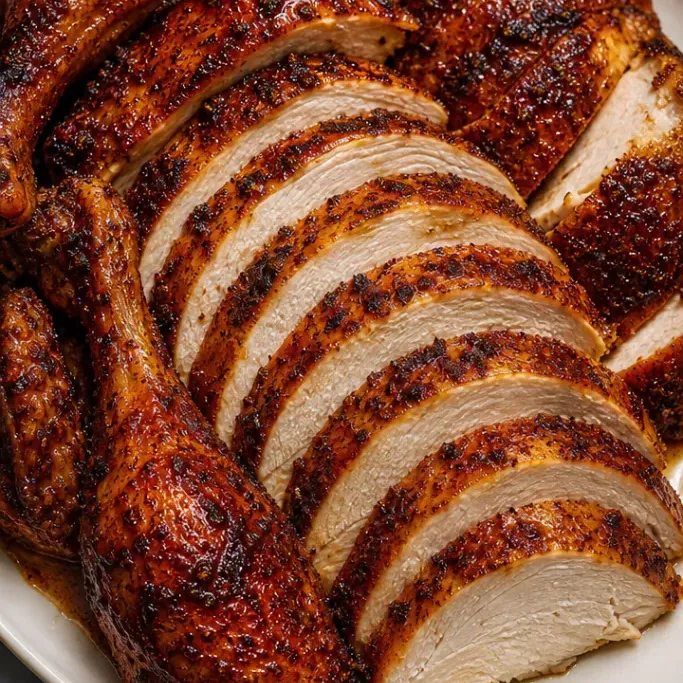
The skin comes out genuinely crisp and rust-colored from the Cajun spice rub, and underneath it the butter baste keeps everything from drying out.
This is the version I keep coming back to for a crowd because you can prep almost everything the night before. Less scrambling on the day you actually need it.
It tastes sharp and smoky, with a real chili heat that builds slowly rather than hitting all at once.
Recipe Ingredients
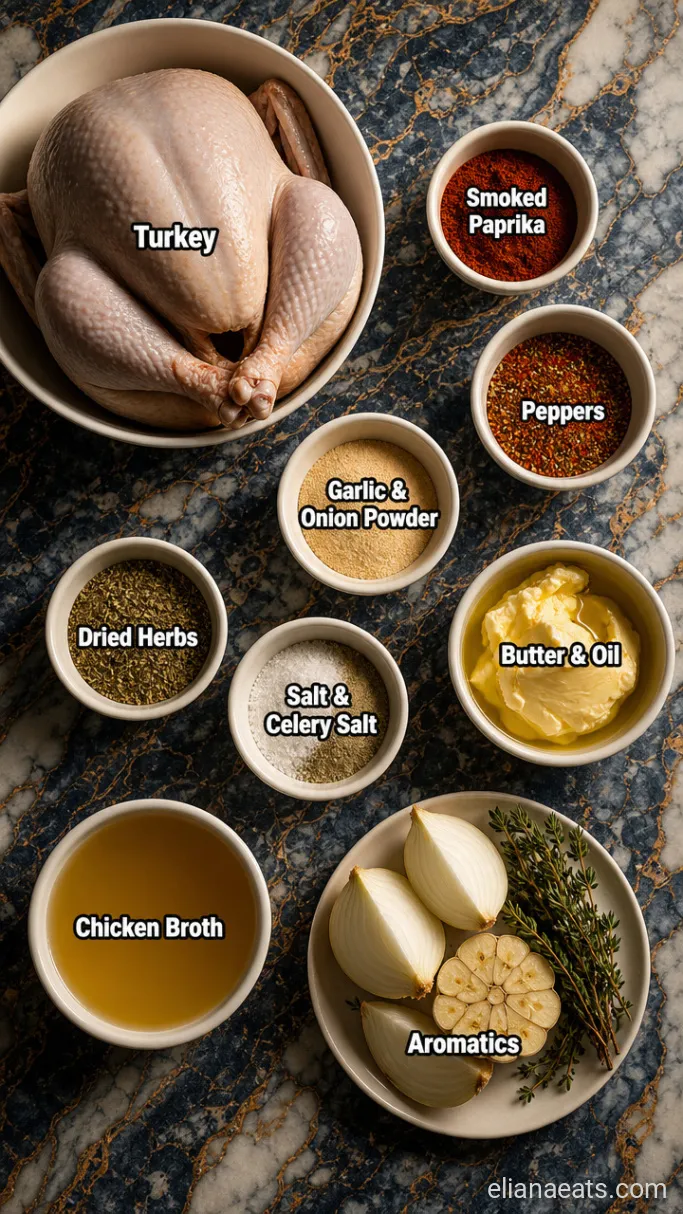
- 1 whole turkey (12 to 14 lbs) – Thawed completely if frozen; pat very dry before seasoning
- 6 tbsp unsalted butter, softened – Goes under and over the skin; unsalted lets you control the salt level
- 2 tbsp olive oil – Helps the rub stick and encourages browning
- 1 tbsp kosher salt – Use kosher, not table salt; the coarser grind seasons more evenly
- 2 tsp smoked paprika – The smoky backbone of the Cajun flavor
- 2 tsp garlic powder – Adds savory depth throughout the rub
- 2 tsp onion powder – Rounds out the garlic without overpowering
- 1.5 tsp cayenne pepper – This is where the heat comes from; reduce to 1 tsp for a milder bird
- 1.5 tsp dried thyme – Earthy and herbal, classic in Cajun seasoning
- 1.5 tsp dried oregano – Adds a faint bitterness that balances the butter
- 1 tsp black pepper, freshly ground – Freshly ground makes a noticeable difference here
- 1 tsp white pepper – Gives a slower, deeper heat than black pepper alone
- 0.5 tsp celery salt – A subtle background note that ties the spices together
- 1 large onion, quartered – Goes inside the cavity for aromatics, not for eating
- 1 head of garlic, halved crosswise – Same purpose as the onion; adds fragrance while roasting
- 4 sprigs fresh thyme – Inside the cavity alongside the onion and garlic
- 2 cups low-sodium chicken broth – Goes in the roasting pan to keep the drippings from burning
Variations / Substitutions
- Butter swap – Use a good dairy-free butter stick (not spread) and the skin will still brown and crisp up well.
- Cayenne reduction – Drop it to 0.5 tsp and the rub stays Cajun in character but loses most of the sharp heat.
- Smoked paprika to regular paprika – You lose the smoke note; add a pinch of chipotle powder to compensate.
- Chicken broth to turkey broth – The drippings will taste slightly richer and more savory.
- Dried thyme and oregano to fresh – Use 1 tbsp of each fresh herb instead of the dried amount; press them into a paste with the butter.
- White pepper to additional black pepper – The heat profile simplifies but the rub still works fine.
If you enjoy big, spiced roast birds, the Popeyes Spicy Fried Chicken Copycat Recipe is worth a look next.
How To Make Cajun Turkey
Step 1: Rub the Turkey with Butter and Spices
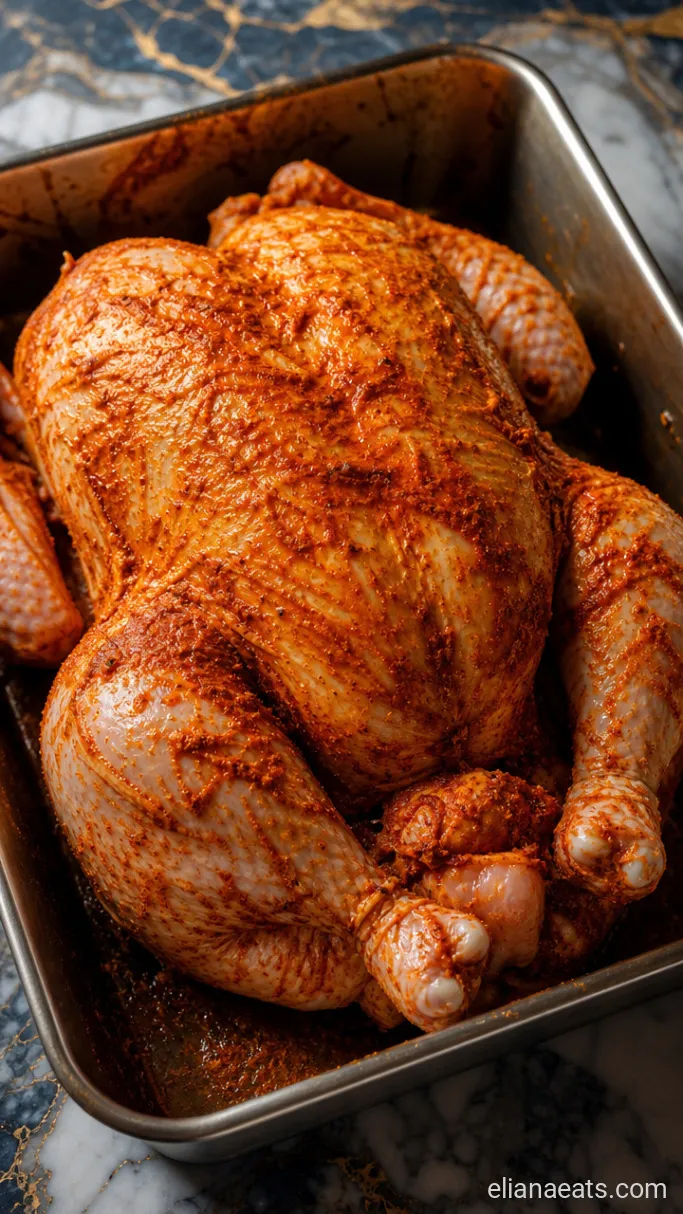
Set your oven to 325°F (165°C) while you work on the bird. In a small bowl, combine the 1 tbsp kosher salt, 2 tsp smoked paprika, 2 tsp garlic powder, 2 tsp onion powder, 1.5 tsp cayenne pepper, 1.5 tsp dried thyme, 1.5 tsp dried oregano, 1 tsp black pepper, 1 tsp white pepper, and 0.5 tsp celery salt. Stir that dry mix into the 6 tbsp softened butter along with the 2 tbsp olive oil until you have a thick, deeply colored paste.
Pat the turkey completely dry with paper towels. Loosen the skin over the breast and thighs by sliding your fingers carefully underneath. Push about half the butter paste directly onto the meat under the skin, spreading it as evenly as you can. Rub the remaining paste all over the outside of the bird. The skin will look orange-red and slightly greasy, which is exactly what you want.
The most common mistake at this stage is skipping the pat-dry. Wet skin traps steam and you end up with something that looks pale and soft rather than the crackly, rust-colored exterior the original is known for.
Step 2: Fill the Cavity with Aromatics
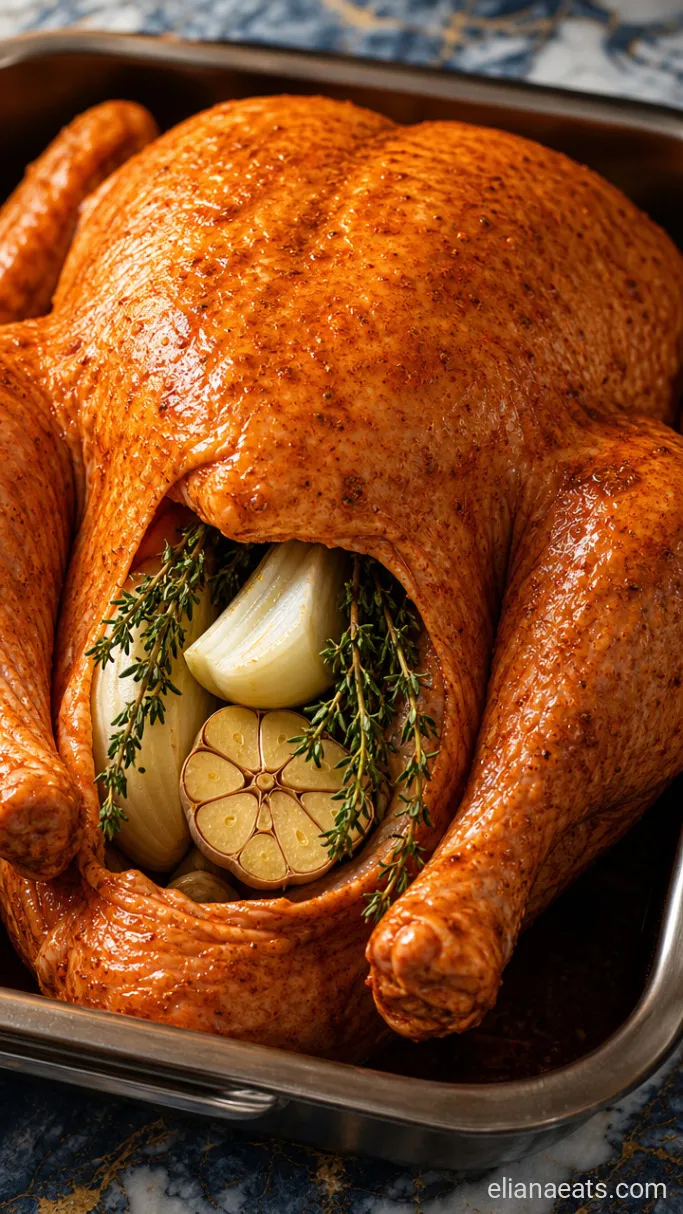
Stuff the turkey cavity loosely with the 1 large quartered onion, the 1 head of garlic halved crosswise, and the 4 sprigs fresh thyme. Do not pack them in tightly. You want air to circulate inside the bird so the inside cooks evenly.
Tuck the wing tips behind the back and tie the legs together with kitchen twine. This keeps the shape compact so the bird roasts more evenly and looks better when it comes out.
Step 3: Roast the Turkey
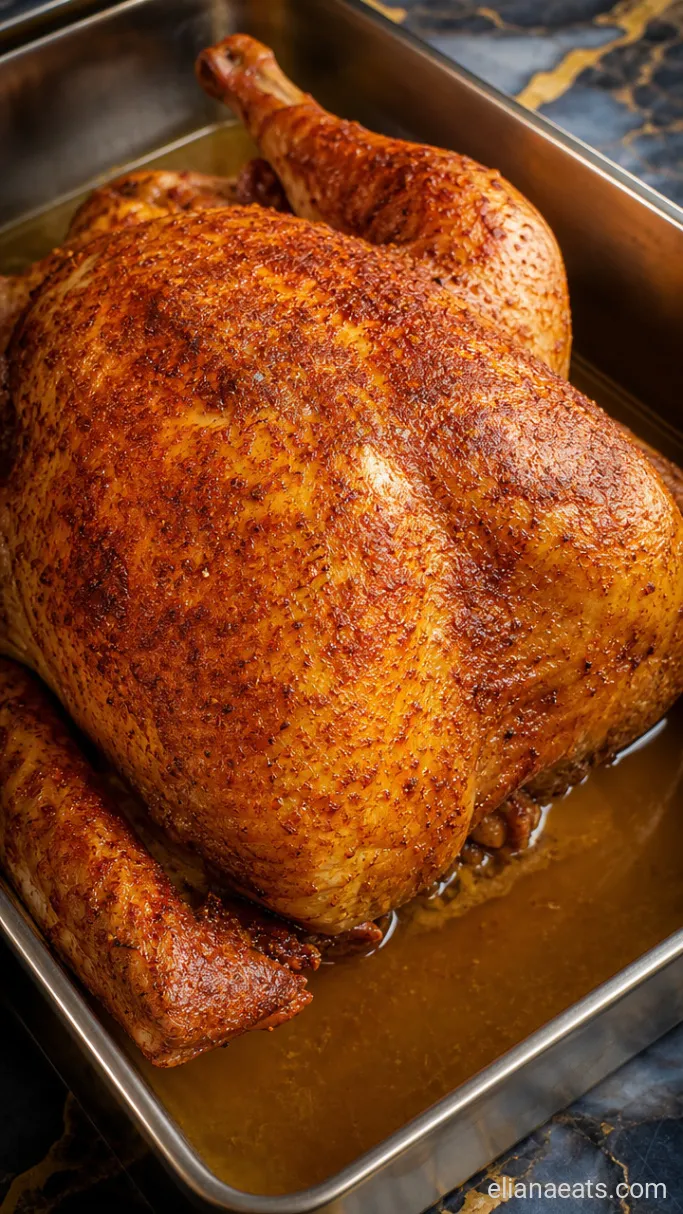
Place the turkey breast-side up on a rack set inside a large roasting pan. Pour the 2 cups low-sodium chicken broth into the bottom of the pan, making sure it does not touch the turkey itself. Roast at 325°F (165°C), uncovered.
Plan on about 13 to 15 minutes per pound. For a 12 to 14 lb bird that puts you somewhere between 2.5 and 3.5 hours. Rotate the pan once halfway through roasting so the skin browns evenly on both sides.
If the skin starts looking very dark before the internal temperature is close to done, tent the breast loosely with aluminum foil. You are not sealing it, just slowing the browning.
Step 4: Baste the Bird
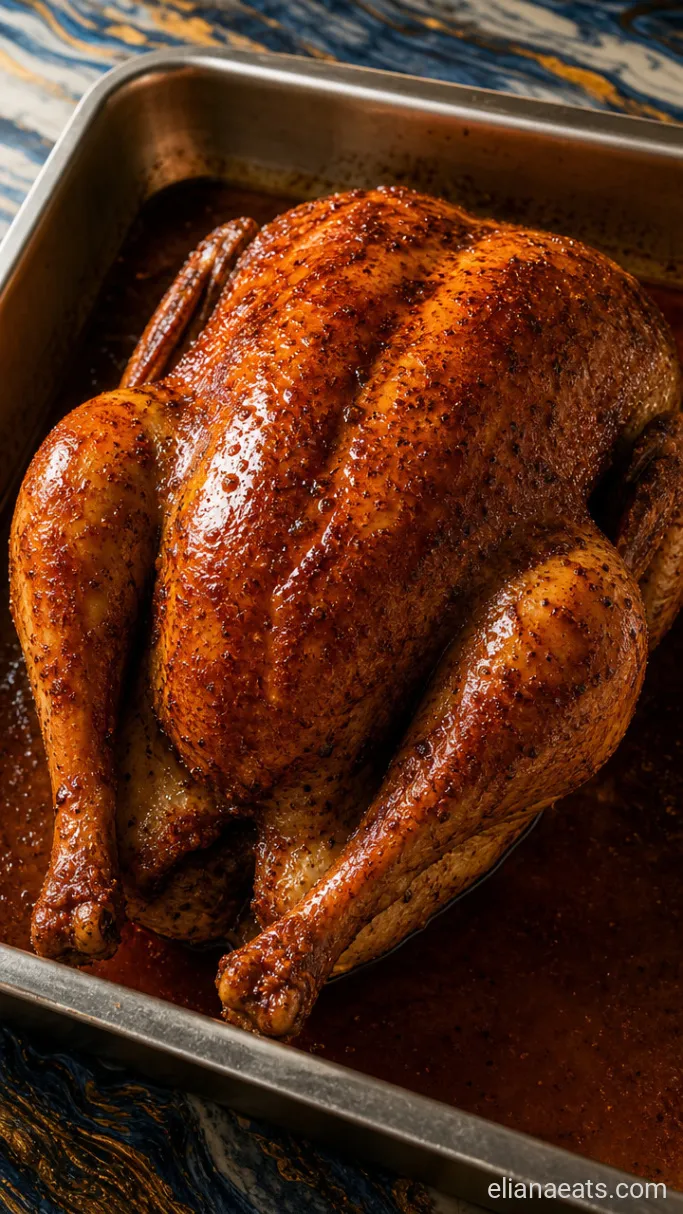
Starting about 1 hour into roasting, baste the turkey every 45 minutes using the pan drippings. Tip the roasting pan slightly and use a spoon or baster to pull up the liquid and drag it over the top and sides of the bird.
Each round of basting deepens the color and builds up a thin, lacquered layer of spiced fat on the skin. By the second or third baste, the surface should be a rich, dark terracotta shade with slightly blistered edges around the thighs.
Do not skip the basting rounds. The broth in the pan prevents the drippings from scorching, but if the pan goes dry, add another 0.5 cup of water or broth.
Step 5: Check the Temperature and Rest the Turkey
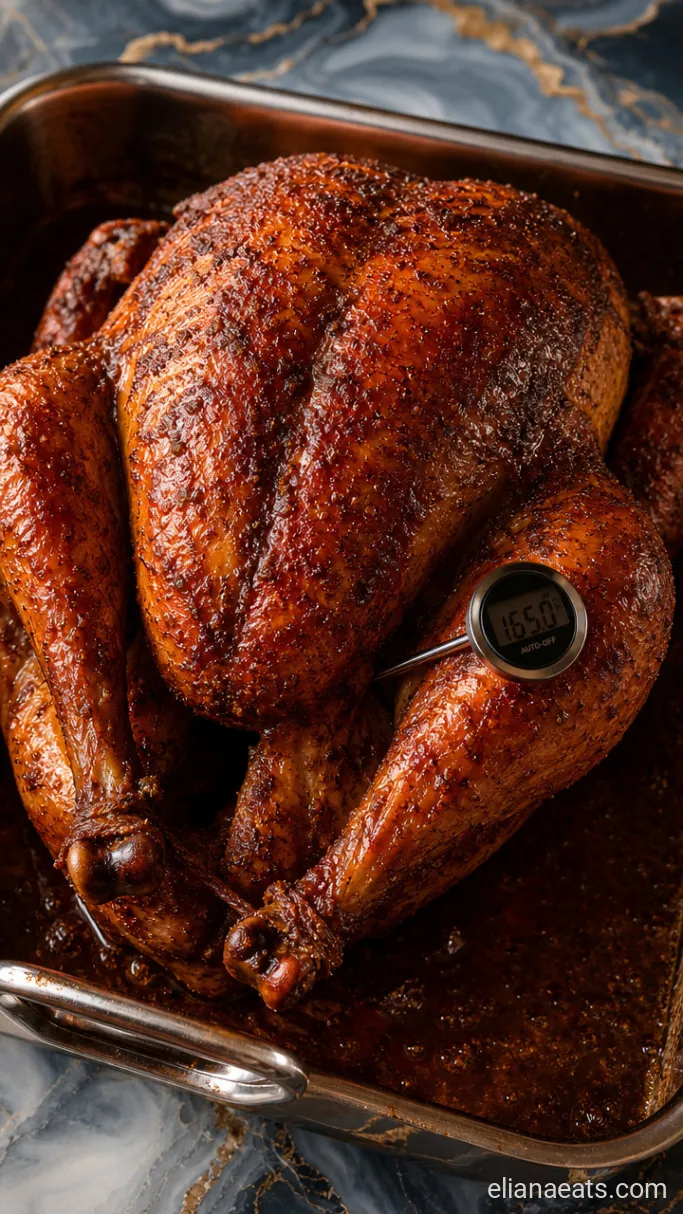
Check the internal temperature starting at the 2.5-hour mark. Insert an instant-read thermometer into the thickest part of the thigh without touching bone. You are looking for 165°F (74°C). The breast should also read at least 160°F (71°C) at this point.
Pull the turkey from the oven when the thigh hits 165°F (74°C). Tent it loosely with foil and let it rest for 30 minutes before carving. The temperature will continue to climb a few degrees and the juices will redistribute through the meat.
Step 6: Carve and Plate the Turkey
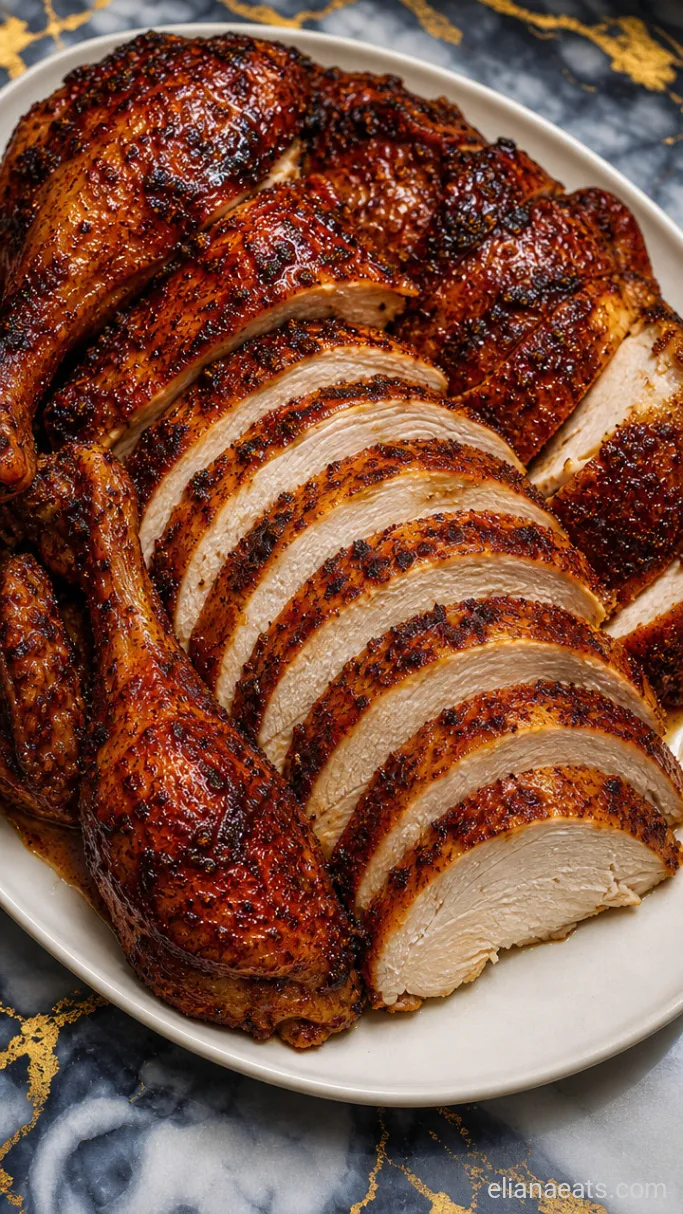
After resting, remove the foil and transfer the turkey to a large carving board. Start by removing the legs and thighs, then slice the breast meat against the grain into 0.5-inch slices. Arrange the slices and pieces on a large serving platter skin-side up so the deep, rust-colored crust stays visible.
Spoon a few tablespoons of the pan drippings over the top, scatter a few fresh thyme sprigs around the platter, and serve immediately.
Recipe Tips
- Dry-brine if you have time. After rubbing the butter paste on, leave the turkey uncovered in the fridge overnight. The salt draws out moisture and then pulls it back in, seasoning deeper into the meat and drying the skin even further.
- Use a roasting rack. Setting the turkey directly on the pan traps steam under the bird and softens the underside. A rack keeps the air moving all around it.
- Check your thermometer. An inaccurate thermometer is the most common reason turkeys come out dry. Test yours in boiling water before you start; it should read 212°F (100°C).
- Save the drippings. The liquid left in the roasting pan after the turkey comes out makes an intensely flavored gravy base. Strain it and use it immediately, or refrigerate it for up to 3 days.
Roasting times vary with turkey size, so use this as your guide (internal target of 165°F / 74°C in the thigh):
| Turkey Weight | Time at 325°F (165°C) | Check Temp At |
|---|---|---|
| 10 to 12 lbs | 2.5 to 3 hrs | 2 hrs |
| 12 to 14 lbs | 3 to 3.5 hrs | 2.5 hrs |
| 14 to 16 lbs | 3.5 to 4 hrs | 3 hrs |
| 16 to 18 lbs | 4 to 4.25 hrs | 3.5 hrs |
How To Store
- Refrigerate – Carve the leftovers off the bone, store in an airtight container, and refrigerate for up to 4 days.
- Reheating – Lay slices in a baking dish, add a splash of broth or drippings, cover with foil, and warm at 300°F (150°C) for about 15 to 20 minutes. This keeps the meat from drying out the way a microwave will.
What To Serve With Cajun Turkey
Cornbread dressing is a natural partner because its mild, slightly sweet flavor balances the heat of the Cajun rub without competing with it. A simple collard greens dish also works well since the slight bitterness cuts through the richness of the buttery skin. If you want something to soak up the pan drippings, a bowl of dirty rice does that better than plain mashed potatoes would, since the rice is already seasoned in a similar Louisiana direction.
Frequently Asked Questions
Can I use this rub on a bone-in turkey breast instead of a whole bird?
Yes. Use the same quantities of rub and butter and roast at 325°F (165°C) for about 1.5 to 2 hours, checking for an internal temperature of 165°F (74°C) in the thickest part.
Can I prep this turkey the day before and refrigerate it overnight?
Yes, and it actually improves the result. The salt in the rub has more time to work into the meat, and the skin dries out further in the fridge, which gives you a better crust.
Does the butter paste burn at this oven temperature?
At 325°F (165°C) it should not. The olive oil in the paste raises the smoke point slightly, and the low roasting temperature is gentle enough that the butter browns slowly rather than scorching.
What if my turkey skin is browning too fast before the inside is done?
Tent the breast with a loose piece of aluminum foil. You can add it at any point during roasting and remove it for the last 20 minutes if you want the color to deepen again.
Popeyes Cajun Turkey Recipe
Ingredients
Method
- Preheat the oven to 325°F (165°C). Mix the kosher salt, smoked paprika, garlic powder, onion powder, cayenne, dried thyme, dried oregano, black pepper, white pepper, and celery salt into the softened butter and olive oil to form a paste. Pat the turkey dry, loosen the skin, push half the paste under the skin, and rub the rest over the outside.
- Stuff the cavity loosely with the quartered onion, halved garlic head, and fresh thyme sprigs. Tuck the wing tips back and tie the legs together with kitchen twine.
- Place the turkey breast-side up on a rack in a large roasting pan. Pour the chicken broth into the bottom of the pan. Roast uncovered at 325°F (165°C) for 3 to 3.5 hours for a 12 to 14 lb bird, rotating the pan once halfway through.
- Starting at 1 hour into roasting, baste the turkey with the pan drippings every 45 minutes. If the pan goes dry, add an extra 0.5 cup of broth.
- Check the internal temperature at the 2.5-hour mark. Pull the turkey when the thigh reads 165°F (74°C) and the breast reads at least 160°F (71°C). Tent loosely with foil and rest for 30 minutes.
- Carve the turkey, arrange the pieces skin-side up on a large platter, and spoon pan drippings over the top before serving.
