
Panda Express Beijing Beef Copycat Recipe

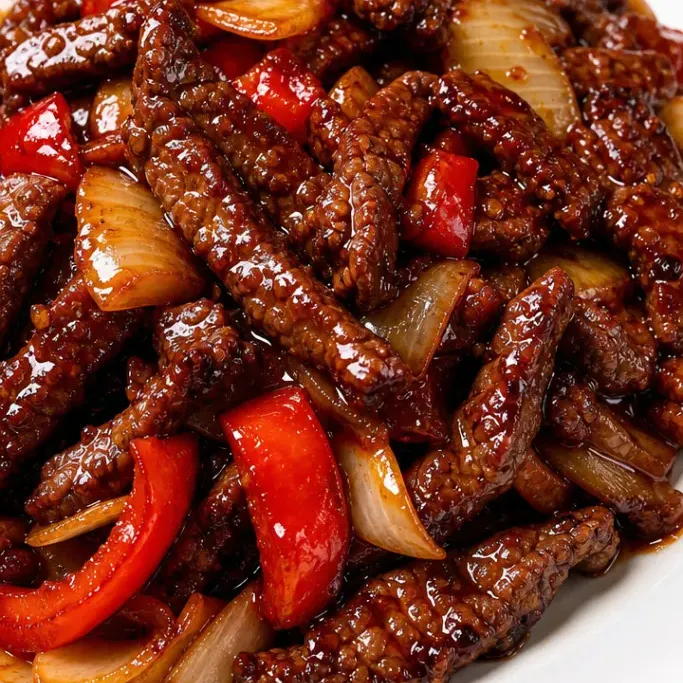
This Panda Express Beijing beef recipe brings home one of the chain’s most popular dishes: crispy strips of beef tossed in a sticky, tangy-sweet sauce with bell peppers and onion. If you want that specific combination of crunch and glaze without a drive-through line, this is the one to make tonight.
It comes together in about 40 minutes, and the ingredients are the kind you probably already have in your pantry.
Why I Love This Recipe
The sauce is what keeps me coming back to this one. It’s genuinely sour from rice vinegar, sweet from the brown sugar, and has a slow heat from the chili flakes that builds as you eat. It’s not a generic stir-fry sauce.
The cornstarch coating gives the beef real crispy edges that hold up even after you toss it in the sauce, which most versions skip and then wonder why the texture falls flat.
This is the version I keep coming back to on nights when I want something that feels like a real takeout order, not a sad approximation.
Recipe Ingredients
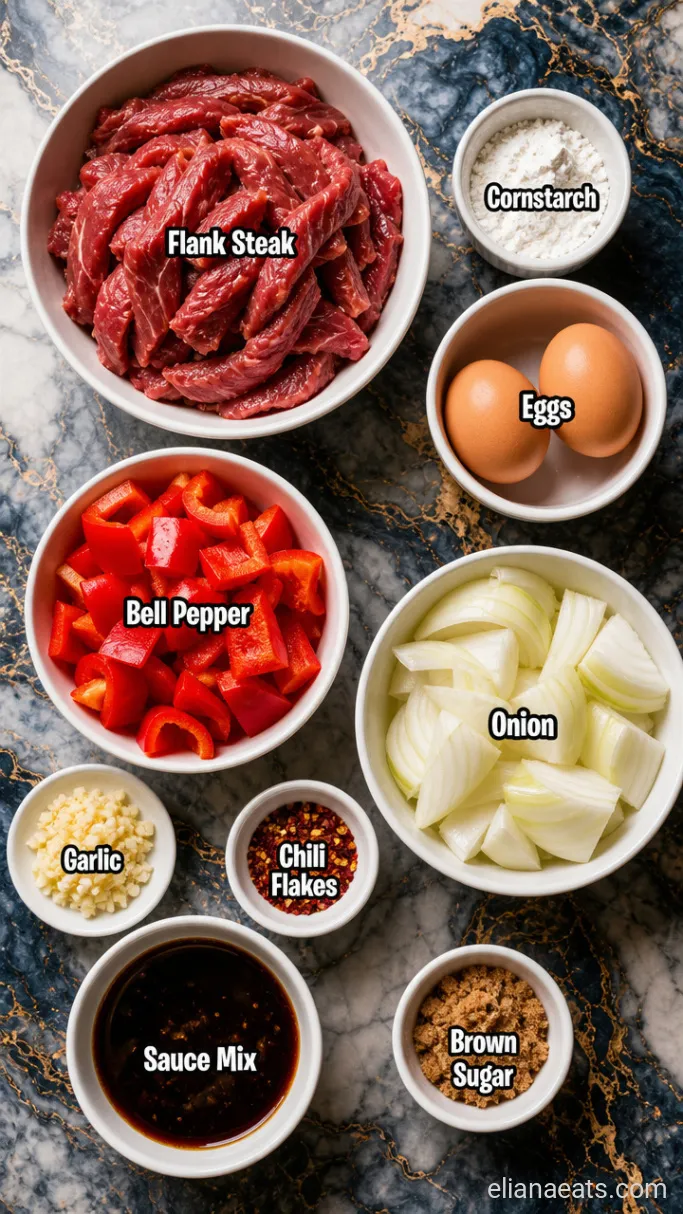
- 1 lb flank steak – Slice it thin against the grain for tenderness; skirt steak also works
- 1/2 cup cornstarch – Creates the crispy coating on the beef; do not substitute flour
- 2 large eggs – Beaten, for the wet dredge that helps cornstarch stick
- 1/2 cup vegetable oil – For shallow-frying the beef strips; any neutral oil works
- 1 red bell pepper – Cut into 1-inch pieces; adds sweetness and color
- 1/2 medium yellow onion – Sliced into wedges; softens slightly but keeps some bite
- 3 cloves garlic – Minced; builds the savory base of the sauce
- 1 tsp red chili flakes – Gives the sauce its background heat; adjust to your taste
- 3 tbsp soy sauce – Use low-sodium if you are salt-sensitive
- 3 tbsp rice vinegar – The main source of the sauce’s sharp, bright note
- 3 tbsp brown sugar – Balances the vinegar and helps the sauce go sticky
- 2 tbsp tomato paste – Adds depth and the slight red color the sauce needs
- 1 tbsp hoisin sauce – Rounds out the sauce with a hint of umami
- 1 tsp sesame oil – Stirred in at the end for aroma; a little goes a long way
- 1 tbsp water – To thin the sauce slightly if it tightens too fast
- 2 tsp cornstarch – Mixed into the sauce to help it cling to the beef
Variations / Substitutions
- Chicken thighs instead of flank steak – Boneless, skinless thighs hold up to frying well and give you a slightly softer bite, though you lose the beefiness the dish is known for.
- Tamari instead of soy sauce – Works as a straight swap and makes the recipe gluten-free if you also swap the hoisin for a gluten-free version.
- Coconut sugar instead of brown sugar – The sauce will be slightly less glossy but the flavor is nearly the same.
- Extra chili flakes or a teaspoon of sambal oelek – If you want real heat rather than background warmth, add either of these to the sauce.
- Coconut aminos instead of soy sauce – Produces a slightly sweeter, lighter sauce; works if you are avoiding soy.
- Red wine vinegar instead of rice vinegar – A reasonable stand-in when that is what you have; the sauce will be a touch sharper.
If you enjoy this kind of sticky stir-fry sauce, Panda Express Orange Chicken Copycat Recipe is worth making next.
How To Make Beijing Beef
Step 1: Slice and Coat the Beef
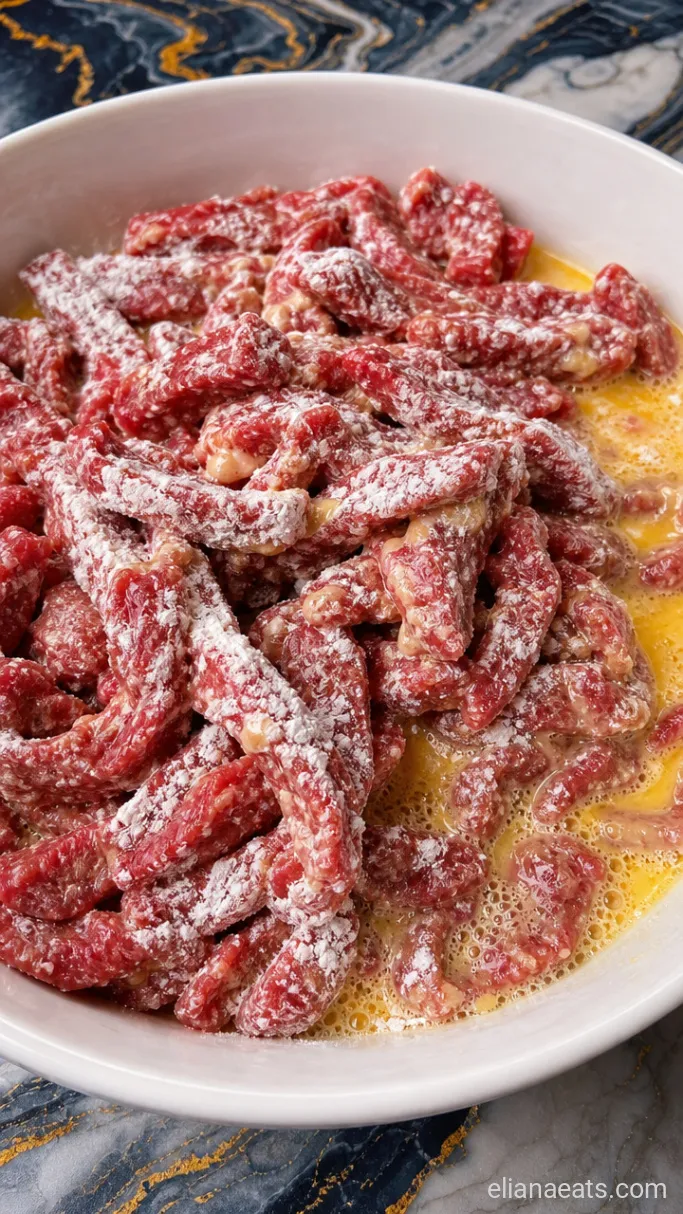
Cut the 1 lb flank steak into thin strips, about 1/4 inch thick, slicing against the grain. Beat the 2 large eggs in one shallow bowl and measure the 1/2 cup cornstarch into a second bowl. Working in batches, dip each strip in the egg, let the excess drip off, then dredge it in the cornstarch and press lightly so it sticks. Set the coated strips on a plate in a single layer.
The coating will look dry and slightly chalky, which is exactly right. Any strips that look wet or patchy will not fry up crispy, so make sure each one has an even, fully covered surface.
Step 2: Fry the Beef Strips
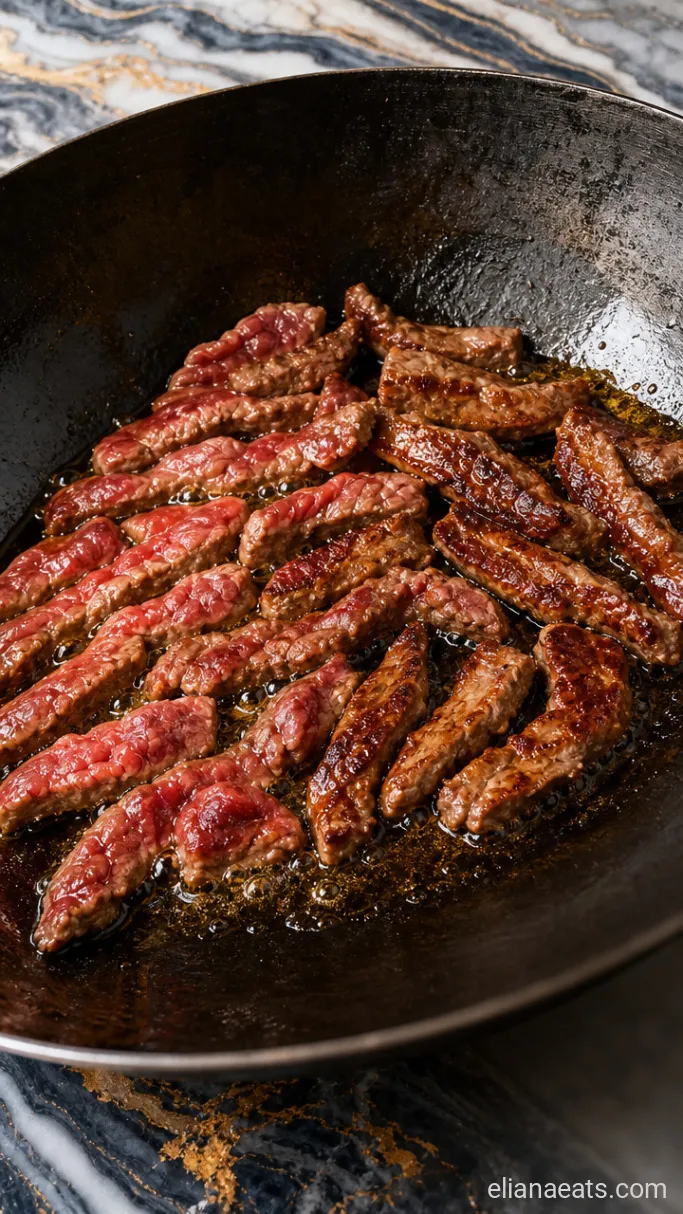
Heat the 1/2 cup vegetable oil in a large skillet or wok over medium-high heat until it shimmers, about 2 minutes. Working in 2 or 3 batches so you do not crowd the pan, fry the beef strips for 2 to 3 minutes per side until the coating is golden and set a crisp crust. Transfer each batch to a paper towel-lined plate.
Crowding the pan is the most common mistake here. If you add too many strips at once, the oil temperature drops, the coating absorbs oil instead of crisping, and you end up with something soggy. Small batches make a real difference.
Do not worry if the strips look a little darker in spots. As long as they are not burnt, those darker edges are where the most crunch will be.
Step 3: Whisk the Sauce
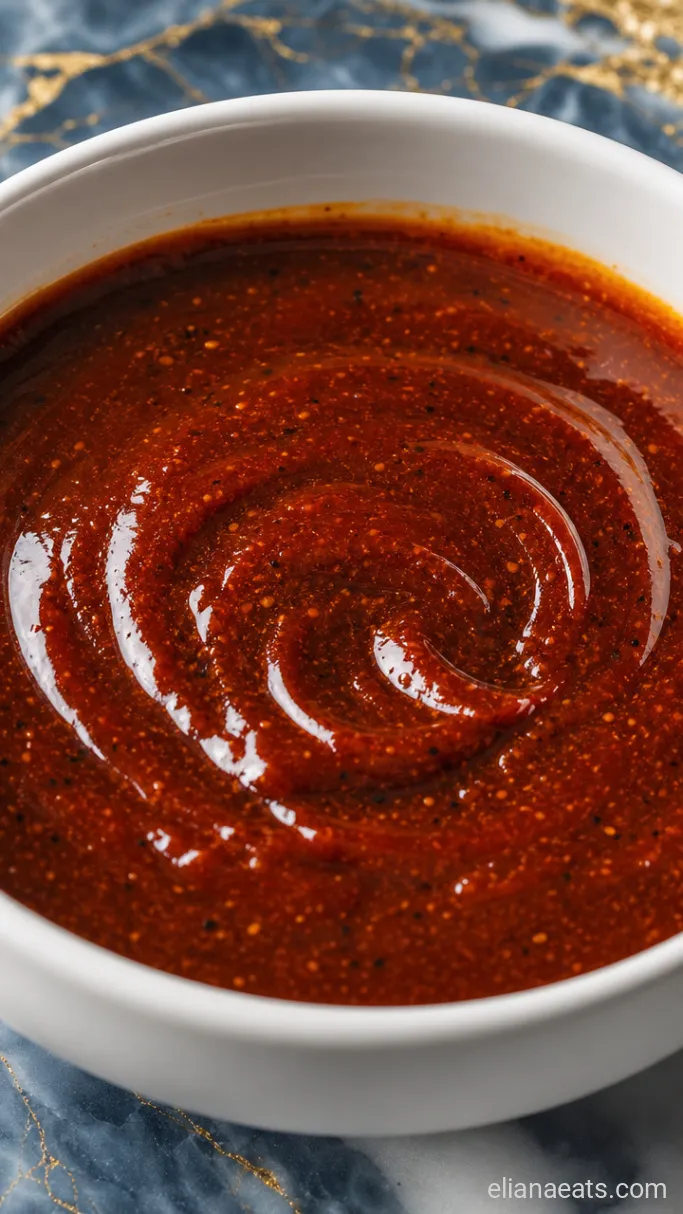
In a small bowl, combine the 3 tbsp soy sauce, 3 tbsp rice vinegar, 3 tbsp brown sugar, 2 tbsp tomato paste, 1 tbsp hoisin sauce, 1 tbsp water, and 2 tsp cornstarch. Whisk everything together until the cornstarch is fully dissolved and there are no lumps. Set it aside within arm’s reach of the stove before you start the next step, because the sauce comes together fast.
Step 4: Stir-Fry the Vegetables
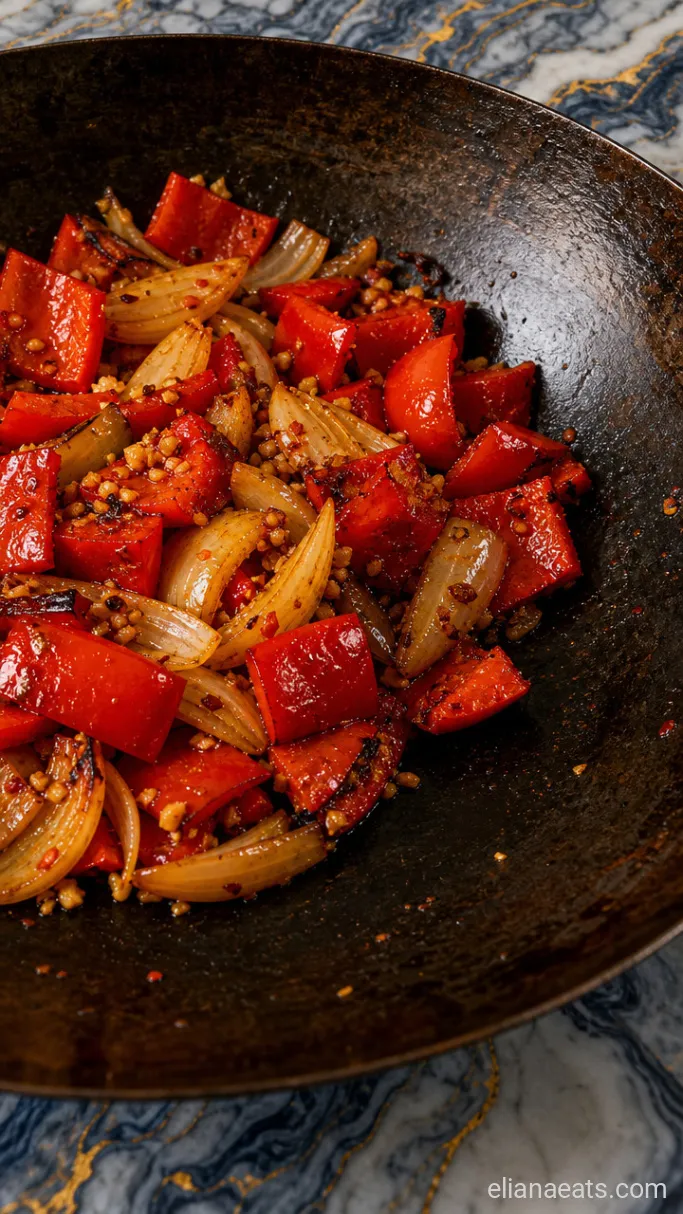
Carefully pour off most of the frying oil, leaving about 1 tbsp in the pan. Return the pan to medium-high heat. Add the 1/2 medium yellow onion wedges and cook for 2 minutes, stirring often, until they just start to soften at the edges. Add the 1 red bell pepper pieces, 3 cloves minced garlic, and 1 tsp red chili flakes and cook for another 1 to 2 minutes. The garlic should be fragrant and the pepper should have a little color but still hold its shape.
Step 5: Glaze and Serve
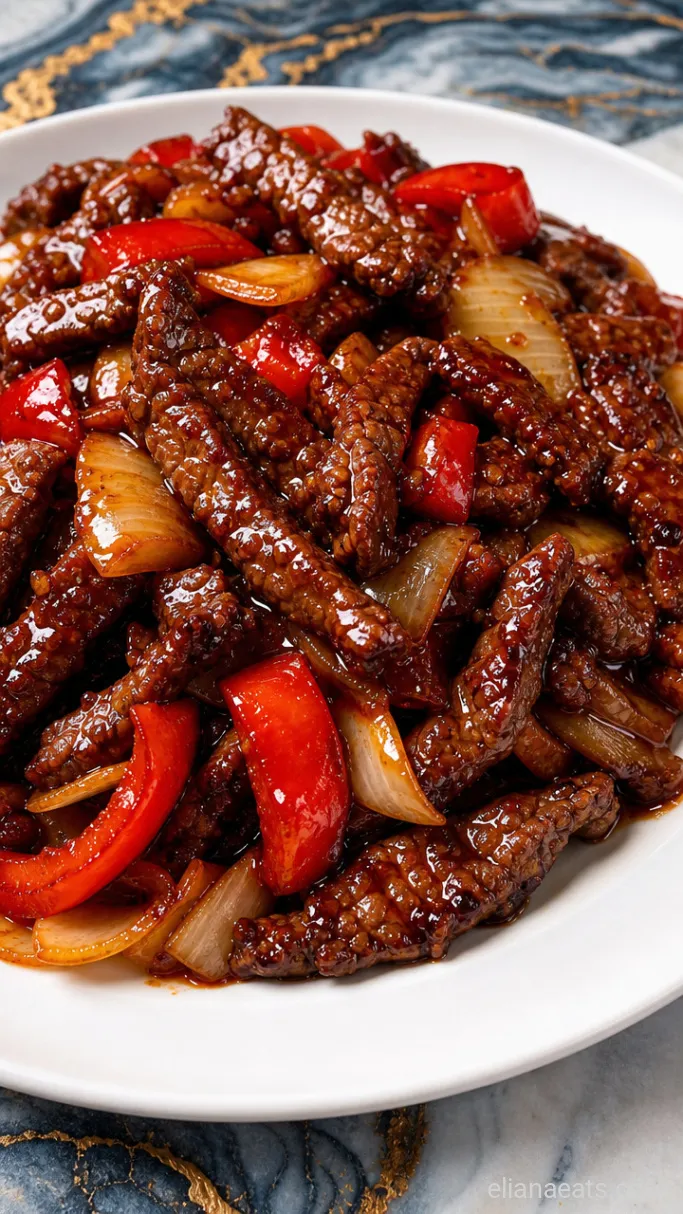
Pour the sauce over the vegetables and stir for about 30 seconds over medium-high heat until it thickens and turns glossy. Add the fried beef strips back into the pan and toss everything together for 1 minute, coating each piece evenly. Remove the pan from the heat and drizzle over the 1 tsp sesame oil, then toss once more. Tip the Beijing beef onto a serving plate, making sure some of the red and green vegetables are visible on top, and serve immediately.
Recipe Tips
- Freeze the steak for 20 minutes before slicing. A slightly firm piece of meat is much easier to cut into thin, even strips. Room-temperature flank steak tends to slide around under the knife.
- Mix the sauce before you start cooking. Once the vegetables are in the pan, things move quickly. Having the sauce already whisked means you will not scramble to measure while garlic is on the verge of burning.
- Dry the beef strips with paper towels before dredging. Surface moisture is the enemy of a crispy coating. A quick pat means the egg and cornstarch adhere more cleanly.
- Use a wok or the widest pan you have. More surface area means faster evaporation when the sauce hits the pan, which is what makes it sticky rather than watery.
Cook times by beef strip thickness:
| Strip Thickness | Oil Temp | Time Per Side |
|---|---|---|
| 1/4 inch | Shimmering (350°F / 175°C) | 2 to 3 minutes |
| 3/8 inch | Shimmering (350°F / 175°C) | 3 to 4 minutes |
| 1/2 inch | Shimmering (350°F / 175°C) | 4 to 5 minutes |
How To Store
- Refrigerate – Store leftovers in an airtight container for up to 3 days. The beef will soften as it sits, but the flavor holds well.
- Reheating – A hot skillet over medium heat for 3 to 4 minutes gives you the best result. The microwave works in a pinch but the crust will not recover.
What To Serve With Beijing Beef
Steamed jasmine rice is the most natural pairing because the neutral, slightly sticky grains soak up the sauce without competing with it. Satisfying fried rice also works well if you want something more substantial; the egg and soy notes in the rice echo the sauce rather than clash with it. A quick side of steamed broccoli or snap peas adds some freshness and cuts through the richness of the glaze.
Frequently Asked Questions
Can I make the sauce ahead of time?
Yes. Whisk it together and refrigerate it in a jar for up to 3 days. Give it a stir before using, since the cornstarch will settle to the bottom.
My sauce turned out too thick. What happened?
It cooked a little too long or the heat was too high. Add an extra tablespoon of water to the pan and toss quickly over medium heat until it loosens to a glossy, coating consistency.
Can I bake the beef instead of frying it?
You can, but the texture will be noticeably different. Bake at 425°F (220°C) on a greased rack for 15 to 18 minutes, flipping halfway. The coating will be firm but not as crunchy as the fried version.
Is this dish actually spicy?
At 1 tsp chili flakes it has a mild background heat, not an aggressive burn. If you are heat-sensitive, start with 1/4 tsp and taste the finished sauce before adding more.
Beijing Beef Recipe
Ingredients
Method
- Slice the flank steak into 1/4-inch strips against the grain. Dip each strip in beaten egg, then dredge in the 1/2 cup cornstarch until fully coated. Set aside on a plate.
- Heat the 1/2 cup vegetable oil in a large skillet over medium-high heat until shimmering. Fry the beef in 2 to 3 batches, 2 to 3 minutes per side until golden and crispy. Drain on a paper towel-lined plate.
- In a small bowl, whisk together the 3 tbsp soy sauce, 3 tbsp rice vinegar, 3 tbsp brown sugar, 2 tbsp tomato paste, 1 tbsp hoisin sauce, 1 tbsp water, and 2 tsp cornstarch until smooth.
- Pour off all but 1 tbsp oil from the pan. Cook the 1/2 onion wedges for 2 minutes, then add the 1 red bell pepper, 3 cloves minced garlic, and 1 tsp chili flakes and cook 1 to 2 minutes more.
- Pour the sauce into the pan and stir for 30 seconds until glossy and thick. Add the beef and toss for 1 minute. Remove from heat, drizzle with the 1 tsp sesame oil, toss once more, and serve on a plate with vegetables on top.
