
Panda Express Kung Pao Chicken Copycat Recipe

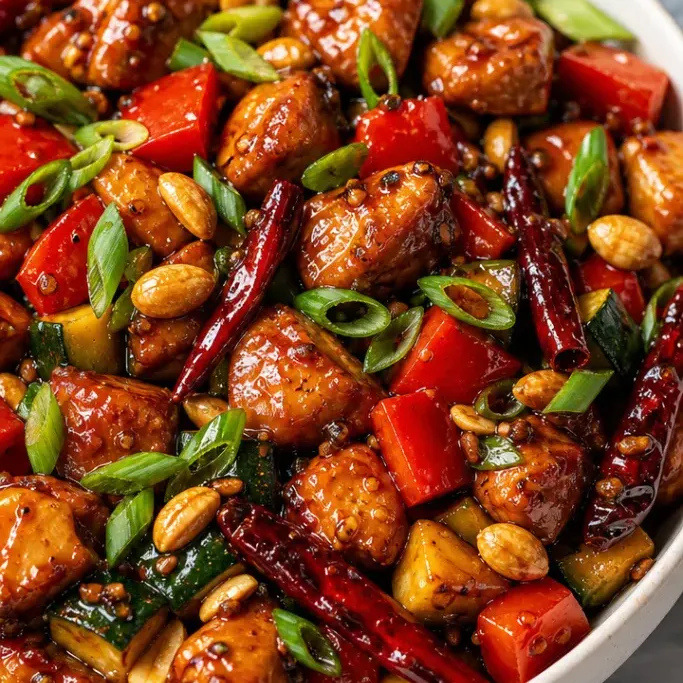
This Panda Express Kung Pao Chicken copycat recipe gives you that sticky, slightly spicy, sweet-and-salty stir-fry at home, in about 30 minutes on a weeknight.
The chicken stays tender, the peanuts add a satisfying crunch, and the sauce clings to everything the way it should.
Why I Love This Recipe
The sauce is the whole point here. It’s tangy from the rice vinegar, a little sweet, and has that low, slow heat from the dried chilies that builds as you eat.
What makes it work is the cornstarch marinade. It locks moisture into the chicken so it doesn’t turn rubbery in a hot pan.
This is the version I keep coming back to because it actually tastes like the thing, not a faint approximation of it.
Recipe Ingredients
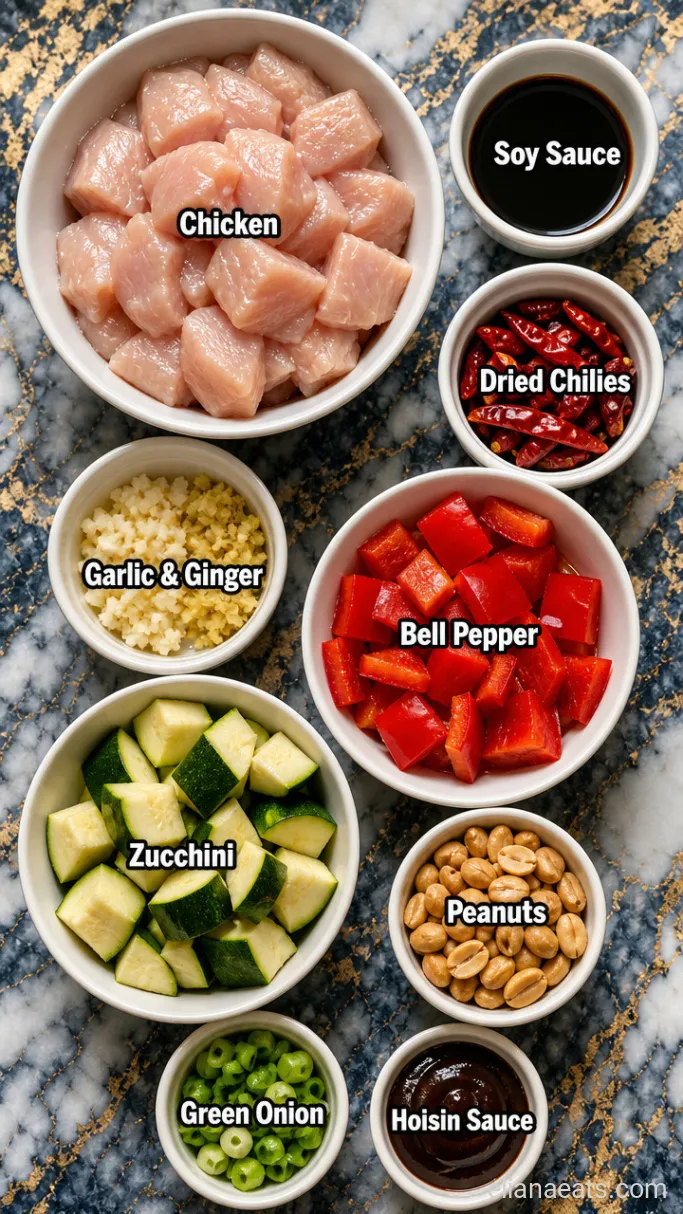
- 1 lb boneless, skinless chicken breast – Cut into ¾-inch cubes; thighs work too and stay juicier
- 1 tbsp cornstarch (for marinade) – Coats the chicken and helps it brown rather than steam
- 1 tbsp soy sauce (for marinade) – Low-sodium works fine here
- 1 tsp sesame oil (for marinade) – Adds fragrance to the chicken before it hits the pan
- 3 tbsp soy sauce (for sauce) – Use the same bottle as the marinade
- 2 tbsp rice vinegar – Brightens everything; don’t swap for white vinegar
- 1 tbsp hoisin sauce – Adds body and a touch of sweetness to the glaze
- 1 tbsp sugar – Balances the vinegar and the chili heat
- 1 tsp cornstarch (for sauce) – Thickens the sauce so it clings instead of pooling
- 2 tbsp water – Loosens the sauce mixture before it hits the pan
- 2 tbsp vegetable oil – High smoke point; neutral flavor
- 8 to 10 dried red chilies – The ones sold as “dried arbol” or “Tien Tsin” work well; remove seeds for less heat
- 3 garlic cloves, minced – Fresh only
- 1 tsp fresh ginger, minced – Adds brightness the dried stuff can’t replicate
- 1 red bell pepper, cut into ¾-inch pieces – Color contrast and a mild sweetness
- 1 zucchini, cut into ¾-inch pieces – Panda’s version uses this; it soaks up sauce well
- ⅓ cup roasted peanuts – Unsalted, so you control the salt level
- 2 green onions, sliced – Stirred in at the end for a fresh, sharp note
Variations / Substitutions
- Chicken thighs – Richer flavor and they stay tender even if you cook them 1 to 2 minutes longer than you planned.
- Shrimp – Use 1 lb of peeled, deveined shrimp and cut the stir-fry time to about 2 minutes per side; it overcooks fast.
- Tofu – Press extra-firm tofu well and pat it dry so it gets crisp edges instead of going soggy; use the same marinade.
- Coconut aminos for soy sauce – The swap works but the sauce will be slightly sweeter and less salty, so taste before adding sugar.
- Maple syrup for sugar – Use ¾ tbsp since it’s sweeter than granulated; the flavor difference is minor.
- Cashews for peanuts – A fair swap; the texture is softer and the flavor is a little more buttery.
- More chilies for more heat – Doubling the dried chilies takes this from mild-medium to genuinely spicy; leave the seeds in for maximum heat.
If you like this kind of fast, saucy stir-fry, the Panda Express Orange Chicken Copycat Recipe uses a similar wok technique and is worth trying next.
How To Make Kung Pao Chicken
Step 1: Marinate the Chicken
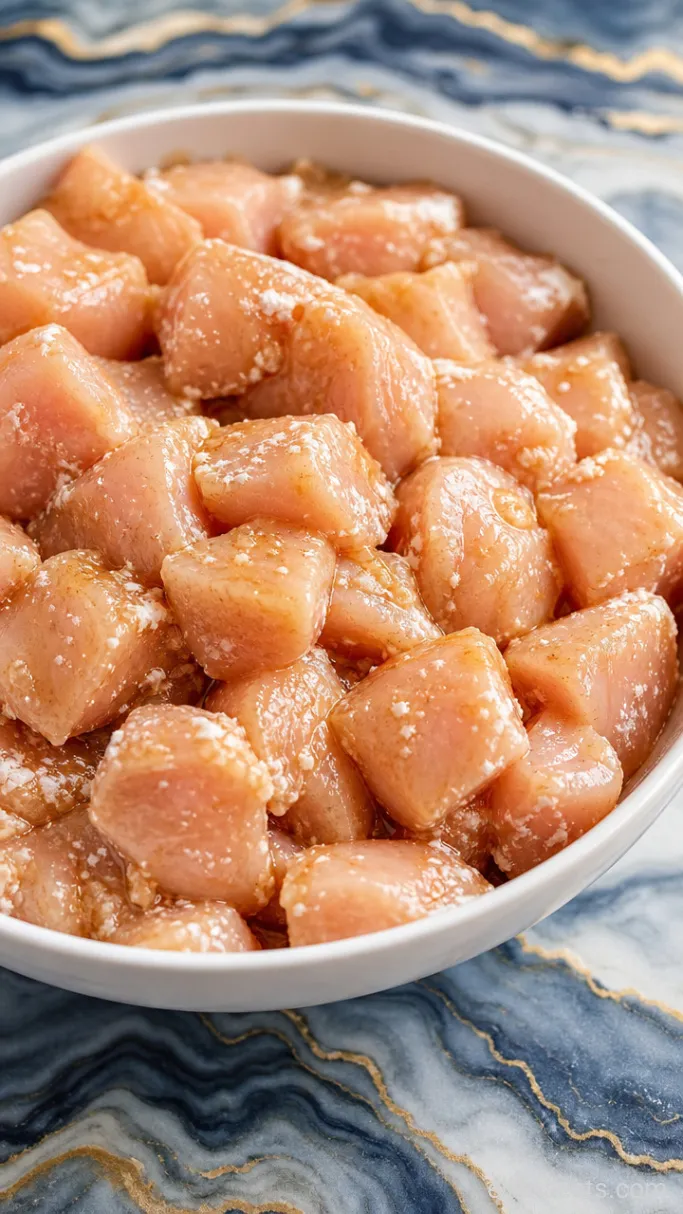
In a medium bowl, combine the 1 lb cubed chicken breast with 1 tbsp cornstarch, 1 tbsp soy sauce, and 1 tsp sesame oil, following these chicken cooking tips. Toss until every piece is evenly coated. Let it sit for at least 10 minutes at room temperature while you prep the vegetables and mix the sauce.
The cornstarch forms a thin shell around each piece. After 10 minutes the coating will look slightly tacky and the chicken will have absorbed most of the liquid, which is exactly what you want.
Don’t skip the rest time. Ten minutes is the minimum; you can go up to 30 minutes in the fridge if you’re working ahead. Less than that and the coating hasn’t had time to bond, so it slides off in the pan.
Step 2: Mix the Sauce
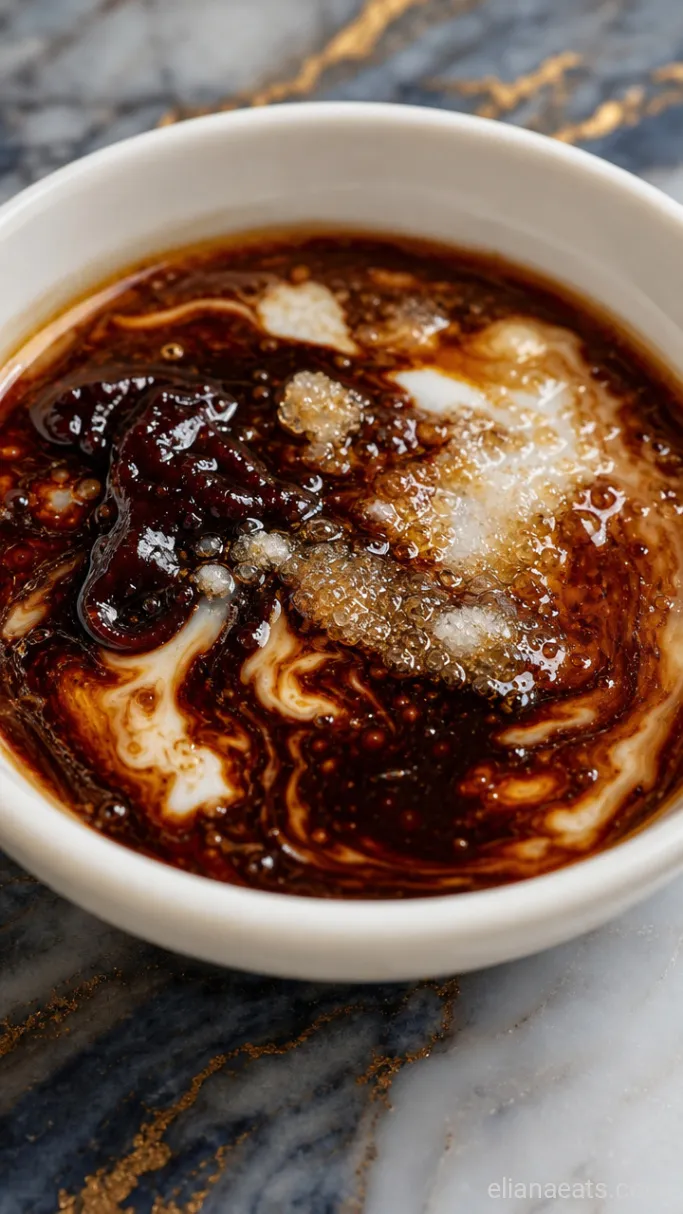
In a small bowl or measuring cup, whisk together the 3 tbsp soy sauce, 2 tbsp rice vinegar, 1 tbsp hoisin sauce, 1 tbsp sugar, 1 tsp cornstarch, and 2 tbsp water until the sugar dissolves and no cornstarch lumps remain. The whole thing takes about 30 seconds of whisking.
Set it right next to the stove. Stir-fry moves fast and you won’t have time to measure once the pan is hot.
Step 3: Sear the Chicken
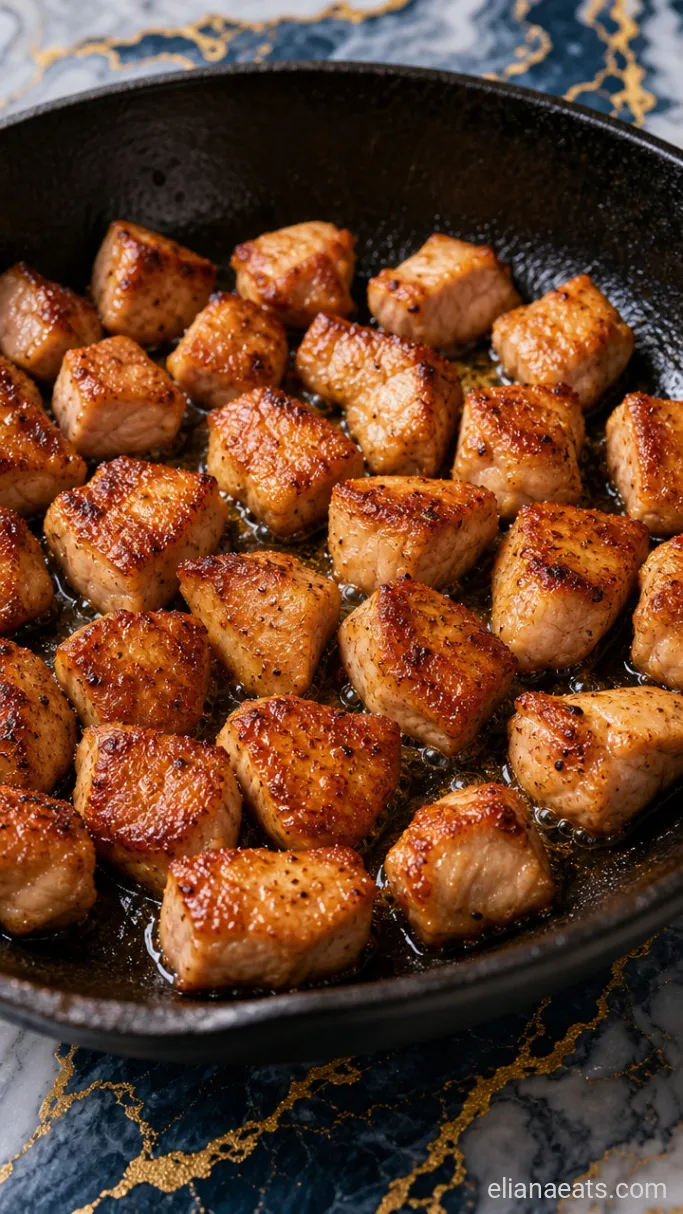
Heat a large skillet or wok over high heat for about 2 minutes until it is genuinely hot. Add the 2 tbsp vegetable oil and let it shimmer for 10 to 15 seconds. Add the marinated chicken in a single layer and let it cook undisturbed for 3 minutes, then flip and cook for another 2 minutes, until the pieces are golden brown on the outside and cooked through to 165°F (74°C).
The edges will be slightly crisp and a little caramelized where they touch the pan. That’s the cornstarch doing its job.
If your pan is small, cook the chicken in 2 batches rather than crowding it. A crowded pan drops the temperature and the chicken steams instead of sears, which means pale, soft pieces instead of the brown, slightly sticky texture you’re after.
Step 4: Toast the Chilies and Aromatics
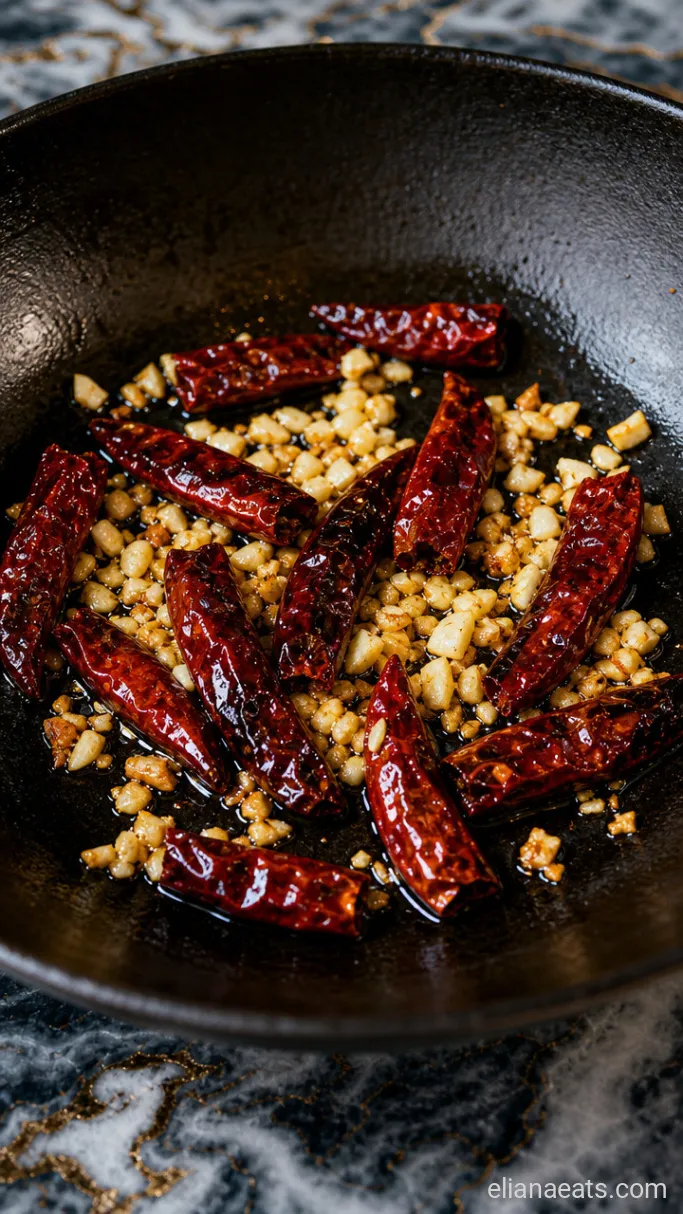
Push the cooked chicken to the edge of the pan. Add the 8 to 10 dried red chilies to the center and let them cook in the residual oil for 30 to 45 seconds, stirring, until they darken slightly and the kitchen smells smoky and sharp. Add the 3 minced garlic cloves and 1 tsp minced ginger right after and stir everything together for another 30 seconds.
Don’t walk away during this step. Chilies go from toasted to acrid in under a minute on high heat, and burnt garlic will take the whole dish with it.
This quick toast is what gives the finished dish that slightly smoky, complex base. Skipping it and just adding the aromatics raw produces a flatter result.
Step 5: Stir-Fry the Vegetables
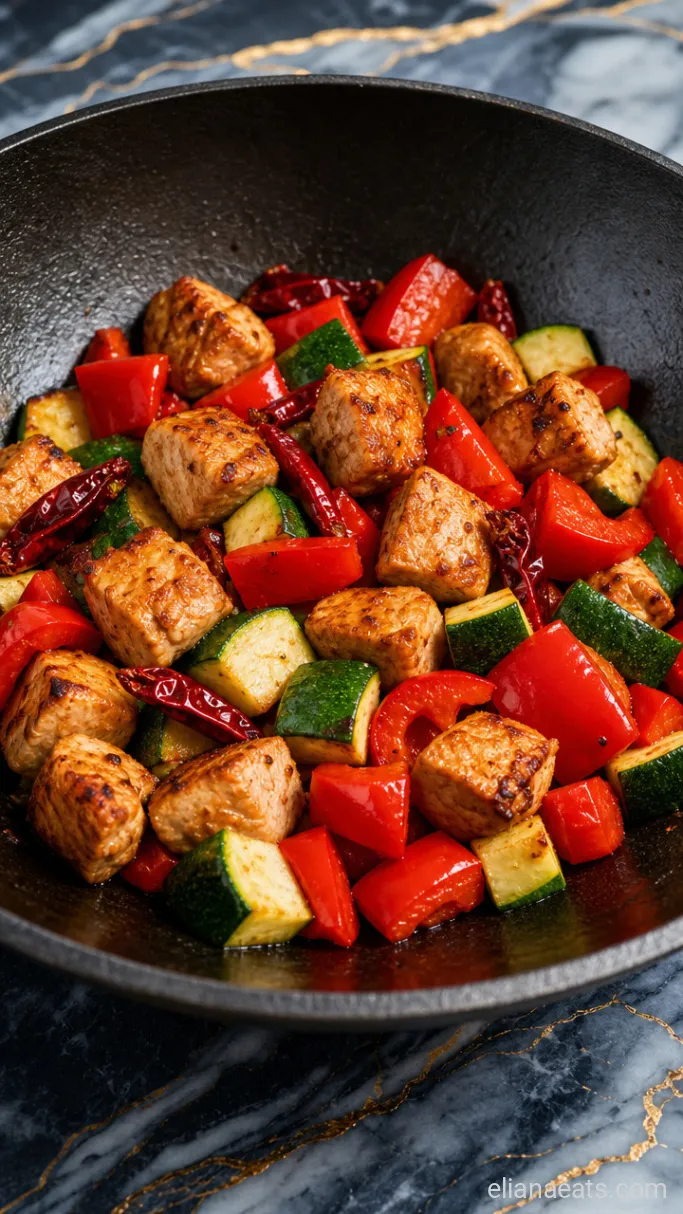
Add the 1 red bell pepper and 1 zucchini to the pan and stir-fry everything together over high heat for 3 minutes. You want the vegetables to soften just slightly and pick up a little color at the edges while staying firm enough to have some bite.
Step 6: Glaze and Garnish
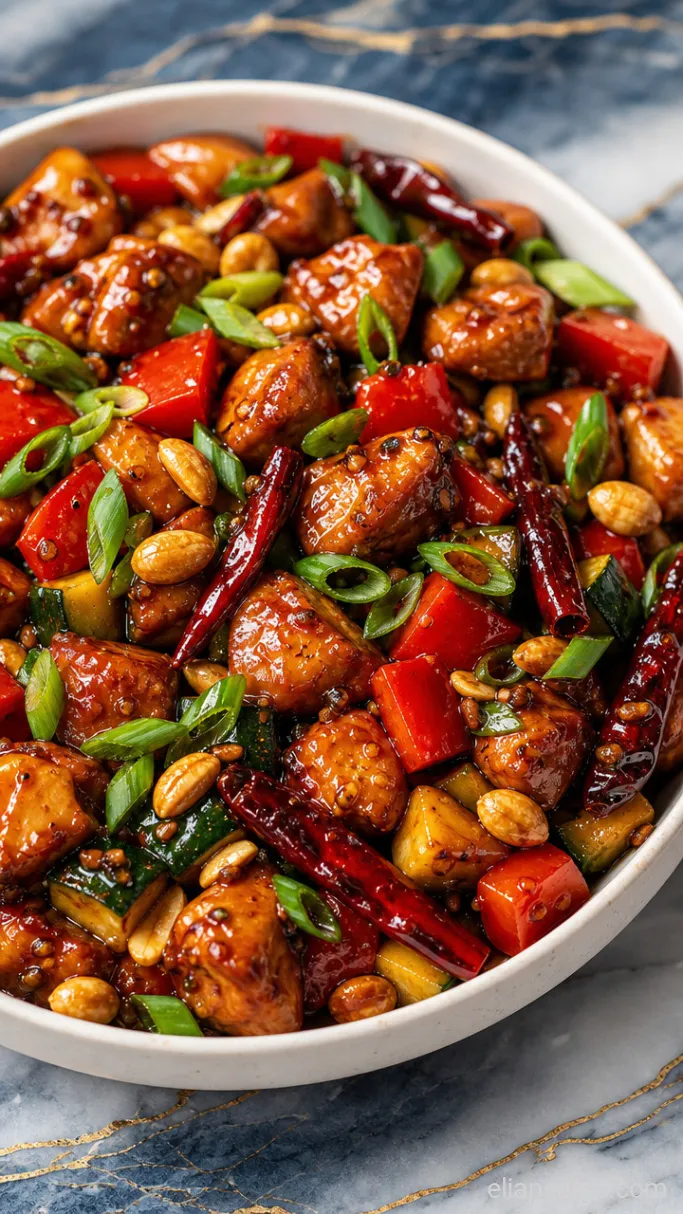
Give the sauce a quick stir to re-suspend the cornstarch, then pour it over the pan. Toss everything together over high heat for about 1 to 2 minutes until the sauce thickens, turns glossy, and coats every piece. Take the pan off the heat and stir in the ⅓ cup roasted peanuts and the 2 sliced green onions.
Spoon onto a serving plate, scatter a few extra green onion slices on top, and serve right away while the sauce is still bubbling at the edges.
Recipe Tips
- Dry your chicken pieces well before marinating. Pat them with a paper towel first. Excess surface moisture dilutes the marinade and makes it harder to get a sear.
- Have everything cut and measured before you turn on the heat. Stir-fry is one of those techniques where the whole thing can go sideways in the 60 seconds you spend searching for the rice vinegar.
- The dried chilies are mostly there for flavor, not eating. The Panda version includes them whole in the dish and most people push them to the side. If you want them edible and less fiery, slice them open, shake out the seeds, and soak in warm water for 5 minutes before using.
- Taste the sauce before it hits the pan. If it seems too sharp, add a pinch more sugar. If it seems flat, add a small splash more rice vinegar. It should be a balance of salty, tangy, and sweet before the heat changes it.
Cook times by pan size and heat level:
| Pan Size | Heat Level | Chicken Cook Time |
|---|---|---|
| 10-inch skillet | High | 5 to 6 mins total |
| 12-inch skillet | High | 4 to 5 mins total |
| 14-inch wok | High | 3 to 4 mins total |
How To Store
- Refrigerate – Store leftovers in an airtight container for up to 3 days. The sauce thickens further as it cools, which is normal.
- Reheating – Reheat in a skillet over medium heat for 3 to 4 minutes, adding a tablespoon of water to loosen the sauce back up. The microwave works in a pinch but the vegetables go soft.
What To Serve With Kung Pao Chicken
Steamed jasmine rice is the obvious choice because the starchy grains soak up the sticky sauce and balance the heat without competing with the flavors. Fried rice works for the same reason, and the egg in it adds richness that rounds out the vinegar edge. If you want something lighter, serve it over steamed broccoli, which absorbs the sauce well and adds a slightly bitter note that cuts the sweetness.
Frequently Asked Questions
Can I make the sauce ahead of time?
Yes. Mix it up to 3 days in advance and keep it in a sealed jar in the fridge. Give it a good shake before using since the cornstarch settles to the bottom.
My sauce isn’t thickening. What went wrong?
The most common cause is a pan that lost too much heat when the sauce went in. Turn it back up to high and keep tossing; it usually comes together within 60 to 90 seconds once the pan is properly hot again.
Can I freeze leftover Kung Pao Chicken?
You can, but the zucchini and bell pepper turn watery when thawed. Freeze for up to 1 month and reheat in a skillet rather than the microwave to cook off the excess liquid.
Is this dish very spicy?
With 8 to 10 whole dried chilies and the seeds mostly contained, it lands around mild to medium. The heat is in the background rather than upfront.
—
Kung Pao Chicken Recipe
Ingredients
Method
- Toss the cubed chicken with the cornstarch, soy sauce, and sesame oil (marinade amounts). Let it rest for 10 minutes.
- Whisk together the soy sauce, rice vinegar, hoisin sauce, sugar, cornstarch, and water (sauce amounts) until smooth. Set aside.
- Heat a wok or large skillet over high heat. Add the vegetable oil, then sear the chicken in a single layer for 3 minutes, flip, and cook for 2 more minutes until golden and cooked to 165°F (74°C).
- Push the chicken aside, add the dried chilies, and toast for 30 to 45 seconds. Add the garlic and ginger and stir for 30 seconds.
- Add the bell pepper and zucchini and stir-fry over high heat for 3 minutes until slightly softened with light color on the edges.
- Stir the sauce, pour it in, and toss everything over high heat for 1 to 2 minutes until the sauce is glossy and thick. Remove from heat, stir in the peanuts and green onions, garnish with extra green onion, and serve immediately.
