
Outback Steakhouse Baked Potato Copycat Recipe

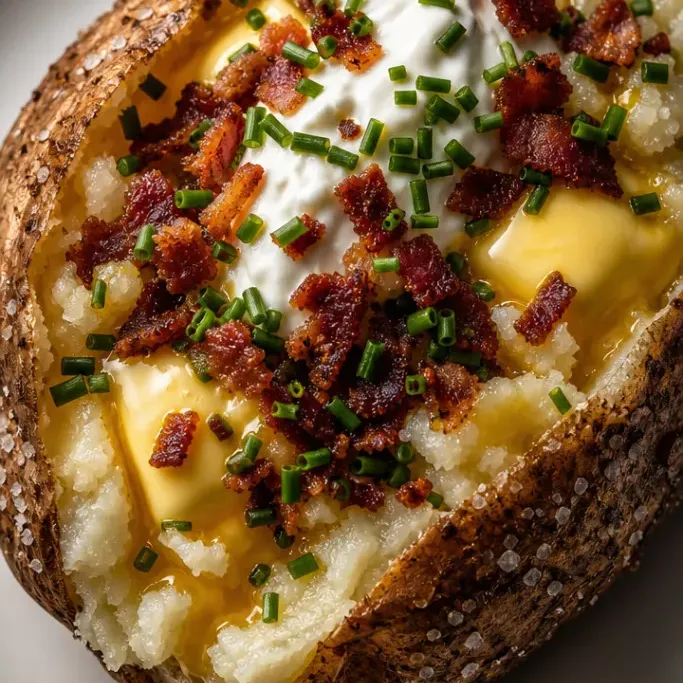
That giant, crispy-skinned baked potato from Outback Steakhouse is one of those sides people order just as much as the steak. This copycat gets you the same thick, salty crust and fluffy interior at home, loaded with butter, sour cream, and chives.
It takes about an hour in the oven, but almost none of that is hands-on time. If you have a russet potato and a few basic toppings, you can have this on the table tonight.
Why I Love This Recipe
The skin is the whole point. Outback rubs their potatoes in oil and coarse salt before baking, which gives you a crust that actually snaps when you break it open. That contrast between the salty, crisp outside and the soft, steamy inside is what makes it worth ordering.
This is the version I keep coming back to because it works every single time. No foil, no shortcuts.
Recipe Ingredients
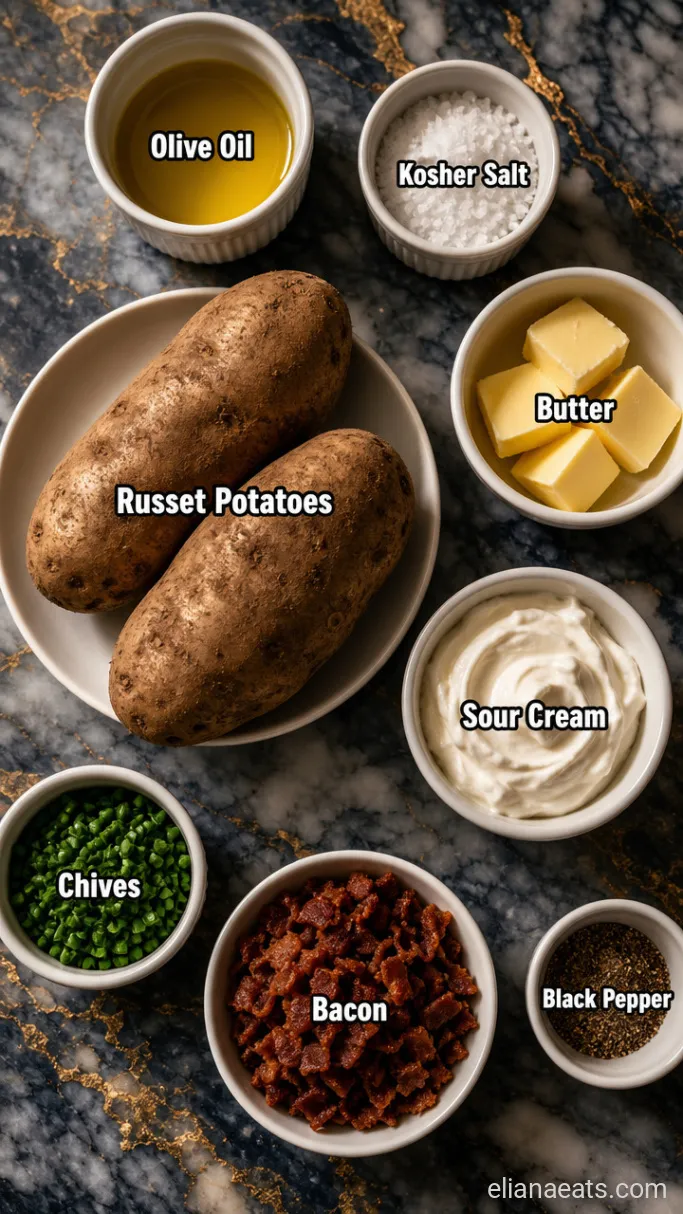
- 2 large russet potatoes (about 12 oz / 340g each) – Russets have the starchy interior and thick skin that crisps best; do not swap for waxy potatoes
- 2 tbsp olive oil – Coats the skin so the salt sticks and the crust forms
- 2 tsp coarse kosher salt – Coarse grain is essential for that thick, textured crust; fine salt will not give the same result
- 4 tbsp unsalted butter, divided – 2 tbsp goes inside each potato; use real butter, not spread
- 4 tbsp sour cream, divided – Full-fat holds up better and tastes richer
- 2 tbsp fresh chives, chopped – Mild onion flavor that cuts through the richness
- 4 strips bacon, cooked and crumbled – Optional, but it adds a smoky, salty crunch
- Salt and black pepper, to taste – For seasoning the interior at the table
Variations / Substitutions
- No bacon – Skip it entirely and the potato is still satisfying; the butter and sour cream carry the dish.
- Greek yogurt for sour cream – Full-fat Greek yogurt works as a 1-for-1 swap and adds a slightly tangier finish.
- Ghee for butter – Gives a nuttier flavor inside and works well if you are avoiding dairy milk solids.
- Green onions for chives – Use the green tops only and slice them thin; the flavor is a little sharper but just as good.
- Dairy-free – Use a plant-based butter and a coconut or cashew-based sour cream alternative; the crust will still be great since it only uses oil and salt.
- Extra heat – Add a few dashes of hot sauce to the sour cream or scatter some pickled jalapeño slices on top.
If you enjoy a great steakhouse side at home, the Copycat Outback Steakhouse Blooming Onion recipe is worth trying next.
How To Make Baked Potato
Step 1: Scrub and Coat the Potatoes
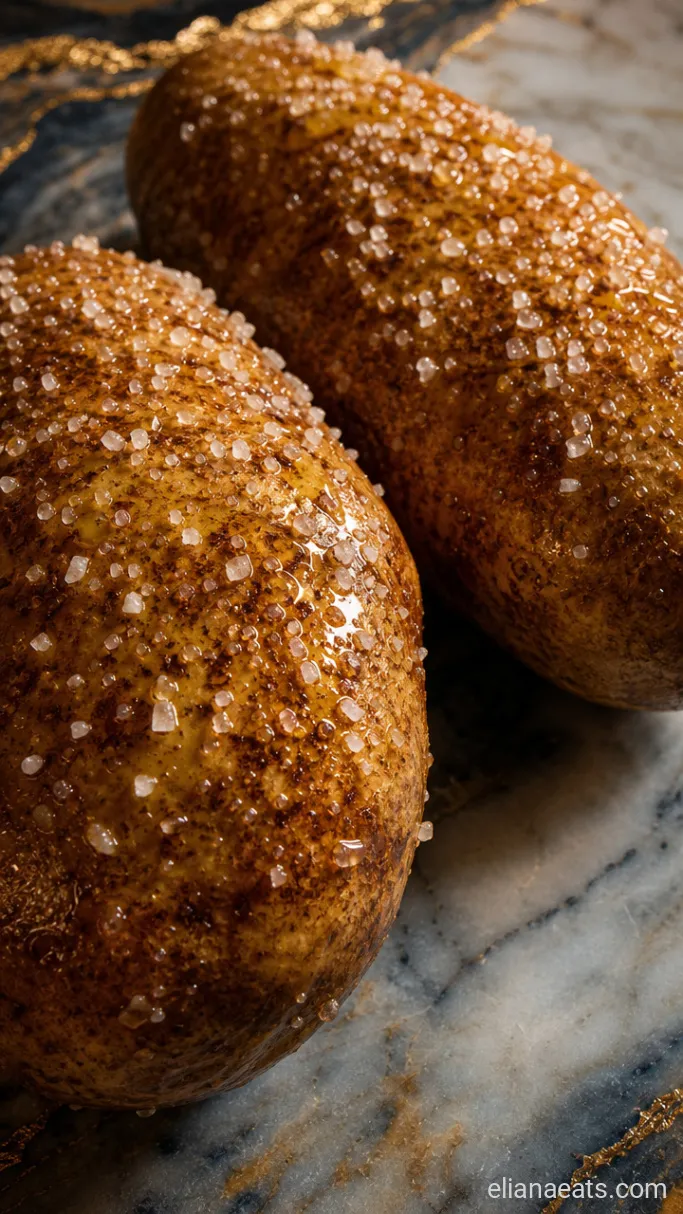
Set your oven to 400°F (200°C). Scrub the 2 russet potatoes under cold running water with a stiff brush to remove any dirt, then dry them completely with a kitchen towel. Prick each potato all over with a fork, about 10 to 12 times per potato. Rub each one with 1 tbsp olive oil, then roll them in the 2 tsp coarse kosher salt until the skin is evenly coated.
Drying the potatoes before oiling is important. Any water left on the skin will steam rather than crisp, and you will lose that signature crunch.
Step 2: Bake the Potatoes
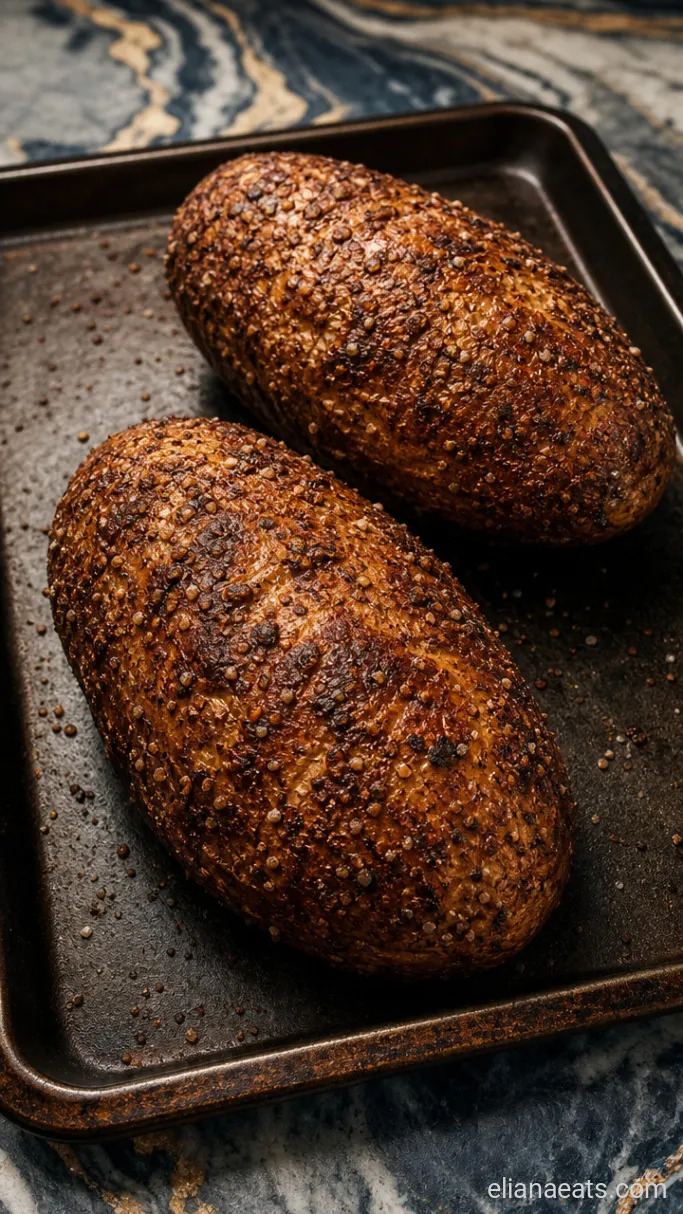
Place the potatoes directly on the oven rack with a foil-lined baking sheet on the rack below to catch drips. Bake at 400°F (200°C) for 55 to 65 minutes, depending on the size of your potatoes. To check for doneness, pierce one with a fork or skewer at the thickest point. It should slide in with zero resistance. The skin should feel firm and dry to the touch, and the internal temperature should read at least 205°F (96°C).
Do not wrap them in foil at any point. Foil traps steam and softens the skin, which is the opposite of what you want here.
If your potatoes are on the larger side, check at 60 minutes and add time in 5-minute increments. The extra few minutes are worth it.
Step 3: Split and Fluff the Interior
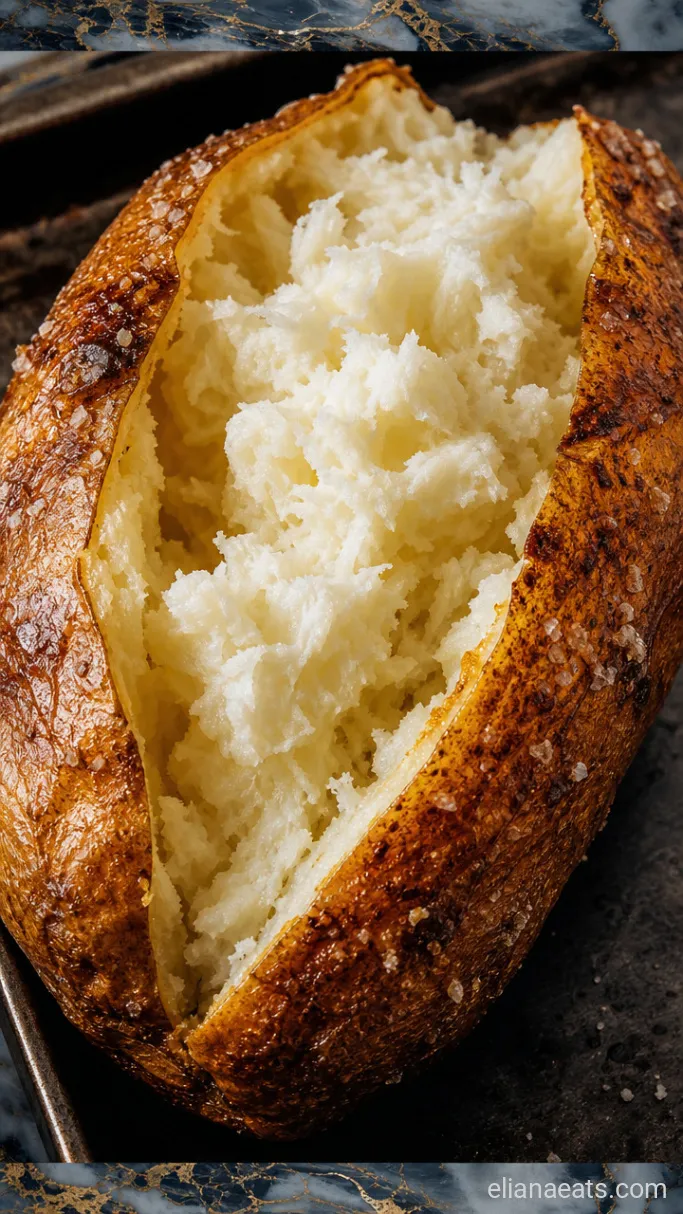
Using a folded kitchen towel to protect your hands, hold a hot potato and cut a slit down the top lengthwise, stopping about an inch from each end. Then make a second shorter slit across the center to form a cross. Push both ends toward each other to open the potato up, then use a fork to scrape and fluff the flesh inside, breaking it up into a light, fluffy mound. This takes about 30 seconds per potato and makes a real difference in texture.
The steam that escapes when you open it is a good sign. It means the interior is cooked through and ready to absorb the butter.
Step 4: Load and Garnish the Potatoes
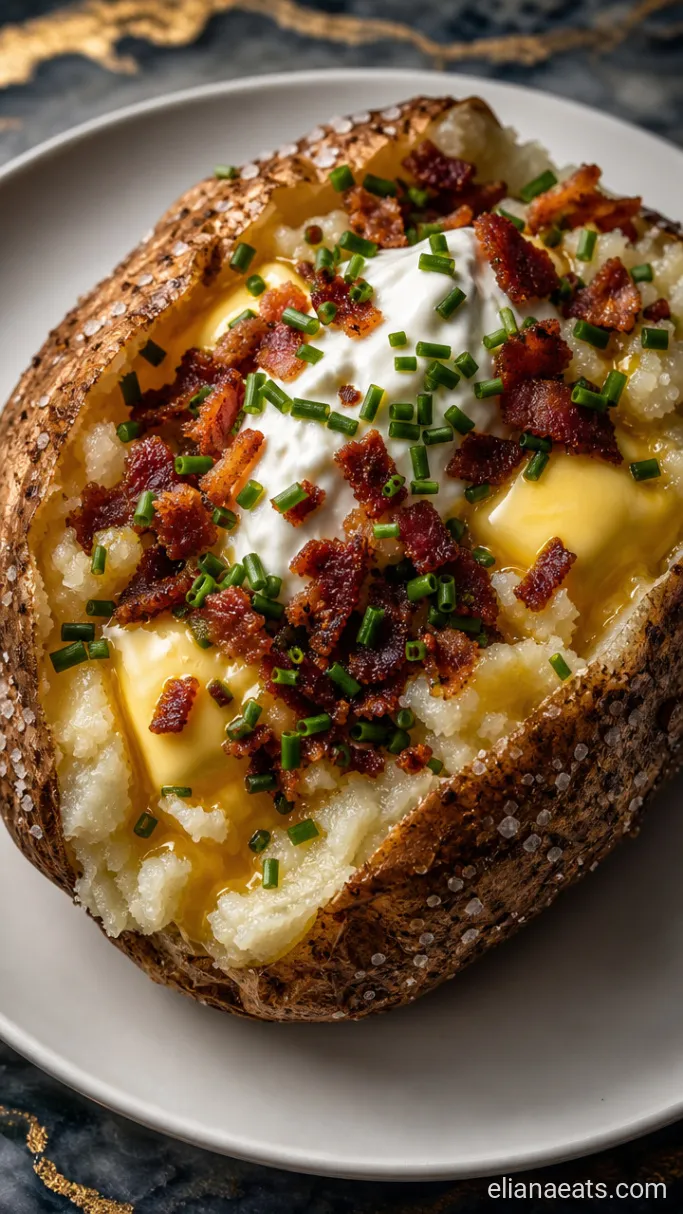
Drop 2 tbsp unsalted butter into each opened potato while they are still hot from the oven, letting it melt down into the fluffed flesh. Season the interior with salt and black pepper to taste. Add 2 tbsp sour cream to each potato, then scatter half the 2 tbsp fresh chives and half the crumbled bacon over each one. Serve immediately on a warm plate.
Recipe Tips
- Choose potatoes of even size. If one is noticeably larger than the other, it will need more time and the smaller one will be done first. Weigh them at the store if you can; 10 to 12 oz (280 to 340g) each is ideal.
- Prick deeply enough. Shallow pricks do not vent the steam properly. Push the fork tines in at least half an inch. This is the main way baked potatoes burst in the oven.
- Check for doneness by feel, not just time. Oven temperatures vary. A fork should glide through with no resistance. If you feel any hardness at the center, put it back for another 5 to 10 minutes.
- Butter first, then sour cream. Adding the butter while the potato is piping hot lets it melt into the flesh rather than just sitting on top. The sour cream goes on after so it stays cool and creamy.
Cook times by potato weight (at 400°F / 200°C):
| Potato Weight | Approximate Bake Time | Done When |
|---|---|---|
| 8 oz / 225g | 45 to 50 minutes | Fork slides in with no resistance |
| 10 oz / 280g | 50 to 58 minutes | Fork slides in with no resistance |
| 12 oz / 340g | 58 to 65 minutes | Fork slides in with no resistance |
| 14 oz / 400g | 65 to 75 minutes | Fork slides in with no resistance |
How To Store
- Refrigerate – Wrap cooled leftover potatoes (toppings removed if possible) in foil or store in an airtight container for up to 4 days.
- Reheating – Reheat in a 375°F (190°C) oven for 15 to 20 minutes directly on the rack. The skin will re-crisp much better than it would in a microwave. Add fresh toppings after reheating.
What To Serve With Baked Potato
This potato is a natural next to anything that comes off a grill or out of a cast iron pan. A ribeye or sirloin steak is the obvious choice because the richness of the butter and sour cream balances the char and fat of the beef. A simple green salad with a sharp vinaigrette also works well alongside it, since the acidity cuts through the heaviness of all that butter and cream. If you want a lighter pairing, grilled chicken thighs work because the potato gives the meal the body and substance that chicken on its own often lacks.
Frequently Asked Questions
Can I make these potatoes ahead of time?
Yes, but only partially. You can bake them up to 2 hours ahead and keep them warm in a 200°F (93°C) oven. Add the toppings right before serving.
Do I need to put oil on the skin if I am skipping the toppings?
Yes. The oil is what carries the salt and creates the crust. It is not just for flavor, it is a structural step.
Can I bake these in an air fryer instead?
You can. Cook at 400°F (200°C) for 40 to 45 minutes for a 10 to 12 oz potato, flipping once at the halfway point. The skin crisps well, but the interior capacity is smaller so you may need to work in batches.
My potato skin came out soft, not crispy. What went wrong?
The two most common causes are moisture and foil. Make sure the potato is completely dry before you oil it, and bake it directly on the oven rack, never wrapped.
—
Baked Potato Recipe
Ingredients
Method
- Preheat the oven to 400°F (200°C). Scrub and dry both potatoes, prick each one 10 to 12 times with a fork, rub each with 1 tbsp olive oil, and coat in the 2 tsp coarse kosher salt.
- Place potatoes directly on the oven rack with a foil-lined baking sheet below and bake for 55 to 65 minutes, until a fork slides in with no resistance and the internal temperature reaches 205°F (96°C).
- Cut a cross into the top of each potato, push the ends in to open them up, and fluff the interior flesh with a fork.
- Add 2 tbsp butter to each potato, season with salt and pepper, then top each with 2 tbsp sour cream, half the chopped chives, and half the crumbled bacon. Serve immediately.
