
LongHorn Steakhouse Mac and Cheese Copycat Recipe

This LongHorn Steakhouse mac and cheese copycat brings the creamy, sharp cheddar sauce and golden breadcrumb top from the restaurant right to your stovetop and oven.
It comes together in about 35 minutes, and unlike most boxed or restaurant-style attempts, the sauce stays thick and glossy without turning grainy.
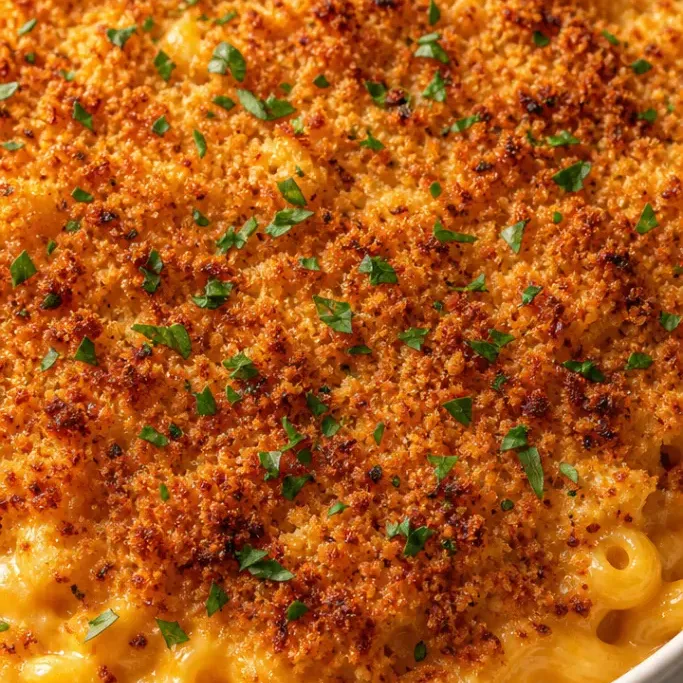
Why I Love This Recipe
The sauce uses a proper roux base, which means it clings to the pasta instead of pooling at the bottom of the dish. The sharp cheddar and Gruyère together give it that slightly tangy, nutty flavor the restaurant version is known for.
The breadcrumb top gets crisp in just a few minutes under the broiler, so you get that contrast of textures without baking the whole dish for an hour.
This is the version I keep coming back to for a crowd, because it holds its shape when scooped and reheats without turning into a clump.
Recipe Ingredients
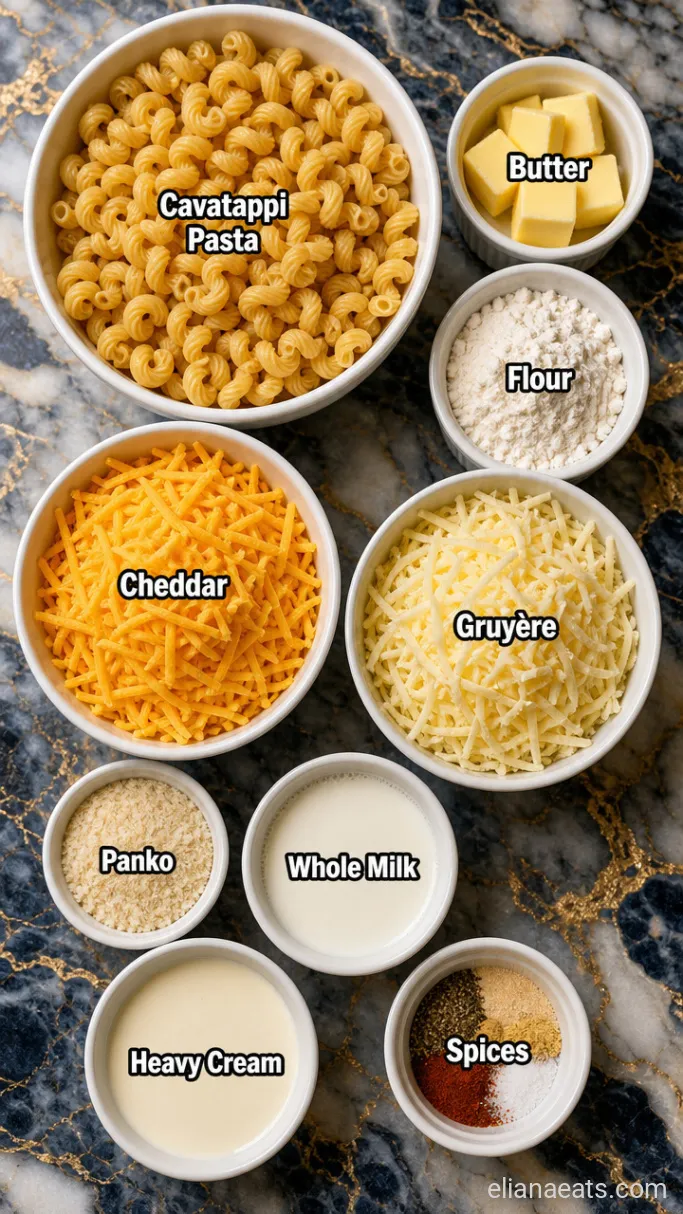
- 12 oz cavatappi pasta – LongHorn uses this corkscrew shape; elbow macaroni works too
- 3 tbsp unsalted butter – for the roux base; salted butter will make the sauce too salty
- 3 tbsp all-purpose flour – thickens the sauce and keeps it from going grainy
- 2 cups whole milk – adds richness; 2% works but the sauce will be slightly thinner
- 1 cup heavy cream – gives the sauce body and keeps it from breaking
- 2 cups sharp cheddar, shredded – shred it yourself; pre-shredded has a coating that prevents smooth melting
- 1 cup Gruyère, shredded – adds a nutty depth that balances the sharp cheddar
- 1 tsp Dijon mustard – brightens the cheese flavor without tasting like mustard
- 1/2 tsp garlic powder – background warmth, not overpowering
- 1/2 tsp onion powder – rounds out the savory base
- 1/2 tsp kosher salt – adjust to taste at the end
- 1/4 tsp white pepper – milder than black pepper; keeps the sauce looking clean
- 1/2 cup panko breadcrumbs – for the broiled top; panko stays crunchier than regular breadcrumbs
- 1 tbsp unsalted butter, melted – tossed with the panko so it browns evenly
- 1 tbsp fresh parsley, chopped – for garnish
Variations / Substitutions
- Smoked Gouda instead of Gruyère – gives a smokier, richer finish that works especially well if you are serving this alongside grilled steak.
- Pepper Jack instead of sharp cheddar – adds steady heat throughout the sauce without being aggressive.
- Gluten-free pasta – use a brown rice or chickpea cavatappi and swap the all-purpose flour for a 1-to-1 gluten-free flour blend; the sauce thickens the same way.
- Whole milk only, no cream – the sauce will be noticeably thinner, but it still works if you reduce it on the stove an extra 2 minutes.
- Gluten-free breadcrumbs – a direct swap with no change to the broiling time.
- Add-ins like crumbled bacon or diced jalapeño – stir them into the finished sauce before baking; about 4 strips of crispy bacon or 1 small jalapeño is enough for this batch.
If you enjoy creamy pasta dishes like this one, you’ll find that the Cheesecake Factory Four Cheese Pasta Copycat Recipe offers a similar creamy dish and is worth a look.
How To Make Mac and Cheese
Step 1: Boil the Pasta
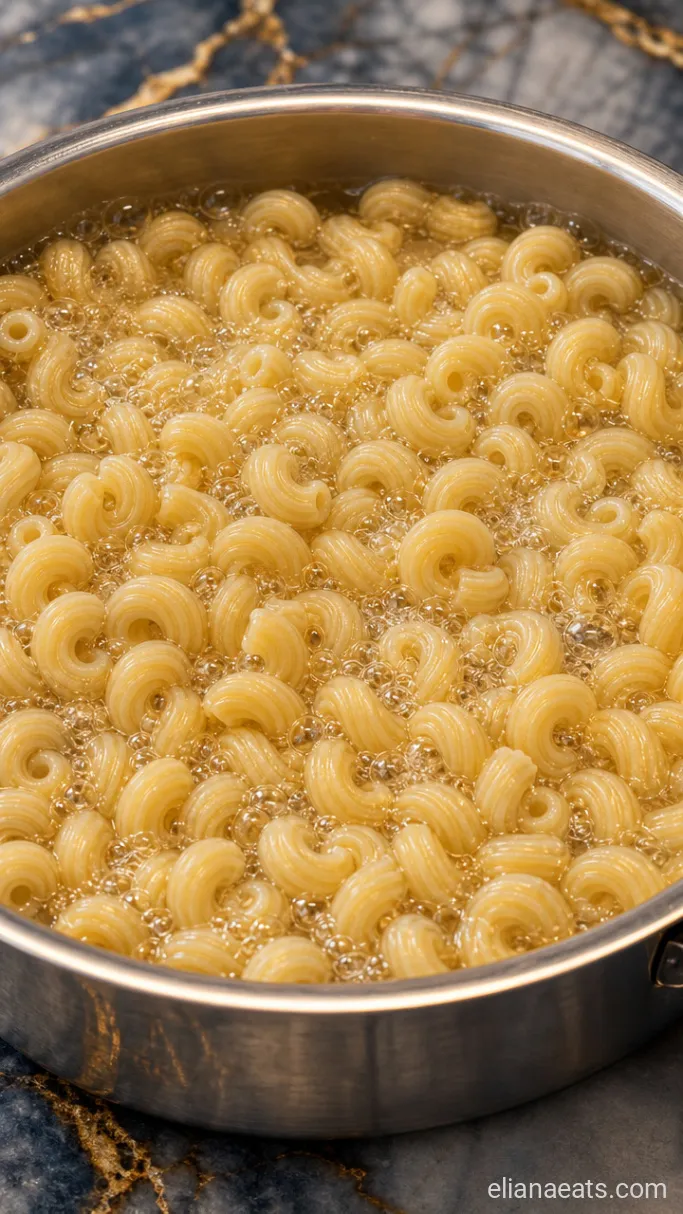
Bring a large pot of well-salted water to a rolling boil over high heat, then add the 12 oz cavatappi pasta. Cook it for 1 minute less than the package directions, around 7 to 8 minutes depending on the brand. You want it slightly underdone because it will finish cooking when it goes under the broiler.
Drain it, but do not rinse it. The starch on the surface of the pasta helps the sauce stick. Set it aside in the colander while you build the sauce.
Step 2: Build the Cheese Sauce
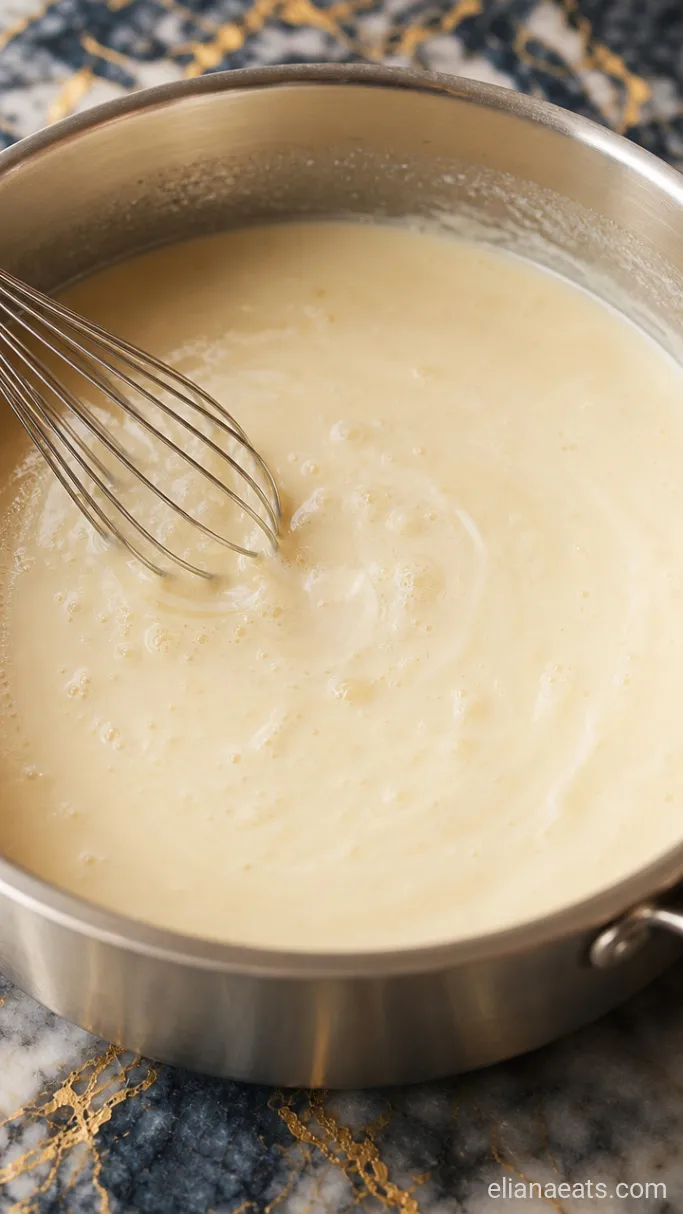
In a large heavy-bottomed saucepan or Dutch oven over medium heat, melt the 3 tbsp unsalted butter. Once it foams, add the 3 tbsp all-purpose flour and whisk constantly for about 1 minute, until the mixture smells faintly nutty and turns the color of pale sand.
Slowly pour in the 2 cups whole milk and 1 cup heavy cream, whisking the whole time to prevent lumps. Raise the heat to medium-high and keep whisking until the sauce thickens enough to coat the back of a spoon, about 4 to 5 minutes. A line drawn through the sauce on the spoon should hold its shape cleanly.
Step 3: Melt in the Cheese
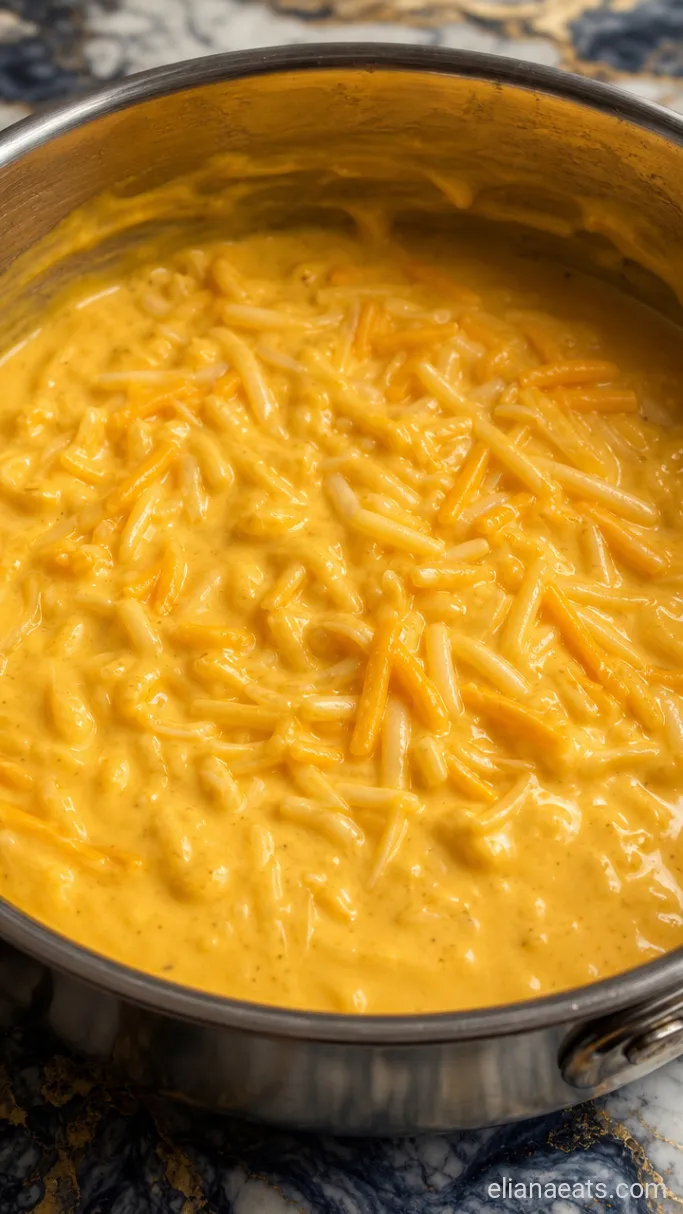
Reduce the heat to low before adding the cheese, because high heat is what causes a cheese sauce to go grainy and greasy. Add the 2 cups sharp cheddar and 1 cup Gruyère in 3 or 4 handfuls, whisking each addition until fully melted before adding the next.
Once the cheese is incorporated, whisk in the 1 tsp Dijon mustard, 1/2 tsp garlic powder, 1/2 tsp onion powder, 1/2 tsp kosher salt, and 1/4 tsp white pepper. Taste it now and adjust salt if needed. The sauce should be smooth, thick, and glossy.
Step 4: Coat the Pasta
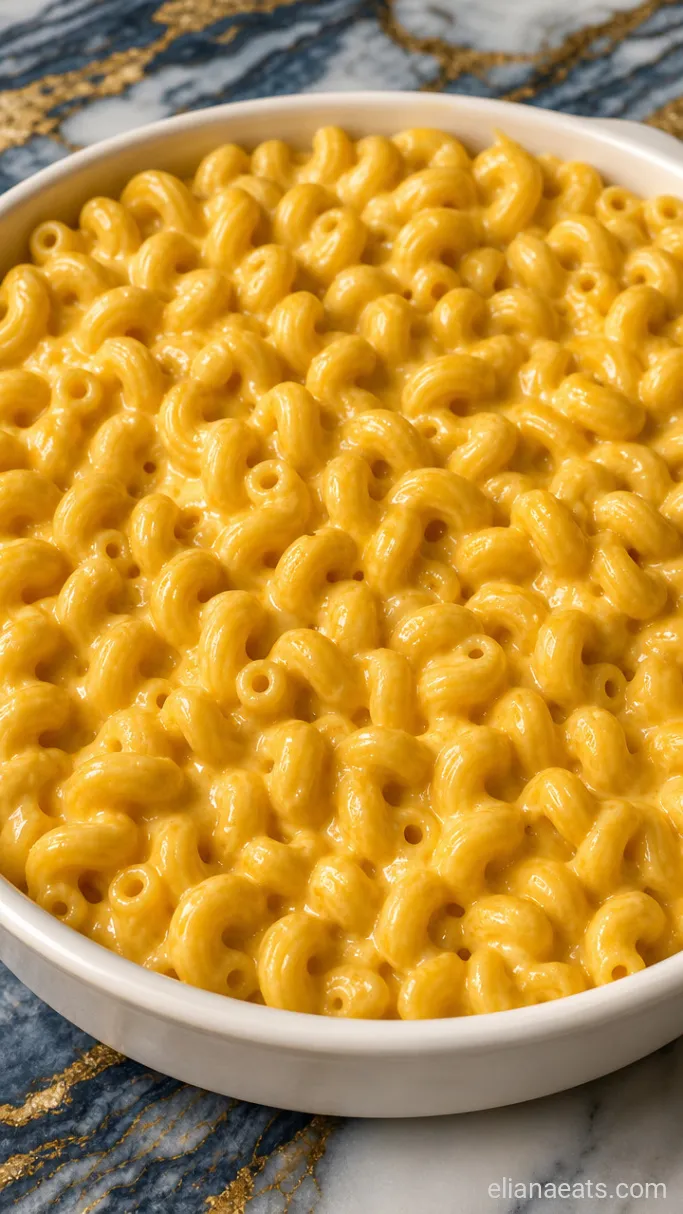
Add the drained cavatappi to the cheese sauce and fold everything together with a wooden spoon or spatula until every piece of pasta is coated. Transfer the mixture to a broiler-safe baking dish, roughly 9×13 inches. Spread it out into an even layer so the top is flat and ready for the breadcrumbs.
The pasta should look almost overwhelmingly saucy at this point, and that is correct. It will absorb the extra sauce under the broiler.
Step 5: Broil the Breadcrumb Top and Serve
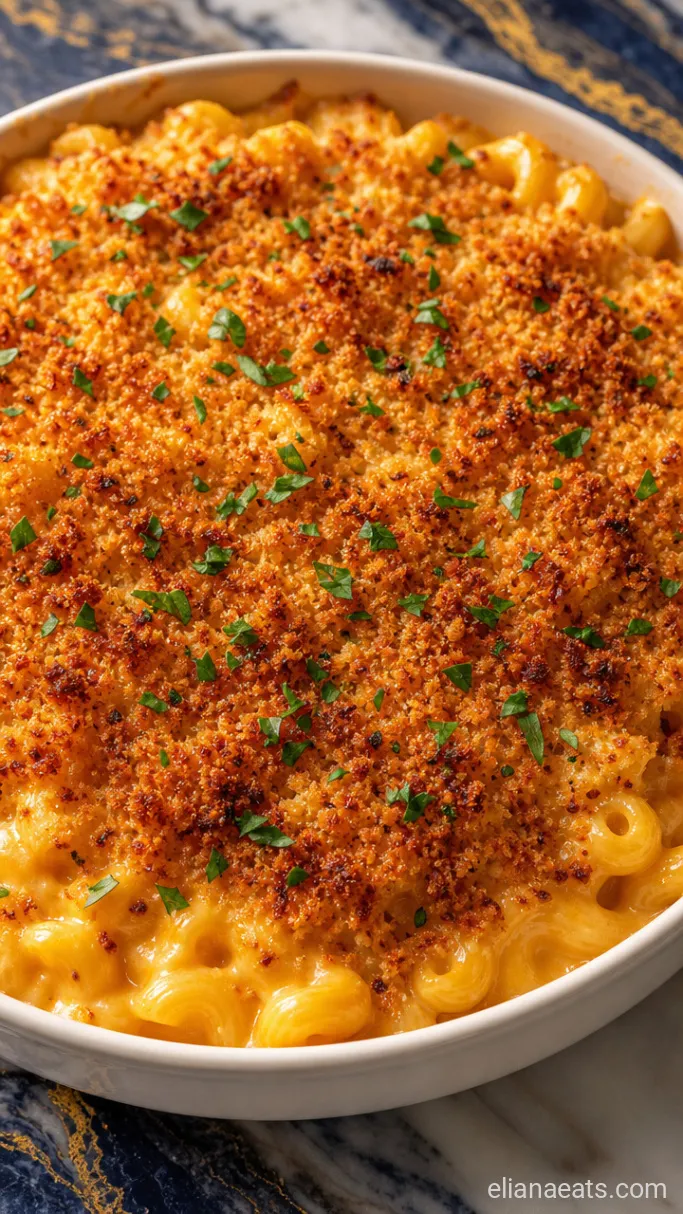
Move an oven rack to about 6 inches from the broiler element and set the broiler to high. In a small bowl, toss the 1/2 cup panko breadcrumbs with the 1 tbsp melted unsalted butter until evenly coated, then scatter them in an even layer across the top of the pasta.
Slide the dish under the broiler and cook for 3 to 4 minutes, watching closely the whole time. You want the breadcrumbs deep golden brown and the edges of the sauce just beginning to bubble. Pull it out, scatter the 1 tbsp chopped fresh parsley across the top, and bring it straight to the table.
Recipe Tips
- Shred your own cheese. It takes an extra 3 minutes and makes a real difference. Pre-shredded cheese is coated in cellulose or potato starch, and that coating is what causes sauces to turn grainy instead of smooth.
- Do not walk away from the broiler. Panko goes from golden to burnt in under a minute. Stay at the oven the entire 3 to 4 minutes.
- Salt the pasta water generously. It should taste faintly like seawater. This is the only chance to season the pasta itself, and under-seasoned pasta makes the whole dish taste flat even if the sauce is well-seasoned.
- Let the sauce cool for 2 minutes before mixing in the pasta. If the sauce is at a full simmer when you add the pasta, the residual heat can cause the cheese to tighten up around the pasta unevenly.
Broil times vary a little by oven and baking dish material:
| Dish Material | Broiler Distance | Approximate Time |
|---|---|---|
| Ceramic | 6 inches | 4 minutes |
| Cast iron | 6 inches | 3 minutes |
| Glass (Pyrex) | 6 inches | 4 to 5 minutes |
| Metal baking pan | 6 inches | 3 minutes |
How To Store
- Refrigerate – Transfer leftovers to an airtight container and refrigerate for up to 4 days. The sauce will thicken as it cools, which is normal.
- Reheating – Reheat portions in a saucepan over medium-low heat with a splash of whole milk (about 2 tbsp per serving), stirring until the sauce loosens back to its original texture. The microwave works in a pinch but stir halfway through and add the milk the same way.
What To Serve With Mac and Cheese
This creamy pasta dish works best alongside something with char or acidity to cut through the richness of the sauce. A simply seasoned grilled ribeye or sirloin is the natural pairing, since the savory fat from the beef and the sharp cheddar sauce reinforce each other. A crisp green salad dressed with red wine vinegar and a little olive oil is also smart here, because the acid does the job of resetting your palate between bites. Roasted broccoli or asparagus with lemon juice works for the same reason and keeps the meal from feeling too heavy.
Frequently Asked Questions
Can I make this ahead of time?
Yes. Assemble the dish up through coating the pasta and spreading it in the baking dish, cover it tightly, and refrigerate for up to 24 hours. Add the buttered panko right before broiling, not before, or it will absorb moisture and go soft.
Can I double the recipe for a larger group?
Yes, the sauce scales cleanly. Use a large roasting pan or two 9×13 dishes, and expect to add 1 to 2 extra minutes under the broiler for the second dish if you are doing them back to back.
My sauce looks grainy. What went wrong?
The cheese was likely added over heat that was too high. If it happens, take the pan off the heat entirely and whisk in 2 to 3 tbsp of warm milk; it often comes back together with a little patient whisking.
Can I use a different pasta shape?
Yes. Any short pasta with ridges or tubes works well, such as rigatoni, penne, or shells. Flat shapes like farfalle will hold less sauce and give you a different result.
—
Mac and Cheese Recipe
Ingredients
Method
- Bring a large pot of well-salted water to a boil over high heat. Add the 12 oz cavatappi and cook for 1 minute less than package directions (about 7 to 8 minutes). Drain without rinsing and set aside.
- Melt 3 tbsp unsalted butter in a large heavy-bottomed saucepan over medium heat. Add 3 tbsp all-purpose flour and whisk for 1 minute until the mixture smells nutty and looks pale golden.
- Slowly whisk in 2 cups whole milk and 1 cup heavy cream. Increase heat to medium-high and whisk until the sauce thickens and coats the back of a spoon, about 4 to 5 minutes.
- Reduce heat to low. Add 2 cups sharp cheddar and 1 cup Gruyère in handfuls, whisking each addition until melted. Stir in 1 tsp Dijon mustard, 1/2 tsp garlic powder, 1/2 tsp onion powder, 1/2 tsp kosher salt, and 1/4 tsp white pepper. Taste and adjust salt.
- Add the drained cavatappi to the sauce and fold to coat. Transfer to a broiler-safe 9×13 baking dish and spread into an even layer.
- Move an oven rack 6 inches from the broiler and set broiler to high. Toss 1/2 cup panko breadcrumbs with 1 tbsp melted unsalted butter and scatter over the pasta. Broil for 3 to 4 minutes until the breadcrumbs are deep golden brown. Scatter 1 tbsp chopped fresh parsley over the top and serve immediately.
