
Olive Garden Carbonara Copycat Recipe

This Olive Garden carbonara recipe brings that creamy, smoky pasta dish home, and it comes together in about 30 minutes on a weeknight. If you love the restaurant version, this one hits all the same notes — pancetta, a silky egg-based sauce, and plenty of Parmesan — without the reservation or the bill.
The sauce is the thing here. It coats every strand of pasta without a drop of heavy cream, just eggs, cheese, and a little pasta water doing all the work.
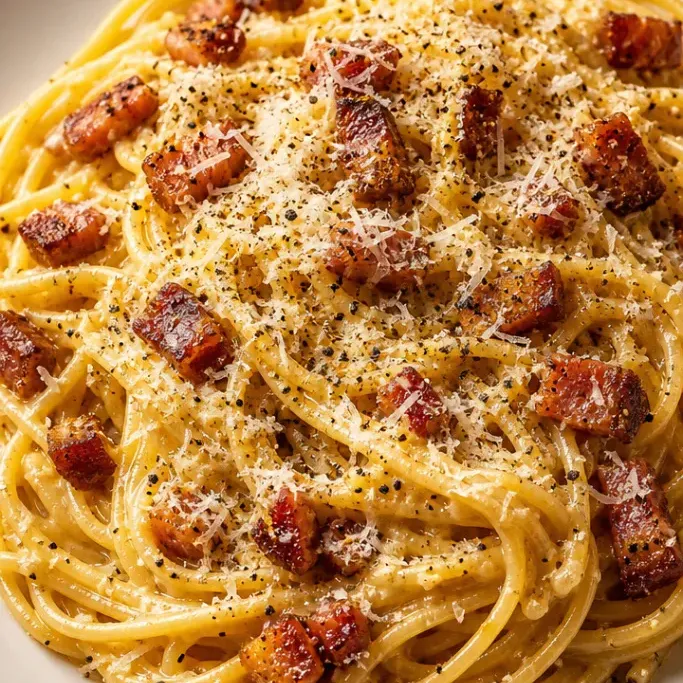
Why I Love This Recipe
The sauce clings to the pasta because the heat from the noodles gently sets the eggs rather than scrambling them. That technique is what gives you something silky instead of sticky.
The pancetta gets crisp and stays crisp, so you get a little crunch in every bite against that smooth sauce.
This is the version I keep coming back to when I want something that feels indulgent but takes less effort than most pasta dishes.
Recipe Ingredients
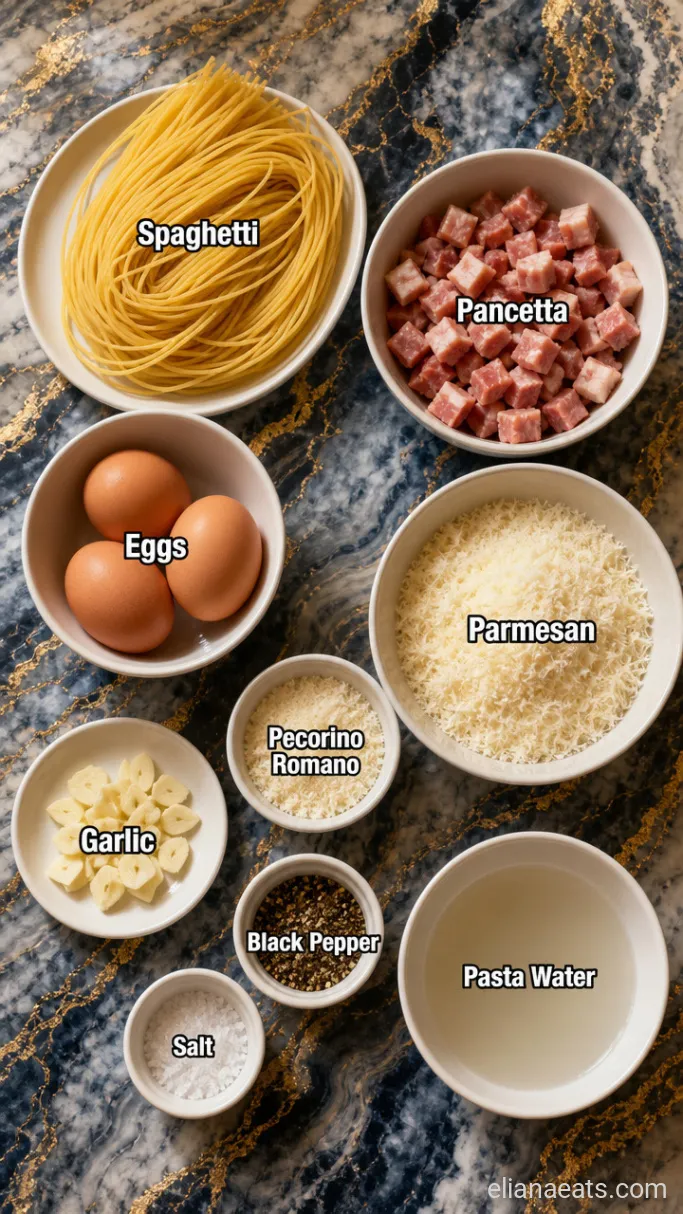
- 12 oz spaghetti – Standard dried spaghetti works well; bucatini is a fine swap for a thicker chew
- 6 oz pancetta – Diced, not sliced; guanciale is the traditional substitute if you can find it
- 3 large eggs – Room temperature blends more smoothly into the sauce
- 1 large egg yolk – Adds extra richness to the sauce without making it heavy
- 1 cup finely grated Parmesan – Grate it yourself from a block; pre-grated won’t melt as smoothly
- 1/2 cup finely grated Pecorino Romano – Adds a sharper, saltier edge; use all Parmesan if unavailable
- 4 cloves garlic – Thinly sliced, not minced, so they infuse the fat without burning
- 1 tsp freshly cracked black pepper – Coarse crack, not fine grind; this is a main flavor, not background
- 1/2 tsp kosher salt – For the pasta water; adjust to taste at the end
- 1/4 cup reserved pasta water – Starchy water loosens the sauce; set it aside before draining
Variations / Substitutions
- Guanciale instead of pancetta – Renders a little more fat and gives the sauce a slightly deeper, porky flavor.
- All Parmesan instead of Parmesan and Pecorino – Milder and a little less sharp, still works well.
- Bucatini or rigatoni instead of spaghetti – Bucatini gives a chewier bite; rigatoni catches sauce inside the tubes.
- Smoked bacon instead of pancetta – The smokiness comes through more assertively, which some people love and others find too strong.
- Add a pinch of chili flakes – Stirs in a gentle heat that cuts through the richness of the egg sauce.
- Dairy-free – This one is genuinely hard to adapt; the cheese is structural, not just a garnish, so there is no clean swap that gives the same result.
If you like creamy pasta dishes, the Olive Garden Alfredo dish is worth making next.
How To Make Carbonara
Step 1: Render the Pancetta
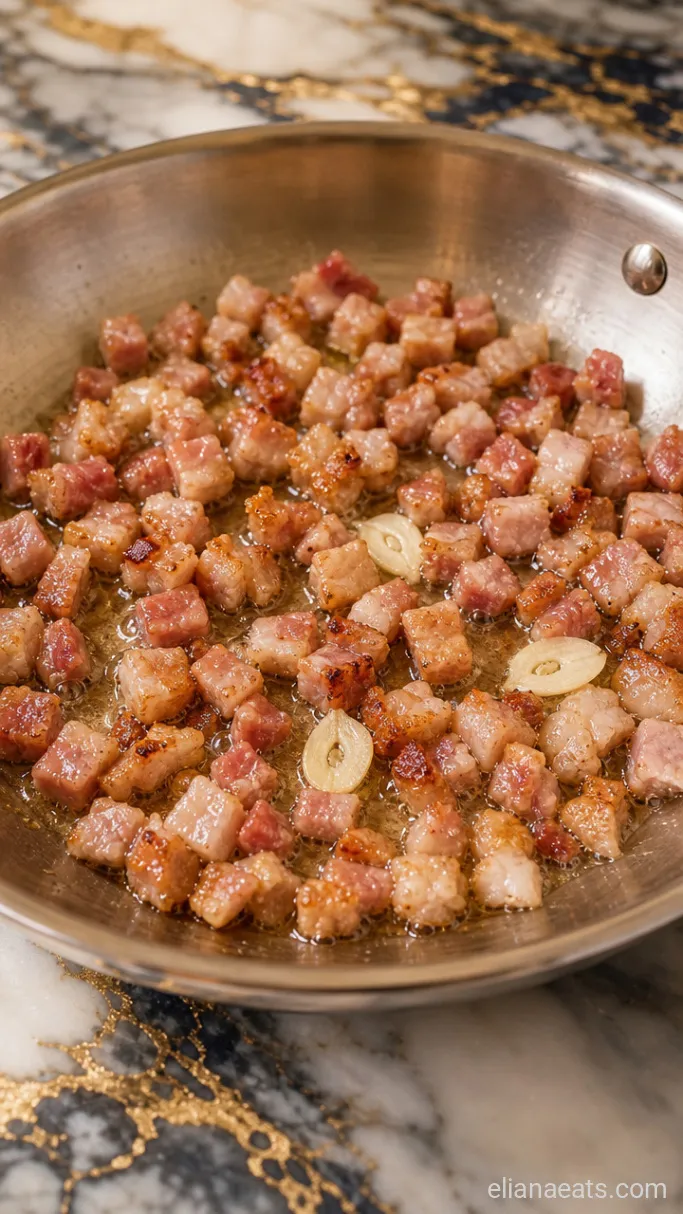
Bring a large pot of well-salted water to a boil, then set a large skillet over medium heat. Add the 6 oz diced pancetta to the cold skillet and let it render for 7 to 9 minutes, stirring occasionally, until the fat has run out and the pieces are golden and crisp at the edges.
Add the 4 cloves thinly sliced garlic to the pan and cook for 1 more minute, just until softened and fragrant. Pull the pan off the heat entirely, you do not want the fat screaming hot when the sauce goes in later.
The pan drippings are part of the sauce, so do not drain them. If your pancetta was particularly fatty and you have more than about 3 tbsp of fat in the pan, pour a little off.
Step 2: Whisk the Egg Sauce
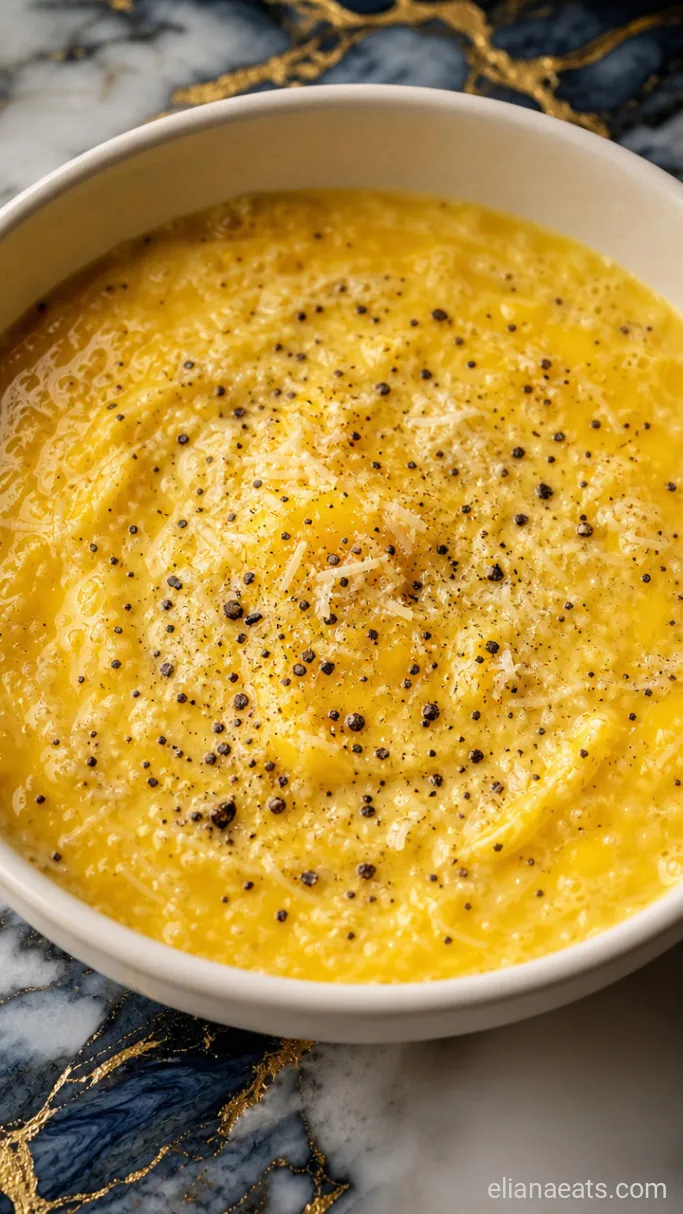
While the pancetta rests, combine the 3 large eggs, 1 large egg yolk, and the cheese combination of 1 cup grated Parmesan and 1/2 cup grated Pecorino Romano in a medium bowl. Whisk until you have a thick, paste-like mixture, about 1 minute.
Grind in the 1 tsp cracked black pepper and whisk again. The mixture should look like a coarse yellow paste at this point, thick enough that it falls off a spoon in ribbons rather than running freely.
Step 3: Cook the Spaghetti
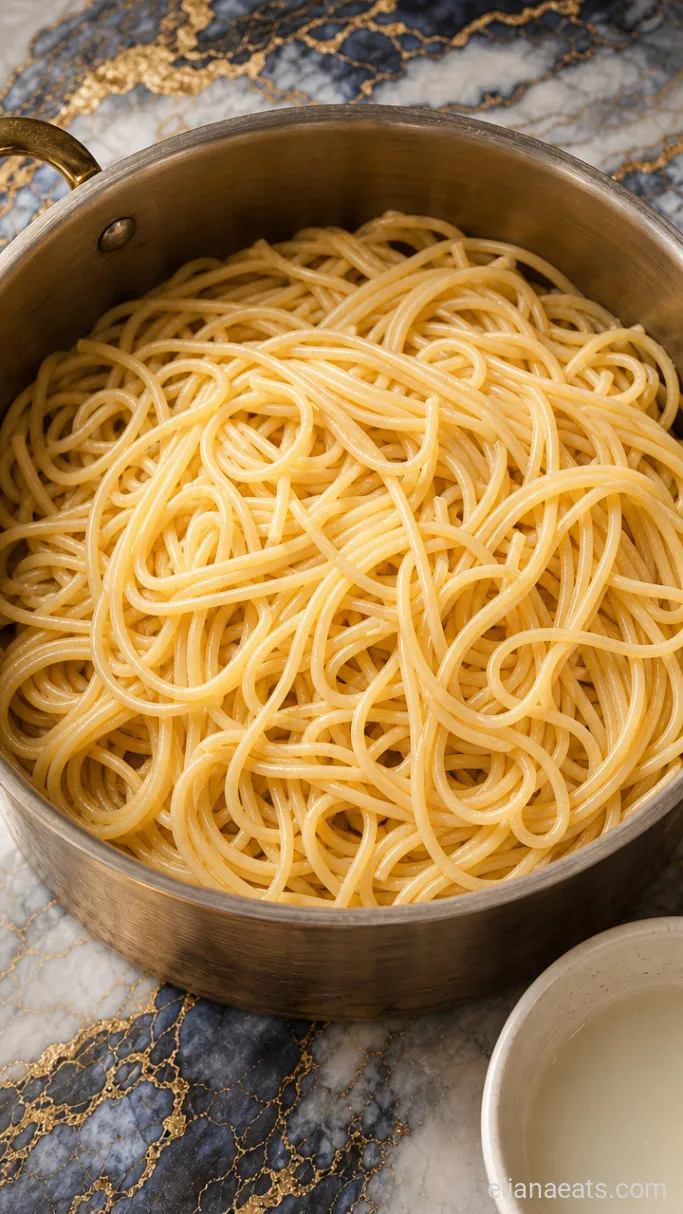
Drop the 12 oz spaghetti into the boiling salted water and cook according to package directions until just al dente, usually 9 to 11 minutes. Before you drain it, scoop out at least 1/2 cup of the starchy pasta water and set it aside.
Drain the pasta but do not rinse it. You want it hot and a little wet when it hits the pan.
Step 4: Toss the Pasta in the Pancetta Fat
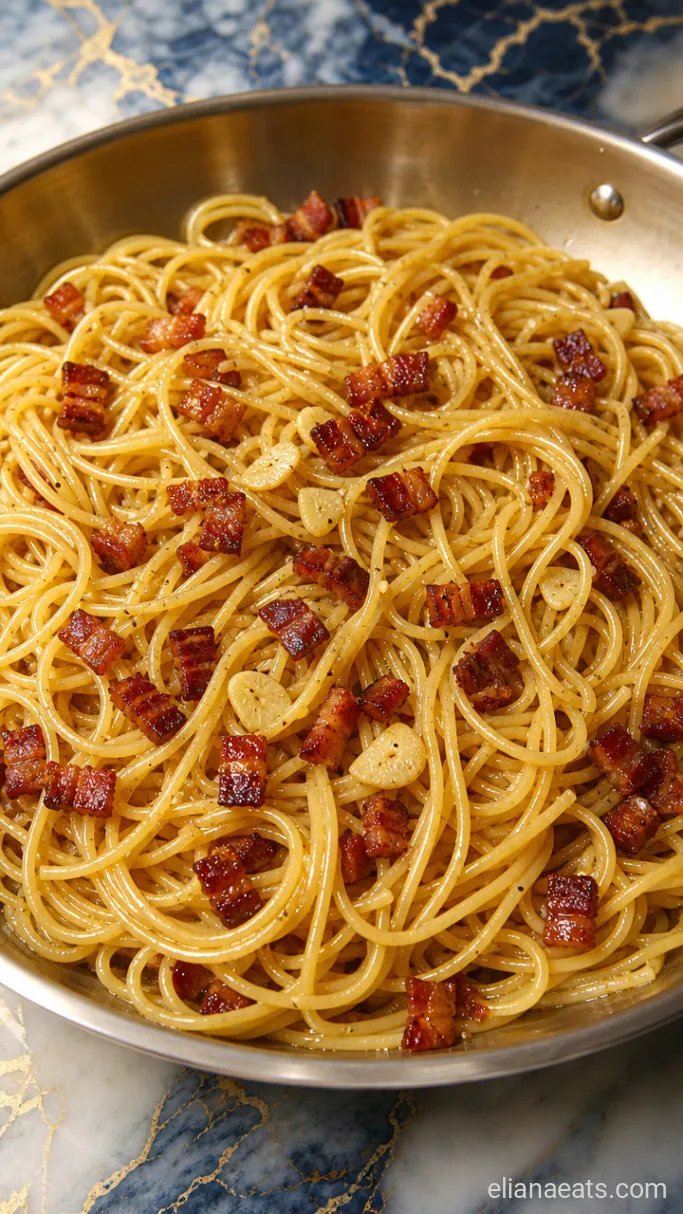
Transfer the hot drained spaghetti straight into the skillet with the pancetta and rendered fat. Toss it over medium-low heat for about 1 minute so every strand picks up the fat and the pancetta gets mixed in. The pasta should look glossy and slightly translucent where the fat has coated it.
Take the pan off the heat before the next step. The residual heat in the pasta is all you need, and a pan that is too hot will scramble your eggs rather than give you a sauce.
Step 5: Fold in the Egg Mixture and Plate
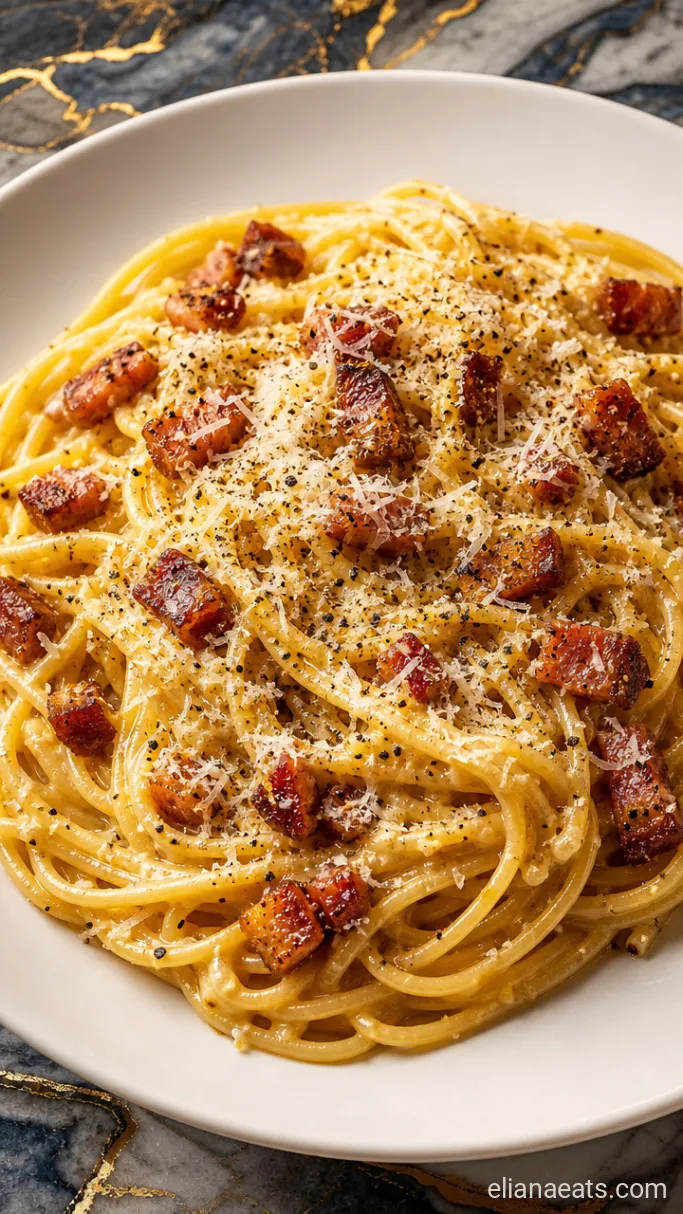
With the pan off the heat, pour the egg and cheese mixture over the pasta. Toss quickly and constantly with tongs, adding the reserved pasta water a splash at a time, starting with about 2 tbsp, until the sauce turns glossy and coats every strand. You may need up to the full 1/4 cup of reserved pasta water to loosen it.
Twirl the pasta into 4 shallow bowls with tongs, then finish each with an extra pinch of grated Parmesan, a few shards of pancetta from the pan, and a generous crack of black pepper over the top.
Recipe Tips
- Use room-temperature eggs. Cold eggs shock when they hit the hot pasta and increase the chance of scrambling. Pull them from the fridge while the pancetta renders.
- Grate the cheese on the smallest holes of a box grater. Cheese that is too coarsely grated will clump rather than melt into the sauce.
- Work fast once the pasta is drained. The window for a smooth sauce is when the pasta is hottest. Have your egg mixture and pasta water within arm’s reach before you drain.
- Taste before adding salt. Pancetta, Parmesan, and Pecorino are all quite salty. Most of the time, no extra salt is needed at the end.
Cook times by pasta shape and pot size:
| Pasta Shape | Pot Size | Boil Time (al dente) |
|---|---|---|
| Spaghetti | 6 qt | 9 to 11 mins |
| Bucatini | 6 qt | 10 to 12 mins |
| Rigatoni | 6 qt | 10 to 13 mins |
How To Store
- Refrigerate – Store leftovers in an airtight container for up to 3 days. The sauce will firm up as it cools.
- Reheating – Add a small splash of water to the pasta before reheating in a skillet over low heat, stirring constantly for 3 to 4 minutes. The sauce will loosen back up as it warms. Avoid the microwave if you can; it tends to dry the pasta out unevenly.
What To Serve With Carbonara
A simple green salad with a sharp vinaigrette works well here because the acidity cuts through the richness of the egg sauce. Garlic bread is the obvious move, but a crusty plain baguette is actually better because the neutral flavor lets the pasta stay the focus. If you want to round it out into a bigger spread, a light tomato-based soup like a broth minestrone adds contrast without competing with the creamy pasta.
Frequently Asked Questions
Can I make this ahead of time?
Freshly prepared carbonara is best made and served right away. The sauce sets as it cools and does not re-emulsify perfectly, though reheating with a splash of water in a skillet gets you close.
My sauce turned into scrambled eggs. What went wrong?
The pan was too hot when the egg mixture was added. Pull the skillet fully off the heat for at least 30 seconds before pouring in the egg and cheese mixture.
Can I double this recipe?
Yes, but cook the pasta in 2 batches or a very large pot so it has room to move and cook evenly. The sauce quantity doubles straightforwardly.
Do I need both Parmesan and Pecorino?
No. All Parmesan gives a milder, nuttier result. The Pecorino adds a sharper, saltier note, but the recipe works without it.
—
Olive Garden Carbonara Recipe
Ingredients
Method
- Add diced pancetta to a cold large skillet over medium heat and render for 7 to 9 minutes until crisp. Add sliced garlic and cook 1 more minute, then pull the pan off the heat.
- Whisk together eggs, egg yolk, grated Parmesan, grated Pecorino Romano, and cracked black pepper in a bowl until a thick paste forms.
- Cook spaghetti in well-salted boiling water for 9 to 11 minutes until al dente. Reserve 1/2 cup pasta water, then drain without rinsing.
- Add hot drained spaghetti to the skillet with the pancetta fat and toss over medium-low heat for 1 minute until glossy. Remove from heat.
- Pour the egg and cheese mixture over the pasta and toss with tongs, adding reserved pasta water 2 tbsp at a time until the sauce is glossy and coats every strand. Twirl into 4 bowls and finish with extra Parmesan, remaining pancetta, and a crack of black pepper.
