
Olive Garden Shrimp Carbonara Copycat Recipe

This Olive Garden shrimp carbonara recipe brings that creamy, smoky pasta straight to your kitchen on a regular weeknight. It skips the reservation and the wait, and honestly, the version you make at home gives you more control over what goes in the bowl.
The sauce is rich and silky from egg yolks and Parmesan, the bacon adds a salty, slightly smoky bite, and the shrimp cook in under 4 minutes. Dinner is on the table in about 30 minutes.
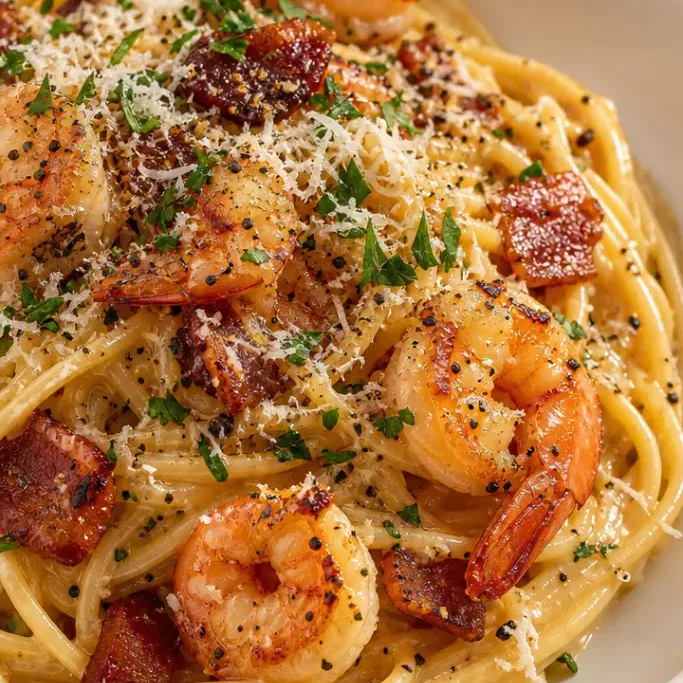
Why I Love This Recipe
The sauce here clings to every strand of pasta in a way a cream-only sauce never does. The egg yolks thicken it without making it heavy, and the starchy pasta water keeps the whole thing loose and glossy.
The shrimp are the right call for this dish because they absorb the smoky bacon flavor from the fat in the pan before the sauce ever goes in. That layering of fat-soluble flavor is why it tastes like more than the sum of its parts.
This is the version I keep coming back to on nights when I want something that feels a little indulgent without actually being complicated.
Recipe Ingredients
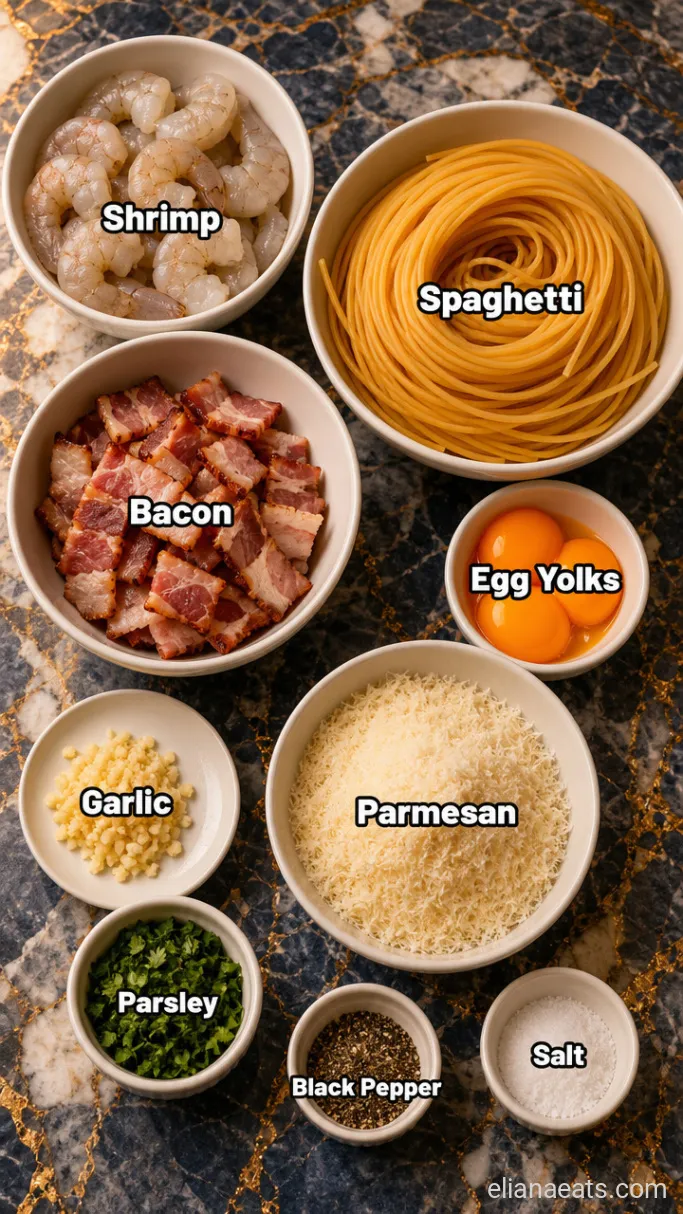
- 12 oz spaghetti – Standard dried spaghetti works great; fettuccine is a fair swap
- 1 lb large shrimp (21/25 count), peeled and deveined – Fresh or thawed frozen both work; pat dry before cooking
- 6 oz thick-cut bacon – Cut into small pieces; pancetta is a classic substitute
- 4 large egg yolks – Room temperature emulsifies more smoothly than cold
- 1 cup finely grated Parmesan – Grate it yourself; pre-grated won’t melt into the sauce properly
- 3 cloves garlic, minced – Adds background warmth without overpowering the sauce
- 1/2 cup reserved pasta water – The starch in this is what keeps the sauce from clumping
- 1/2 tsp freshly cracked black pepper, plus more to finish – Freshly cracked is noticeably sharper than pre-ground
- 1/4 tsp kosher salt, plus more for pasta water – For seasoning the shrimp before they hit the pan
- 2 tbsp fresh flat-leaf parsley, chopped – Adds a green note to finish; skip it if you don’t have it
Variations / Substitutions
- Pancetta instead of bacon – Milder and slightly less smoky, but more traditionally carbonara in flavor.
- Chicken instead of shrimp – Slice 1 lb chicken breast thin and cook 5 to 6 minutes per side; the sauce works exactly the same way.
- Pecorino Romano instead of Parmesan – Sharper and saltier, so taste before adding any extra salt.
- Gluten-free pasta – Use a rice-based or chickpea pasta and reserve the pasta water at the same stage; the starch content is lower, so you may need a touch more to loosen the sauce.
- Add heat – A pinch of red pepper flakes in with the garlic gives the sauce a low, slow warmth.
- No dairy – A full dairy-free carbonara is tricky because the Parmesan is structural here, but a hard aged vegan Parmesan-style cheese finely grated will get you close.
If you like creamy pasta nights, also look up Olive Garden Fettuccine Alfredo Copycat Recipe.
How To Make Shrimp Carbonara
Step 1: Boil the Spaghetti
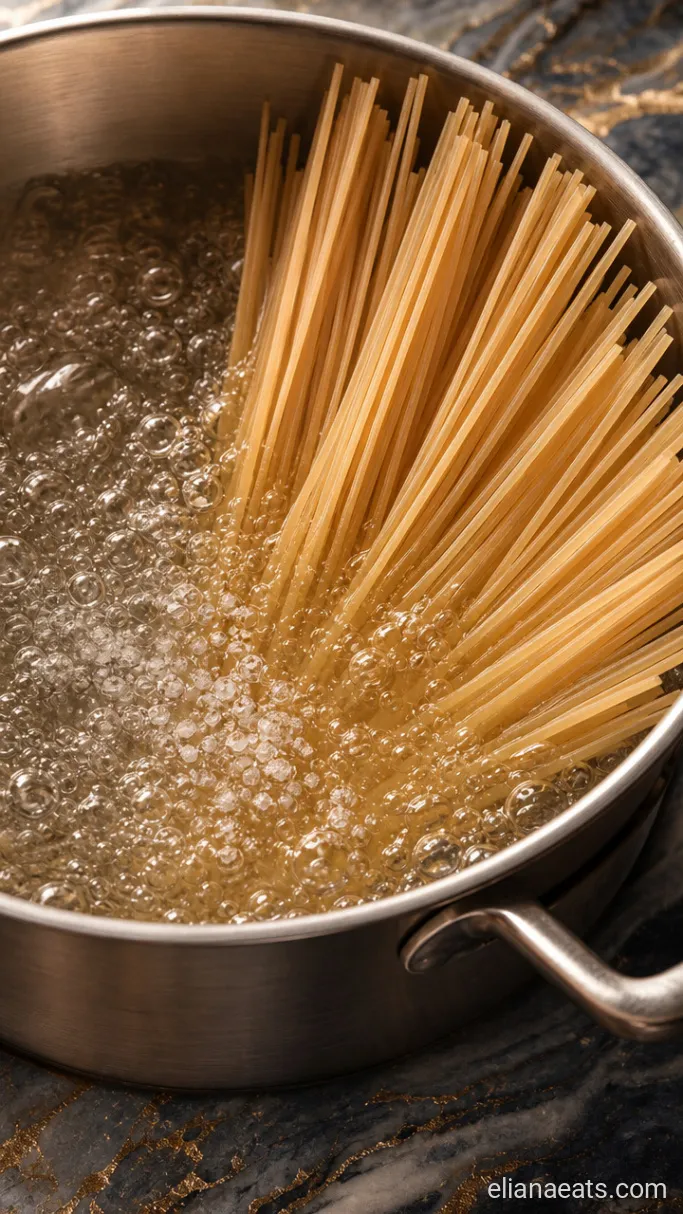
Bring a large pot of water to a rolling boil over high heat. Add enough kosher salt that it tastes faintly like the sea, then add the 12 oz spaghetti. Cook according to the package directions until just al dente, typically 8 to 10 minutes. Before you drain anything, scoop out at least 1 cup of pasta water and set it aside.
The pasta should have a tiny bit of resistance in the center when you bite it. It will finish cooking briefly in the pan, so pulling it a minute early is the right call.
Step 2: Render the Bacon
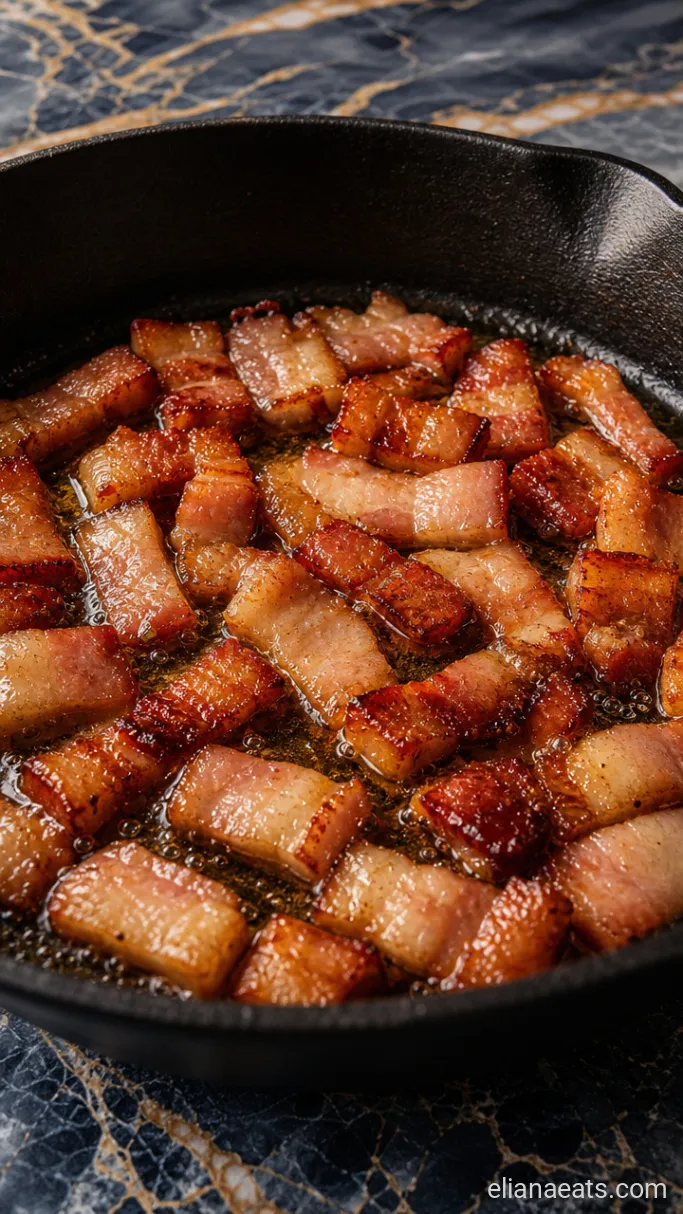
While the pasta cooks, put the 6 oz thick-cut bacon pieces in a large, cold skillet and set it over medium heat. Let them render slowly for 7 to 9 minutes, stirring occasionally, until the fat has pooled in the pan and the bacon pieces are golden and crisp at the edges.
Use a slotted spoon to transfer the bacon to a paper towel-lined plate, but leave all the rendered fat in the pan. That fat is going to provide a shrimp flavor infusion and eventually enhance the sauce.
Step 3: Sear the Shrimp
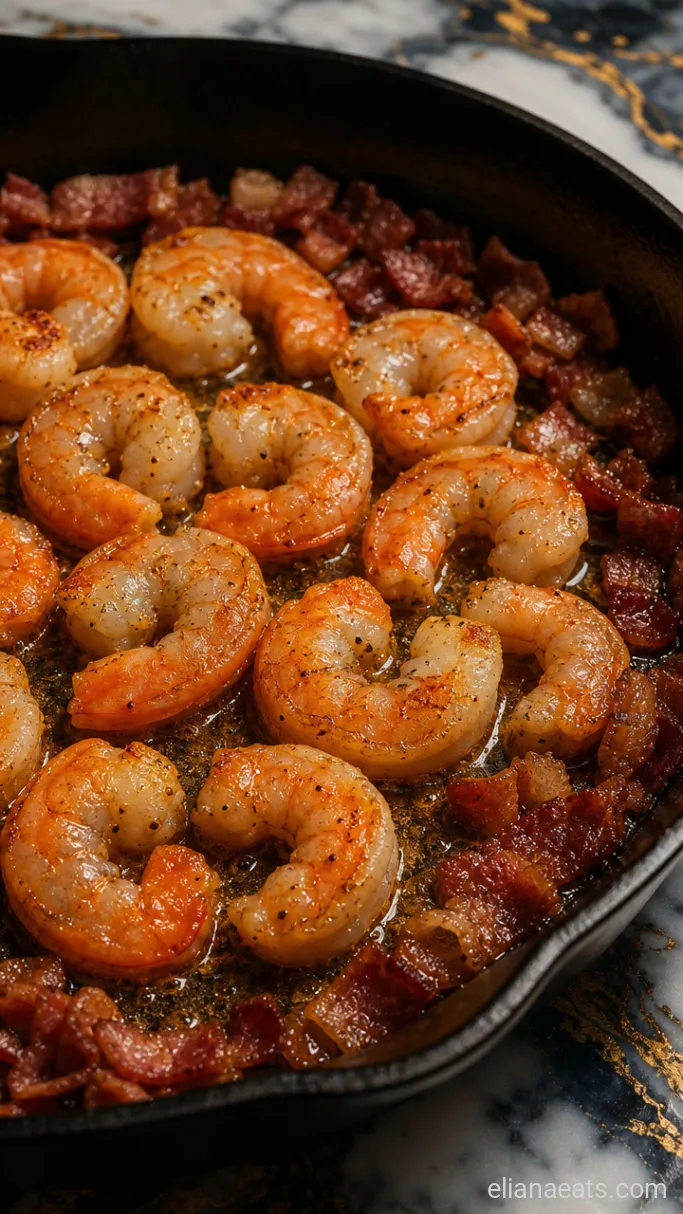
Pat the 1 lb shrimp dry with paper towels, then season them with the 1/4 tsp kosher salt. Raise the heat under the skillet to medium-high. Add the shrimp to the bacon fat in a single layer and cook for about 2 minutes per side, until they are pink and just curled into a loose C shape.
If a shrimp curls tight into an O shape, it is overcooked. Pull them off the heat at the C stage and they will carry over perfectly. Transfer the shrimp to the same plate as the bacon.
Step 4: Toast the Garlic
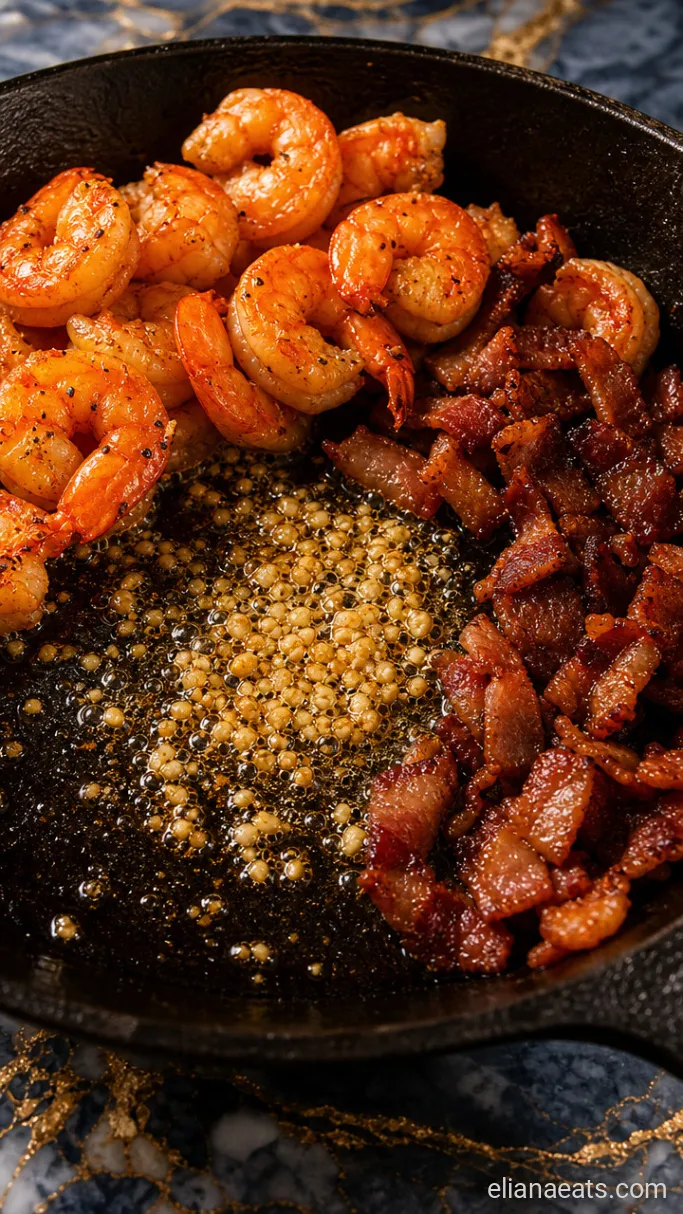
Reduce the heat to low. Add the 3 cloves minced garlic directly to the fat remaining in the skillet and stir for 30 to 45 seconds, until the garlic is fragrant and just starting to turn golden at the edges.
Don’t walk away here. Garlic goes from golden to bitter in less than a minute at this temperature, and there is no fixing a burnt-garlic carbonara sauce.
Step 5: Whisk the Egg Sauce
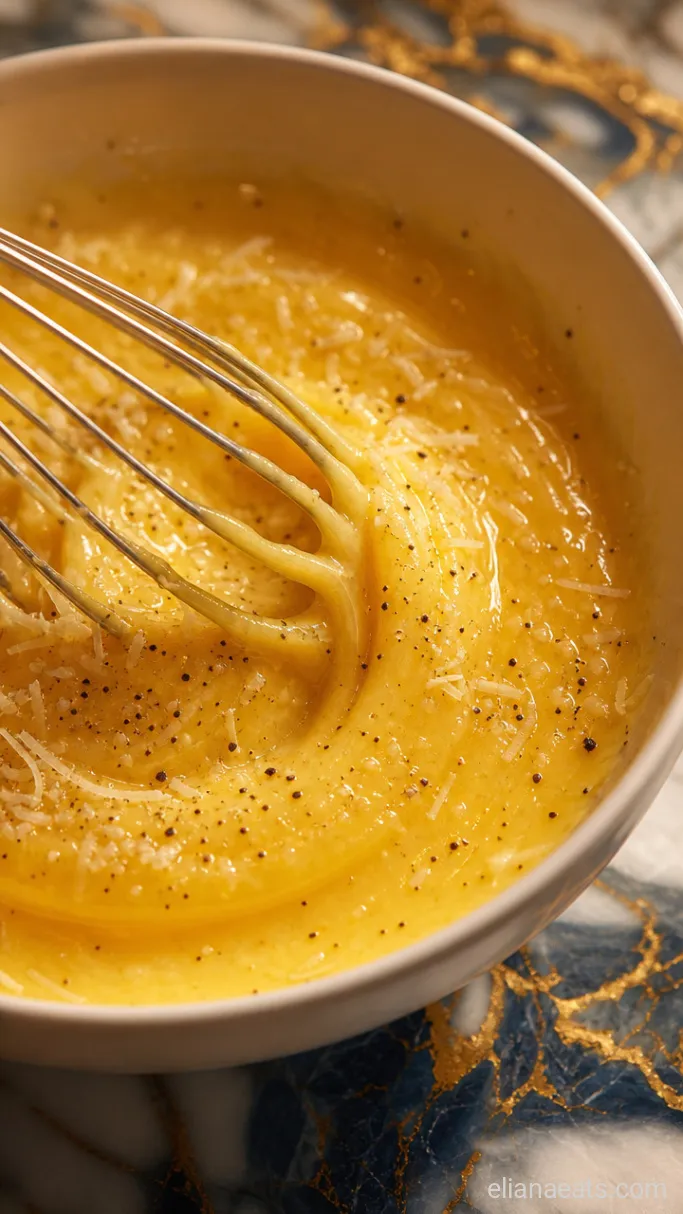
In a medium bowl, whisk together the 4 large egg yolks, the 1 cup finely grated Parmesan, the 1/2 tsp cracked black pepper, and 3 tbsp of the reserved pasta water. The mixture should look thick and pale yellow, almost like a loose custard.
Adding a little warm pasta water to the eggs before they hit the pan tempers them slightly, which makes it much less likely you will end up with scrambled egg bits in your sauce.
Step 6: Toss the Pasta and Finish the Sauce
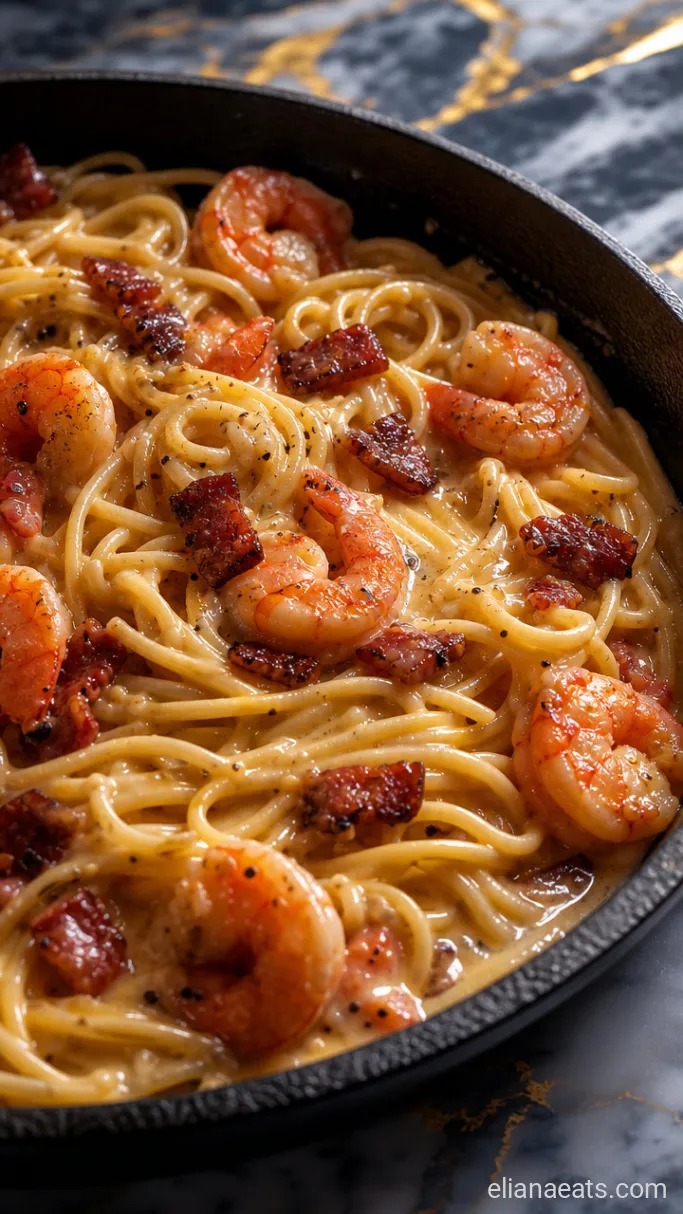
Turn the heat off completely under the skillet. Add the drained spaghetti to the pan and toss it in the garlic fat for about 30 seconds. Then pour the egg mixture over the pasta and toss quickly and continuously for 1 to 2 minutes, adding the remaining pasta water a splash at a time until the sauce is silky and coats every strand.
The residual heat in the pan and the pasta is exactly enough to thicken the egg yolks into a sauce without scrambling them. Keep tossing the whole time so no one spot gets too hot.
Step 7: Plate and Garnish
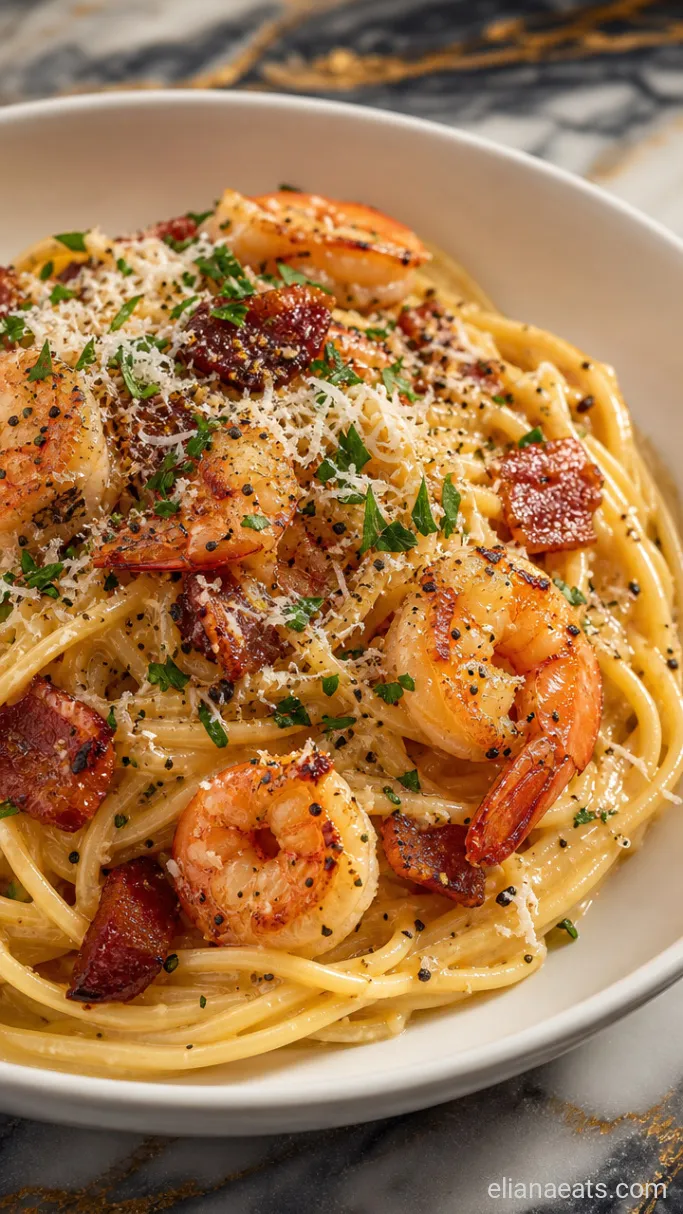
Add the sizzling shrimp and bacon back into the pan and give everything one final toss to combine. Divide the pasta among 4 bowls, twisting it into a loose mound with tongs.
Finish each bowl with a small handful of extra Parmesan, a few extra cracks of black pepper, and the 2 tbsp chopped fresh parsley scattered over the top. Serve immediately while the sauce is still glossy.
Recipe Tips
- Dry the shrimp well. Any moisture on the surface will steam the shrimp instead of searing them, and you want that slightly golden crust for the best texture.
- Room temperature egg yolks matter. Cold yolks hit a hot pan faster and are more likely to seize. Set them out 15 minutes before you start cooking.
- Don’t skip the pasta water. It is easy to drain the pot before you remember to reserve it. Set a glass measuring cup right next to the stove before the pasta goes in.
- Use a wide pan. The more surface area you have for tossing the pasta in the sauce, the more evenly the egg mixture coats every strand. A 12-inch skillet is the minimum.
Cook times by pan and protein size:
| Shrimp Size | Per Side | Total Active Cook Time |
|---|---|---|
| 21/25 count (large) | 2 min | About 4 min |
| 31/40 count (medium) | 1.5 min | About 3 min |
| 16/20 count (extra-large) | 2.5 min | About 5 min |
How To Store
- Refrigerate – Store leftovers in an airtight container for up to 2 days. The sauce will thicken considerably as it cools.
- Reheating – Reheat gently in a skillet over low heat with 1 to 2 tbsp of water or chicken broth, tossing until the sauce loosens again. The microwave works but tends to overcook the shrimp; use 50% power in 30-second bursts if that is your only option.
What To Serve With Shrimp Carbonara
A simple green salad with a sharp vinaigrette works well here because the acid cuts through the richness of the egg-and-Parmesan sauce. Crusty bread is worth having on the table to catch any sauce left in the bowl. For a vegetable on the side, roasted broccolini at 425°F (220°C) for 12 minutes gets crisp and slightly charred, which holds its own next to a heavy pasta without competing with the flavors.
Frequently Asked Questions
Can I make the egg mixture ahead of time?
Yes, up to a few hours. Whisk the yolks and Parmesan together, cover the bowl, and refrigerate it. Let it come back to room temperature before it goes into the hot pan.
My sauce turned grainy. What happened?
The pan was likely still too hot when you added the egg mixture. Turn the heat fully off next time and wait 30 seconds after removing it from the burner before tossing.
Can I double the recipe for a crowd?
You can, but do it in 2 separate pans rather than one giant batch. A single large skillet gets overcrowded, the pasta steams instead of tossing freely, and the sauce coats unevenly.
Does this work with frozen shrimp?
Yes. Thaw them overnight in the fridge or under cold running water for about 10 minutes, then pat them very dry before they go into the pan.
—
Shrimp Carbonara Recipe
Ingredients
Method
- Boil a large pot of salted water, cook the 12 oz spaghetti until al dente (8 to 10 minutes), and reserve at least 1 cup of pasta water before draining.
- Cook the 6 oz bacon pieces in a large cold skillet over medium heat for 7 to 9 minutes until crisp and golden. Remove with a slotted spoon, leaving the fat in the pan.
- Pat the 1 lb shrimp dry, season with 1/4 tsp kosher salt, raise heat to medium-high, and sear in the bacon fat for about 2 minutes per side until pink and curled. Remove and set aside with the bacon.
- Reduce heat to low, add the 3 cloves minced garlic to the pan, and stir for 30 to 45 seconds until just golden and fragrant.
- Whisk the 4 egg yolks, 1 cup Parmesan, 1/2 tsp black pepper, and 3 tbsp reserved pasta water together in a bowl until thick and smooth.
- Turn the heat off, add the drained spaghetti to the pan, toss for 30 seconds in the garlic fat, then pour in the egg mixture and toss continuously for 1 to 2 minutes, adding reserved pasta water a splash at a time until the sauce is silky.
- Return the shrimp and bacon to the pan, toss to combine, divide into 4 bowls, and finish with extra Parmesan, cracked black pepper, and the 2 tbsp chopped parsley.
