
KFC 11 Herbs and Spices Copycat Recipe

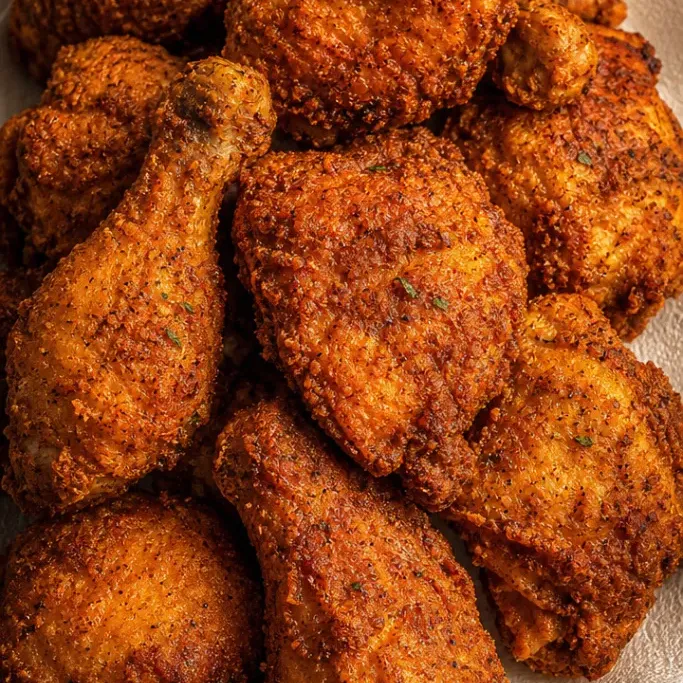
This KFC 11 herbs and spices recipe gives you that iconic fried chicken crust at home, with a seasoning blend that is shockingly close to the real thing. If you have been curious about the Colonel’s secret, this is the version worth trying on a weeknight.
It comes together from pantry staples you likely already have, and the chicken is ready in about an hour from start to finish.
Why I Love This Recipe
The crust has real complexity. Celery salt and dried sage pull the blend away from generic “spicy chicken” territory and give it that slightly herbal, almost old-fashioned flavor that makes KFC taste like itself.
The double-dredge in seasoned flour is what gets you those craggly, textured edges that shatter when you bite in. No beer batter, no buttermilk overnight soak required.
This is the version I keep coming back to when I want fried chicken that actually tastes like something.
Recipe Ingredients
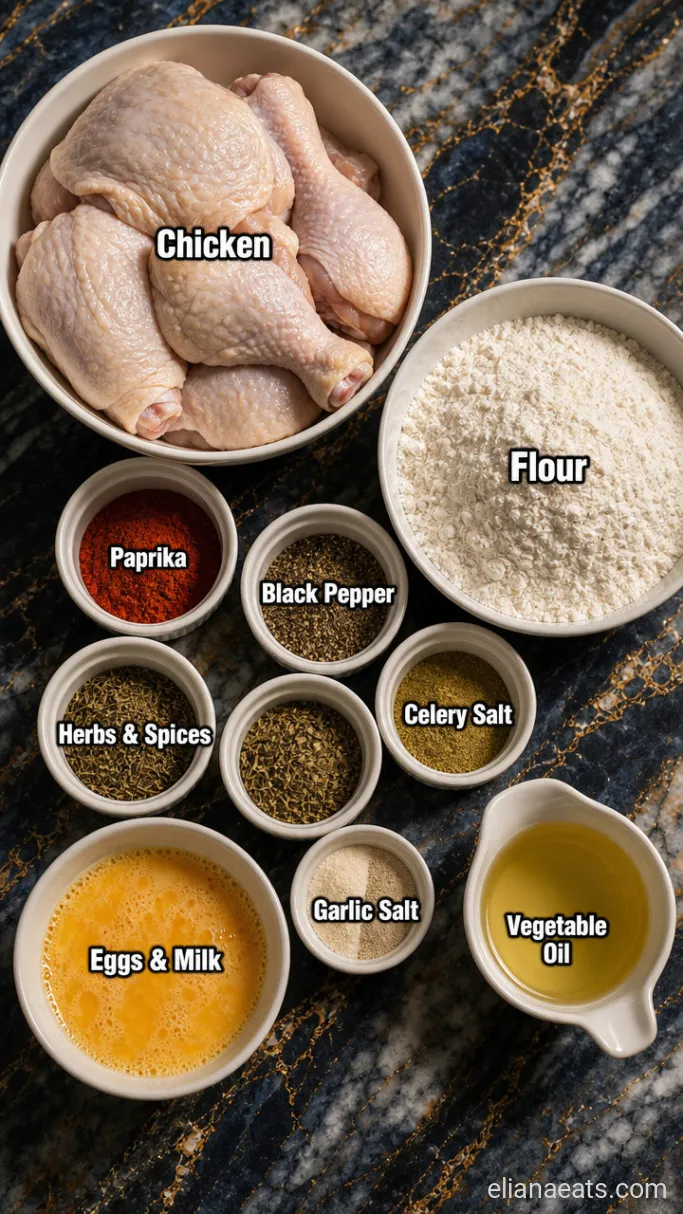
- 1 whole chicken (about 3.5 lbs), cut into 8 pieces – bone-in, skin-on pieces give you the juiciest result; you can use thighs and drumsticks only if you prefer dark meat
- 2 cups all-purpose flour – the base of the dredge; do not substitute self-rising flour
- 2 tsp salt – fine table salt, not kosher (it distributes more evenly through dry flour)
- 1 tsp dried thyme – one of the key herbal notes; do not skip it
- 1 tsp dried basil – adds a faintly sweet, green note
- 1 tsp dried oregano – earthy backbone to the blend
- 1 tsp celery salt – this one is non-negotiable; it gives the blend its distinctive savory depth
- 1 tsp black pepper – coarsely ground if you have it
- 1 tsp dried mustard – brings a low, tangy heat that is different from chili heat
- 1 tsp paprika – adds color and mild sweetness; use sweet, not smoked
- 1 tsp garlic salt – not garlic powder; the extra salt content is part of the balance
- 1/2 tsp dried sage – use sparingly; it is potent and essential to the flavor
- 1/2 tsp white pepper – warmer and more floral than black pepper; adds the back-of-the-throat heat
- 2 large eggs – beaten, for the egg wash that helps the dredge adhere
- 4 tbsp whole milk – whisked into the eggs to loosen the wash
- 4 cups vegetable oil – for frying; a neutral oil with a high smoke point works best; canola oil is a fine substitute
Variations / Substitutions
- Boneless chicken thighs – cook faster (about 8 minutes per side) and stay juicy; the crust-to-meat ratio changes but the flavor holds up well.
- Gluten-free flour blend – a 1:1 gluten-free flour swap works, though the crust is a little more fragile and will not stay quite as crisp.
- Add cayenne – 1/2 tsp of cayenne stirred into the flour blend turns this into a mildly spicy version without changing the overall character of the seasoning.
- Smoked paprika instead of sweet – the blend becomes a little bolder and more barbecue-adjacent; good, but different from the original.
- Dairy-free egg wash – replace the whole milk with unsweetened oat milk or water; the dredge still adheres well.
- Air fryer – spray the dredged pieces generously with cooking spray and air fry at 375°F (190°C) for 25 to 30 minutes, flipping once, until the internal temp hits 165°F (74°C). The crust is crispier and lighter than you would expect.
If you enjoy making fast food classics at home, you might also like trying a homemade spicy chicken sandwich inspired by the Popeyes Spicy Chicken Sandwich Copycat Recipe.
How To Make KFC 11 Herbs and Spices Chicken
Step 1: Mix the Seasoned Flour
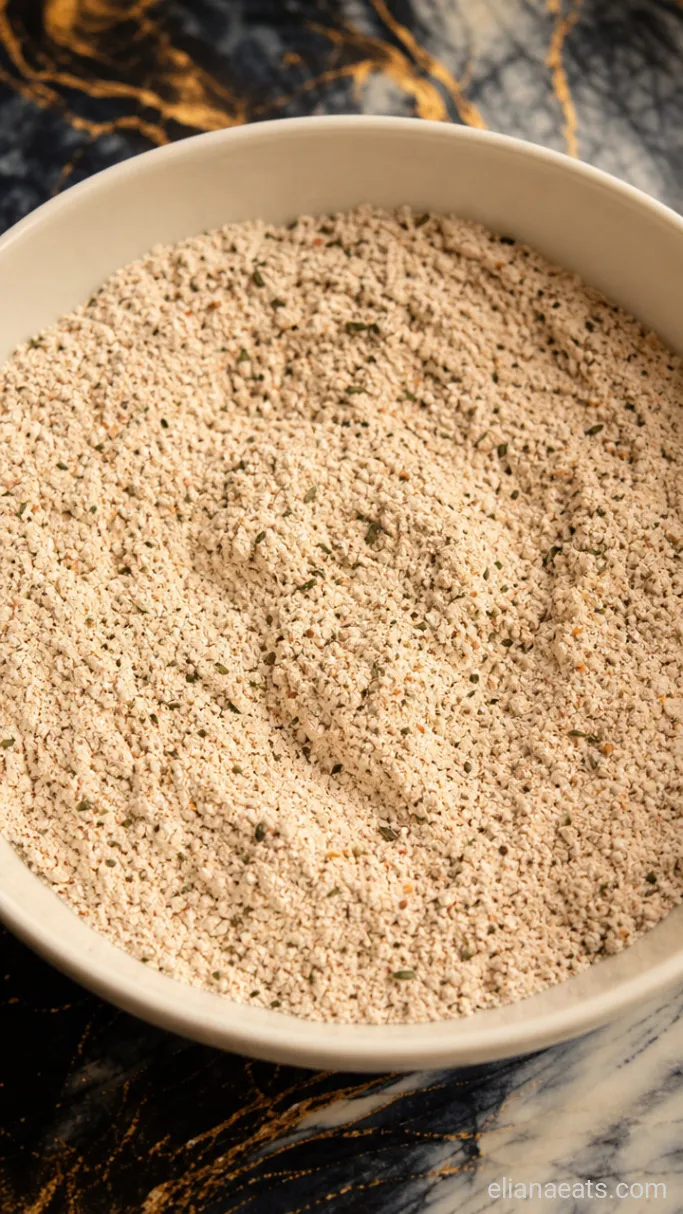
In a large shallow bowl or baking dish, combine the 2 cups all-purpose flour with a homemade seasoning blend that includes 2 tsp salt, 1 tsp dried thyme, 1 tsp dried basil, 1 tsp dried oregano, 1 tsp celery salt, 1 tsp black pepper, 1 tsp dried mustard, 1 tsp paprika, 1 tsp garlic salt, 1/2 tsp dried sage, and 1/2 tsp white pepper. Whisk everything together for about 30 seconds until the spices are evenly distributed through the flour. The mixture should look pale tan with visible specks of green and brown throughout.
In a separate bowl, beat the 2 large eggs with the 4 tbsp whole milk until the mixture is smooth and fully combined, about 20 seconds of brisk whisking.
Step 2: Dredge the Chicken Pieces
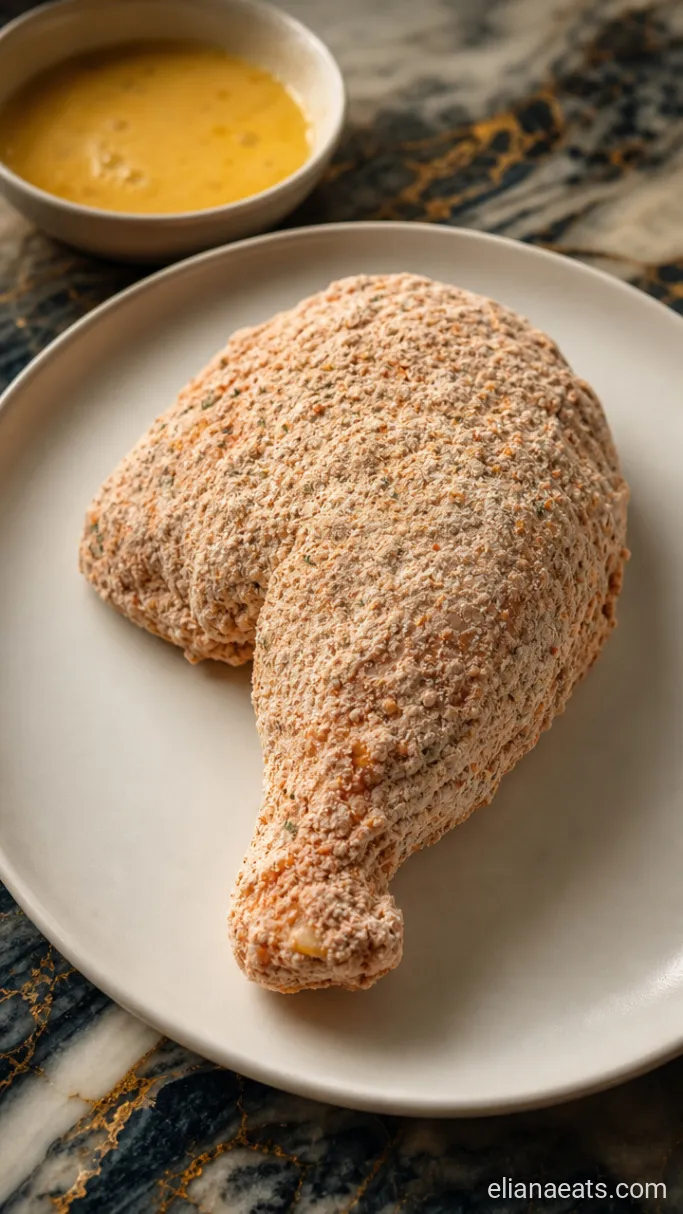
Working one piece at a time, press a piece of chicken firmly into the seasoned flour, making sure every surface is coated. Then dip it in the egg wash, letting the excess drip off for a second or two, then press it back into the flour a second time. That double dredge is what builds the craggy, textured crust. Set each coated piece on a wire rack or plate, and get all 8 pieces coated before the oil goes on.
Let the coated pieces sit for 5 minutes at room temperature. This short rest helps the coating bond to the surface so it does not slide off in the oil.
Step 3: Heat the Oil
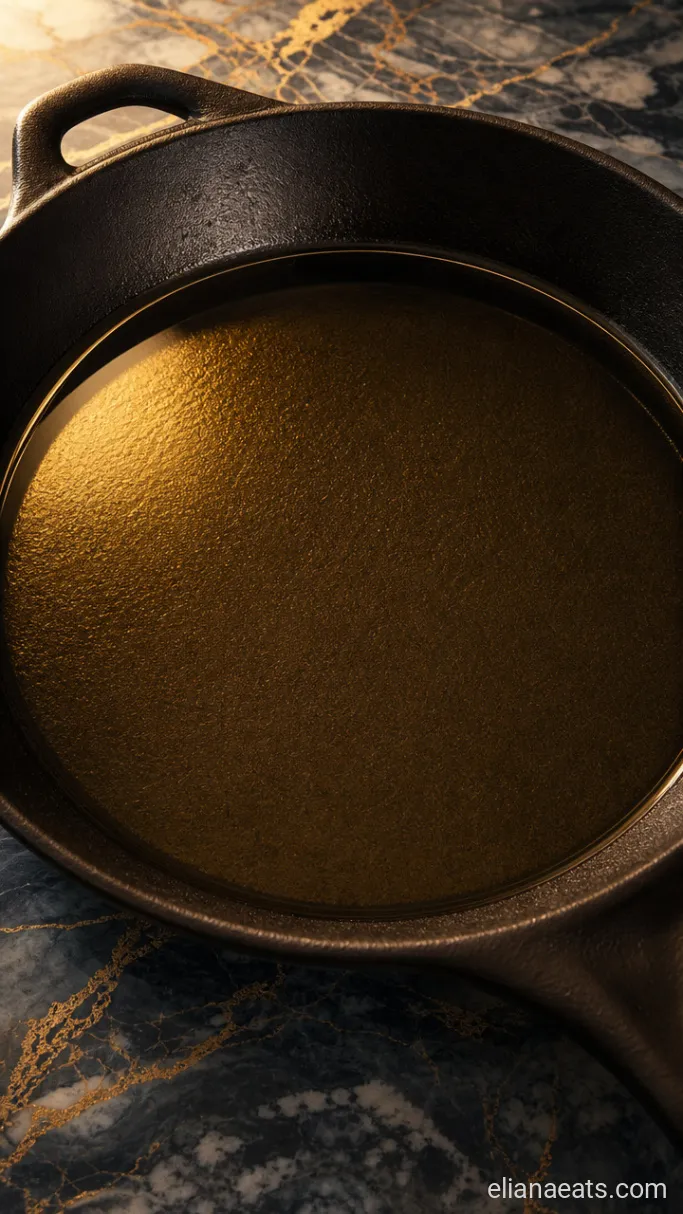
Pour the 4 cups vegetable oil into a large, deep heavy-bottomed pot or Dutch oven. Heat it over medium-high heat until it reaches 350°F (175°C) on a kitchen thermometer, which takes about 8 minutes. Keep the thermometer clipped to the side of the pot while you fry, because the temperature will drop each time you add chicken and you want to bring it back to 350°F between batches.
Do not skip the thermometer here. Oil that is too cool gives you a pale, greasy crust. Oil that is too hot burns the outside before the chicken is cooked through.
Step 4: Fry the Chicken in Batches
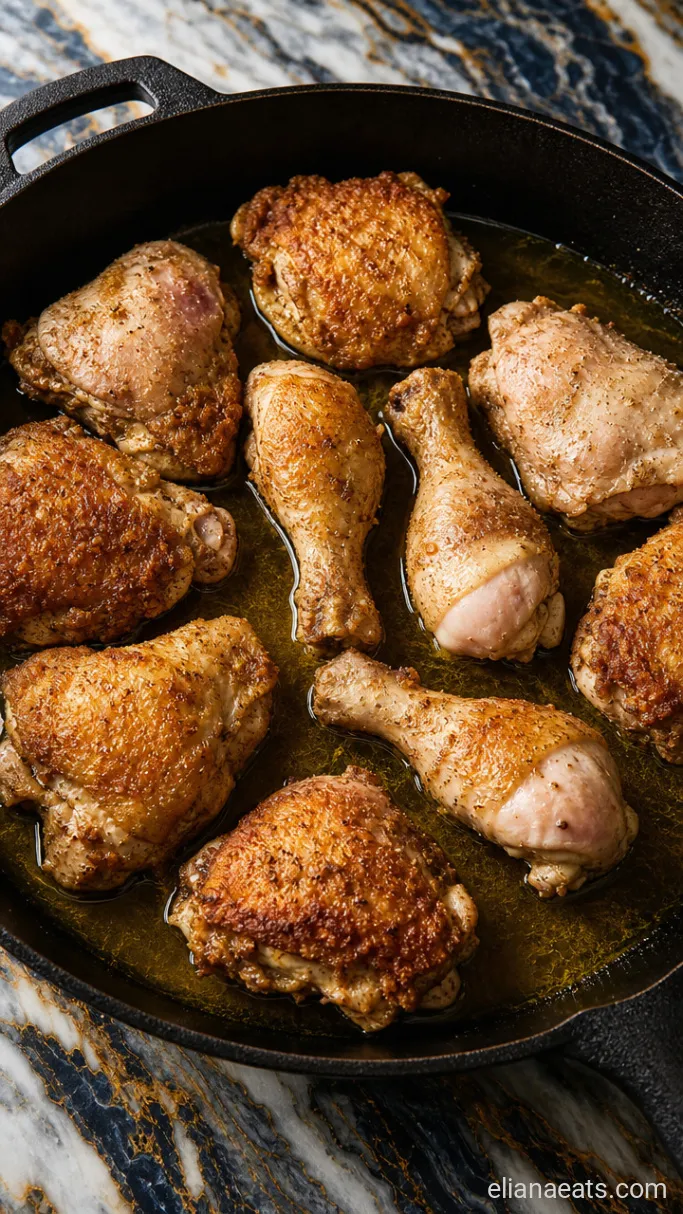
Lower 3 to 4 pieces of chicken into the hot oil using tongs, skin-side down first. Fry for 12 to 14 minutes, turning once halfway through, until the crust is a deep amber brown and the internal temperature reads 165°F (74°C). Do not crowd the pot. Cook the remaining pieces in a second batch, letting the oil return to 350°F (175°C) before adding them.
As the chicken fries, the coating will go from pale and damp-looking to dry, set, and then genuinely golden. The color change from pale to amber happens quickly in the last 2 to 3 minutes, so watch it.
Step 5: Drain and Plate the Chicken
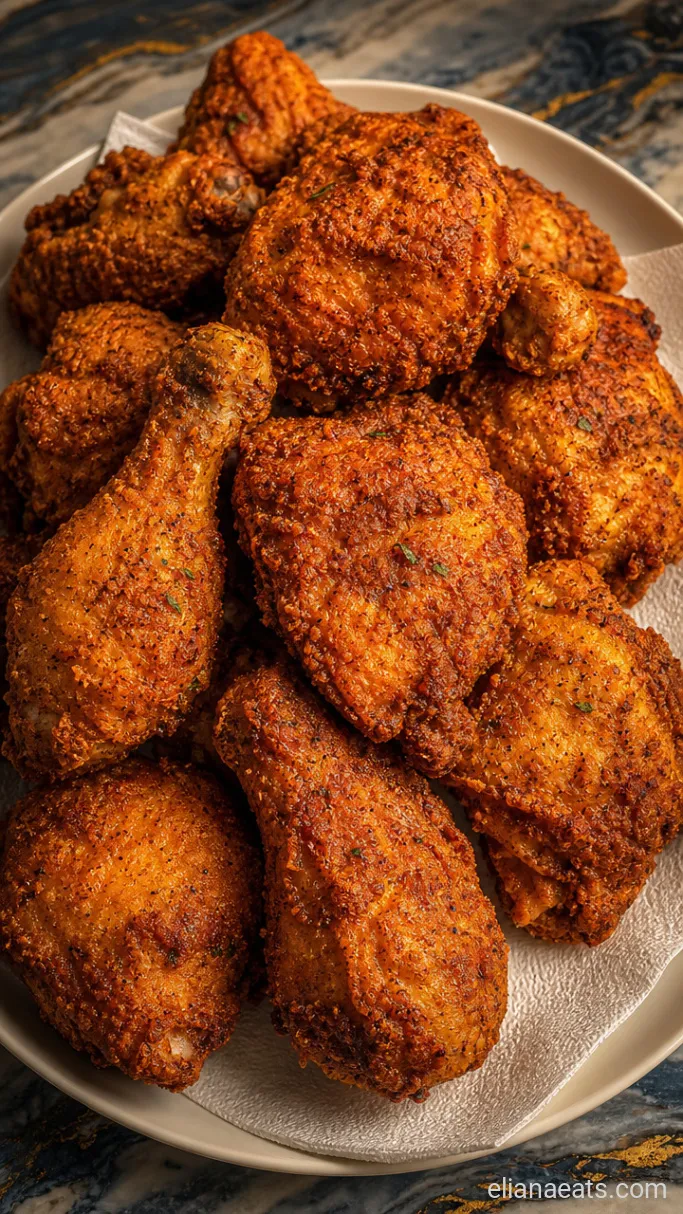
Lift each piece out of the oil with tongs and set it on a wire rack over a baking sheet. A rack keeps the bottom of the crust from steaming and going soft, which a paper towel-lined plate will do. Let the pieces rest on the rack for 3 minutes, then transfer them to a serving platter. Arrange the pieces so the skin side faces up, showing the full craggy, amber crust, and serve immediately while the coating is still crackling.
Recipe Tips
- Pat the chicken dry before dredging. Surface moisture is the main reason coatings turn out thin and uneven. A paper towel and 30 seconds of patting makes a real difference.
- Use a Dutch oven if you have one. The heavy walls hold a more stable temperature than a thin skillet, which means fewer oil temperature swings between batches.
- Keep the first batch warm. While the second batch fries, put the first batch in a 200°F (93°C) oven on the wire rack. It stays hot without continuing to cook.
- Make the spice blend ahead. You can mix the dry herbs and spices (without the flour) up to 2 weeks in advance and store them in a sealed jar. When you are ready to cook, just whisk the blend into the flour.
Cook times vary by piece size and starting temperature of the chicken:
| Piece | Bone-In (at 350°F) | Boneless |
|---|---|---|
| Breast | 14 to 16 min | 10 to 12 min |
| Thigh | 12 to 14 min | 8 to 10 min |
| Drumstick | 12 to 14 min | N/A |
| Wing | 10 to 12 min | N/A |
How To Store
- Refrigerate – Let the chicken cool completely, then store in an airtight container for up to 3 days.
- Reheating – The oven is your best option. Place the pieces on a wire rack over a baking sheet and heat at 375°F (190°C) for 12 to 15 minutes. The crust comes back to life in a way a microwave cannot manage.
What To Serve With KFC 11 Herbs and Spices Chicken
Creamy coleslaw is the natural partner because the cool, slightly acidic slaw cuts through the richness of the fried crust and resets your palate between bites. Mashed potatoes with gravy work well for the same reason, the mild starchiness rounds out the seasoned, salty crust without competing with it. Corn on the cob is a good third option because the natural sweetness of the corn plays well against the herbal, savory spice blend.
Frequently Asked Questions
Can I use chicken pieces straight from the fridge?
It is better to let them sit at room temperature for 15 to 20 minutes first. Cold chicken drops the oil temperature sharply when it hits the pan, which can lead to uneven cooking and a greasy crust.
What if I do not have celery salt or garlic salt?
You can substitute celery seed plus a pinch of plain salt for the celery salt, and garlic powder plus a pinch of salt for the garlic salt. The flavor is slightly less rounded but still works.
Can I make this in a cast iron skillet instead of a pot?
Yes, a 12-inch cast iron skillet works well with about 1 inch of oil (roughly 2 cups). You will need to fry in smaller batches and turn the pieces more frequently since the shallower oil does not submerge them.
How do I know when the oil is hot enough without a thermometer?
Drop a small pinch of the seasoned flour into the oil. If it sizzles and floats to the surface within a second or two, you are close to 350°F. A wooden chopstick dipped in will also bubble steadily at the right temperature. That said, a thermometer is the only way to be sure.
—
KFC 11 Herbs and Spices Chicken Recipe
Ingredients
Method
- Whisk together the flour, salt, thyme, basil, oregano, celery salt, black pepper, dried mustard, paprika, garlic salt, sage, and white pepper in a large shallow bowl until evenly combined. In a separate bowl, beat the eggs with the milk until smooth.
- Dredge each chicken piece in the seasoned flour, dip in the egg wash, then press back into the flour a second time. Set on a rack and rest for 5 minutes.
- Heat the vegetable oil in a large Dutch oven over medium-high heat to 350°F (175°C), about 8 minutes.
- Fry 3 to 4 pieces at a time, skin-side down first, for 12 to 14 minutes, turning once, until deep amber and the internal temperature reads 165°F (74°C). Return oil to 350°F before the next batch.
- Lift each piece onto a wire rack and rest for 3 minutes, then transfer to a serving platter skin-side up and serve immediately.
