
Cracker Barrel Sourdough Bread (Easy Copycat Recipe)

Cracker Barrel sourdough bread is that thick, tangy loaf that comes warm to your table before the meal even starts, and this copycat gets you surprisingly close at home. If you have ever wished you could skip the wait and just have it in your own kitchen on a Tuesday night, this recipe is for you.
The dough uses a shortcut starter method so you are not waiting weeks to develop a culture from scratch. One evening of hands-on work, an overnight rise, and you will have a golden, crackly loaf ready to slice.
Why I Love This Recipe
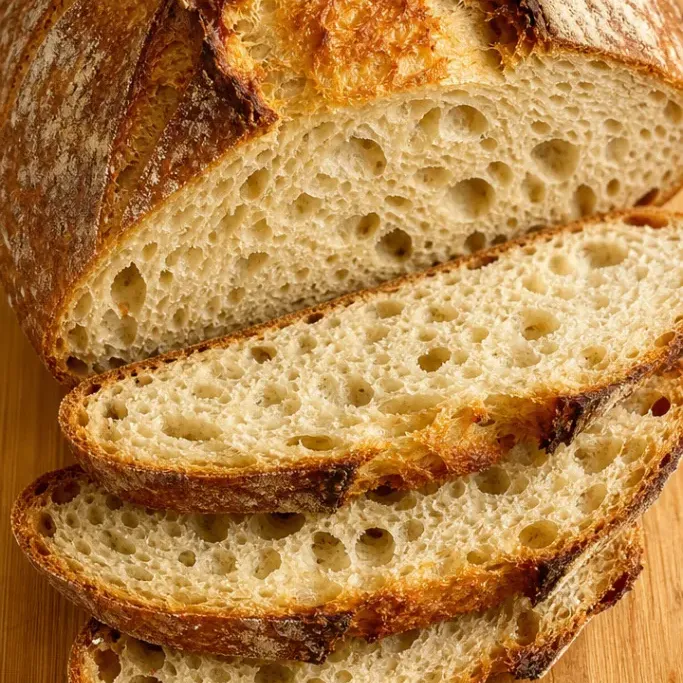
The crust has a real snap to it, and the inside is soft and slightly chewy with that mild sour tang that is just enough to taste without being sharp.
What keeps me coming back to this version is the overnight cold rise. It builds flavor without any extra effort on your part, and the slow fermentation is what makes the crumb open and tender rather than dense.
It also toasts beautifully the next day, which means the second half of the loaf gets used just as fast as the first.
Recipe Ingredients
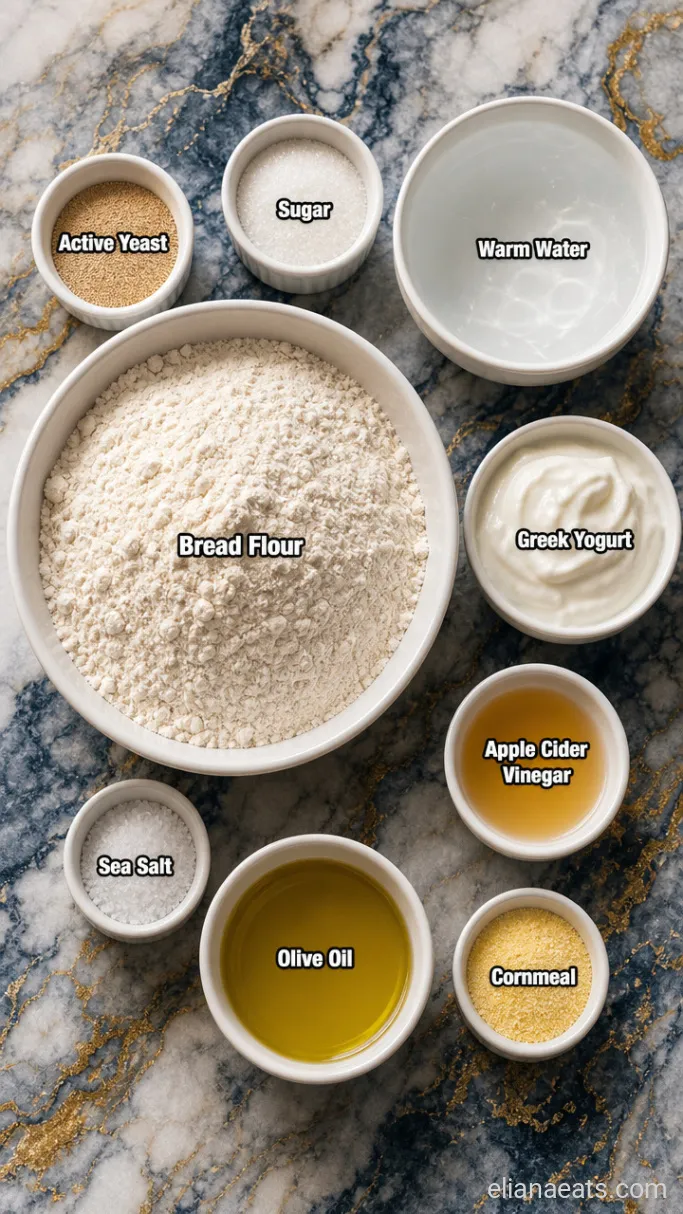
- 2¼ tsp (1 packet) active dry yeast – The leavener; instant yeast works too but the rise will be faster, so watch the dough rather than the clock
- 1 tbsp granulated sugar – Feeds the yeast and very slightly softens the sour edge
- 1½ cups warm water (105°F to 110°F / 40°C to 43°C) – Too hot kills the yeast; use a thermometer if you are unsure
- 1 cup bread flour, for the sponge – Bread flour gives the starter sponge more structure than all-purpose
- 2 tbsp plain Greek yogurt – This is the shortcut souring agent; full-fat gives the best flavor
- 1 tbsp apple cider vinegar – Adds a clean, mild acidity that mimics a mature sourdough culture
- 1¾ cups bread flour, for the dough – You may need a tablespoon or two more if the dough is very sticky
- 1½ tsp fine sea salt – Added after the sponge stage so it does not slow the yeast
- 1 tbsp olive oil – Keeps the crust from getting too hard and helps the loaf brown evenly
- 1 tbsp cornmeal – For dusting the baking sheet; gives the bottom crust a light crunch
Variations / Substitutions
- Greek yogurt swap – Use full-fat sour cream in the same quantity and the tang comes out slightly richer and more pronounced.
- Apple cider vinegar swap – White wine vinegar works at the same amount and gives a slightly cleaner, less fruity sour note.
- Whole wheat flour – Replace up to ½ cup of the bread flour in the dough with whole wheat for a slightly denser crumb and a nuttier flavor.
- Extra heat – Add ½ tsp of cracked black pepper and 1 tsp of red pepper flakes to the dough for a loaf that goes well with soups and chilis.
- Dairy-free – Replace the Greek yogurt with a plain, unsweetened coconut yogurt; the tang is a little lighter but still noticeable.
- Herb variation – Fold in 2 tsp of chopped fresh rosemary with the final flour addition for a savory version that pairs well with roasted meats.
If you enjoy baking bread at home, Cracker Barrel Buttermilk Biscuits is another recipe worth trying next.
How To Make Sourdough Bread
Step 1: Build the Sponge
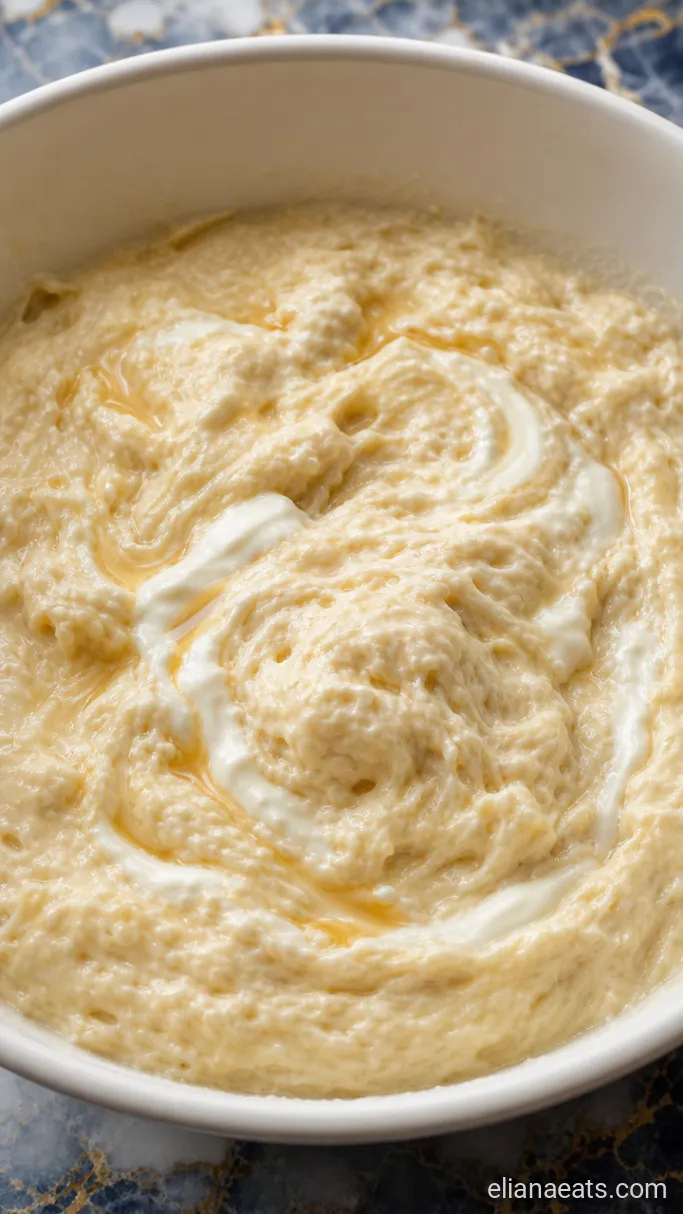
In a large bowl, combine the 2¼ tsp active dry yeast and 1 tbsp sugar with the 1½ cups warm water. Stir briefly and let it sit for 5 minutes until it looks foamy and slightly puffy on top. That foam tells you the yeast is active. Once it is ready, stir in the 1 cup bread flour, the 2 tbsp Greek yogurt, and the 1 tbsp apple cider vinegar until everything is combined into a thick, lumpy paste.
Cover the bowl loosely with plastic wrap and leave it at room temperature for 1 hour. After an hour, it will have puffed up noticeably and smell lightly sour and yeasty. That smell is exactly what you want.
Step 2: Develop the Dough
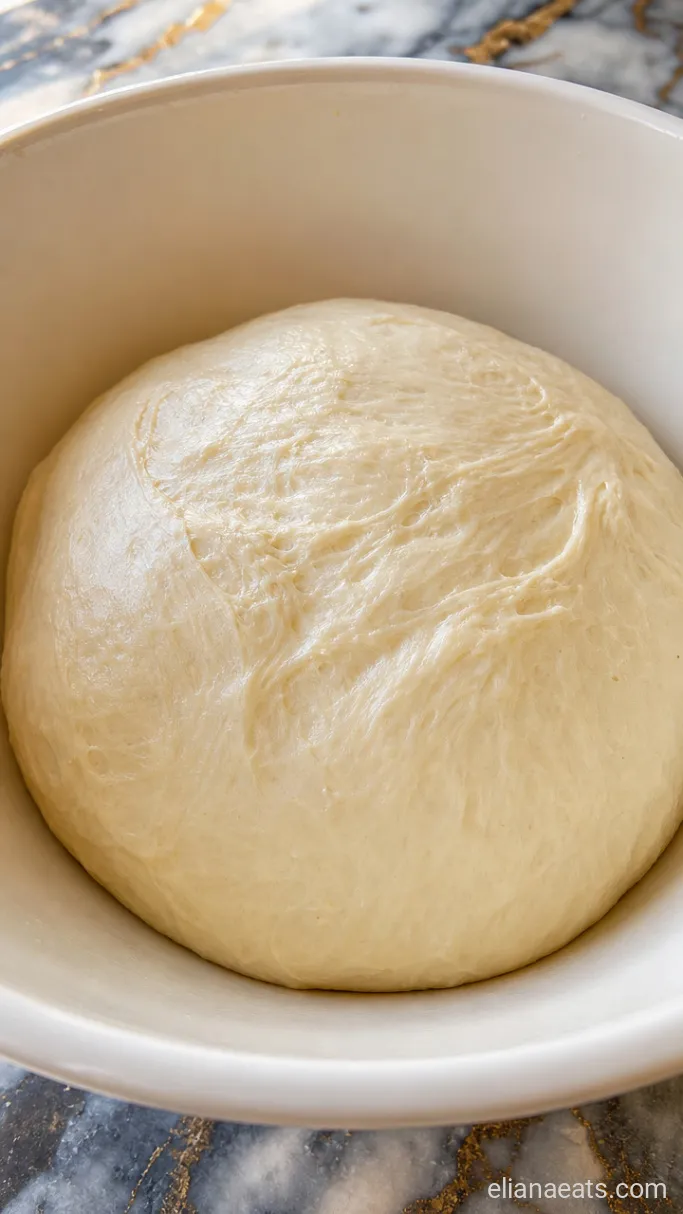
Add the 1¾ cups bread flour, 1½ tsp fine sea salt, and 1 tbsp olive oil to the sponge. Stir with a wooden spoon or dough scraper until a shaggy dough forms, then turn it out onto a lightly floured surface. Knead for 8 to 10 minutes by hand, pushing the dough away with the heel of your hand and folding it back, until it is smooth and springs back when you poke it with a finger.
The dough should feel slightly tacky but not sticky. If it clings to your hands and the counter, add flour one tablespoon at a time. Resist the urge to add too much; a slightly tacky dough makes a better, more open crumb than a stiff one.
Step 3: Cold-Rise the Dough
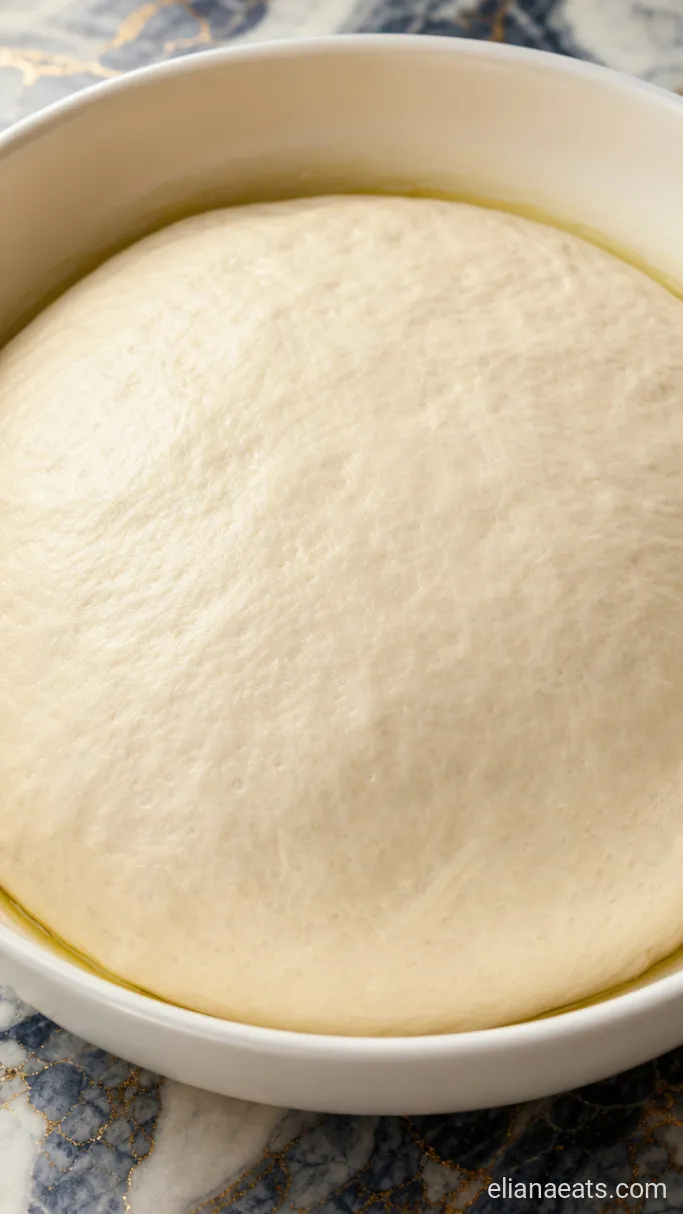
Shape the kneaded dough into a ball and place it in a lightly oiled bowl, turning it once so all sides are coated. Cover tightly with plastic wrap and refrigerate for at least 8 hours or up to 16 hours. The long, cold fermentation is where the sour flavor develops, so do not cut it short.
When you pull it out of the fridge, the dough will have roughly doubled and feel cold and firm. Let it sit at room temperature for 45 minutes to take the chill off before you shape it.
Step 4: Shape the Loaf
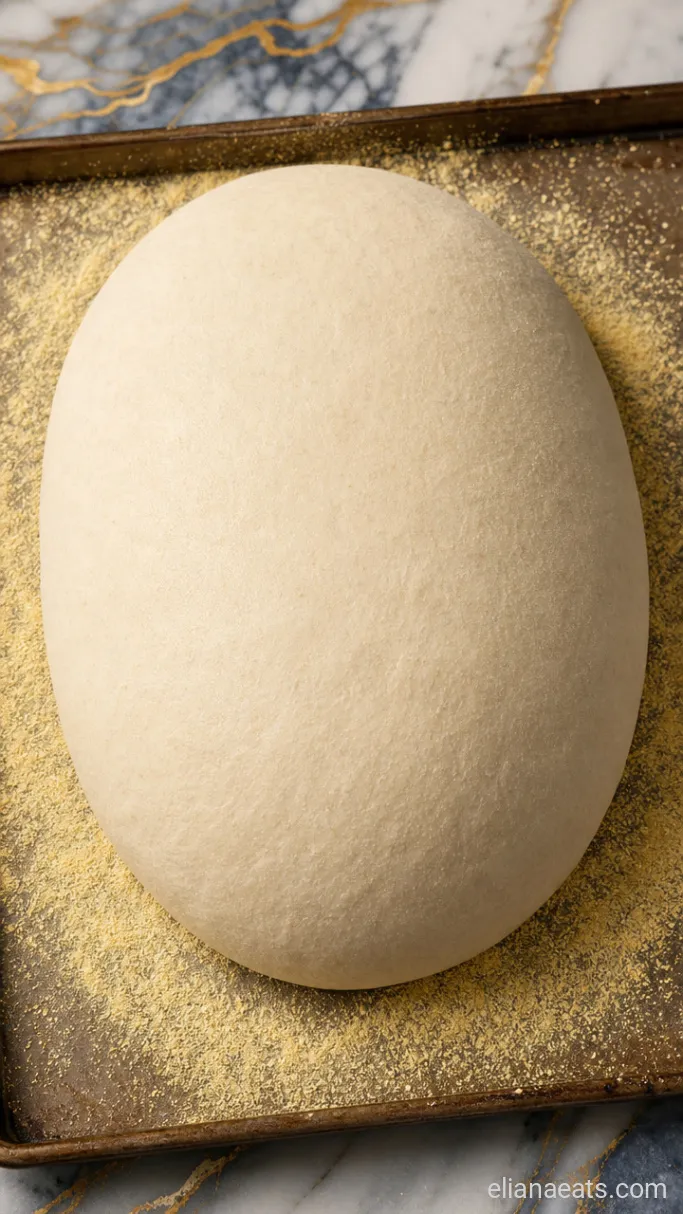
Line a baking sheet with parchment paper and dust it with the 1 tbsp cornmeal. Gently punch down the dough to release the gas, then shape it into an oval loaf about 10 inches long. Place it seam-side down on the prepared baking sheet. Cover it loosely with a clean kitchen towel and let it rise at room temperature for 45 minutes to 1 hour, until it has puffed up again and looks slightly domed.
If you press a floured finger about ½ inch into the side of the dough and the indent fills back in slowly, the dough is proofed and ready to bake. If it springs back immediately, give it another 10 to 15 minutes.
Step 5: Score and Bake the Loaf
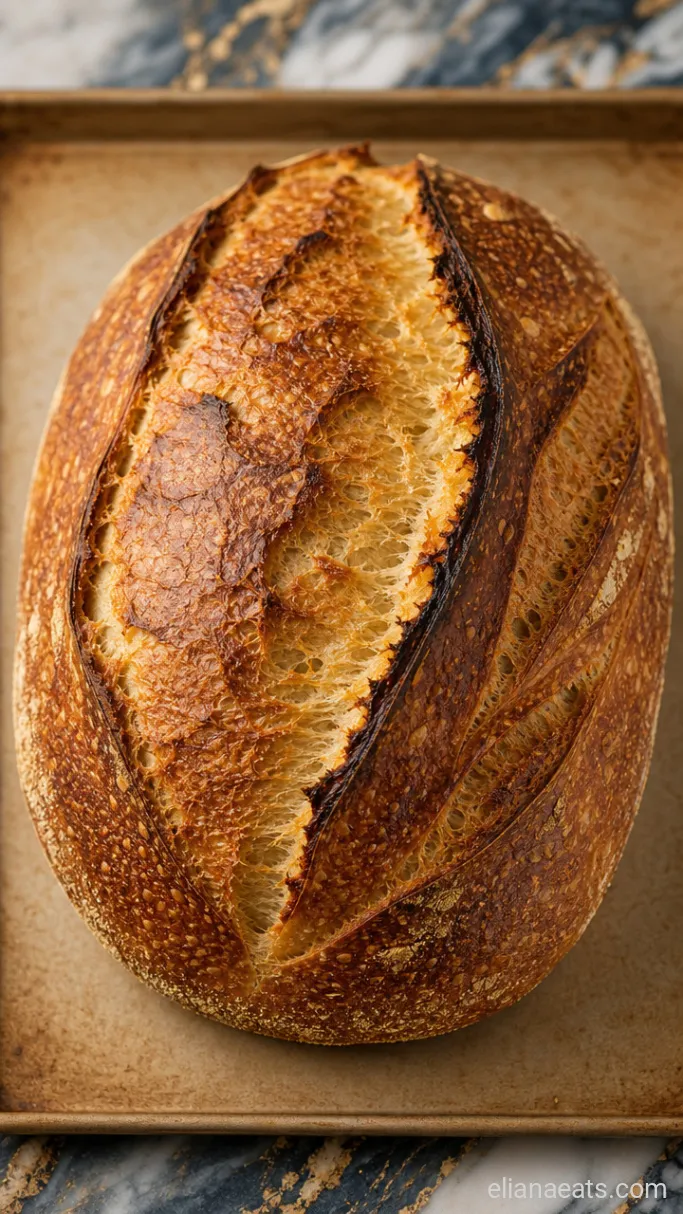
Position a rack in the center of your oven and preheat it to 425°F (220°C). Just before the bread goes in, use a sharp knife or a bread lame to score 3 diagonal slashes across the top, each about ¼ inch deep. These cuts let the bread expand in the oven instead of cracking along the sides.
Bake for 28 to 32 minutes, until the crust is deep golden brown. To check for doneness, lift the loaf and tap the bottom with your knuckle. It should sound hollow, not dense. The internal temperature should read 200°F to 205°F (93°C to 96°C) on an instant-read thermometer.
Step 6: Slice and Serve Warm
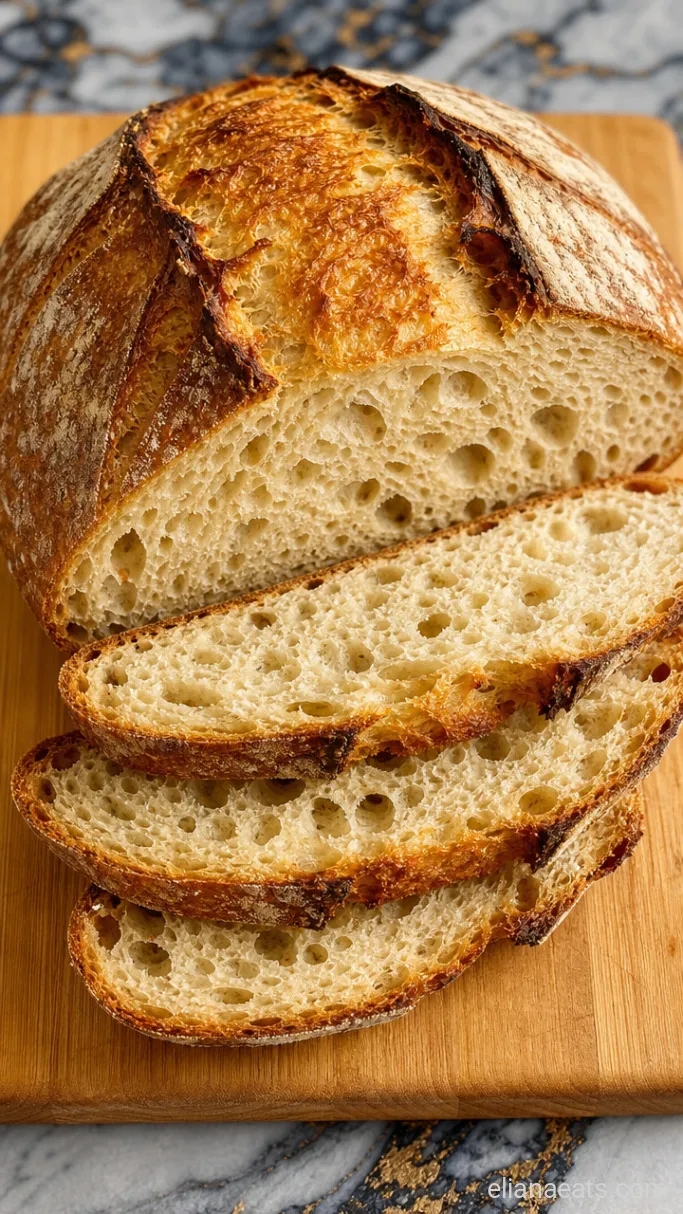
Transfer the baked loaf to a wire rack and let it rest for 15 minutes before slicing so the crumb sets. Cut into thick slices and serve on a wooden board with softened butter alongside. The crust will have a deep amber color and a visible crackle along the score lines, and the crumb will be tender and slightly open inside.
Recipe Tips
- Use a kitchen thermometer for the water. Yeast is sensitive. Water above 115°F (46°C) will kill it before the sponge even gets started.
- Do not skip the cornmeal on the baking sheet. It prevents sticking and gives the bottom crust a subtle texture that is part of what makes the loaf feel bakery-style.
- Scoring matters more than it looks. Shallow scores barely break the surface and the bread will crack along the sides unpredictably. Aim for a confident, firm stroke rather than dragging the blade.
- If your oven runs cool, place an empty metal pan on the bottom rack while it preheats, then add ½ cup of hot water to it just as you slide the bread in. The burst of steam helps the crust develop before it sets.
Bake times by pan (the internal done-temp for fully baked bread is 200°F to 205°F / 93°C to 96°C):
| Pan Type | Loaf Size | Bake Time at 425°F (220°C) |
|---|---|---|
| Rimmed baking sheet | Standard oval, ~10 in | 28 to 32 minutes |
| Dutch oven, lid on first 20 min | Round boule | 20 min covered, 12 to 15 min uncovered |
| Cast iron skillet | Smaller round, ~8 in | 24 to 28 minutes |
How To Store
- Refrigerate – Wrap the cooled loaf tightly in plastic wrap or seal it in a zip-top bag. It keeps well for up to 4 days. The crust will soften in storage, which is normal.
- Reheating – Place slices directly on the oven rack or in a toaster oven at 350°F (175°C) for 5 to 7 minutes to bring back some crust snap. A whole leftover loaf can go back into a 350°F oven for 10 minutes.
What To Serve With Sourdough Bread
Thick slices work really well alongside a bowl of potato soup or tomato bisque because the slightly sour, chewy crumb holds up to dipping without falling apart. It is also good with scrambled eggs and bacon for a weekend breakfast where you want something more substantial than toast. If you are serving it at dinner, a simple herb butter made with softened butter, garlic, and fresh parsley gives each slice enough flavor to stand on its own while you wait for the main course.
Frequently Asked Questions
Can I make this without a stand mixer?
Yes. The entire dough is developed by hand and that is actually how this recipe is written. Eight to 10 minutes of kneading by hand gets the gluten where it needs to be.
Can I freeze the baked loaf?
Yes. Slice the cooled loaf first, wrap it tightly in plastic wrap, then seal in a freezer bag. Frozen slices keep for up to 2 months and go straight from freezer to toaster.
My dough did not rise much in the fridge. Is it ruined?
Probably not. Cold slows yeast significantly, so a modest rise overnight is normal. As long as the dough is noticeably larger than when it went in and the room-temperature rest makes it feel soft and pliable, you are fine.
Can I use all-purpose flour instead of bread flour?
Yes, but the crumb will be a little softer and less chewy because all-purpose flour has lower protein content. The loaf will still taste good; it just will not have quite the same chew.
How do I know if my yeast is still good before I start?
If the yeast does not foam within 5 to 7 minutes of sitting in the warm water and sugar, it is likely expired. Toss it and start with a fresh packet rather than going through the full recipe with dead yeast.
—
Sourdough Bread Recipe
Ingredients
Method
- Combine the yeast, sugar, and warm water in a large bowl. Let sit 5 minutes until foamy, then stir in 1 cup bread flour, the Greek yogurt, and apple cider vinegar. Cover and rest at room temperature for 1 hour.
- Add 1¾ cups bread flour, the salt, and olive oil to the sponge. Stir to combine, then knead on a floured surface for 8 to 10 minutes until smooth and springy.
- Shape the dough into a ball, place in a lightly oiled bowl, cover tightly, and refrigerate for 8 to 16 hours. Remove and rest at room temperature for 45 minutes.
- Dust a parchment-lined baking sheet with cornmeal. Shape the dough into a 10-inch oval loaf, place seam-side down, cover, and proof 45 minutes to 1 hour until domed and slow to spring back when pressed.
- Preheat oven to 425°F (220°C). Score 3 diagonal slashes across the top of the loaf. Bake 28 to 32 minutes until deep golden brown and hollow-sounding when tapped, with an internal temperature of 200°F to 205°F (93°C to 96°C).
- Rest on a wire rack for 15 minutes, then slice and serve on a board with softened butter.
