
Cracker Barrel Pot Roast Copycat Recipe

This cracker barrel pot roast recipe brings the slow-braised, fork-tender beef from the restaurant straight into your own kitchen. It’s the kind of dinner that makes the whole house smell good and requires almost no hands-on work once it’s in the oven.
The vegetables braise right alongside the roast, so you’ve got a complete meal in one pot.
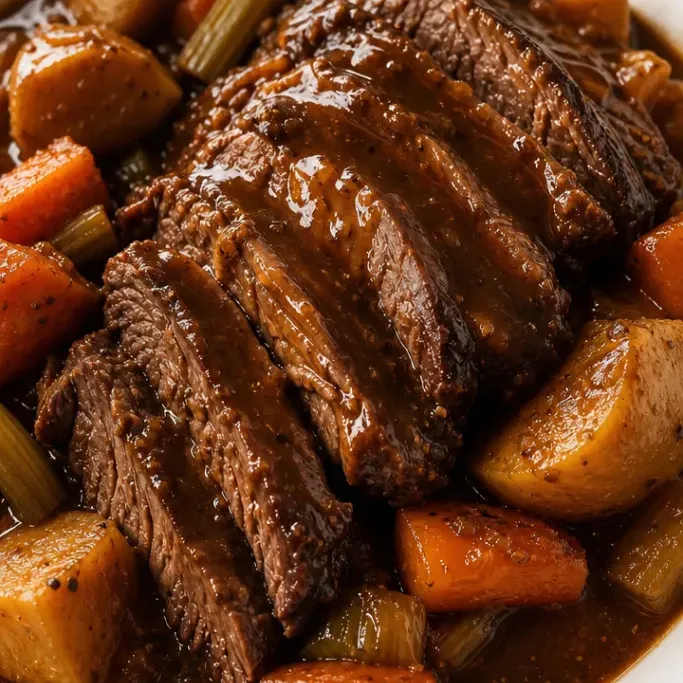
Why I Love This Recipe
The gravy is the real draw here. It builds from the browned meat and braising liquid into something thick, savory, and just a little tangy from the tomatoes.
The chuck roast stays tender without falling apart into strings, which means you can slice it cleanly and get a proper bite of meat with the vegetables.
This is the version I keep coming back to on cold nights when I want something that feels substantial without spending the evening in the kitchen.
Recipe Ingredients
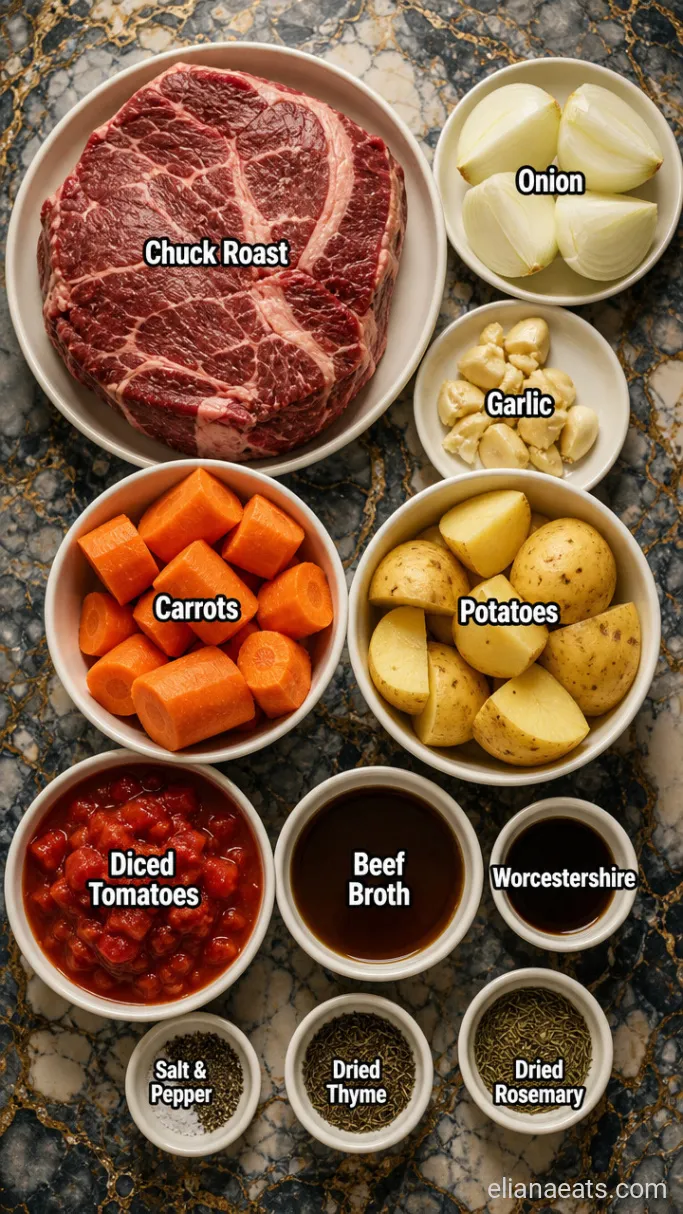
- 3 to 3.5 lbs boneless chuck roast – The higher fat content keeps it moist during the long braise; avoid eye of round here
- 2 tsp kosher salt – For seasoning the meat before searing; adjust to taste
- 1 tsp black pepper – Freshly cracked gives a slightly sharper bite
- 2 tbsp vegetable oil – A neutral oil with a high smoke point; canola works too
- 1 medium yellow onion, quartered – Breaks down into the braising liquid and sweetens it
- 4 cloves garlic, smashed – Smashing rather than mincing lets the flavor release slowly
- 3 medium carrots, cut into 2-inch pieces – Cut thick so they hold their shape through the braise
- 3 medium Yukon Gold potatoes, quartered – Waxy enough to stay intact; russets tend to disintegrate
- 2 stalks celery, cut into 2-inch pieces – Adds a background savory note to the broth
- 1 can (14.5 oz) diced tomatoes, undrained – Adds acidity that keeps the gravy from tasting flat
- 1 cup beef broth – Low sodium preferred so you control the salt level
- 1 tbsp Worcestershire sauce – Deepens the savory backbone of the gravy
- 1 tsp dried thyme – Pairs naturally with beef; dried holds up better than fresh in a long braise
- 1 tsp dried rosemary – Crumble it between your fingers before adding to release the oils
- 2 tbsp cornstarch – For thickening the gravy at the end
- 2 tbsp cold water – Mixed with cornstarch to make a slurry
Variations / Substitutions
- Bone-in chuck roast – The bone adds extra richness to the braising liquid; increase cook time by about 30 minutes.
- Chicken or vegetable broth – Works fine if that’s what you have, though the beef flavor will be slightly lighter.
- Fresh thyme and rosemary – Use 1 tbsp of each fresh herb instead of 1 tsp dried; add them in the last 2 hours so the flavor stays bright.
- Red wine for half the broth – Swap 1/2 cup of the 1 cup beef broth for dry red wine to get a deeper, slightly more complex gravy.
- Sweet potatoes instead of Yukon Gold – They turn a little soft but add a natural sweetness that works well against the savory broth.
- Turnips or parsnips – Both hold up well in a long braise and are a good lower-starch option in place of potatoes.
- Skip the cornstarch – Let the braising liquid reduce on the stovetop for 8 to 10 minutes at a rolling simmer for a thinner, more natural jus.
If you enjoy this style of braised dinner, you might also like a Mississippi Pot Roast Recipe.
How To Make Pot Roast
Step 1: Sear the Chuck Roast
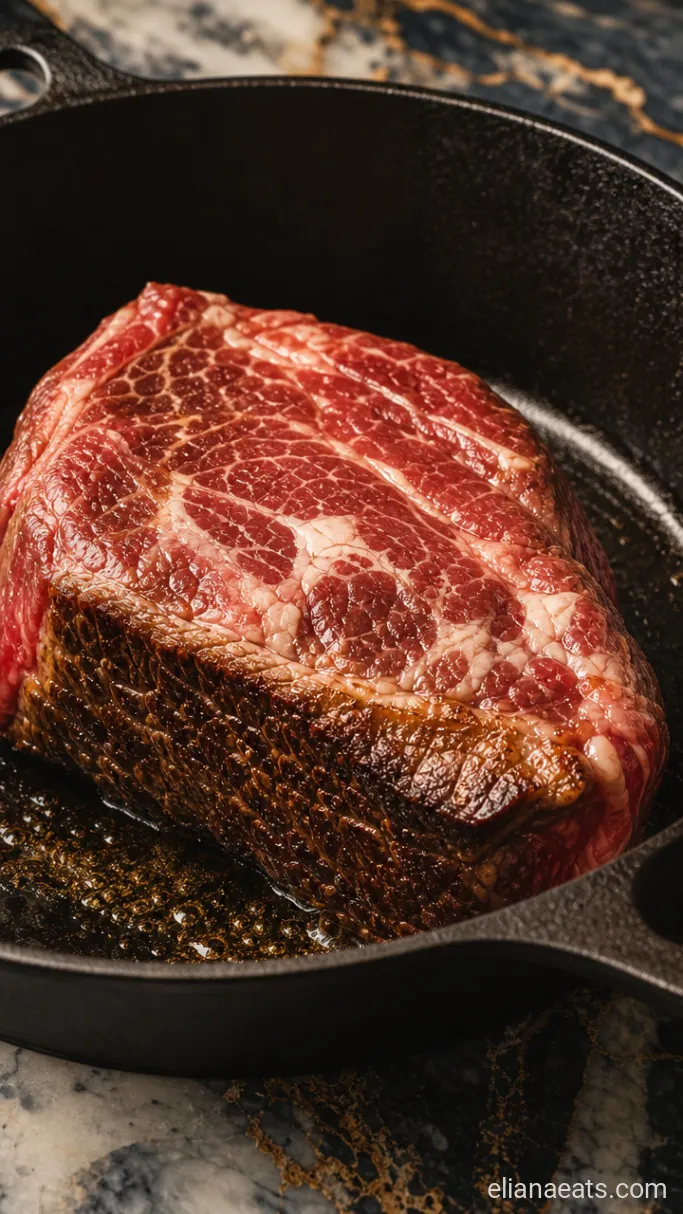
Heat your oven to 325°F (165°C). Pat the 3 to 3.5 lb chuck roast dry with paper towels, then season all over with the 2 tsp kosher salt and 1 tsp black pepper. Heat the 2 tbsp vegetable oil in a large Dutch oven over medium-high heat until the oil shimmers. Set the roast in the pot and let it sear, undisturbed, for 4 to 5 minutes per side until a deep brown crust forms.
That crust is where a lot of the gravy’s flavor comes from, so don’t rush it. If the roast sticks when you try to flip it, give it another 30 seconds, and it’ll release on its own.
Don’t skip the pat-dry step. Moisture on the surface of the meat will cause it to steam rather than sear, and you’ll end up with a gray, pale exterior instead of a proper brown crust.
Step 2: Soften the Aromatics
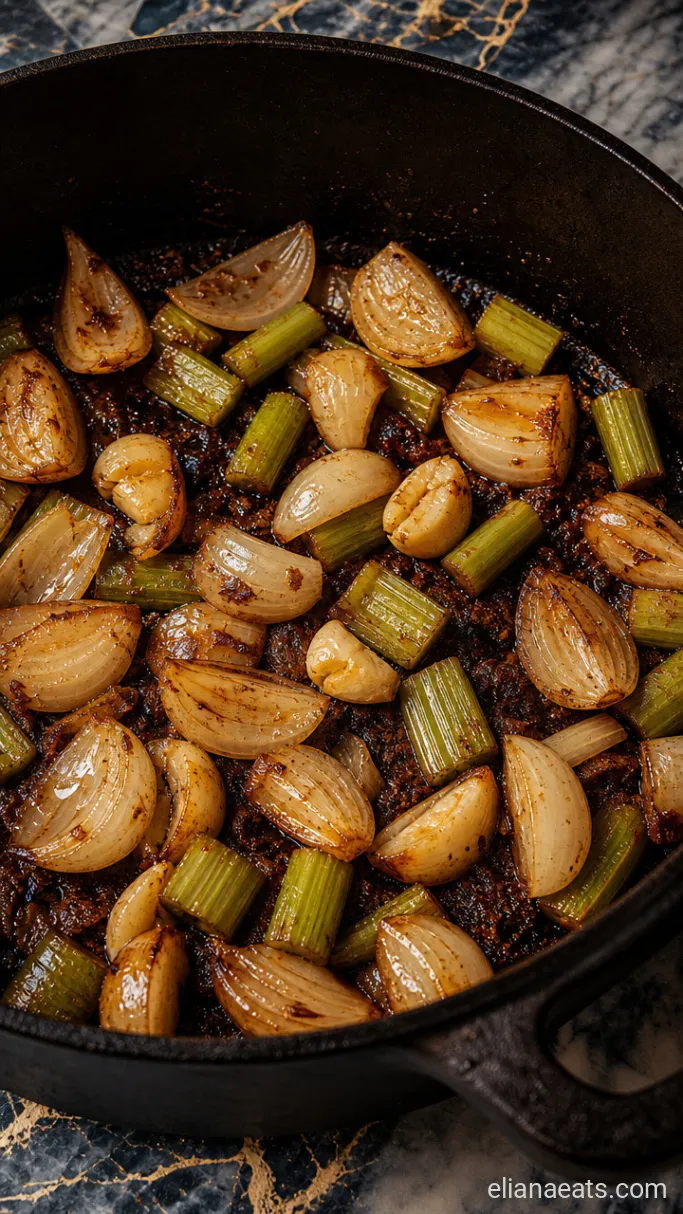
Transfer the seared roast to a plate. Reduce the heat to medium and add the 1 quartered onion and 4 smashed garlic cloves to the same pot. Stir them around in the drippings for about 3 minutes, until the onion edges start to go golden and you can smell the garlic toasting.
Don’t wash the pot between searing and this step. Those dark bits stuck to the bottom are flavor, and the onion and garlic will help lift them.
Step 3: Braise the Roast and Vegetables
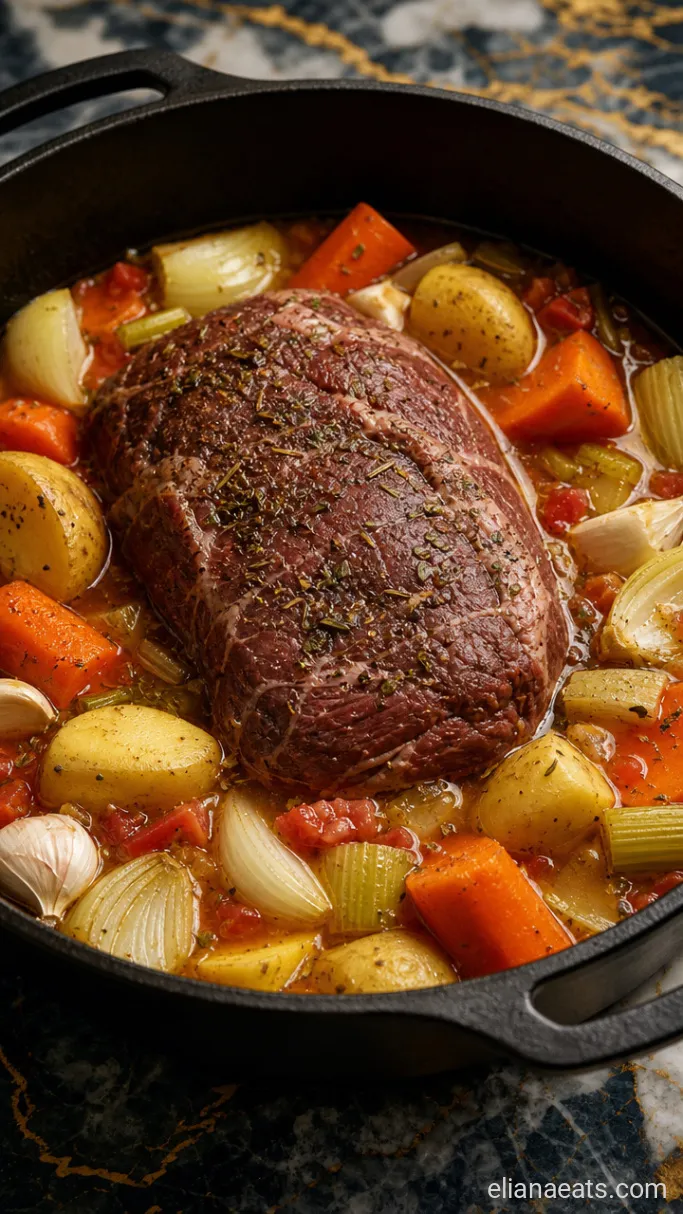
Add the 3 carrots, 3 quartered potatoes, and 2 celery stalks to the pot. Pour in the 14.5 oz can of undrained diced tomatoes, the 1 cup beef broth, and the 1 tbsp Worcestershire sauce. Sprinkle in the 1 tsp dried thyme and 1 tsp dried rosemary. Set the seared roast back on top of the vegetables, put the lid on, and slide the pot into the 325°F oven. Braise for 3 to 3.5 hours, until the meat is fork-tender and an instant-read thermometer reads around 200 to 205°F (93 to 96°C) in the thickest part.
Check it at 3 hours. The meat should offer very little resistance when you press a fork into the center. If it still feels firm, give it another 20 to 30 minutes and check again. Ovens vary, and a slightly bigger roast will need the extra time.
Step 4: Thicken the Gravy
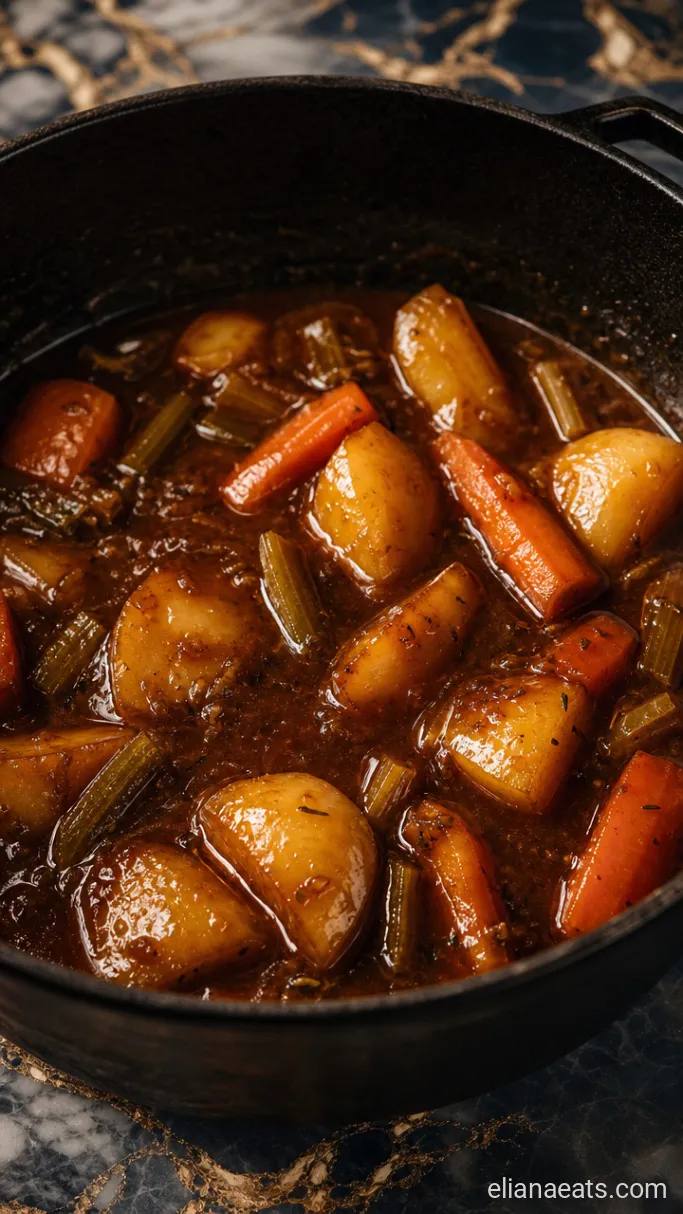
Lift the roast and vegetables out of the pot and set them aside on a rimmed sheet pan or platter. Pour the braising liquid into a medium saucepan and bring it to a simmer over medium heat. In a small bowl, stir the 2 tbsp cornstarch together with the 2 tbsp cold water until smooth. Whisk the slurry into the simmering liquid and cook for 2 to 3 minutes, stirring, until the gravy coats the back of a spoon.
Add the slurry gradually if you want more control over the thickness. Stop when it reaches the consistency you want, and keep in mind it will thicken a little more as it cools.
Step 5: Slice and Plate the Roast
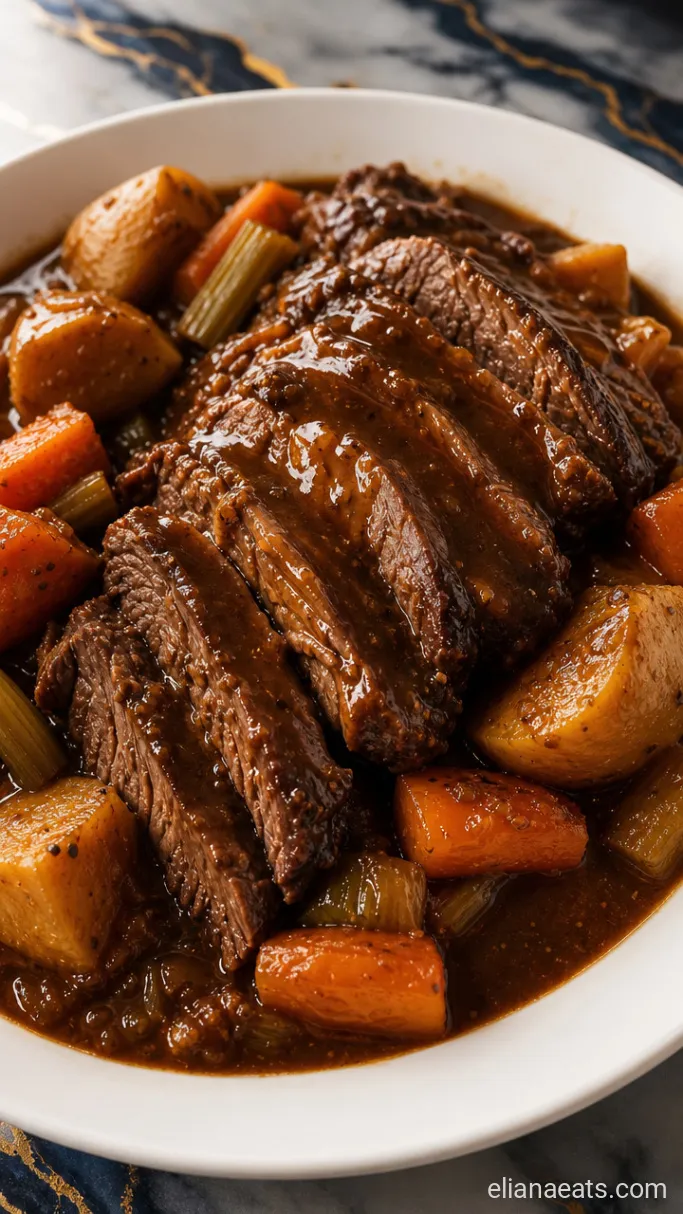
Transfer the roast to a cutting board and slice it across the grain into 1/2-inch pieces, or pull it apart into chunks with two forks if you prefer it that way. Arrange the sliced meat on a serving platter with the vegetables around it, then ladle the hot gravy over the top. Finish with a few sprigs of fresh thyme laid across the meat if you have them.
Recipe Tips
- Use a Dutch oven if you can. The heavy lid traps steam and keeps the braise from drying out. A tight-fitting lid on a regular oven-safe pot works, but check at the 2.5-hour mark to make sure the liquid hasn’t reduced too far.
- Don’t trim all the fat off the roast. A little fat cap on the outside keeps the meat basted as it braises. You can skim excess fat from the braising liquid at the end.
- Let the meat rest for 10 minutes before slicing. The juices redistribute and the meat slices much more cleanly than if you cut it straight out of the pot.
- Taste the gravy before serving. The braising liquid concentrates as it reduces, so the gravy may need very little added salt, or none at all.
Cook times by roast size (at 325°F / 165°C, bone-in add 30 minutes):
| Roast Weight | Time in Oven | Internal Target |
|---|---|---|
| 2 to 2.5 lbs | 2.5 to 3 hours | 200 to 205°F (93 to 96°C) |
| 3 to 3.5 lbs | 3 to 3.5 hours | 200 to 205°F (93 to 96°C) |
| 4 to 4.5 lbs | 3.5 to 4 hours | 200 to 205°F (93 to 96°C) |
How To Store
- Refrigerate – Store leftover meat, vegetables, and gravy together in an airtight container for up to 4 days. Keeping everything in the gravy prevents the meat from drying out.
- Reheating – Warm gently in a covered saucepan over low heat with a splash of beef broth to loosen the gravy, or microwave in 90-second intervals, covered, until heated through.
What To Serve With Pot Roast
Crusty bread is the obvious move, and it earns its place here because you want something to drag through the leftover gravy at the bottom of the bowl. Buttered egg noodles work the same way and make the meal a little more filling if you’re feeding a crowd. A simple green salad with a sharp vinegar dressing cuts through the richness of the braise and keeps the meal from feeling too heavy.
Frequently Asked Questions
Can I make this in a slow cooker instead of the oven?
Yes. Sear the roast and soften the aromatics on the stovetop first, then transfer everything to the slow cooker and cook on low for 8 to 10 hours or on high for 5 to 6 hours. Make the gravy separately on the stovetop at the end.
Can I make this a day ahead?
It’s actually better the next day. Store everything together in the fridge, and the flavors deepen overnight; reheat gently as described in the storage section.
My gravy turned out too thin. What happened?
The braising liquid may have had more moisture than expected, especially if the vegetables released a lot of liquid. Just simmer the gravy a few minutes longer, or whisk in a little more cornstarch slurry, 1 tsp cornstarch dissolved in 1 tsp cold water at a time, until it reaches the consistency you want.
Can I freeze leftover pot roast?
Yes, it freezes well for up to 3 months. Freeze the meat and gravy together in a sealed container so the meat stays moist when you thaw it.
—
Pot Roast Recipe
Ingredients
Method
- Pat the chuck roast dry, season with the 2 tsp salt and 1 tsp pepper, and sear in the 2 tbsp vegetable oil over medium-high heat in a Dutch oven for 4 to 5 minutes per side until deeply browned. Remove and set aside.
- Reduce heat to medium and cook the quartered onion and 4 smashed garlic cloves in the drippings for about 3 minutes, until the onion edges are golden.
- Add the carrots, potatoes, and celery to the pot. Pour in the undrained diced tomatoes, 1 cup beef broth, and 1 tbsp Worcestershire sauce. Add the 1 tsp thyme and 1 tsp rosemary. Return the roast to the pot on top of the vegetables, cover, and braise in a 325°F (165°C) oven for 3 to 3.5 hours, until the meat reaches 200 to 205°F (93 to 96°C) internally.
- Remove the roast and vegetables. Pour the braising liquid into a saucepan and simmer over medium heat. Stir together the 2 tbsp cornstarch and 2 tbsp cold water, then whisk into the liquid and cook for 2 to 3 minutes until the gravy thickens.
- Slice the roast across the grain into 1/2-inch pieces, arrange on a platter with the vegetables, and ladle the gravy over the top.
