
Starbucks Blueberry Scone Copycat Recipe

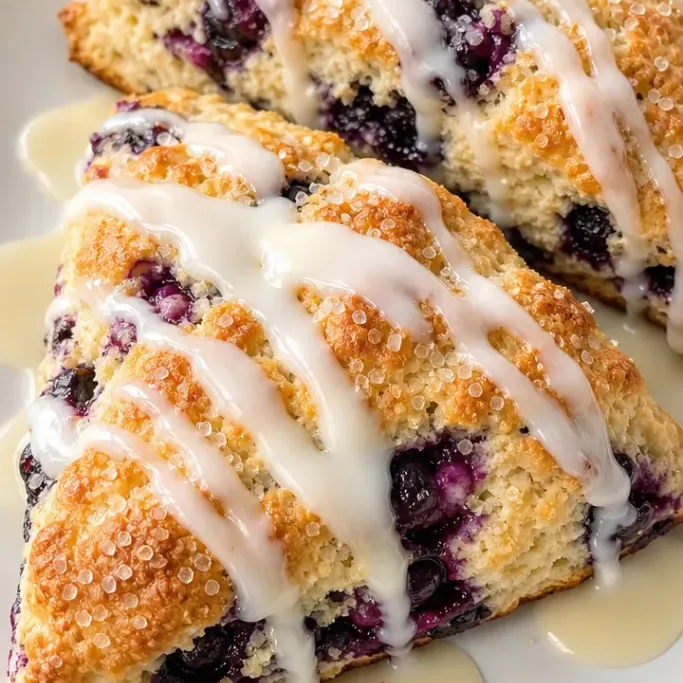
Starbucks blueberry scones have that particular combination of crisp, sugared edges and a tender, almost biscuit-like crumb that is really hard to find anywhere else. This copycat gets you there at home, in about 45 minutes, with ingredients you likely already have.
The glaze is the part most recipes skip or oversimplify. Here, it sets into a thin, crackly shell that mirrors what you get at the counter.
Why I Love This Recipe
The texture is what keeps me coming back to this one. Cold butter and a light hand with the mixing give you those distinct, flaky layers without the scone turning dense or dry.
The lemon zest in the dough brightens the blueberries without tasting obviously “lemony.” It just makes the fruit taste more like itself.
This version also holds up well the next day, which most scones do not. The cream in the dough keeps the crumb from drying out overnight.
Recipe Ingredients
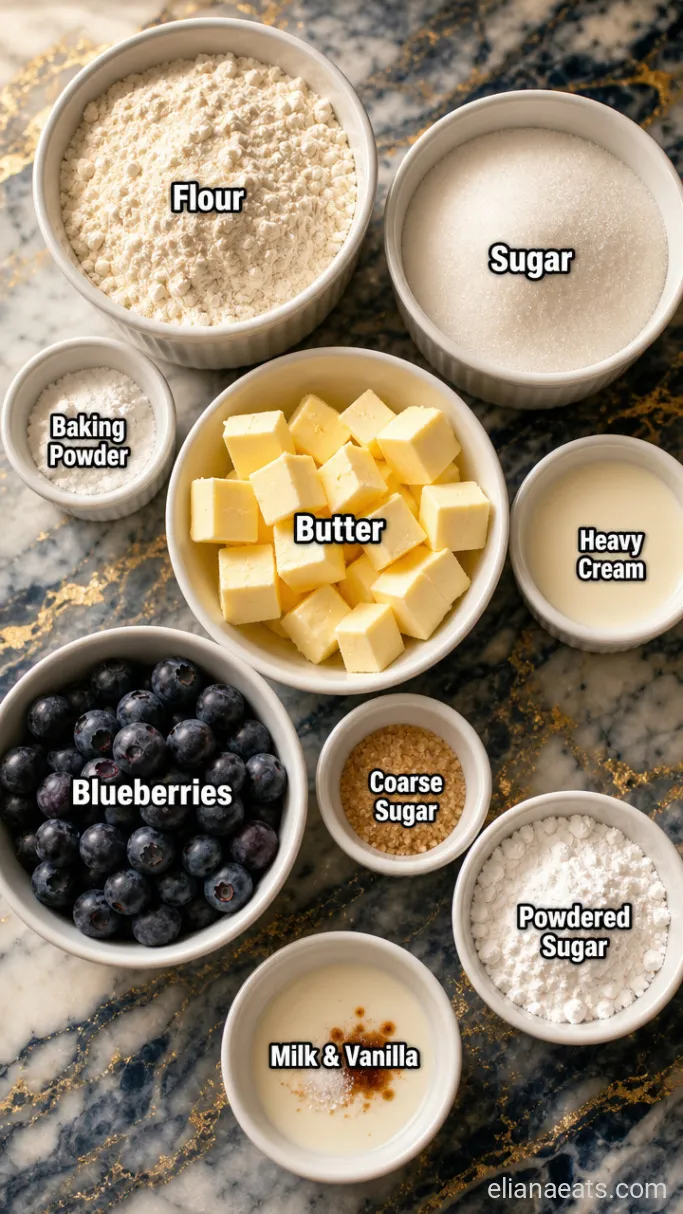
- 2 cups all-purpose flour – Spooned and leveled, not scooped straight from the bag, or the scones will be heavy
- 1/3 cup granulated sugar – Gives the scone its slight sweetness without making it feel like a muffin
- 1 tbsp baking powder – A full tablespoon gives the lift you need for a tall, open crumb
- 1/2 tsp fine salt – Brings out the blueberry flavor; do not skip it
- 1/2 cup (1 stick) unsalted butter, cold – Must be cold; cut into small cubes and keep it in the freezer for 10 minutes before you start
- 1/2 cup heavy cream, plus 2 tbsp for brushing – Heavy cream gives richness and a golden top; do not substitute milk
- 1 large egg – Binds the dough and adds a little structure
- 1 tsp vanilla extract – Rounds out the sweetness
- 1 tsp lemon zest – From about half a lemon; lifts the blueberry flavor without overpowering it
- 1 cup fresh blueberries – Fresh work best here; frozen can bleed and make the dough wet and purple
- 2 tbsp coarse sugar (for topping) – Turbinado or demerara gives the classic crunchy top
For the glaze:
- 1 cup powdered sugar – Sifted so the glaze stays smooth
- 2 to 3 tbsp whole milk – Start with 2 tbsp and add more to reach a pourable but not runny consistency
- 1/2 tsp vanilla extract – Keeps the glaze from tasting flat
Variations / Substitutions
- Frozen blueberries – You can use them frozen (do not thaw first), but toss them in 1 tsp of flour before adding so they do not streak the dough blue.
- Raspberries or blackberries – Swap 1 to 1 for the blueberries; blackberries may need to be halved if they are large.
- Dairy-free butter – A plant-based stick butter like Miyoko’s works well as long as it is cold and solid; the texture will be slightly less flaky.
- Coconut cream – Use full-fat canned coconut cream in place of heavy cream for a dairy-free version; the scone will be slightly denser.
- Lemon glaze – Replace the milk in the glaze with fresh lemon juice for a sharper, brighter finish that pairs well with the blueberries.
- Orange zest – Swap the lemon zest for orange zest if you want a warmer, less tart fruit note.
If you enjoy baking from the Starbucks menu, you might also like this Lemon loaf recipe that tastes just like the one from Starbucks.
How To Make Blueberry Scones
Step 1: Combine the Dry Ingredients and Cut in the Butter
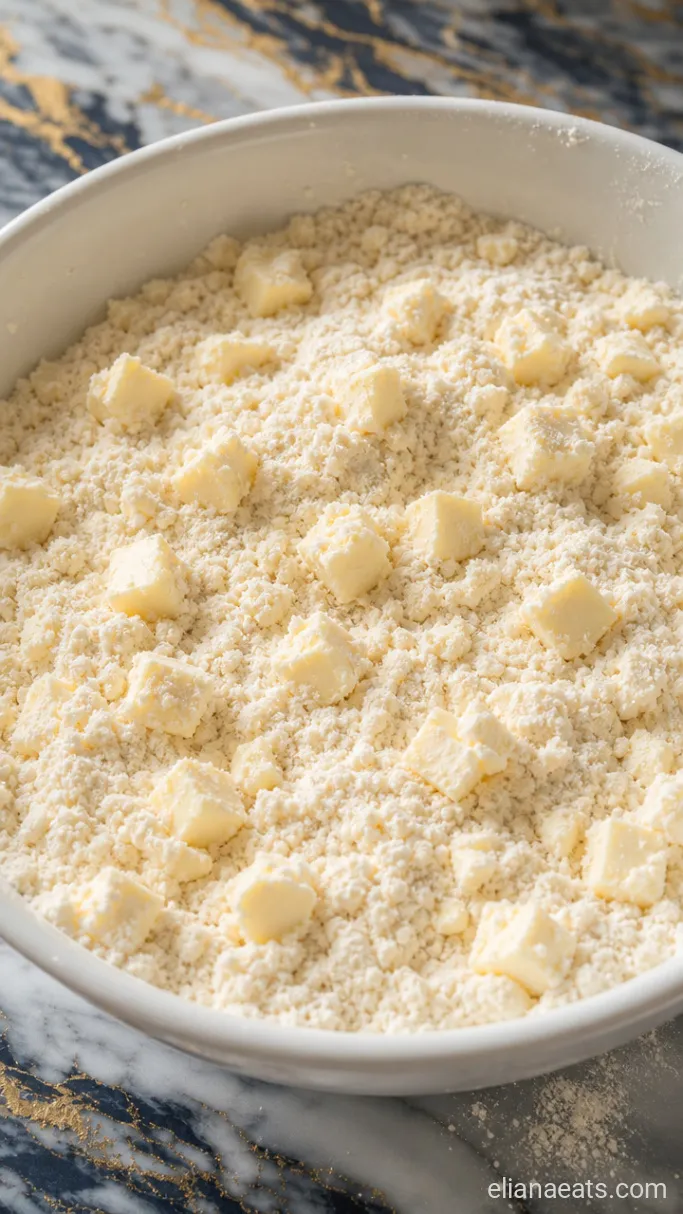
Heat your oven to 400°F (200°C) and line a baking sheet with parchment paper. In a large bowl, whisk together the 2 cups flour, 1/3 cup granulated sugar, 1 tbsp baking powder, and 1/2 tsp salt until evenly combined. Add the cold cubed 1/2 cup butter and work it into the flour with your fingertips or a pastry cutter. Press each piece flat, then break it up, until the mixture looks like rough, uneven breadcrumbs with some pea-sized pieces still visible.
Those bigger butter pieces matter. When they hit the oven heat, they create steam and push the layers apart. If the butter gets too warm and smooth from handling, the scone will be cakey rather than flaky. Work fast, and if your kitchen is warm, pop the bowl in the freezer for 5 minutes before moving on.
Step 2: Mix in the Wet Ingredients
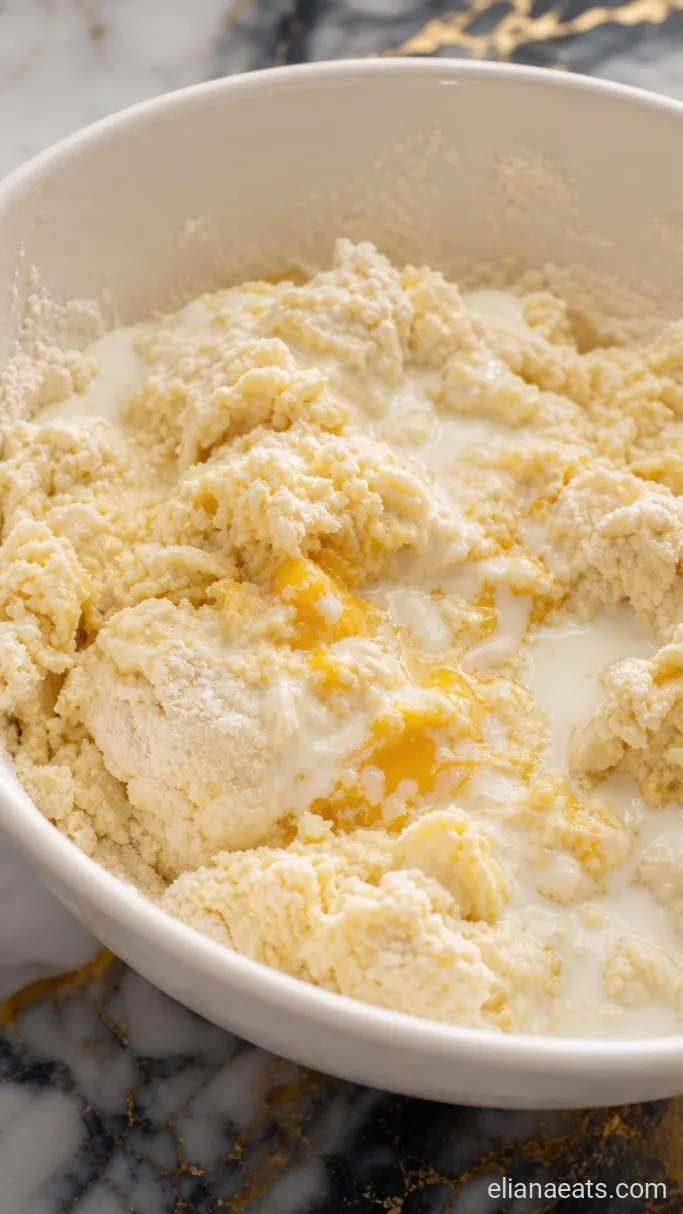
In a small bowl or measuring cup, whisk together the 1/2 cup heavy cream, 1 large egg, 1 tsp vanilla extract, and 1 tsp lemon zest. Pour this over the flour and butter mixture. Stir with a fork or spatula, using as few strokes as possible, just until no dry streaks of flour remain. The dough will look shaggy and rough, and that is exactly right.
Overworking at this stage is the most common mistake with scones. As soon as the flour disappears, stop. A few uneven lumps in the dough are fine; a smooth dough means you have mixed too long and will get a tough crumb.
Step 3: Fold in the Blueberries
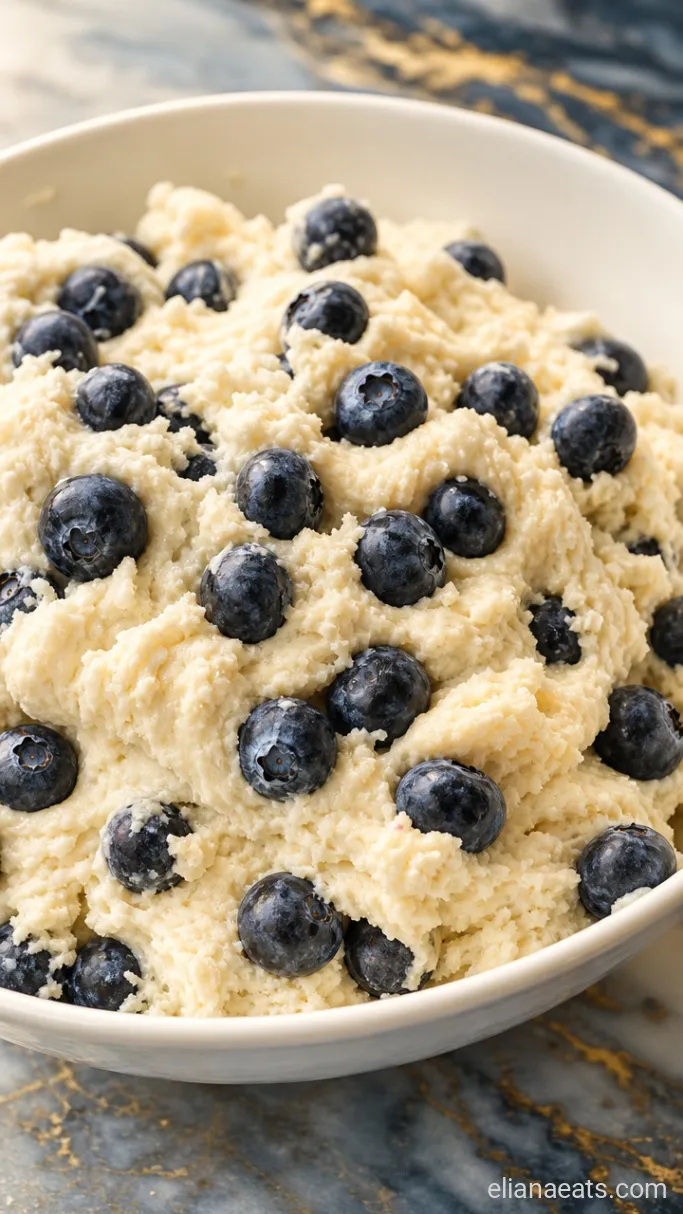
Scatter the 1 cup fresh blueberries over the dough, inspired by fresh blueberry recipes, and fold them in with 3 or 4 gentle turns of a spatula. You want the berries distributed without crushing them, so do not stir. Turn the dough out onto a lightly floured surface and press it into a round disc about 7 inches wide and 1 inch thick.
If the dough cracks at the edges as you shape it, just press it back together with your fingers. It does not need to look perfect at this stage, and a slightly rough edge on the baked scone is actually part of the appeal.
Step 4: Cut and Bake the Scones

Use a sharp knife or bench scraper to cut the disc into 8 equal wedges, like a pizza. Transfer them to the lined baking sheet, spacing them at least 2 inches apart. Brush the tops with the 2 tbsp heavy cream and sprinkle each one with the 2 tbsp coarse sugar. Bake at 400°F (200°C) for 20 to 23 minutes, until the tops are golden and the edges have a deeper amber color.
A scone that looks pale at 20 minutes needs more time. Pull them when the edges are clearly golden and the tops feel set, not soft, when you give them a very gentle press. Underbaked scones are gummy in the center, and they will not improve as they cool.
Step 5: Drizzle the Glaze and Serve

Let the scones cool on the pan for 10 minutes so the glaze does not slide right off. While they cool, whisk together the 1 cup sifted powdered sugar, 2 tbsp whole milk, and 1/2 tsp vanilla extract until smooth. Add the third tablespoon of milk only if the glaze feels too thick to drizzle. Spoon or pour the glaze over each scone in slow, even passes so it coats the top and drips down the sides. Serve them on a board or plate while the glaze is still a little wet and glossy.
Recipe Tips
- Keep everything cold. If your kitchen runs warm, chill your mixing bowl for 10 minutes before you start. Cold fat is the one thing you cannot undo once it melts into the flour.
- Measure flour carefully. Spoon it into the measuring cup and level it off with a knife. Scooping compacts the flour and can add up to 25% more than the recipe calls for, which makes the scones dry and crumbly.
- Do not skip the rest before glazing. Ten minutes of cooling lets the crust firm up so the glaze stays on top rather than soaking in. If you can wait, 15 minutes gives a crisper glaze finish.
- Make-ahead option. You can cut the scones into wedges, freeze them unbaked on the sheet until solid, then transfer them to a bag. Bake straight from frozen at 400°F (200°C) for 25 to 27 minutes. Do not thaw first.
Bake times vary slightly by oven and pan color; here is a general guide (internal temp of a fully baked scone should reach 200°F / 93°C):
| Pan Color | Rack Position | Bake Time |
|---|---|---|
| Light / silver | Middle | 20 to 23 mins |
| Dark nonstick | Middle | 18 to 20 mins |
| Dark nonstick | Lower third | 20 to 22 mins |
How To Store
- Refrigerate – Keep leftover scones in an airtight container at room temperature for up to 2 days, or refrigerate for up to 4 days. Glazed scones stored at room temperature will soften slightly by day 2, which is still pleasant.
- Reheating – Warm individual scones in a 325°F (160°C) oven for 8 minutes to bring the edges back to life. A microwave works in a pinch, but 20 seconds is the maximum or the crumb turns rubbery.
- Serve Cold – Cold scones straight from the fridge are actually quite good with coffee. The glaze firms up and the texture is a bit denser, closer to a shortbread-style bite.
What To Serve With Blueberry Scones
A pot of lightly sweetened Earl Grey or a simple black coffee is the most natural companion. The bergamot in Earl Grey picks up on the lemon zest in the dough in a way that feels deliberate. Clotted cream or thick Greek yogurt alongside lets each person control the richness, which works well if you are serving a mix of people with different preferences. If you want to turn these into a full brunch spread, a sharp fruit salad with citrus segments cuts through the richness of the cream and glaze.
Frequently Asked Questions
Can I make the dough the night before?
Yes. Shape the disc, wrap it tightly in plastic wrap, and refrigerate overnight. Cut and bake it the next morning; the cold rest actually improves the texture slightly.
Why did my scones spread flat instead of rising?
The butter was most likely too warm before baking. Flat scones usually happen when the fat melts into the dough before it hits the oven heat, so the steam has nothing to lift.
Can I double the recipe?
Yes, and the ratios scale exactly. Work in 2 separate batches of dough rather than mixing everything in one bowl, because a double batch is hard to handle without overworking it.
My glaze turned out lumpy. What went wrong?
Powdered sugar straight from the bag often has small clumps. Sift it before whisking and the glaze will come together smooth every time.
—
Blueberry Scone Recipe
Ingredients
Method
- Heat oven to 400°F (200°C) and line a baking sheet with parchment. Whisk together the flour, granulated sugar, baking powder, and salt, then cut in the cold butter until the mixture resembles rough breadcrumbs with pea-sized pieces remaining.
- Whisk together the heavy cream, egg, vanilla extract, and lemon zest. Pour over the flour mixture and stir with a fork just until no dry flour remains.
- Fold in the blueberries with 3 to 4 gentle turns of a spatula, then turn the dough onto a floured surface and press into a 7-inch disc, about 1 inch thick.
- Cut the disc into 8 wedges, transfer to the lined baking sheet with 2 inches of space between them, brush the tops with the 2 tbsp heavy cream, and sprinkle with coarse sugar. Bake for 20 to 23 minutes until the tops are golden and the edges are amber.
- Cool on the pan for 10 minutes. Whisk the sifted powdered sugar, 2 tbsp milk, and vanilla extract until smooth, adding the third tablespoon of milk if needed, then drizzle over the scones and serve while the glaze is still glossy.
Notes

