
Panera Bread Kitchen Sink Cookie Copycat Recipe

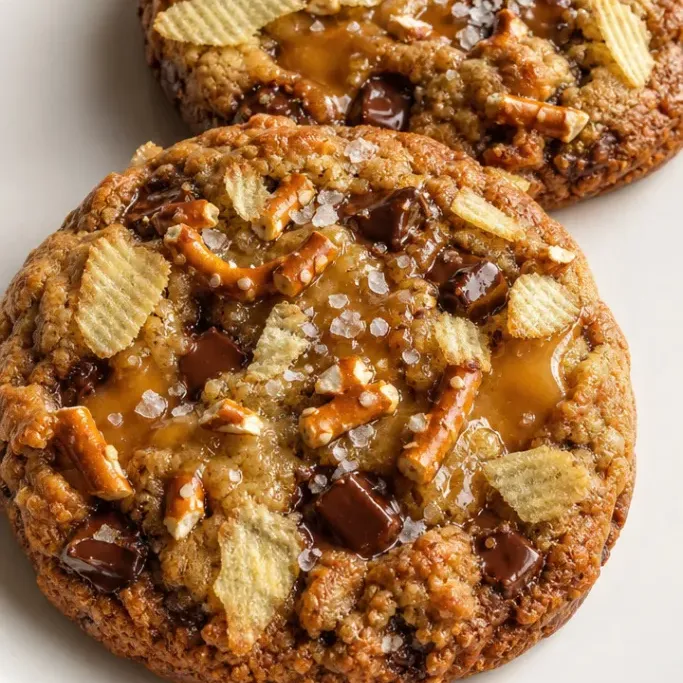
This Panera Bread kitchen sink cookie recipe gives you those thick, chewy bakery cookies at home, loaded with chocolate chips, pretzels, potato chips, and caramel bits. If you have ever stood at the Panera counter debating whether to grab one, this is the version to make instead.
It comes together in one bowl with no special equipment, and the dough takes about 10 minutes to mix. The hardest part is waiting for them to cool enough to eat.
Why I Love This Recipe
The sweet-salty thing here is real. The crushed pretzels and potato chips keep every bite a little crunchy against the chewy center, and the caramel bits get sticky and slightly browned at the edges.
This is also a generous cookie. Each one is thick enough that the center stays soft even the next day, because the higher brown sugar ratio holds onto moisture.
It is the version I keep coming back to when I want something that actually feels like a treat.
Recipe Ingredients
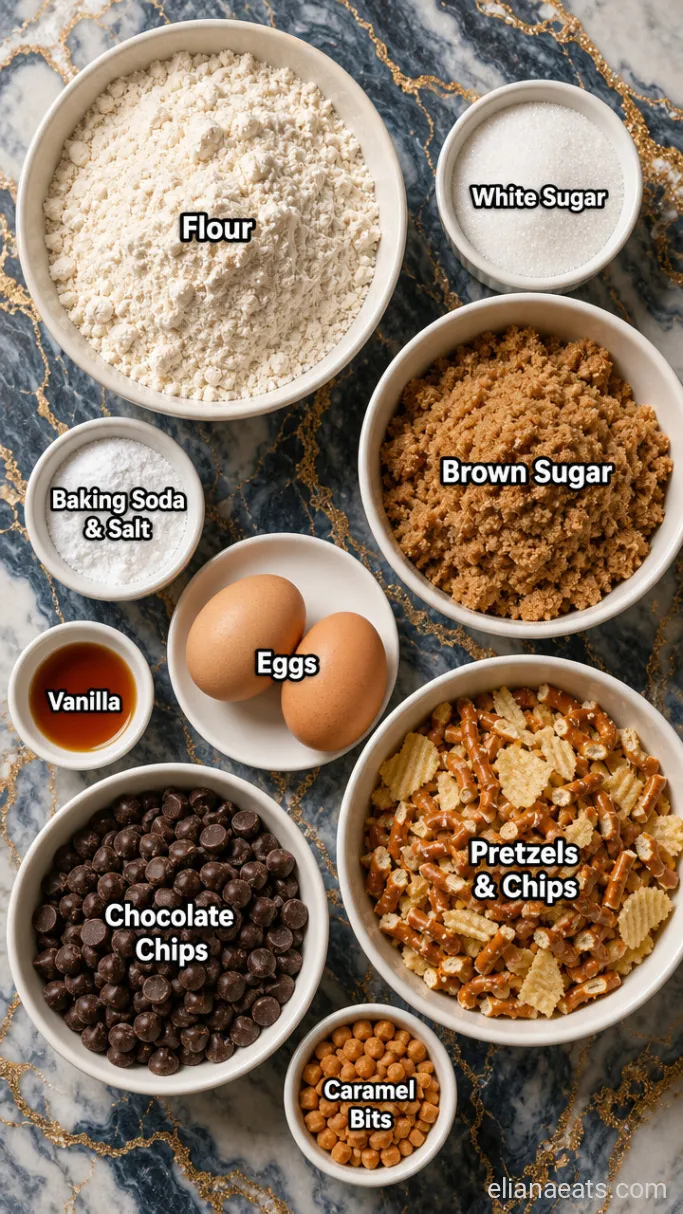
- 2 1/4 cups all-purpose flour – Spoon and level it; scooping packs the flour and toughens the cookie
- 1 tsp baking soda – Gives lift and helps the edges spread just enough
- 1/2 tsp fine sea salt – Fine salt dissolves evenly; kosher salt works too
- 1 cup (2 sticks) unsalted butter, softened – Room temperature, not melted; this is what keeps the cookie thick
- 3/4 cup granulated sugar – Adds crispness to the edges
- 1 cup packed light brown sugar – The higher ratio to white sugar keeps the center soft and chewy
- 2 large eggs – At room temperature so they incorporate without breaking the batter
- 2 tsp vanilla extract – Plain vanilla, nothing fancy needed
- 1 cup semi-sweet chocolate chips – Semi-sweet balances the sweetness of the caramel
- 1/2 cup caramel bits – The bagged kind (like Kraft), not soft caramels cut up; they hold their shape better
- 3/4 cup coarsely crushed pretzels – Crush them into rough pieces, not crumbs, so you get texture
- 3/4 cup coarsely crushed plain potato chips – Use a sturdy chip like Lay’s Classic; thin chips disappear when baked
- Flaky sea salt for topping – Optional, but it sharpens the sweet-salty contrast noticeably
Variations / Substitutions
- Butter swap – Brown the butter first and let it cool to a paste; it adds a nuttier, slightly more complex flavor to the finished cookie.
- Dairy-free – Use a plant-based butter stick (not spread) and dairy-free chocolate chips; the texture is very close to the original.
- Milk chocolate chips – They make the cookie sweeter overall, which works if you are scaling back the caramel bits.
- No caramel bits – Add 1/2 cup of roughly chopped soft caramel squares instead; press a piece into each cookie before baking for a visible caramel pocket.
- Extra heat – A pinch of cayenne, about 1/8 tsp, added to the dry ingredients gives a faint warmth that plays off the salt and caramel.
- Gluten-free – A 1:1 gluten-free flour blend and gluten-free pretzels work here; the spread is slightly less but the chew holds up.
If you like thick bakery-style cookies with a salty edge, the Levain Bakery Chocolate Chip Walnut Cookie Copycat Recipe follows the same thick-dough approach and is worth trying next.
How To Make Kitchen Sink Cookies
Step 1: Cream the Butter and Sugars
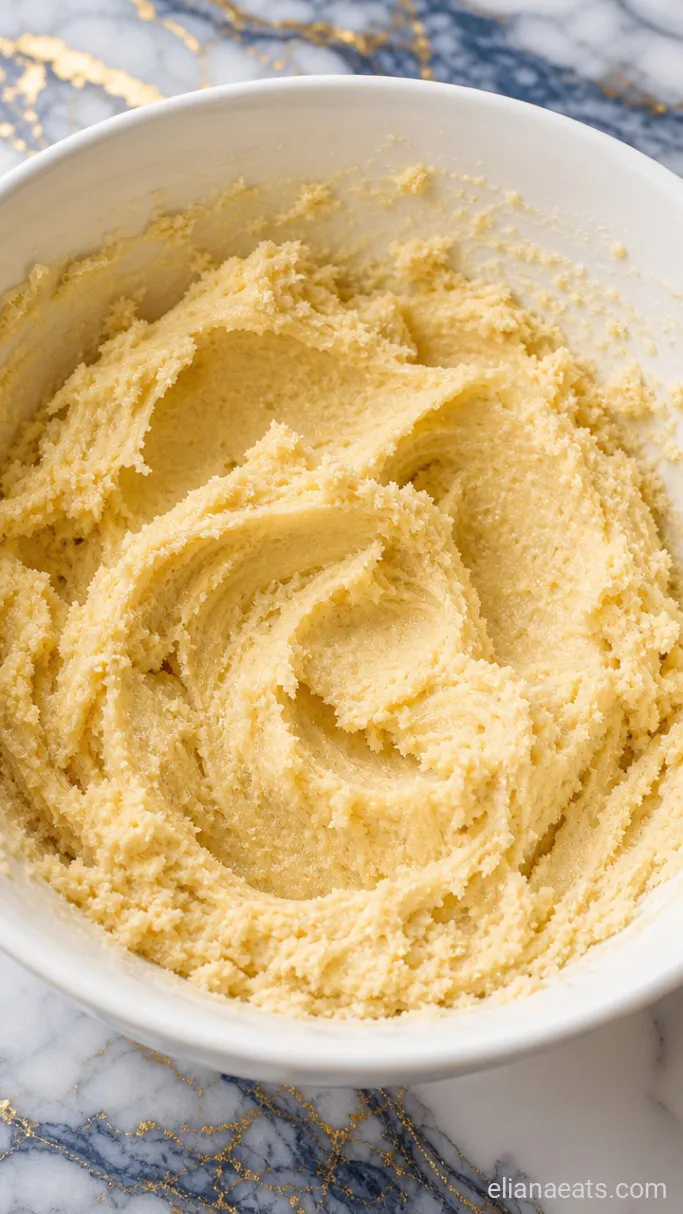
Set your oven to 375°F (190°C) and line 2 baking sheets with parchment paper. In a large bowl, beat the 1 cup softened butter with the 3/4 cup granulated sugar and 1 cup packed brown sugar on medium speed for 3 to 4 minutes, until the mixture looks lighter in color and slightly fluffy.
This step matters more than it seems. Under-creamed butter and sugar produces a flat, dense cookie. You are looking for a pale, slightly airy mixture that almost looks like frosting before the eggs go in.
Do not rush it by using melted butter instead of softened. Melted butter will spread too thin in the oven and you will lose the thick, domed shape that makes these cookies feel like the Panera version.
Step 2: Beat in the Eggs and Vanilla
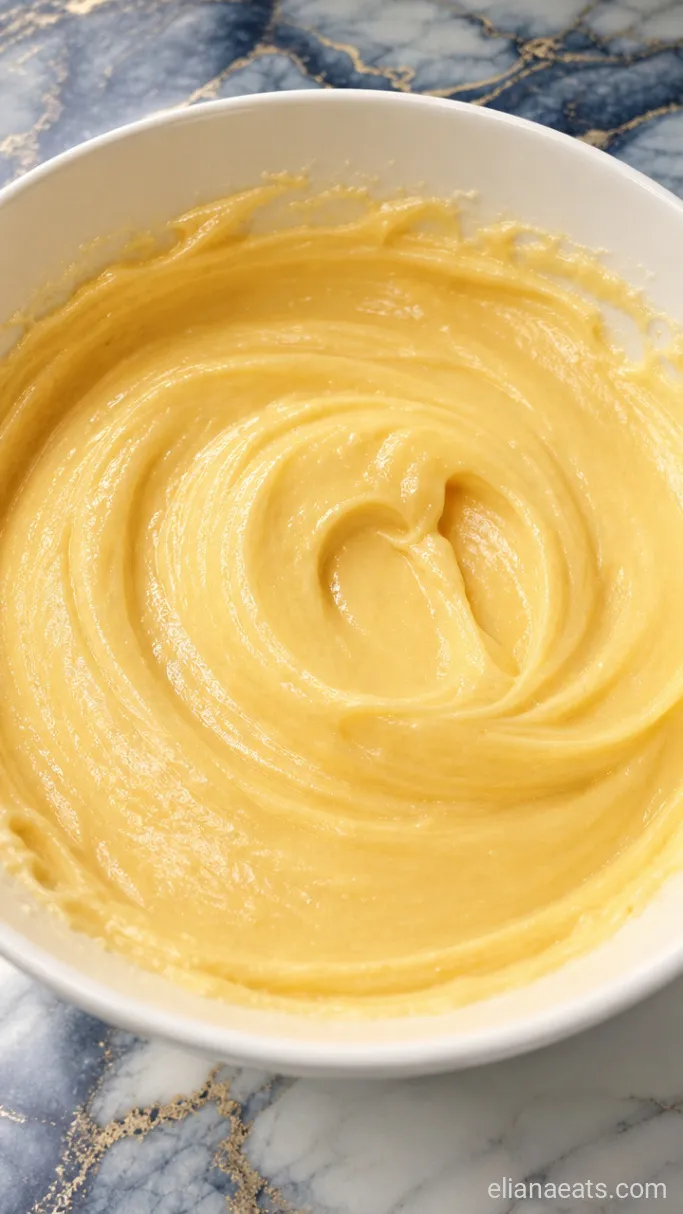
Add the 2 large eggs one at a time, mixing on medium after each one until fully combined. Pour in the 2 tsp vanilla extract and mix for another 30 seconds.
The batter should look smooth and glossy at this point, with no streaks of egg white visible. If it looks slightly curdled, the eggs were too cold. It will come together when the flour goes in, so do not panic.
Step 3: Fold in the Dry Ingredients
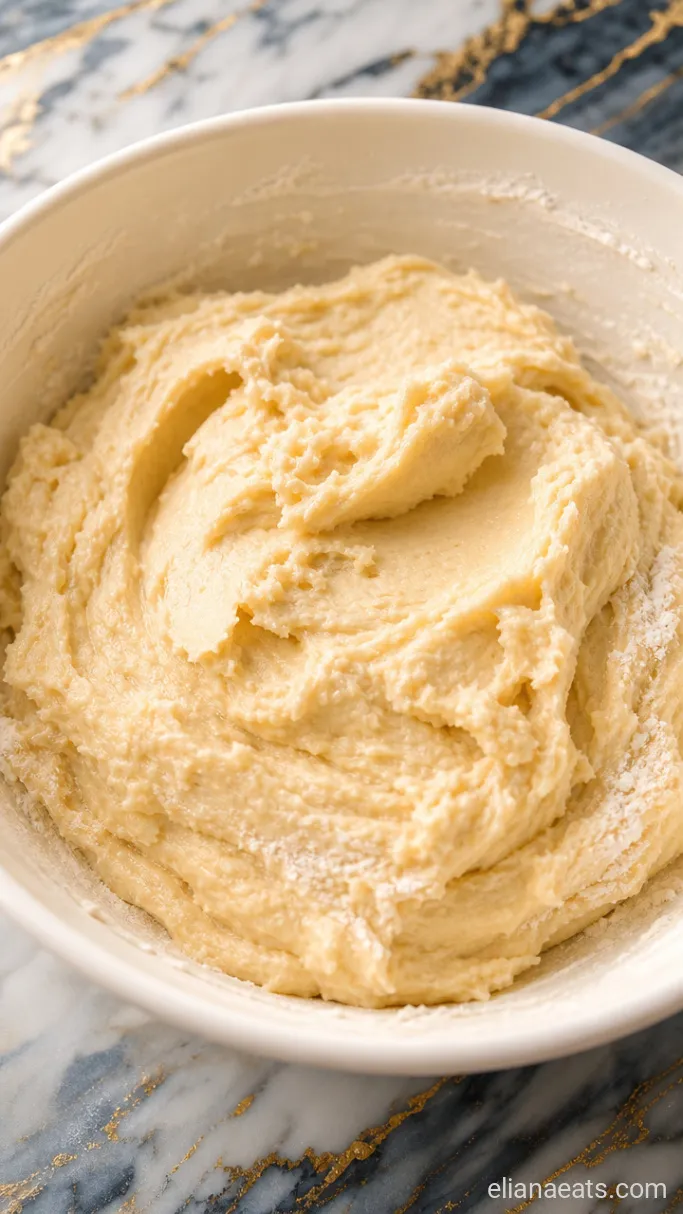
Add the 2 1/4 cups all-purpose flour, 1 tsp baking soda, and 1/2 tsp fine sea salt directly to the bowl. Mix on low just until no dry flour is visible, about 30 to 45 seconds. Stop as soon as it comes together.
Over-mixing at this stage develops gluten, which makes cookies tough instead of chewy. A few seconds past “just combined” is fine. A minute past it is not.
Step 4: Stir in the Mix-Ins
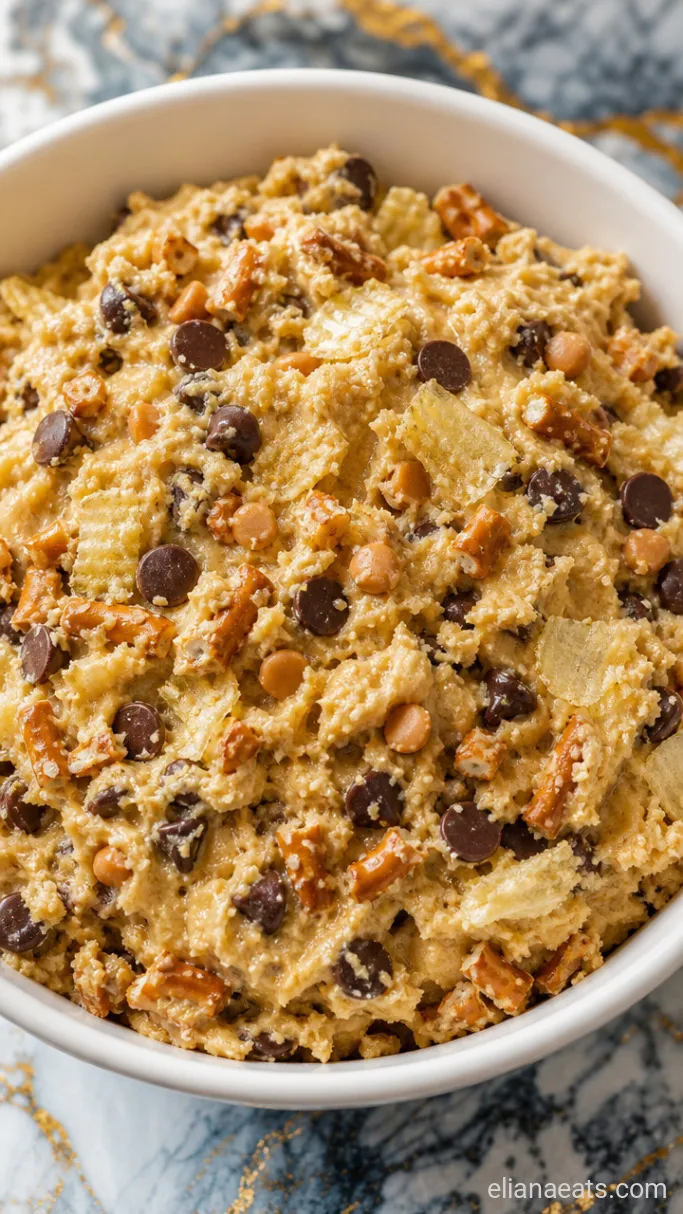
Add the 1 cup semi-sweet chocolate chips, 1/2 cup caramel bits, 3/4 cup crushed pretzels, and 3/4 cup crushed potato chips to the dough. Fold everything in with a spatula or wooden spoon until the mix-ins are evenly distributed throughout the dough.
The dough will be stiff and chunky. That is what you want. If it feels greasy or very soft, refrigerate it for 20 minutes before scooping.
Step 5: Scoop and Bake the Cookies
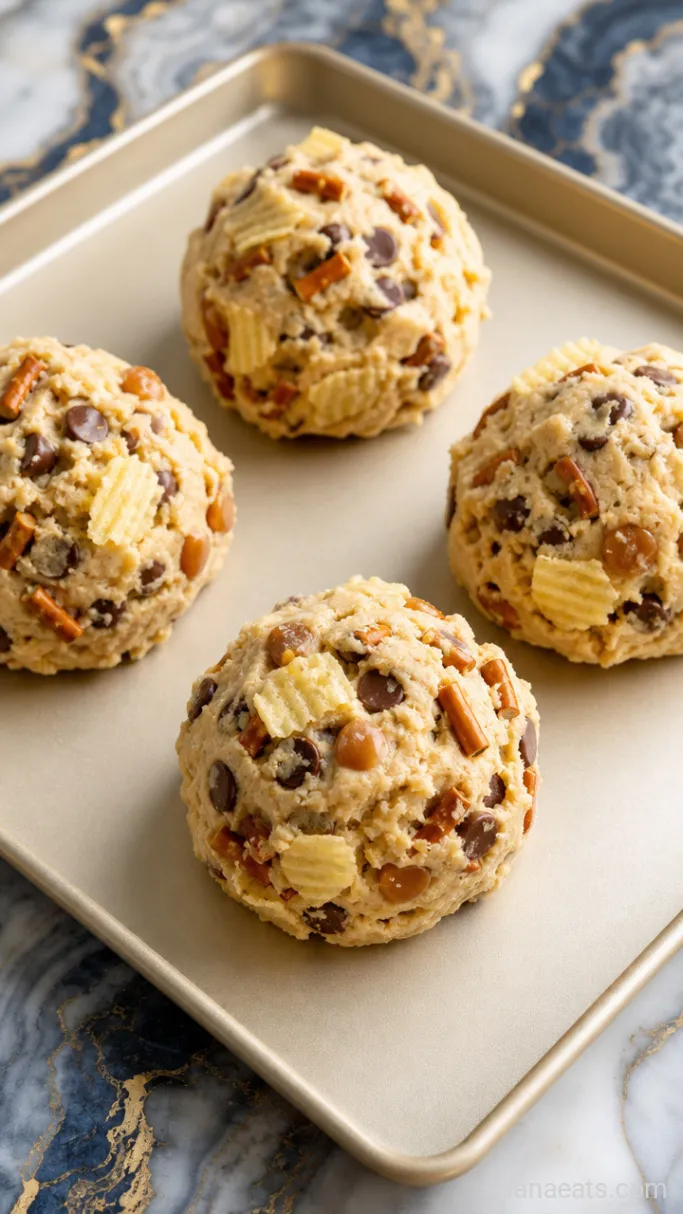
Scoop the dough into balls about 3 tablespoons each (roughly the size of a golf ball) and place them 3 inches apart on the prepared baking sheets. Bake at 375°F (190°C) for 11 to 13 minutes, until the edges are set and golden but the centers still look slightly underdone and matte.
Pull them when the center looks almost done, not fully done. Cookies carry over from the heat of the pan for about 5 minutes after they come out of the oven, and that is what gives you a soft, fudgy center rather than a dry one.
Step 6: Finish and Plate the Cookies
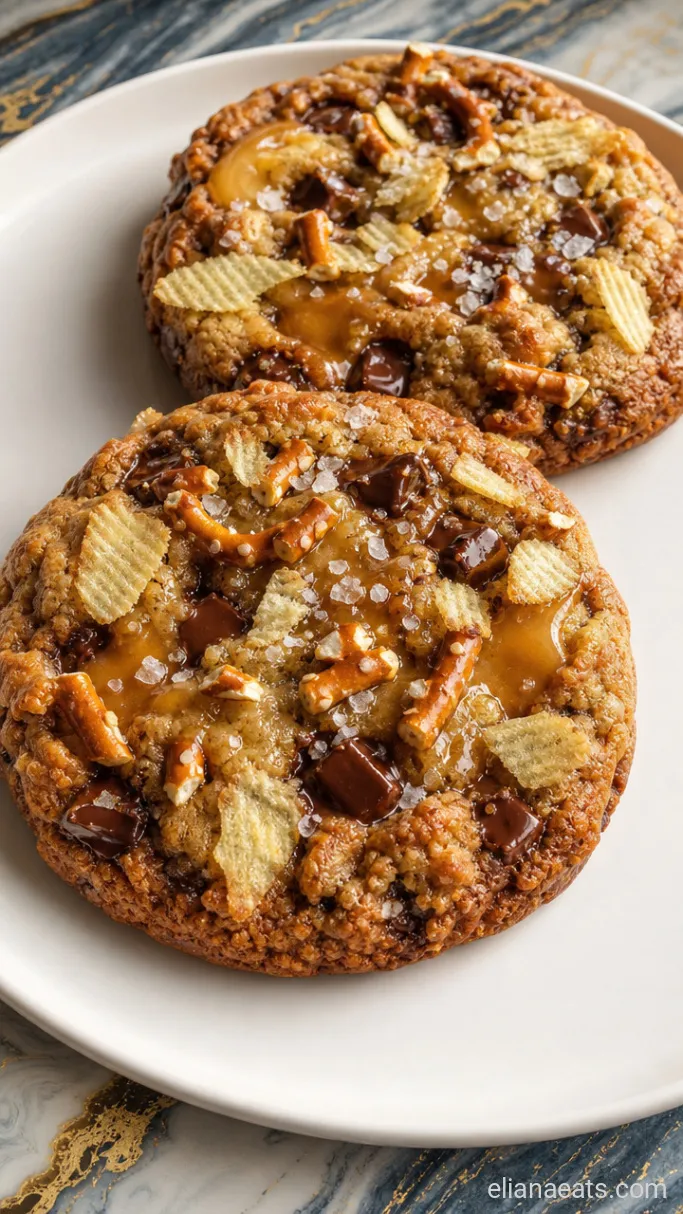
Let the cookies rest on the pan for 5 minutes, then transfer them to a wire rack. Sprinkle a small pinch of flaky sea salt over each warm cookie, and arrange 3 or 4 on a plate or wooden board while the chocolate is still glossy and the caramel bits are visibly sticky at the edges.
Recipe Tips
- Crush the chips and pretzels by hand. Put them in a zip-lock bag and break them with your palm. You want pieces between pea-sized and thumbnail-sized, not a powder. Big chunks mean real texture in every bite.
- Weigh your flour if you can. 2 1/4 cups of spoon-and-leveled flour is about 280g. If you scoop directly from the bag, you can easily end up with 330g, and the cookies come out dry and barely spread.
- Cold dough bakes up thicker. If your kitchen is warm or the butter was slightly too soft, a 30-minute refrigerator rest on the scooped dough balls makes a visible difference in height.
- Swap in toffee bits alongside or instead of caramel bits. They are easier to find and give a similar sticky-sweet hit with a slightly more butterscotch flavor.
Bake times vary by cookie size, and these run large. Here is a quick guide:
| Cookie size (dough ball) | Bake time at 375°F (190°C) | Expected result |
|---|---|---|
| 2 tbsp (small) | 9 to 10 minutes | Thin, crisp edge |
| 3 tbsp (standard) | 11 to 13 minutes | Thick, soft center |
| 4 tbsp (large bakery-style) | 13 to 15 minutes | Domed, gooey center |
How To Store
- Refrigerate – Store baked cookies in an airtight container at room temperature for up to 4 days. For longer storage, refrigerate for up to 1 week, but let them come to room temperature before eating.
- Reheating – Ten seconds in the microwave brings the chocolate back to melty and the caramel soft again. It is genuinely worth doing.
- Serve Cold – Straight from the fridge, the cookie firms up into something almost like a chocolate chip cookie bar. Some people prefer it that way.
What To Serve With Kitchen Sink Cookies
A cold glass of whole milk is the obvious one, and it works because the fat cuts through the sweetness and gives you a clean next bite. A strong black coffee or an Americano is the other good option, where the bitterness of the coffee pulls the caramel and chocolate flavors forward rather than competing with them. If you are serving these at a gathering, set them out alongside a scoop of vanilla bean ice cream, where the cold and creamy contrast against the warm, salty cookie edges is worth it.
Frequently Asked Questions
Can I freeze the cookie dough?
Yes. Scoop the dough into balls, freeze them on a sheet pan until solid, then transfer to a bag. Bake from frozen at 375°F (190°C) for 14 to 16 minutes.
Why did my cookies spread too flat?
The most likely reason is butter that was too warm or melted rather than properly softened. If your kitchen runs hot, cream the butter briefly and keep the dough cool before scooping.
Can I make the dough ahead and refrigerate it overnight?
Yes, and the cookies actually bake up slightly thicker and more flavorful after a night in the fridge. Cover the bowl tightly and bring the dough out 10 minutes before scooping.
Do the potato chips taste obvious in the finished cookie?
Not in a distracting way. They mostly contribute a subtle saltiness and a faint crunch rather than a chip flavor. Most people cannot identify them without being told.
—
Kitchen Sink Cookie Recipe
Ingredients
Method
- Beat the softened butter, granulated sugar, and brown sugar on medium speed for 3 to 4 minutes until pale and fluffy. Preheat the oven to 375°F (190°C) and line 2 baking sheets with parchment.
- Add the eggs one at a time, mixing after each, then mix in the vanilla extract for 30 seconds until smooth and glossy.
- Add the flour, baking soda, and fine sea salt. Mix on low for 30 to 45 seconds, just until no dry flour remains.
- Fold in the chocolate chips, caramel bits, crushed pretzels, and crushed potato chips with a spatula until evenly distributed.
- Scoop 3-tablespoon balls onto the prepared sheets, spacing them 3 inches apart. Bake at 375°F (190°C) for 11 to 13 minutes until edges are golden and centers look slightly underdone.
- Rest on the pan for 5 minutes, transfer to a wire rack, sprinkle with flaky sea salt, and serve warm.
