
Olive Garden Salmon Recipe (Easy Copycat in 30 Minutes)

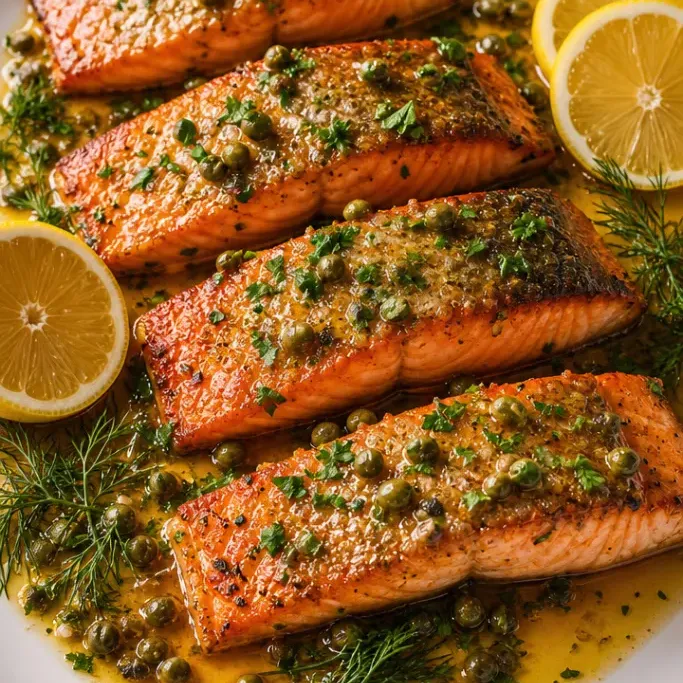
This Olive Garden salmon recipe brings that restaurant-style herb-crusted fillet home, with a garlicky white wine sauce that’s bright, buttery, and ready in about 30 minutes. If you’ve been trying to recreate that Italian-American dinner-out feeling on a weeknight, this is a solid way to do it.
It works because nothing here is fussy. A hot pan, a handful of pantry staples, and one good piece of salmon is all you need.
Why I Love This Recipe
The combination of a crisp, herb-coated crust and that garlicky, lemon-forward pan sauce is what keeps me coming back to this one. The sauce is light but has enough body from the butter to coat the fish properly.
It’s also fast in a way that actually matters. From fridge to table in under 30 minutes means it fits into a real Tuesday evening.
The capers add a little sharpness that cuts through the richness of the salmon. It’s a small thing, but without them the dish tastes flat.
Recipe Ingredients
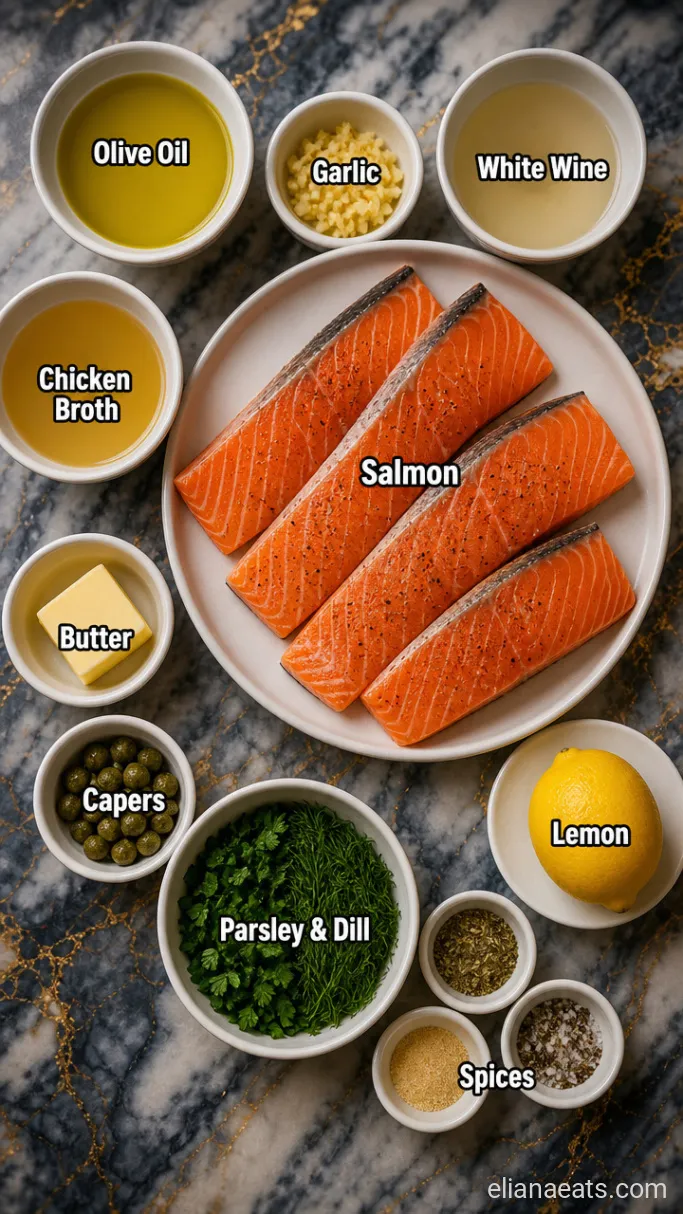
- 4 salmon fillets (about 6 oz / 170g each), skin-on – skin-on fillets hold together better in the pan and crisp up nicely
- 2 tbsp olive oil – for searing; a neutral oil like avocado oil works too
- 3 cloves garlic, minced – fresh is best here; jarred will work but the flavor is milder
- 1/2 cup dry white wine – a Pinot Grigio or Sauvignon Blanc; use low-sodium chicken broth if you prefer no alcohol
- 1/2 cup low-sodium chicken broth – adds depth to the sauce without overpowering the fish
- 2 tbsp unsalted butter – finishes the sauce and gives it a glossy, silky texture
- 2 tbsp capers, drained – bring a briny, slightly sharp note that balances the butter
- 2 tbsp fresh flat-leaf parsley, chopped – for the herb crust and the finish; dried works in a pinch but use half the amount
- 1 tbsp fresh dill, chopped – part of the herb coating; pairs naturally with salmon
- 1 tsp dried Italian seasoning – rounds out the herb coating
- 1/2 tsp garlic powder – goes into the herb rub on the fish
- 1/2 tsp salt – for seasoning the fish before searing
- 1/4 tsp black pepper – freshly cracked if you have it
- 1 lemon, half juiced (about 1 tbsp juice), half sliced into rounds for serving – the juice brightens the sauce; the slices are for the plate
Variations / Substitutions
- Salmon swap – Trout or Arctic char fillets work at the same thickness; the cook time stays the same.
- Wine-free sauce – Replace the 1/2 cup white wine with an extra 1/2 cup low-sodium chicken broth plus an extra squeeze of lemon to keep the acidity.
- Dairy-free – Swap the 2 tbsp unsalted butter for 2 tbsp good olive oil stirred in at the end; the sauce will be thinner but still flavorful.
- Extra heat – Add 1/4 tsp red pepper flakes to the pan with the garlic for a little warmth that plays well against the lemon.
- Herb swap – Tarragon can replace the dill if that’s what you have; it gives the dish a slightly more anise-forward character.
- Caper-free – Leave them out and add an extra squeeze of lemon to compensate for the lost sharpness.
If you enjoy this style of sauce with fish, you might also like a homemade Olive Garden Shrimp Scampi Recipe.
How To Make Olive Garden Salmon
Step 1: Season the Salmon
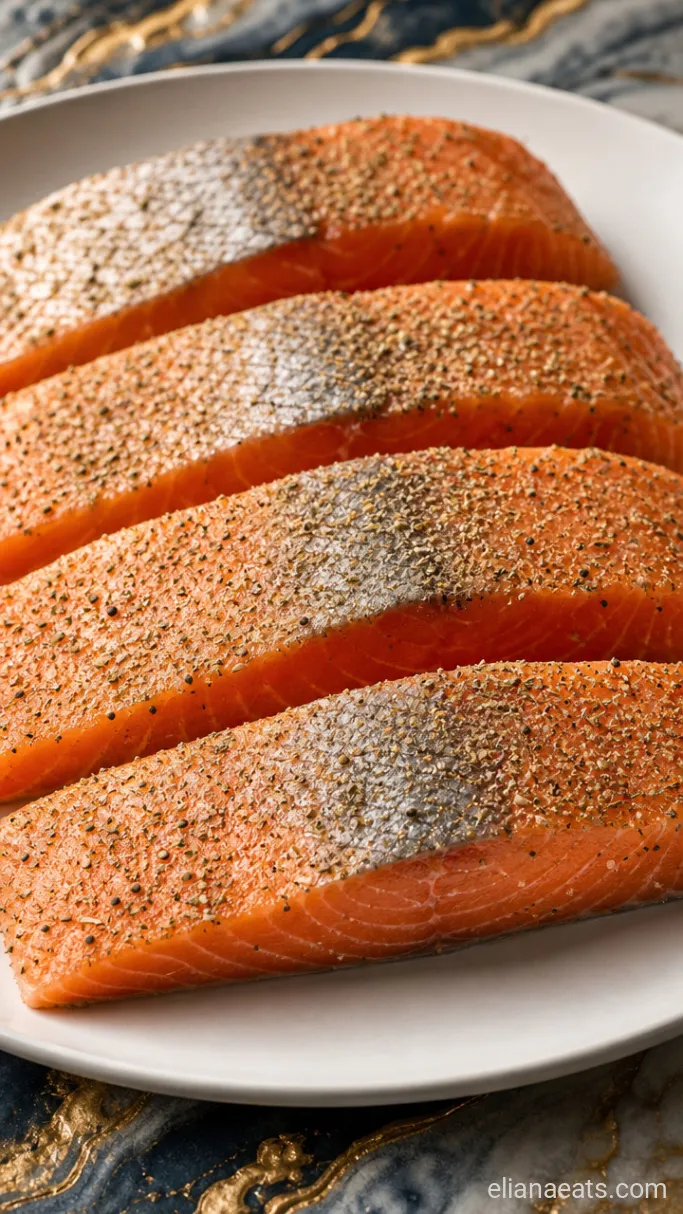
In a small bowl, mix together the 1 tbsp fresh flat-leaf parsley, 1 tbsp fresh dill, 1 tsp dried Italian seasoning, 1/2 tsp garlic powder, 1/2 tsp salt, and 1/4 tsp black pepper. Pat your 4 salmon fillets dry with paper towels, then press the herb mixture firmly onto the flesh side of each fillet.
Drying the salmon before seasoning matters more than it sounds. Moisture on the surface steams the fish instead of searing it, and you lose the crust you’re working toward.
Step 2: Sear the Salmon
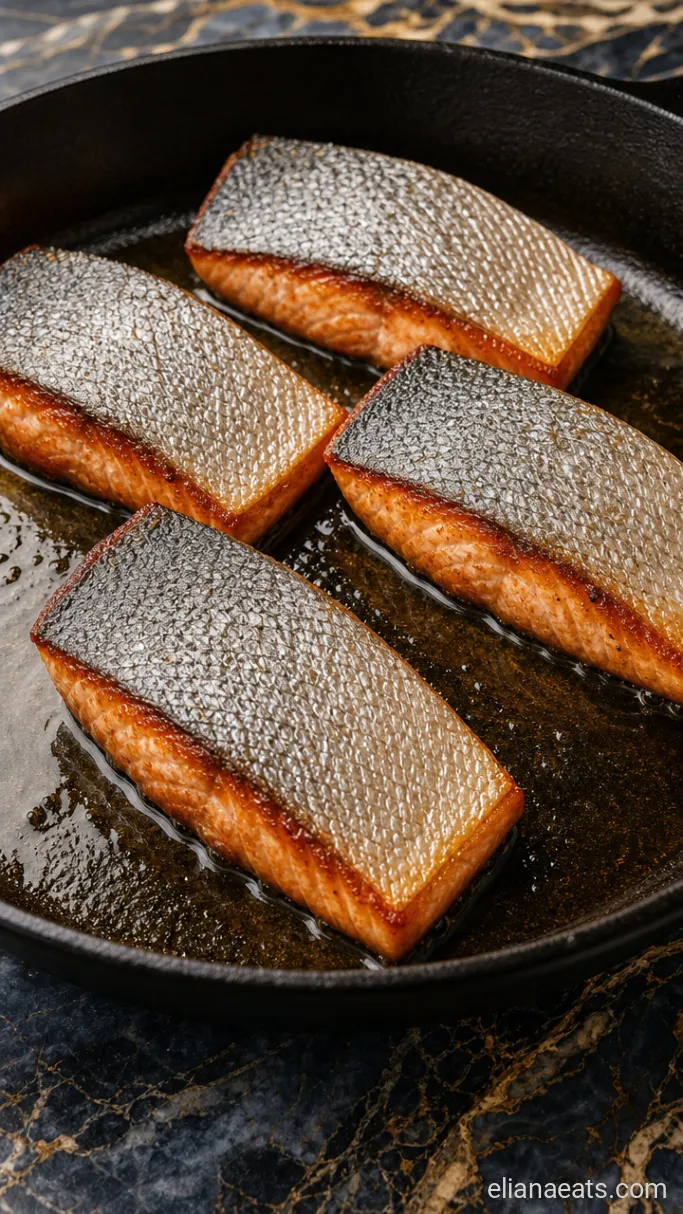
Heat the 2 tbsp olive oil in a large skillet (12-inch works well) over medium-high heat until the oil shimmers, about 1 to 2 minutes. Place the salmon fillets flesh-side down and cook for 4 minutes without moving them. Flip and cook skin-side down for another 3 to 4 minutes, until the salmon is opaque all the way through and reads 125°F to 130°F (52°C to 54°C) on an instant-read thermometer for medium, or 145°F (63°C) if you prefer it fully cooked.
The herb crust should be a deep golden color with visible browning around the edges before you flip. If it’s sticking to the pan when you try to turn it, give it another 30 seconds; it will release on its own when it’s ready.
A common mistake here is overcrowding the pan. If your fillets are large, sear in 2 batches and keep the first batch warm on a plate tented with foil. Crowding drops the pan temperature and the salmon ends up steaming rather than searing.
Step 3: Build the Sauce
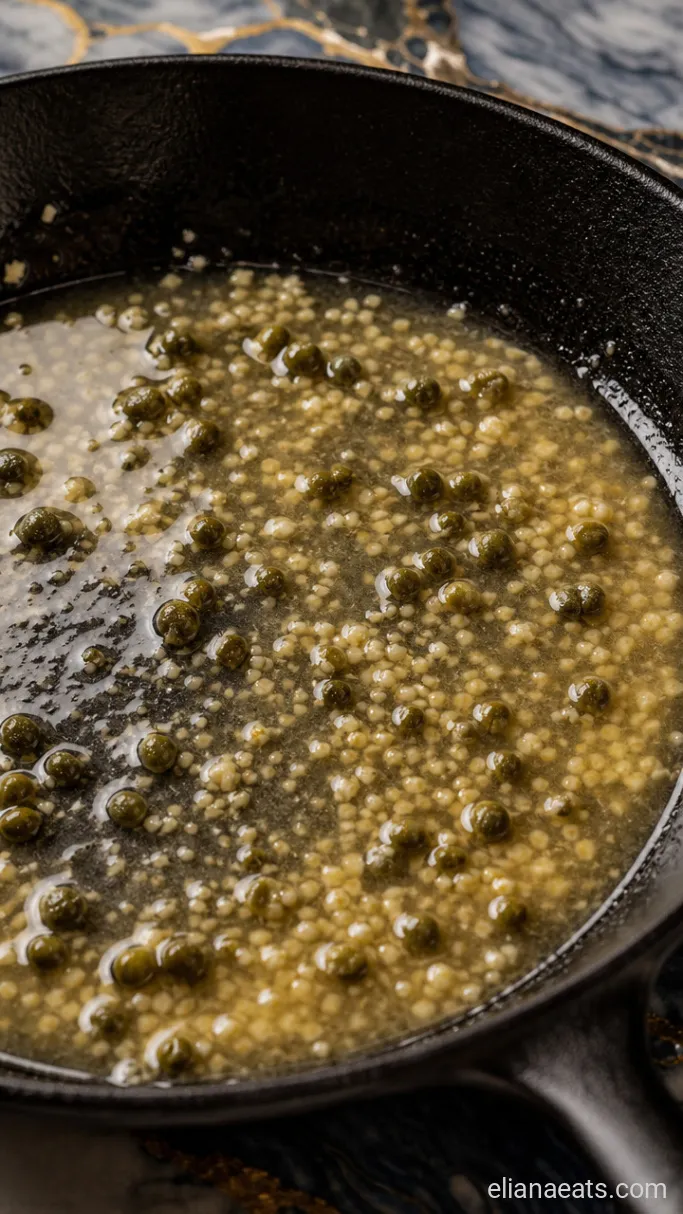
Remove the salmon to a plate and reduce the heat to medium. Add the 3 cloves minced garlic to the same pan and stir for about 30 seconds, just until fragrant and very lightly golden. Pour in the 1/2 cup white wine and the 1/2 cup chicken broth, scraping up any brown bits stuck to the bottom of the pan. Let the liquid simmer for 3 to 4 minutes until it reduces by roughly a third.
You’ll see the sauce go from watery and pale to slightly glossier with a little more color. Those browned bits from the salmon dissolve into the sauce and are where most of the flavor comes from, so don’t skip the scraping.
Step 4: Finish and Glaze the Fillets
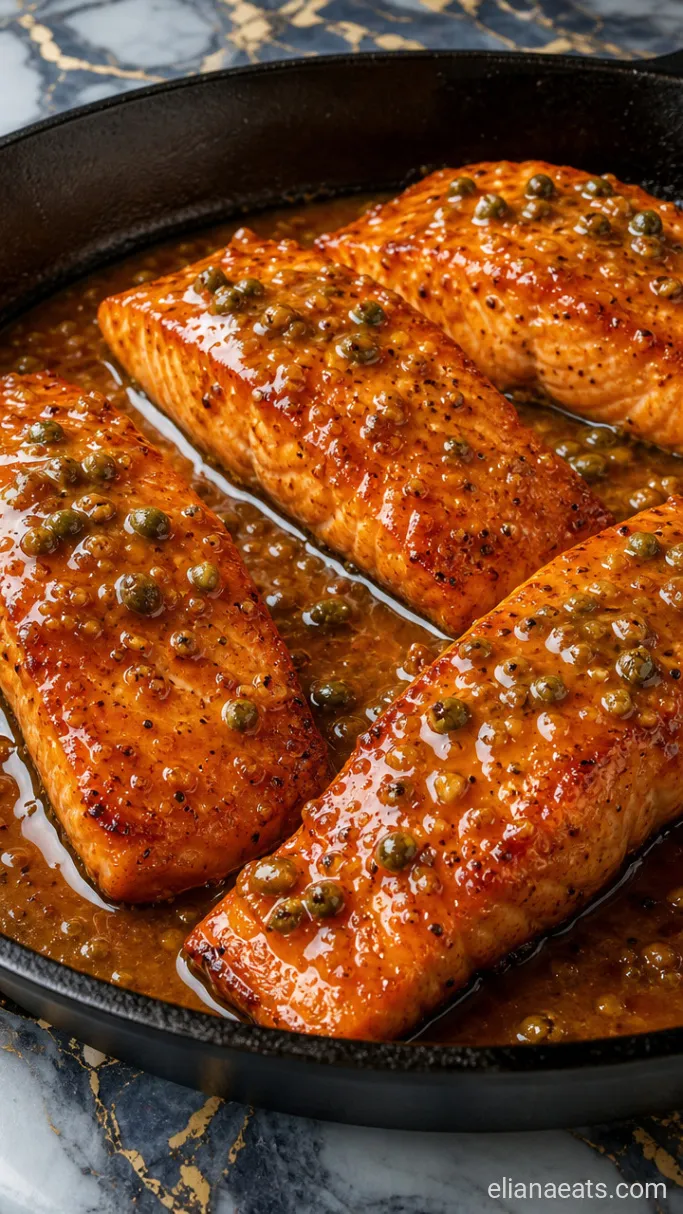
Stir the 2 tbsp unsalted butter into the reduced sauce until it melts completely, then add the 2 tbsp drained capers and the 1 tbsp fresh lemon juice. Nestle the salmon fillets back into the pan, skin-side up this time, and spoon the sauce over them for about 1 minute over medium-low heat.
The sauce should look glossy and just slightly thickened, coating the back of a spoon. If it seems too thin, let it simmer for another 30 to 60 seconds before adding the fish back in.
Step 5: Plate and Garnish
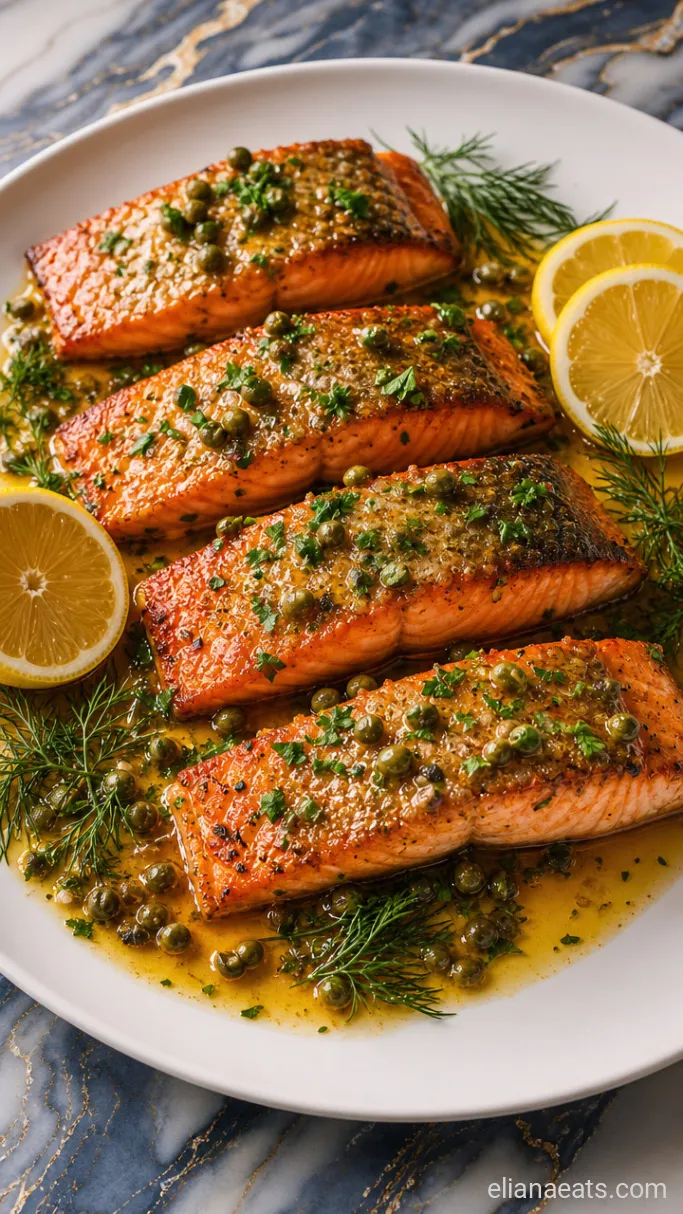
Transfer the salmon fillets to a serving plate or individual plates, spoon the remaining pan sauce generously over the top, and scatter the reserved 1 tbsp fresh parsley over everything. Lay the lemon rounds alongside the fish and serve immediately.
Recipe Tips
- Choose center-cut fillets – They’re a more even thickness than tail-end pieces, so the whole fillet cooks at the same rate without the thin end drying out.
- Bring salmon to room temperature first – Pull the fillets from the fridge about 15 minutes before cooking. Cold fish dropped into a hot pan cooks unevenly at the center.
- Don’t skip the simmer reduction – If you add the butter before the liquid has reduced, the sauce will be watery and won’t cling to the fish. Give it the full 3 to 4 minutes.
- Leftover sauce – Any extra pan sauce is excellent tossed with linguine or spooned over roasted asparagus the next day.
Cook times by fillet thickness (medium-high heat, flesh-side first):
| Fillet Thickness | Flesh-Side Down | Skin-Side Down |
|---|---|---|
| 3/4 inch (2 cm) | 3 minutes | 2 to 3 minutes |
| 1 inch (2.5 cm) | 4 minutes | 3 to 4 minutes |
| 1.25 inch (3 cm) | 5 minutes | 4 to 5 minutes |
How To Store
- Refrigerate – Store leftover salmon and sauce together in an airtight container for up to 2 days.
- Reheating – Warm gently in a covered skillet over low heat with a splash of chicken broth (about 2 tbsp) to loosen the sauce, about 3 to 4 minutes. Microwaving works but tends to dry the fish out.
- Serve Cold – Cold leftover salmon flaked over a salad or grain bowl is genuinely good; the herb crust holds its flavor well.
What To Serve With Salmon
A simple bowl of angel hair pasta tossed in olive oil and garlic soaks up the leftover pan sauce well, which is reason enough to make it. Roasted broccolini or asparagus works alongside because the slight char and bitterness of those vegetables balances the richness of the butter sauce. A wedge of crusty bread on the side is also worth having, specifically to get the last of the sauce out of the pan.
Frequently Asked Questions
Can I use frozen salmon fillets?
Yes, but thaw them completely in the fridge overnight and pat them very dry before seasoning. Any residual water prevents a proper sear.
Can I make this recipe ahead of time?
The sauce can be made up to 2 hours ahead and kept warm on very low heat. Sear the salmon fresh right before serving; reheated seared fish loses the crust.
What if I don’t have capers?
A few green olives, roughly chopped, give you a similar briny sharpness. Start with about 1 tbsp and taste before adding more.
Can I bake the salmon instead of pan-searing it?
You can. Bake the herb-crusted fillets at 400°F (200°C) for 12 to 15 minutes, then make the sauce separately in a small saucepan. You won’t get the same fond in the pan sauce, so add an extra 1/2 tbsp butter at the end to compensate.
—
Olive Garden Salmon Recipe
Ingredients
Method
- Mix the 1 tbsp parsley, 1 tbsp dill, 1 tsp Italian seasoning, 1/2 tsp garlic powder, 1/2 tsp salt, and 1/4 tsp black pepper in a small bowl. Pat salmon dry and press the herb mixture firmly onto the flesh side of each fillet.
- Heat the 2 tbsp olive oil in a 12-inch skillet over medium-high heat until shimmering. Sear salmon flesh-side down for 4 minutes, flip, and cook skin-side down for 3 to 4 more minutes until the internal temperature reaches 125°F to 145°F (52°C to 63°C) depending on your preference. Transfer to a plate.
- Reduce heat to medium. Add the 3 cloves minced garlic to the same pan and cook for 30 seconds. Pour in the 1/2 cup white wine and 1/2 cup chicken broth, scraping up the browned bits. Simmer 3 to 4 minutes until reduced by a third.
- Stir in the 2 tbsp butter until melted, then add the 2 tbsp capers and 1 tbsp lemon juice. Return salmon to the pan skin-side up and spoon sauce over it for 1 minute over medium-low heat.
- Transfer fillets to a serving plate, spoon the pan sauce over the top, scatter the reserved 1 tbsp fresh parsley over everything, and lay the lemon rounds alongside before serving.
