
Olive Garden Meat Sauce Copycat Recipe

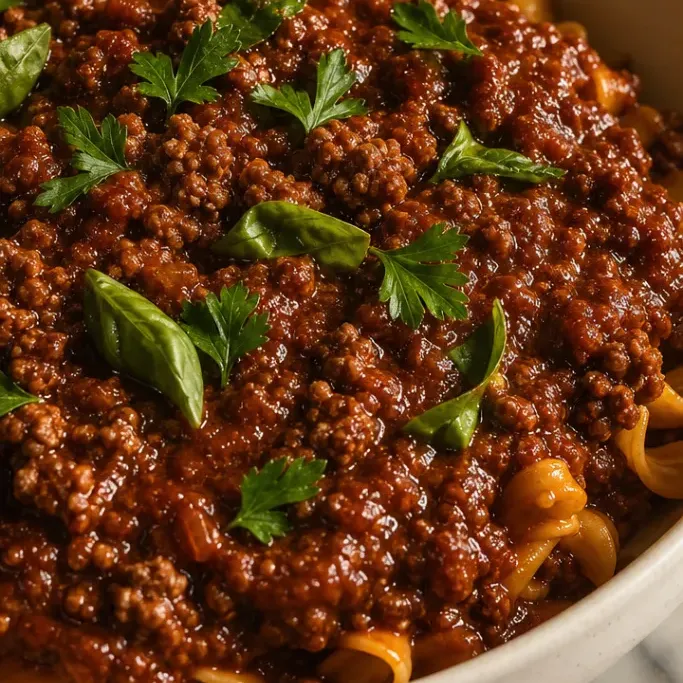
This Olive Garden meat sauce recipe brings the restaurant’s hearty, slow-simmered bolognese-style sauce home in about an hour. It’s the kind of thick, beefy tomato sauce that clings to rigatoni or pappardelle, and it’s worth making a big batch because it reheats even better the next day.
If you have been trying to recreate that deep, savory richness at home, this is the version I keep coming back to.
Why I Love This Recipe
The sauce gets its body from a mix of ground beef and Italian sausage. The sausage brings a mild fennel-and-herb note that plain beef alone never quite delivers.
A splash of whole milk stirred in near the end rounds out the acidity and gives the sauce a subtle creaminess without making it heavy. It’s a small thing that makes a real difference.
This one comes together in 1 pot, which means less cleanup on a weeknight.
Recipe Ingredients
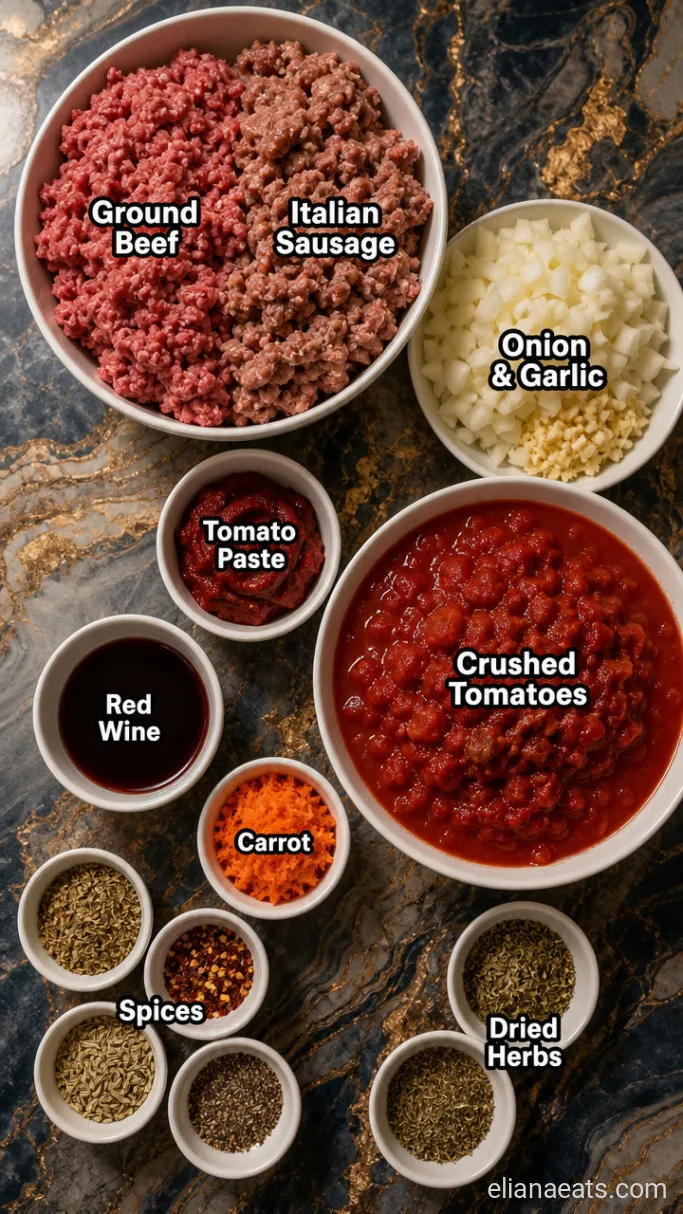
- 1 lb (450g) ground beef (80/20) – Higher fat content keeps the meat tender and adds flavor to the base
- 1/2 lb (225g) mild Italian sausage, casings removed – Adds herbaceous depth; hot Italian works if you want heat
- 1 medium yellow onion, finely diced – About 1 cup; white onion works too
- 3 cloves garlic, minced – Fresh is best here; jarred garlic tastes flat in a long simmer
- 1 medium carrot, finely grated – Sweetens the sauce naturally without sugar
- 2 tbsp olive oil – For browning the aromatics
- 2 tbsp tomato paste – Deepens the tomato flavor and adds color
- 1 can (28 oz / 800g) crushed tomatoes – San Marzano style gives the cleanest flavor
- 1 can (14.5 oz / 410g) diced tomatoes – Adds texture; do not drain
- 1/2 cup (120ml) dry red wine – Chianti or any table red; adds body and a slight tang
- 1/2 cup (120ml) whole milk – Stirs in at the end to mellow the acidity
- 1 tsp dried oregano – Classic base herb for Italian-American tomato sauce
- 1 tsp dried basil – Earthy, sweet undertone; fresh basil added at the end is a nice bonus
- 1/2 tsp fennel seeds – Echoes the sausage and adds a subtle anise note
- 1/2 tsp red pepper flakes – Mild background heat; leave it out for a gentler sauce
- 1 tsp kosher salt, plus more to taste – Start here and adjust at the end
- 1/2 tsp black pepper – Freshly cracked if you have it
- Fresh basil or flat-leaf parsley, for serving – Optional but adds a bright finish
Variations / Substitutions
- Ground turkey instead of beef – The sauce will be lighter in color and less rich, but it still works well if you season generously.
- Omit the sausage – Use 1.5 lb (675g) total ground beef and add an extra 1/4 tsp fennel seeds to keep the herby flavor.
- Skip the wine – Swap in 1/2 cup (120ml) beef broth with a squeeze of lemon juice to keep the acidity.
- Dairy-free – Replace the whole milk with an equal amount of full-fat coconut milk or just leave it out; the sauce will be slightly sharper but still good.
- Add heat – Double the red pepper flakes or use hot Italian sausage in place of mild.
- Extra vegetables – Finely diced celery or zucchini can be added with the onion and carrot without changing the character of the sauce.
If you enjoy slow-simmered tomato sauces, you might also like this cheesy marinara recipe that resembles the Olive Garden Five Cheese Marinara Copycat Recipe.
How To Make Olive Garden Meat Sauce
Step 1: Brown the Meat
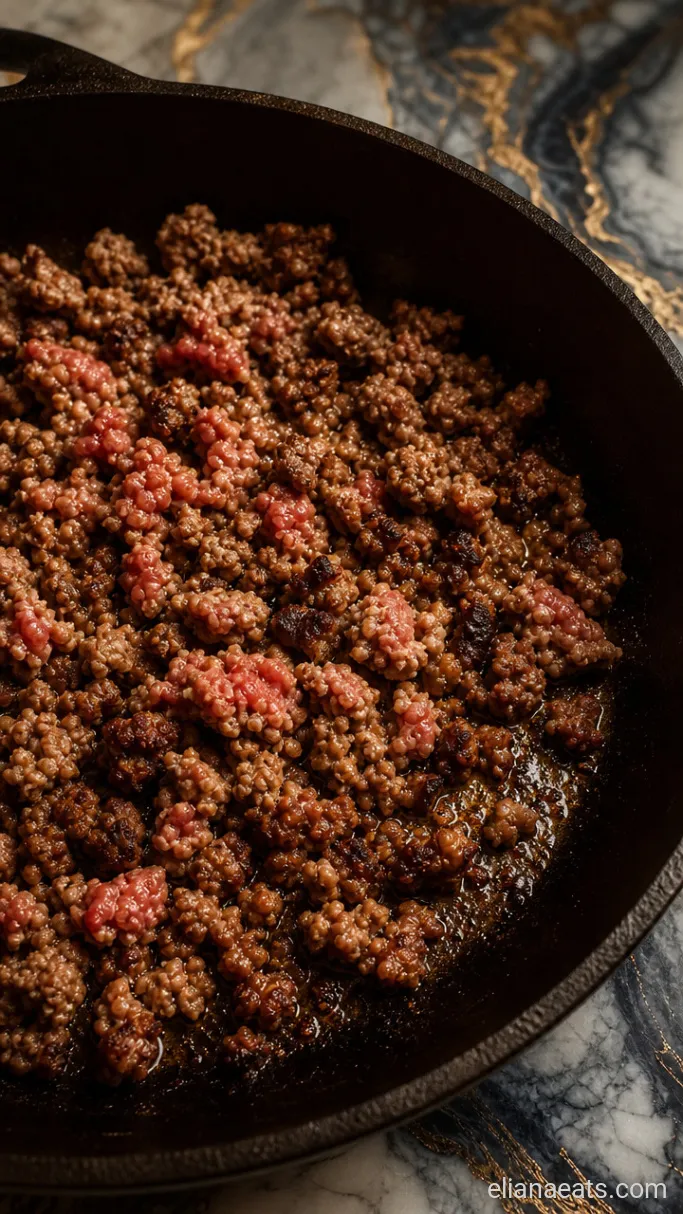
Heat the 2 tbsp olive oil in a large, heavy-bottomed pot or Dutch oven over medium-high heat. Add the 1 lb ground beef and 1/2 lb Italian sausage, breaking the meat apart with a wooden spoon. Cook for 8 to 10 minutes, stirring occasionally, until no pink remains and the bottom of the pot has some good brown bits forming.
Don’t rush this step by stirring constantly. Let the meat sit for a minute or two between stirs so it gets actual color on the bottom of the pot. That browning is where a lot of the savory flavor comes from. Drain off most of the excess fat, leaving about 1 tbsp in the pot.
Step 2: Soften the Aromatics
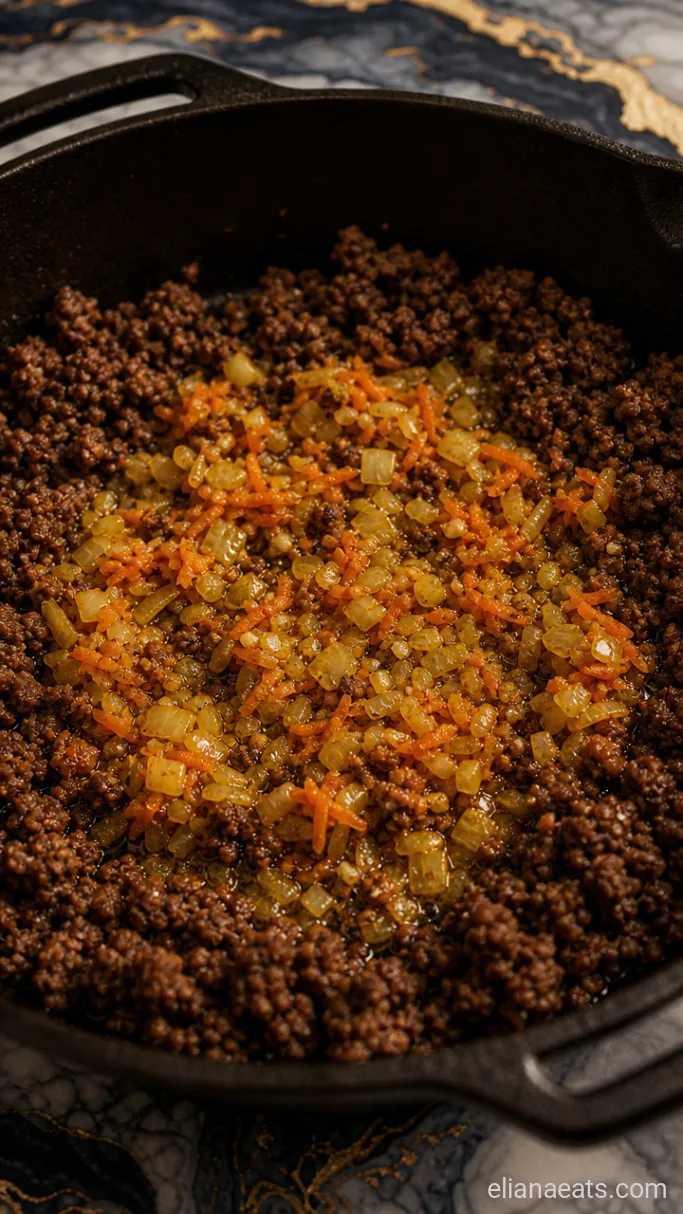
Add the diced onion and grated carrot to the pot and reduce the heat to medium. Cook for 5 to 6 minutes, stirring often, until the onion is translucent and the carrot has softened. Stir in the 3 cloves minced garlic, 1/2 tsp fennel seeds, 1/2 tsp red pepper flakes, 1 tsp oregano, and 1 tsp basil. Cook for 1 more minute until fragrant.
The onion will look soft and slightly golden at the edges. You’ll smell the garlic and fennel the moment they hit the pan, which tells you the heat is right.
Step 3: Build the Tomato Base
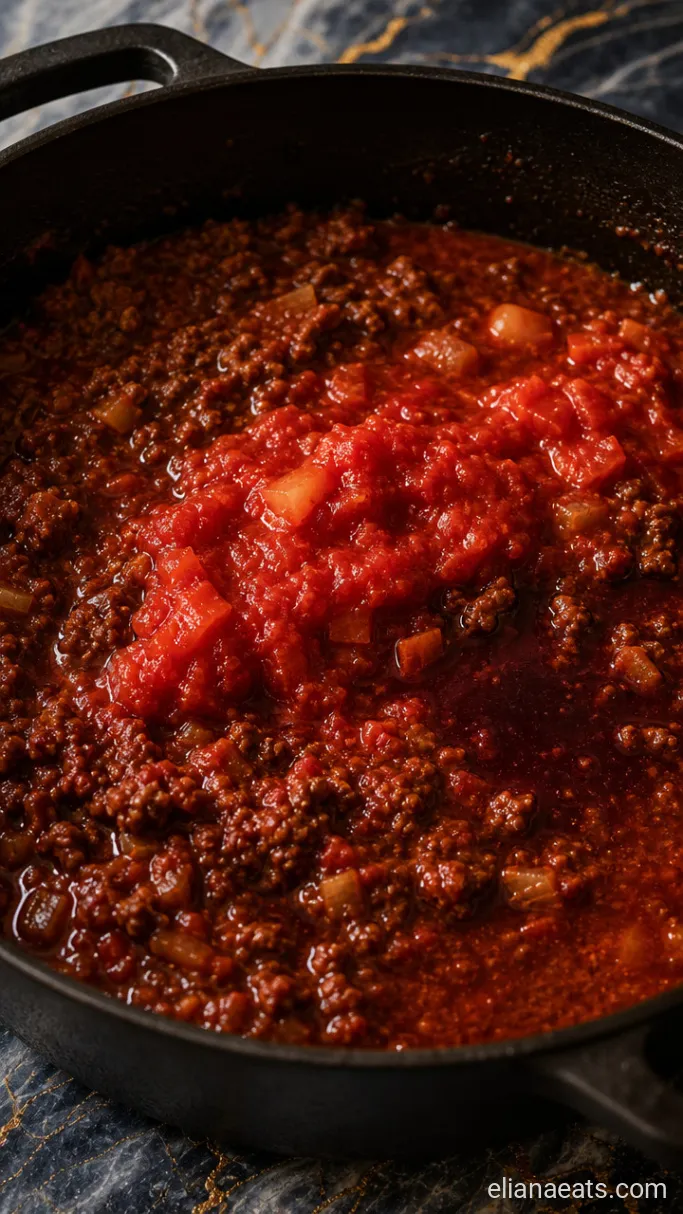
Push everything to one side of the pot and add the 2 tbsp tomato paste directly onto the cleared surface. Let it cook, undisturbed, for about 1 minute until it darkens slightly from bright red to a deeper brick color. Then stir it through the meat and vegetables. Pour in the 1/2 cup red wine and scrape up any browned bits from the bottom of the pot. Let the wine cook for 2 minutes until most of it has reduced.
That brief cooking of the tomato paste before stirring it in is worth the extra minute. It knocks out the raw, tinny edge and adds a roasted note to the whole sauce.
Step 4: Simmer the Sauce
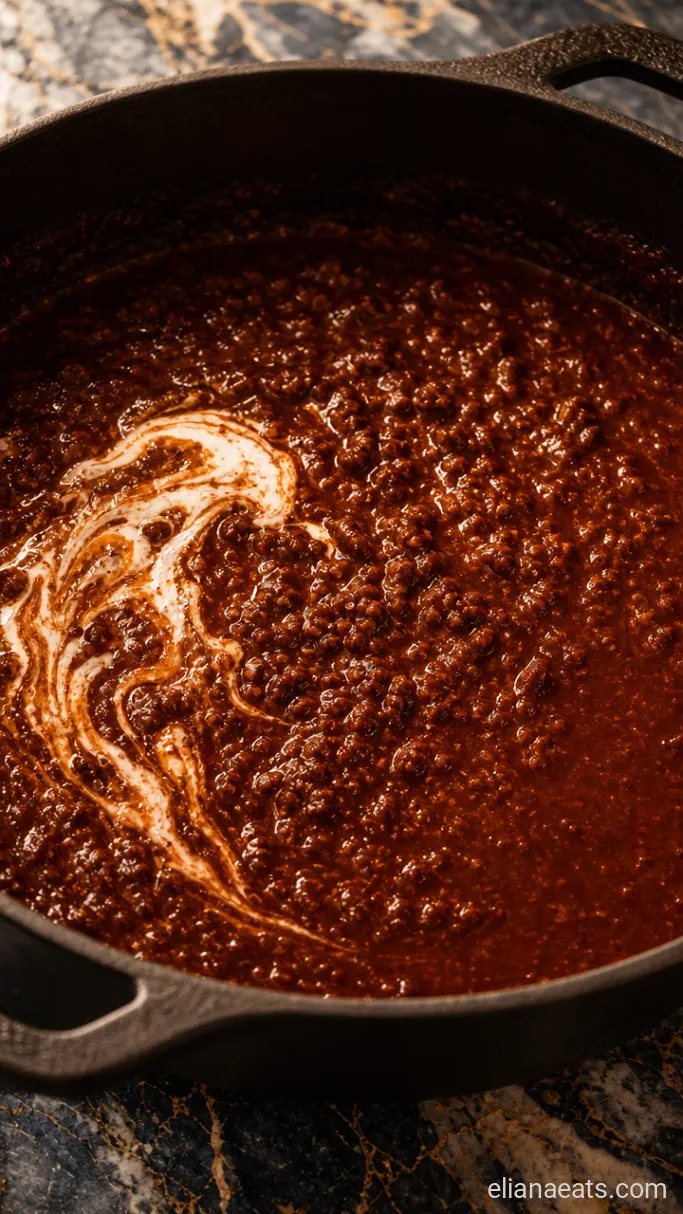
Pour in the 28 oz crushed tomatoes and the 14.5 oz diced tomatoes (with all their liquid). Stir in the 1 tsp salt and 1/2 tsp black pepper. Bring the sauce to a gentle boil, then reduce the heat to low, partially cover with a lid, and simmer for 30 to 40 minutes, stirring every 10 minutes or so.
By the 30-minute mark the sauce will have thickened noticeably and the surface will be slowly, lazily bubbling. It should coat the back of a spoon. If it looks too thick, add a small splash of water or broth. If it still looks thin, give it another 5 to 10 minutes uncovered.
Step 5: Finish and Plate the Sauce
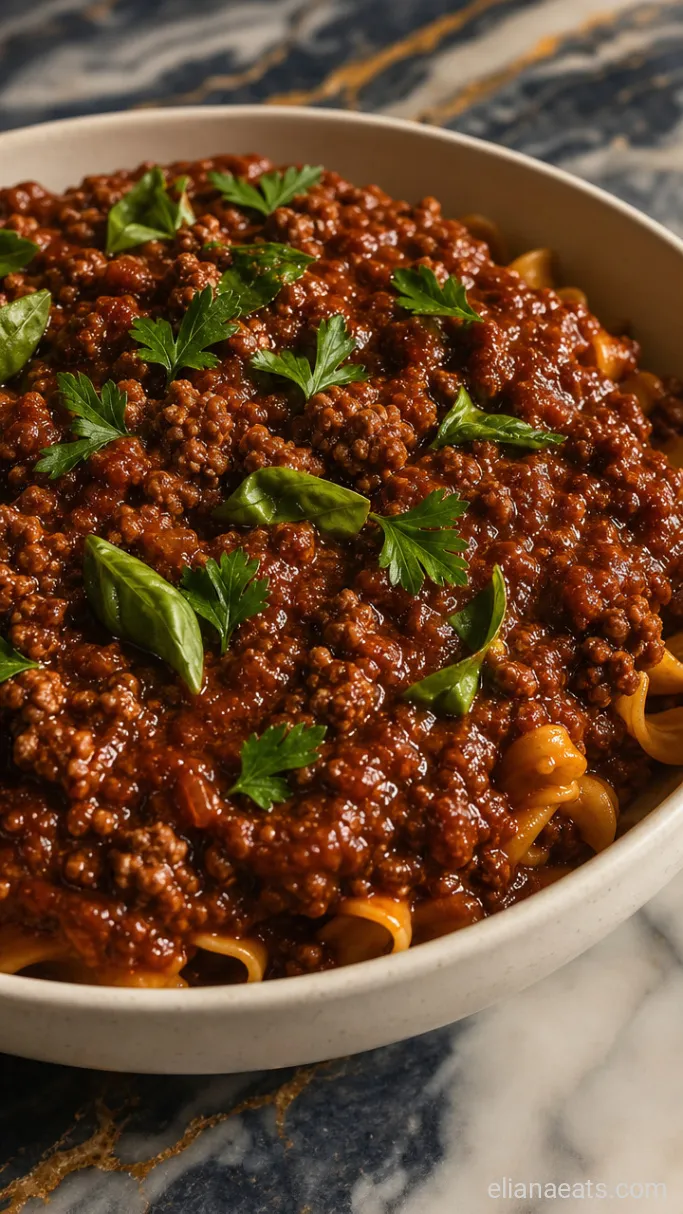
Stir in the 1/2 cup whole milk and cook for 2 more minutes over low heat. Taste and adjust salt. Ladle the sauce generously over your cooked pasta in a wide shallow bowl, then tear a few leaves of fresh basil over the top and finish with a light grating of Parmesan.
Recipe Tips
- Grate the carrot finely. A box grater on the small holes works well. If the carrot is in chunks it won’t break down fully, and you’ll taste it as a separate ingredient rather than a background sweetness.
- Season at the end, not just the beginning. Tomatoes vary in saltiness depending on the brand, and the sauce reduces as it simmers. Always taste again right before serving.
- Make a bigger batch. This sauce freezes very well for up to 3 months in an airtight container. It takes the same amount of effort to double it, and future-you will appreciate having a portion in the freezer.
- Use the pasta cooking water. If your sauce feels a little thick when tossing it with pasta, a ladleful of the starchy cooking water loosens it and helps it cling to the noodles.
Cook times by sauce consistency:
| Simmer Time | Lid | Result |
|---|---|---|
| 30 mins | Partially covered | Thick, scoopable sauce |
| 40 mins | Partially covered | Very thick, richer flavor |
| 40 mins | Uncovered (last 10 mins) | Reduced, concentrated, almost ragù-style |
How To Store
- Refrigerate – Store cooled sauce in an airtight container for up to 4 days. The flavor deepens overnight.
- Reheating – Reheat gently in a saucepan over medium-low heat, stirring occasionally. Add a small splash of water if it has thickened too much in the fridge.
- Freezing – Freeze in portions for up to 3 months. Thaw overnight in the refrigerator before reheating.
What To Serve With Olive Garden Meat Sauce
A thick, beefy sauce like this works best with a pasta shape that has somewhere for it to go. Rigatoni and pappardelle are the two I reach for most often: the tubes and folds trap the chunky meat and hold the sauce rather than letting it slide off. A simple green salad dressed with lemon and olive oil cuts through the richness well, because the acid balances the fat in the meat. Warm crusty bread is also worth making, not just to mop the bowl, but because dragging bread through the leftover sauce at the bottom is genuinely one of the better parts of the meal.
Frequently Asked Questions
Can I make this sauce ahead of time?
Yes. Make it up to 2 days ahead and refrigerate it. The flavor actually improves after a day as the herbs and meat settle into each other.
Do I have to use red wine?
No. See the Variations section for the beef broth swap. If you prefer not to cook with alcohol at all, broth plus a small squeeze of lemon is a reliable stand-in.
Can I use this sauce for lasagna?
Yes, it works well as a lasagna filling. You may want to simmer it a little longer, uncovered, so it is thicker and holds its layers without making the pasta sheets soggy.
My sauce tastes too acidic. What went wrong?
The most likely cause is undercooking the tomato paste or not simmering long enough. Make sure the tomato paste gets that brief solo cook before you stir it in, and give the sauce the full 30 to 40 minutes on the stovetop. If it still tastes sharp, the whole milk stir-in at the end should help.
—
Olive Garden Meat Sauce Recipe
Ingredients
Method
- Heat the 2 tbsp olive oil in a large pot over medium-high. Add the 1 lb ground beef and 1/2 lb Italian sausage, breaking apart and browning for 8 to 10 minutes until no pink remains. Drain most of the fat, leaving about 1 tbsp.
- Add the diced onion and grated carrot, reduce heat to medium, and cook for 5 to 6 minutes until the onion is translucent. Stir in the 3 cloves garlic, 1/2 tsp fennel seeds, 1/2 tsp red pepper flakes, 1 tsp oregano, and 1 tsp basil. Cook 1 more minute.
- Push the mixture aside, add the 2 tbsp tomato paste to the cleared surface, and cook for 1 minute until it darkens. Stir through, then pour in the 1/2 cup red wine, scraping up the browned bits. Reduce for 2 minutes.
- Add the 28 oz crushed tomatoes, 14.5 oz diced tomatoes, 1 tsp salt, and 1/2 tsp black pepper. Bring to a gentle boil, then reduce heat to low, partially cover, and simmer for 30 to 40 minutes, stirring occasionally.
- Stir in the 1/2 cup whole milk and cook for 2 more minutes. Taste and adjust salt. Ladle over pasta in a wide shallow bowl, tear fresh basil over the top, and finish with a grating of Parmesan.
