
Olive Garden Breadstick Copycat Recipe

This Olive Garden breadstick recipe gives you those soft, buttery, garlic-brushed sticks you keep thinking about long after dinner. They come together with basic pantry ingredients, and the whole thing from mixing to table takes about 2 hours including rise time.
The dough is forgiving and the technique is straightforward. If you’ve made yeasted bread even once, these will feel easy.
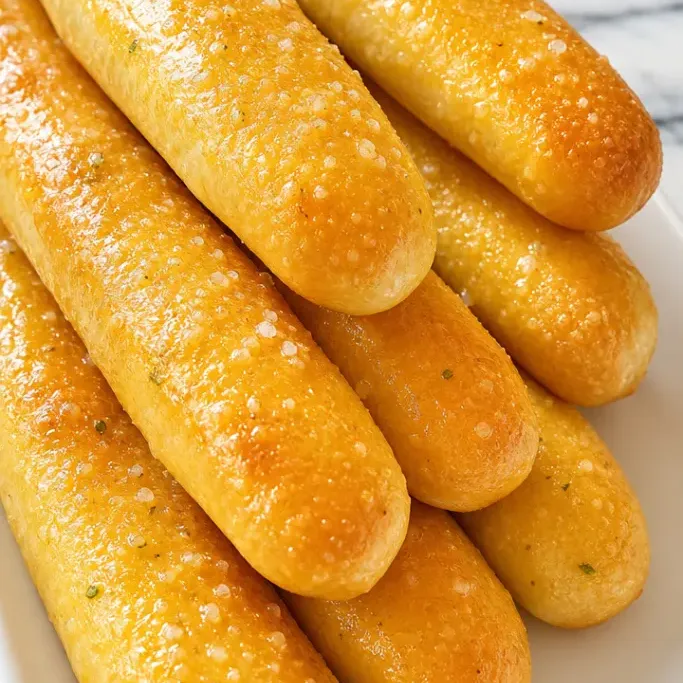
Why I Love This Recipe
The texture is what keeps me making these. The inside stays pillowy and a little chewy, while the outside gets just enough structure from a hot oven to hold the butter glaze without going soggy.
That garlic-butter brush at the end is the whole point. It soaks into the warm bread in about 30 seconds and coats every bite with something salty and savory without being greasy.
This is the version I keep coming back to on nights when I want bread that actually competes with the main course.
Recipe Ingredients
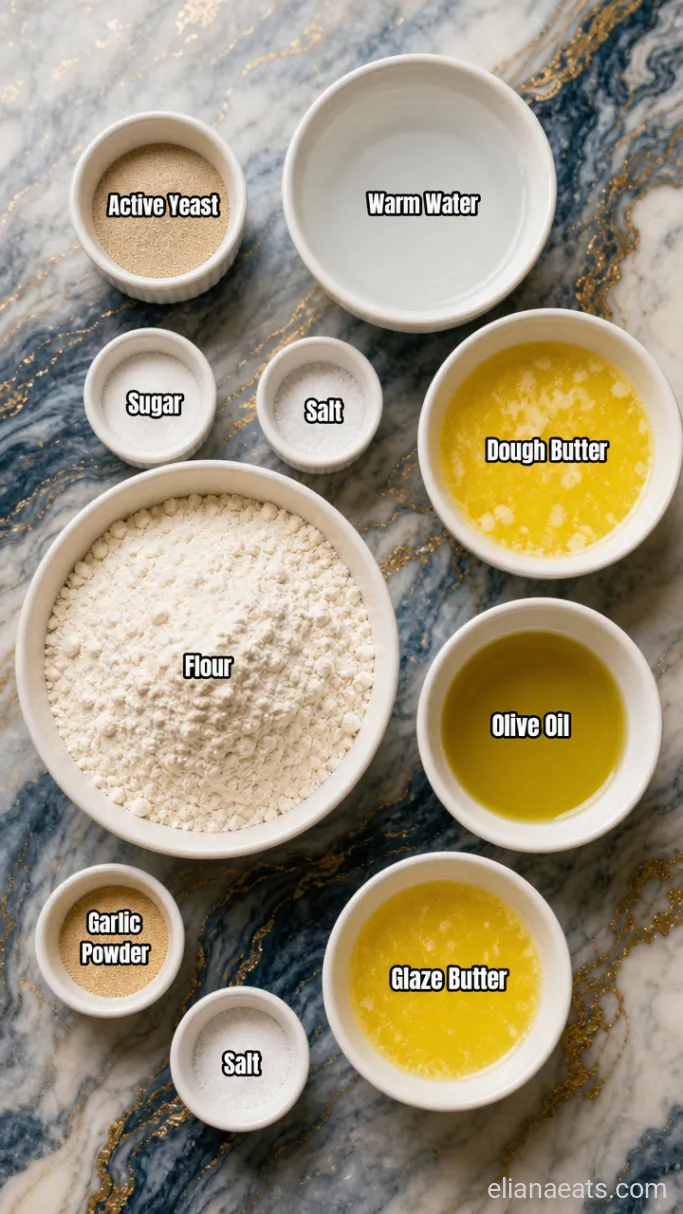
- 2¼ tsp (1 packet) active dry yeast – Standard packet size; make sure it’s not expired
- 1 cup warm water (105-110°F / 40-43°C) – Too hot kills the yeast; use a thermometer if unsure
- 1 tbsp granulated sugar – Feeds the yeast and adds a slight sweetness to the dough
- 1½ tsp fine salt – Regular table salt works fine here
- 2 tbsp unsalted butter, melted – Goes into the dough; adds richness and tenderness
- 3 cups all-purpose flour, plus up to ¼ cup more – Spoon and level to avoid a dense dough
- 1 tsp olive oil – For greasing the bowl during the rise
- 3 tbsp unsalted butter, melted – For the topping; kept separate from the dough butter
- 1 tsp garlic powder – The signature flavor in the glaze
- ½ tsp fine salt – Sprinkled on top right after the butter brush
Variations / Substitutions
- Bread flour instead of all-purpose – Gives the breadsticks a slightly chewier, more structured crumb.
- Instant yeast instead of active dry – Skip the proofing step and mix it straight into the dry ingredients; reduce the first rise to 30 minutes.
- Salted butter for the glaze – Works fine, just skip the extra ½ tsp salt on top or the topping will be too salty.
- Garlic powder swapped for fresh minced garlic – Melt the butter with 2 cloves of minced garlic over low heat for about 1 minute before brushing; the flavor is sharper and more pungent.
- Dairy-free – Use a good vegan butter (one that is solid at room temperature) in place of the unsalted butter in both the dough and the glaze; the texture holds up well.
- Add dried herbs – Stir ½ tsp of dried Italian seasoning or dried parsley into the glaze butter for an herby variation.
If you like this kind of dipping bread, the Alfredo sauce recipe from Olive Garden is a natural companion.
How To Make Olive Garden Breadsticks
Step 1: Proof the Yeast
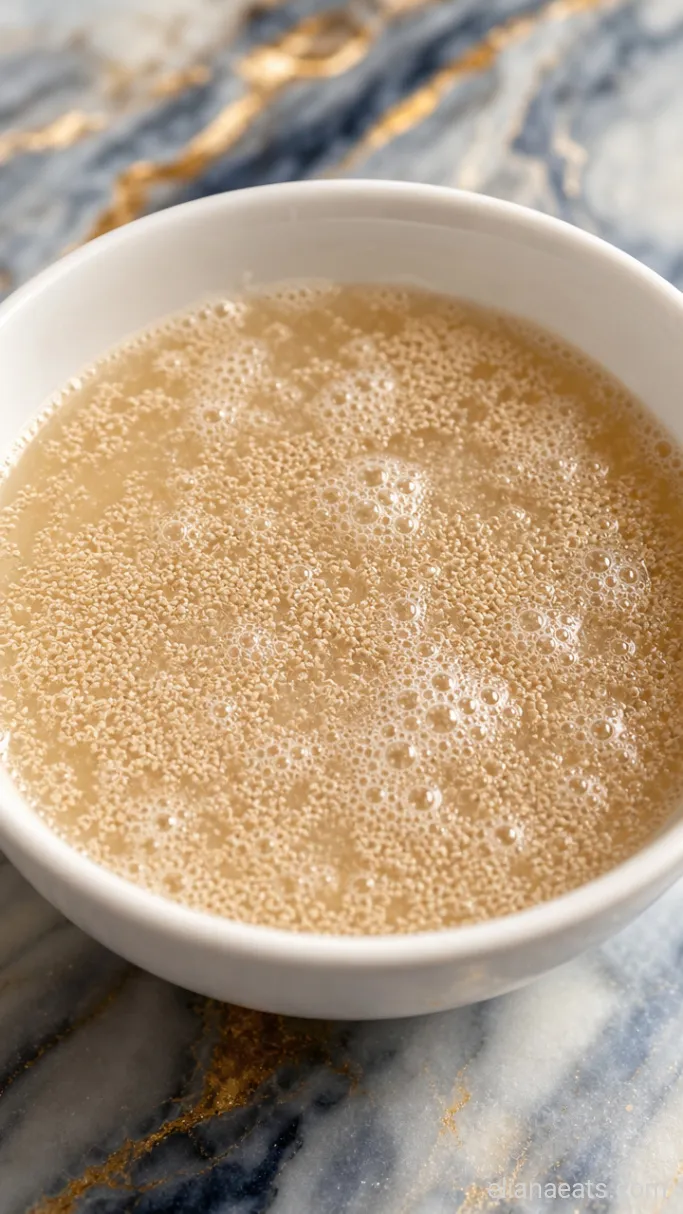
In a large mixing bowl, combine the 1 cup warm water (105-110°F / 40-43°C), 1 tbsp granulated sugar, and 2¼ tsp active dry yeast. Give it a quick stir and let it sit for 5 to 10 minutes without touching it.
After about 7 minutes, the surface should look foamy and smell faintly of bread. If nothing happens after 10 minutes, the yeast is likely dead and it’s worth starting over with a fresh packet before you mix the dough.
Step 2: Mix and Knead the Dough
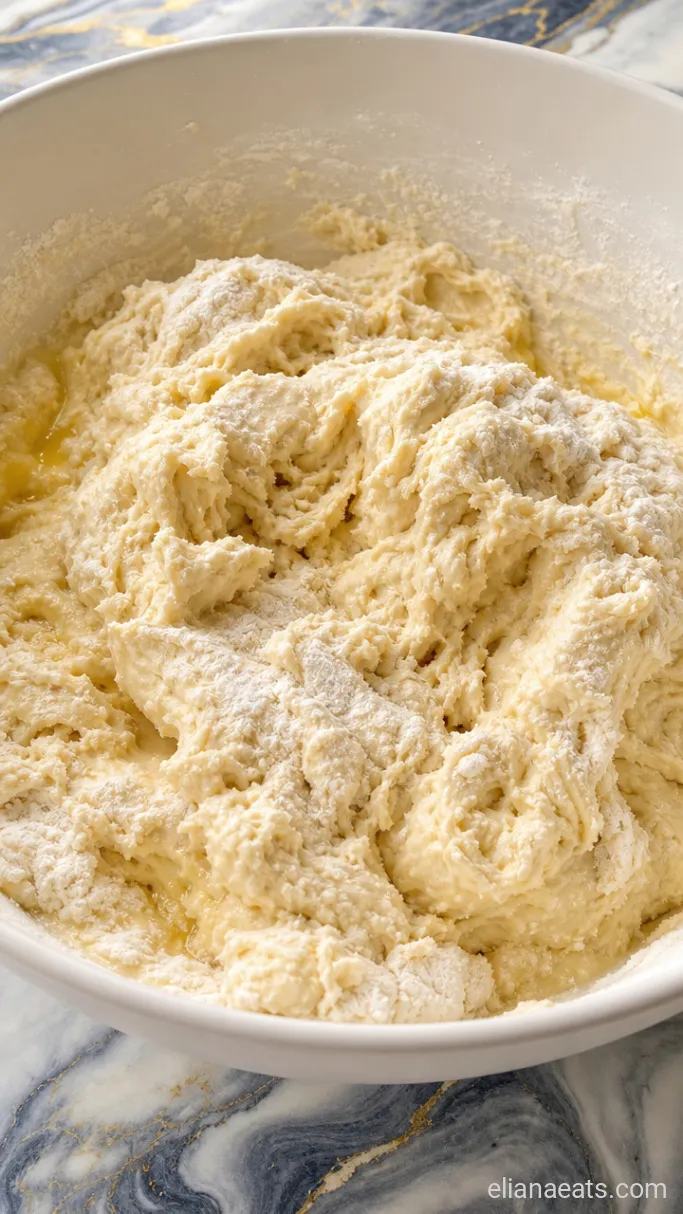
Add the 1½ tsp fine salt and 2 tbsp melted unsalted butter to the yeast mixture, then add 3 cups all-purpose flour one cup at a time, stirring as you go. Once it comes together into a shaggy mass, turn it out onto a lightly floured surface and knead for 8 minutes until the dough is smooth and springs back when you poke it. If it sticks badly to the counter after the first 2 minutes of kneading, work in extra flour a tablespoon at a time, up to ¼ cup.
The dough should feel soft and a little tacky, not sticky. Tacky means it barely clings to your hand and releases cleanly. Sticky means it tears. That difference matters here because too much flour makes a tight, dense breadstick.
Step 3: Rise the Dough
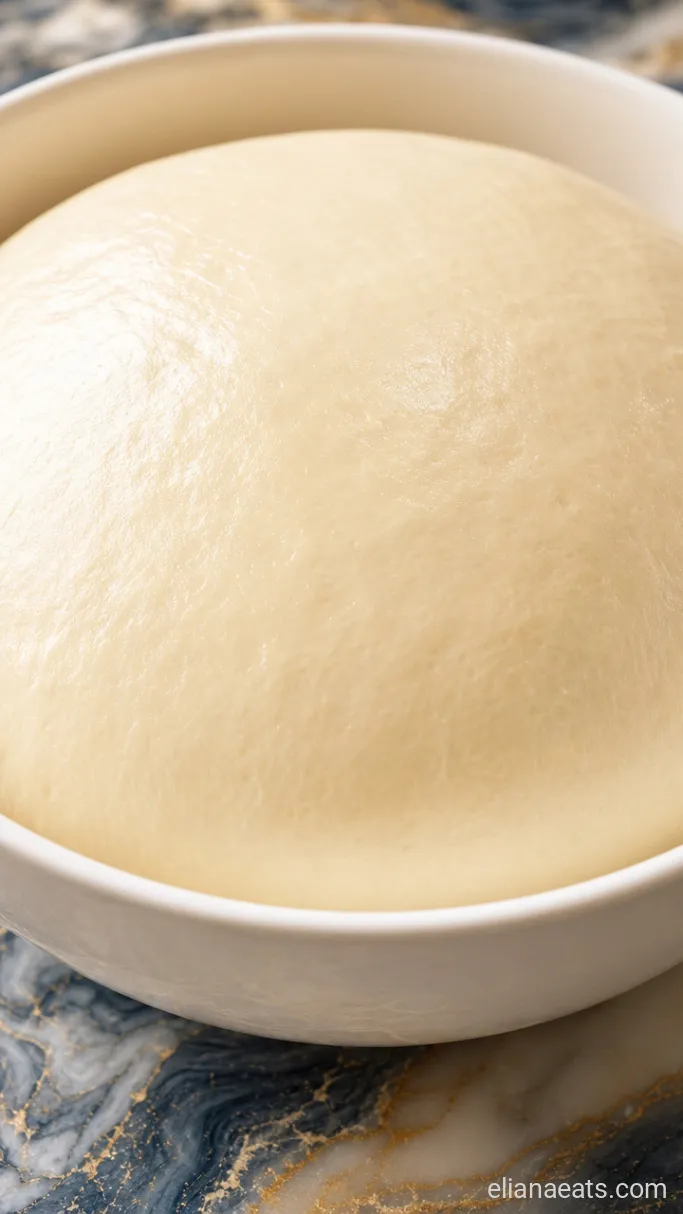
Rub the inside of a clean large bowl with the 1 tsp olive oil, place the dough ball inside, and turn it once to coat. Cover the bowl tightly with plastic wrap or a clean kitchen towel and let it rise at room temperature for 1 hour, until the dough has roughly doubled in size.
A warm kitchen speeds this up. If your kitchen is cold, set the covered bowl near the oven while it preheats and it will rise in about the same time.
Step 4: Shape the Breadsticks
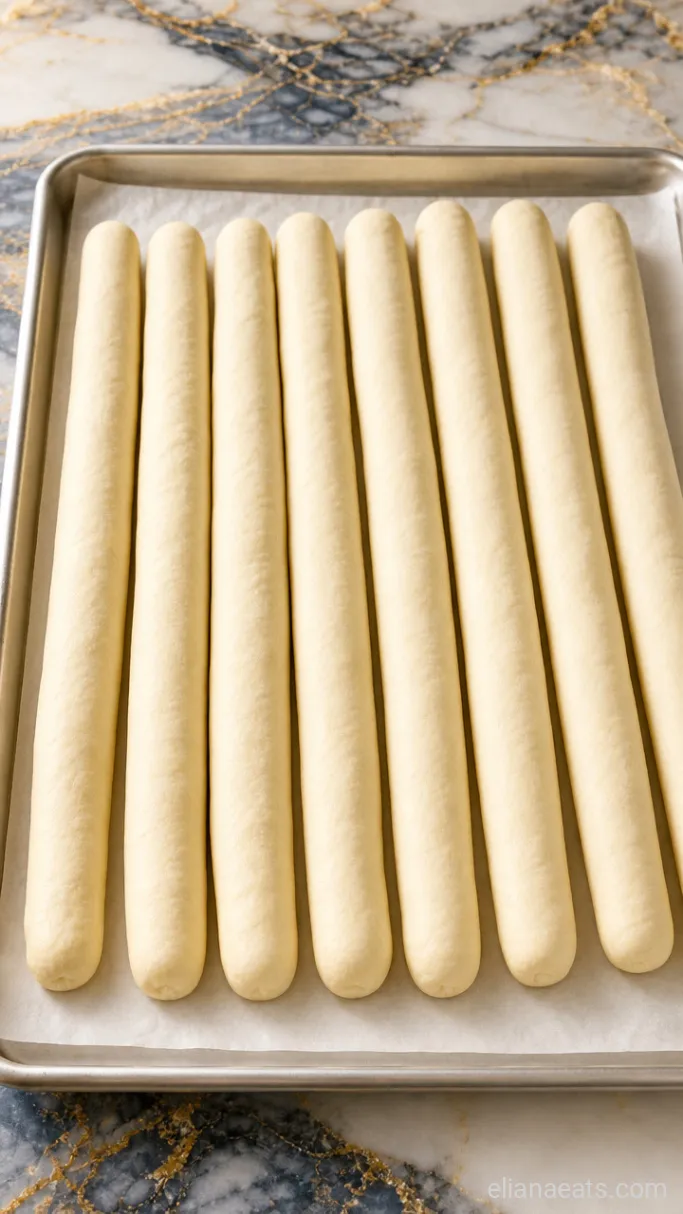
Preheat your oven to 400°F (200°C). Punch down the risen dough, then divide it into 12 equal pieces. Roll each piece between your hands into a log about 7 inches long, keeping them roughly uniform so they bake at the same rate. Place them 2 inches apart on a parchment-lined baking sheet, cover loosely with the kitchen towel, and let them rest for 20 minutes.
They’ll puff slightly during this short rest and feel noticeably lighter when you pick up the pan. That second rise is what gives the inside that soft, open texture.
Step 5: Bake the Breadsticks
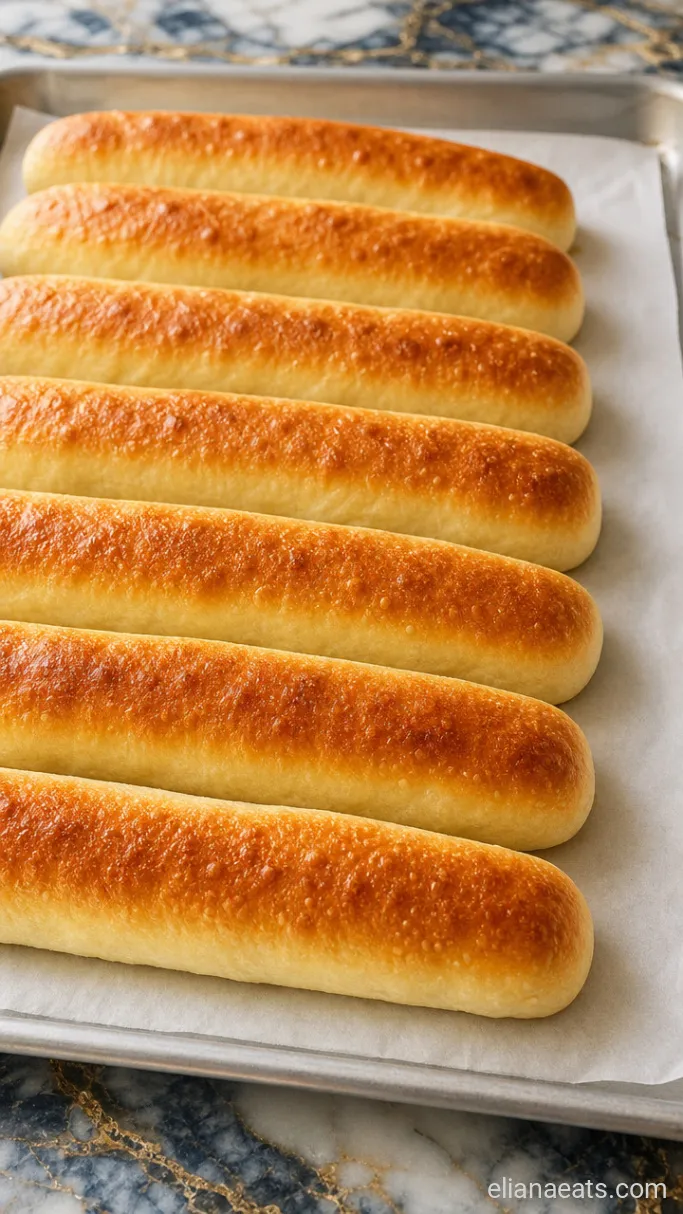
Slide the pan into the preheated 400°F (200°C) oven and bake for 13 to 15 minutes, until the tops are light golden and the bottoms have a little color. They should feel firm on the outside when you tap one lightly but not hard.
Pull them at the lighter end of golden if you want the classic soft Olive Garden texture. A deep brown crust is fine if you prefer more chew, but the original leans pale and pillowy.
Step 6: Glaze and Serve
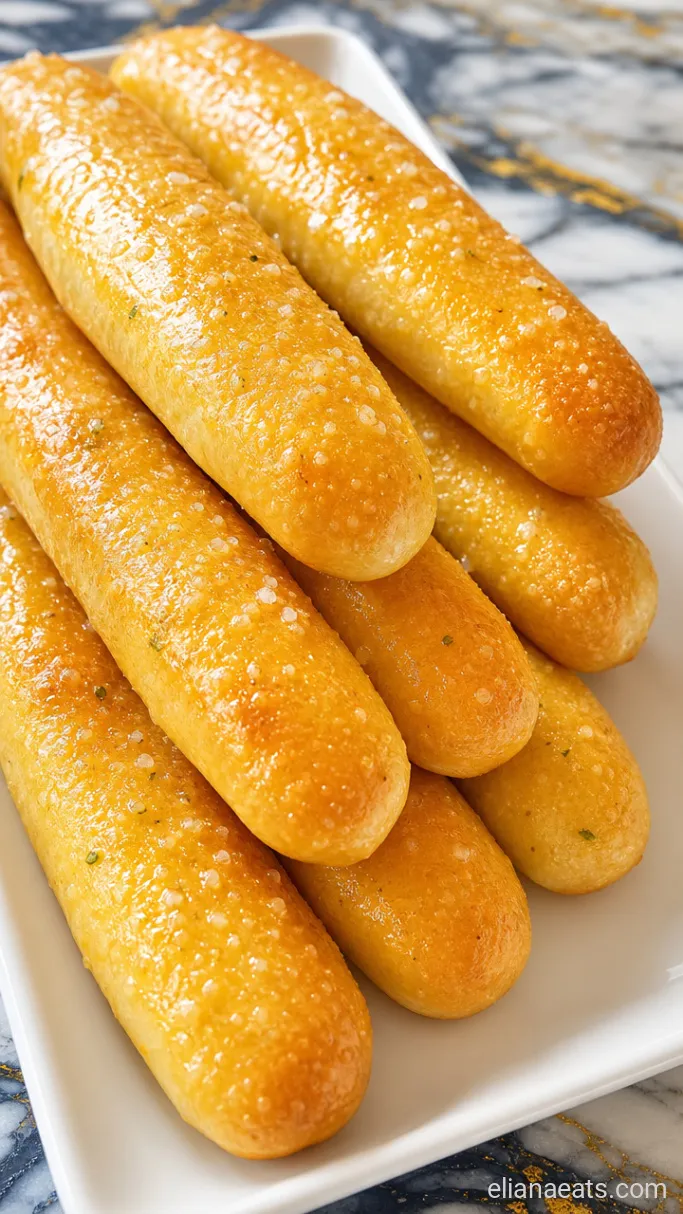
As soon as the breadsticks come out of the oven, stir together the 3 tbsp melted unsalted butter and 1 tsp garlic powder in a small bowl. Brush the mixture generously over the tops of all 12 breadsticks, then immediately sprinkle the ½ tsp fine salt evenly over them. Arrange them on a serving plate or in a cloth-lined basket and serve right away.
Recipe Tips
- Use a thermometer for the water. Yeast is the one place where guessing gets you into trouble. Water that feels warm to the wrist can still be 15 degrees off; a cheap instant-read thermometer takes the uncertainty out of it.
- Weigh or spoon-and-level your flour. Scooping directly with the measuring cup packs in about 20% more flour than you need, which makes the dough stiff and the breadsticks dense.
- Roll the logs more tightly than feels necessary. Loose rolling leaves air pockets in the shape, and the breadsticks bake up uneven. Press the dough against the counter firmly as you roll.
- Brush the butter glaze the moment they come out. Even 2 minutes of cooling means the glaze sits on the surface rather than soaking in.
Bake times by pan (at 400°F / 200°C):
| Pan type | Color / material | Time |
|---|---|---|
| Light aluminum half-sheet | Pale silver | 13 to 14 mins |
| Dark nonstick baking sheet | Dark gray or black | 11 to 12 mins |
| Rimmed stainless pan | Shiny silver | 14 to 15 mins |
How To Store
- Refrigerate – Wrap leftover breadsticks tightly in foil or store in an airtight container for up to 3 days. They firm up in the fridge, so reheating is worth the extra minute.
- Reheating – Wrap them in foil and warm at 325°F (160°C) for 8 to 10 minutes. A quick brush of fresh melted butter before serving brings them back close to just-baked.
What To Serve With Olive Garden Breadsticks
A big bowl of tomato soup or minestrone is the most natural match here because the soft bread soaks up broth-based liquids without falling apart. They’re also good alongside a simple Caesar salad, where the salty, crunchy leaves contrast nicely with the soft, buttery bread. If you’re serving pasta, bring these to the table with the pasta rather than before it, so they stay warm through the meal.
Frequently Asked Questions
Can I make the dough the night before?
Yes. After kneading, place the dough in the oiled bowl, cover it tightly, and refrigerate overnight instead of doing the 1-hour room-temperature rise. Let it sit at room temperature for 30 minutes before shaping.
Can I freeze the baked breadsticks?
Yes. Cool them completely, wrap individually in plastic wrap, and freeze for up to 2 months. Reheat from frozen at 350°F (175°C) for 12 to 14 minutes.
My breadsticks came out too dense. What went wrong?
Most likely either too much flour was added during kneading or the yeast didn’t fully activate. Check that your yeast was foamy before mixing, and measure flour by spooning it into the cup rather than scooping.
Can I use a stand mixer instead of kneading by hand?
Yes. Mix the dough with the dough hook on medium speed for 5 minutes instead of kneading for 8 minutes by hand. The dough is ready when it pulls cleanly away from the sides of the bowl.
—
Olive Garden Breadstick Recipe
Ingredients
Method
- Combine the warm water, sugar, and yeast in a large bowl. Let sit 5 to 10 minutes until foamy.
- Add the salt and 2 tbsp melted butter to the yeast mixture, then stir in the flour one cup at a time. Knead on a floured surface for 8 minutes until smooth and slightly tacky, adding up to ¼ cup extra flour if needed.
- Place the dough in an olive-oil-rubbed bowl, cover, and let rise at room temperature for 1 hour until doubled.
- Preheat oven to 400°F (200°C). Punch down the dough, divide into 12 pieces, and roll each into a 7-inch log. Arrange on a parchment-lined baking sheet and let rest 20 minutes.
- Bake at 400°F (200°C) for 13 to 15 minutes until light golden on top.
- Stir together the 3 tbsp melted butter and garlic powder. Brush over the hot breadsticks, sprinkle with ½ tsp salt, and serve immediately.
