
KFC Spicy Chicken Copycat Recipe

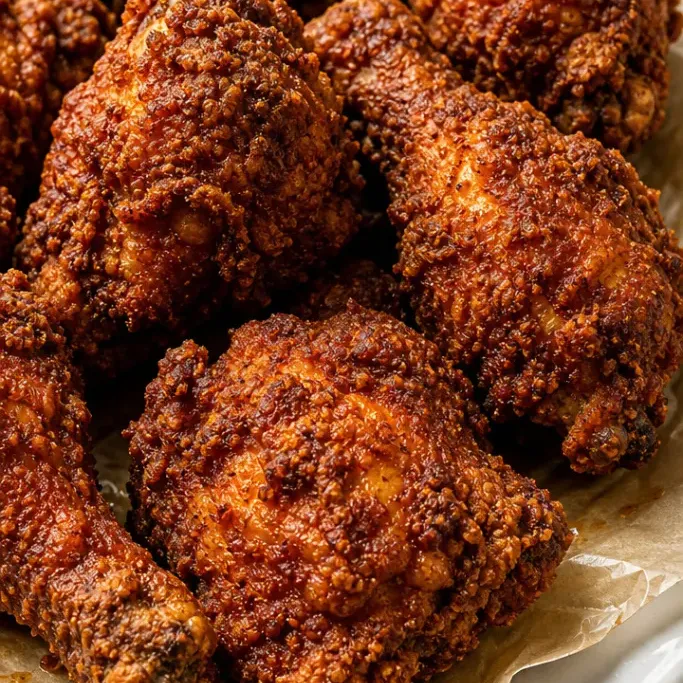
This KFC spicy chicken copycat gets you that same hot, crunchy, juicy fried chicken at home, and it’s closer to the real thing than you’d expect. If you’ve been chasing that specific heat and crunch after a drive-through craving, this is the recipe to bookmark.
The coating uses a seasoned flour blend with cayenne, paprika, and white pepper to build the heat in layers, not just on the surface. Fry it right and you get a shatteringly crisp crust with chicken that stays juicy all the way through.
Why I Love This Recipe
The crust has real bite to it — hot enough that you notice it, but not so aggressive it drowns everything else out. The cayenne and white pepper work together in a way that hits the back of your throat rather than just your lips.
What keeps me coming back to this version is the double-dredge. That second pass through the seasoned flour is what gives you those craggy, uneven bits of crust that shatter when you bite through.
It’s also genuinely weeknight-friendly. The chicken soaks in buttermilk while you get everything else ready, and the fry time is short.
Recipe Ingredients
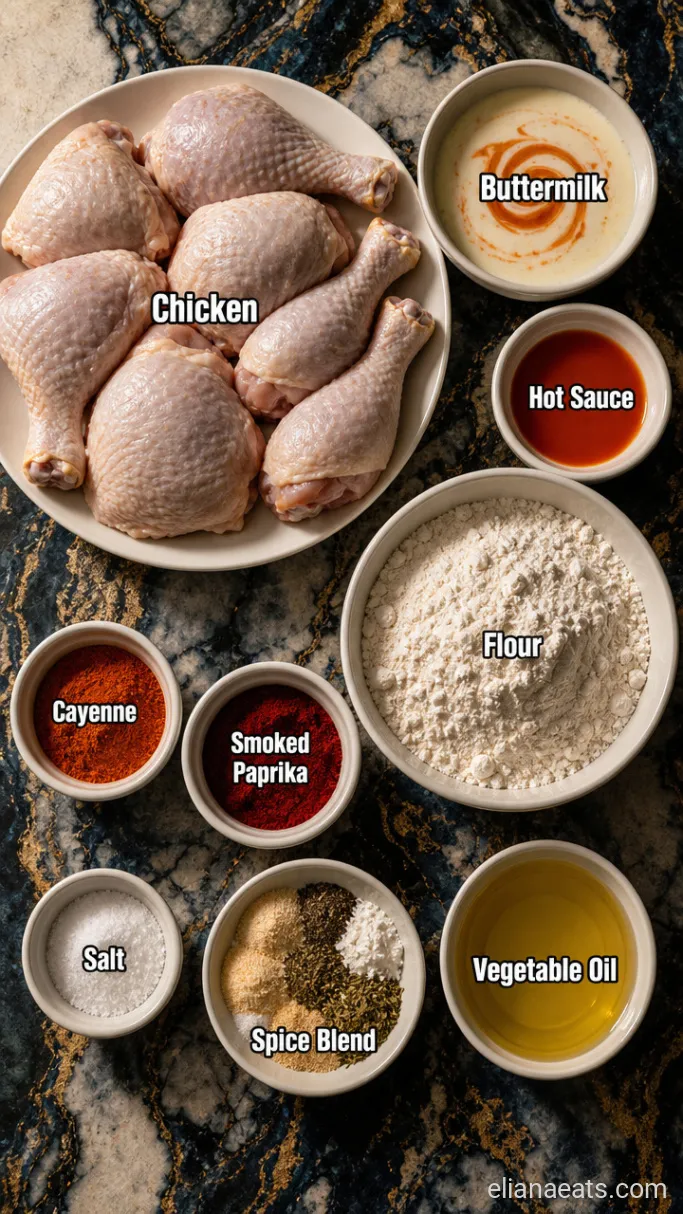
- 8 bone-in chicken pieces – Drumsticks and thighs hold up best to frying; breasts work too but watch the cook time
- 2 cups buttermilk – Tenderizes the meat and helps the coating stick; whole milk with 1 tbsp vinegar works in a pinch if needed
- 2 tbsp hot sauce – Adds heat to the soak itself; Frank’s RedHot or Crystal are good choices
- 2 cups all-purpose flour – The base of the coating; don’t sub bread flour
- 2 tsp cayenne pepper – This is what gives the spice its real kick; reduce to 1 tsp for milder heat
- 2 tsp smoked paprika – Adds color and a subtle depth behind the heat
- 1 tsp garlic powder – Background savory note
- 1 tsp onion powder – Rounds out the seasoning blend
- 1 tsp white pepper – Adds a slower, deeper heat than black pepper
- 1 tsp black pepper – Sharpness and bite in the crust
- 1 tsp dried oregano – A dried herb note that reads as familiar KFC flavor
- 1 tsp dried basil – Works alongside the oregano in the seasoning blend
- 2 tsp salt – Seasons the flour coating throughout, not just on top
- 1 tsp baking powder – Helps the crust puff slightly for that thick, bumpy texture
- Vegetable oil for frying – Enough to fill your pot 3 inches deep; neutral flavor and high smoke point
Variations / Substitutions
- Skinless chicken – The crust won’t cling quite as well, but you’ll still get a solid coating; press the dredge on firmly.
- Air fryer – Spray the dredged pieces generously with oil and cook at 400°F (200°C) for 20 to 25 minutes, flipping halfway; the crust is less craggy but still crisp.
- Extra hot – Increase cayenne to 3 tsp and add 1 tsp of chipotle powder for a smokier, deeper heat.
- Dairy-free – Swap buttermilk for full-fat coconut milk with 1 tbsp apple cider vinegar; it tenderizes nearly as well and doesn’t leave a coconut taste.
- Boneless thighs – Flatten them slightly and reduce fry time to about 6 to 7 minutes per side; they stay juicier than breast meat for a boneless version.
If you like bold fried chicken coatings, you might also enjoy this spicy chicken sandwich recipe inspired by a Popeyes favorite.
How To Make KFC Spicy Chicken
Step 1: Soak the Chicken in Buttermilk
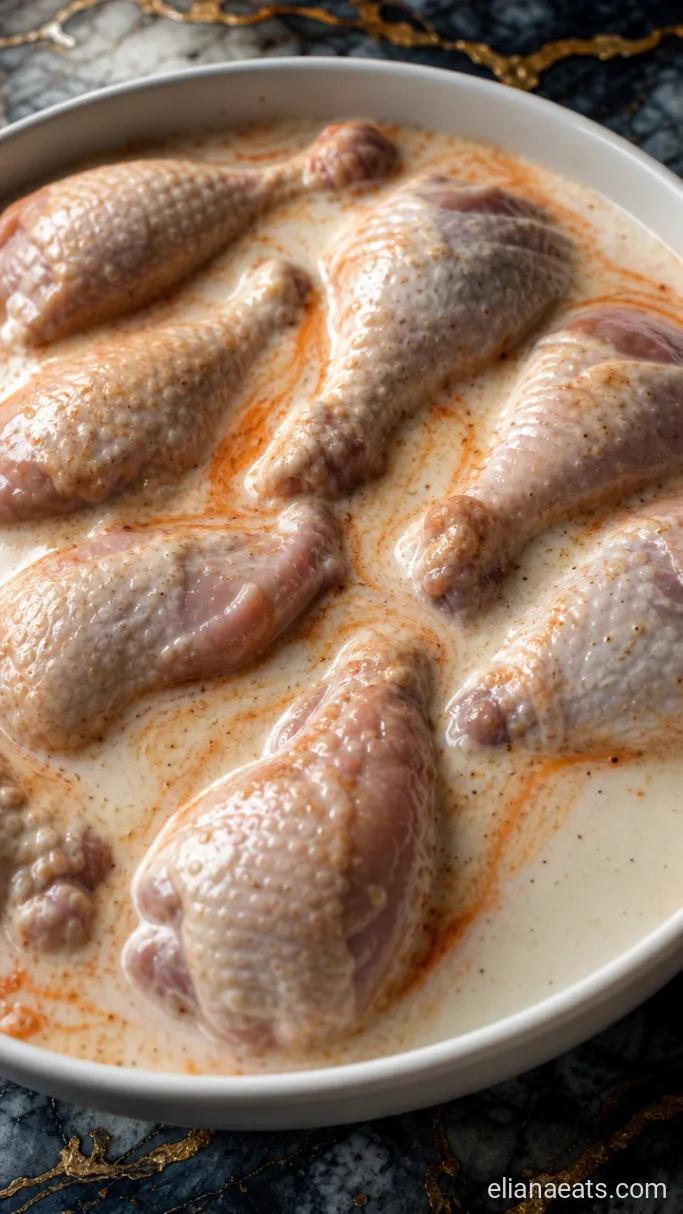
In a large bowl, whisk together the 2 cups buttermilk and 2 tbsp hot sauce. Add the 8 chicken pieces, making sure each one is fully submerged, then cover the bowl and refrigerate for at least 1 hour, or up to overnight.
When you pull the chicken out, the buttermilk will have thickened slightly where it’s touching the meat. That’s what you want. It clings to the surface and gives the flour coating something to hold onto. Don’t rinse it off.
Step 2: Mix the Seasoned Flour
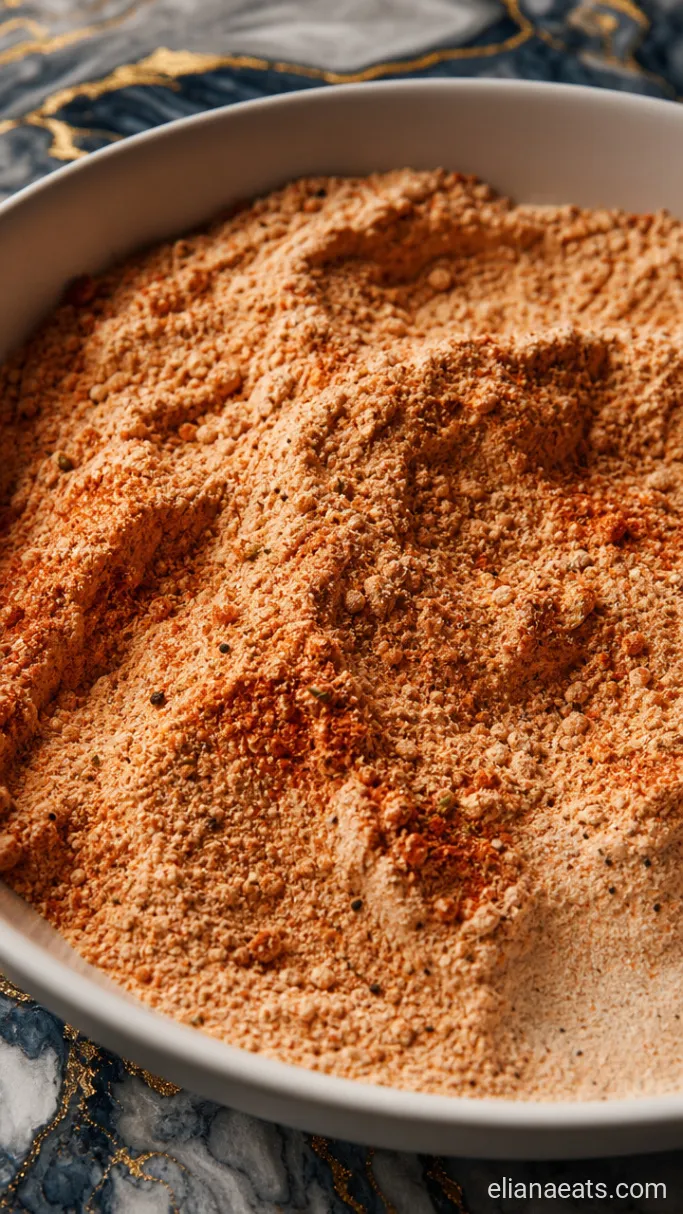
In a wide, shallow dish, combine the 2 cups all-purpose flour, 2 tsp cayenne pepper, 2 tsp smoked paprika, 1 tsp garlic powder, 1 tsp onion powder, 1 tsp white pepper, 1 tsp black pepper, 1 tsp dried oregano, 1 tsp dried basil, 2 tsp salt, and 1 tsp baking powder. Stir everything together until the spices are evenly distributed through the flour with no visible streaks.
Take a pinch and smell it. It should be noticeably sharp and spiced. If it just smells like flour, the seasoning isn’t mixed in enough yet.
Step 3: Dredge the Chicken
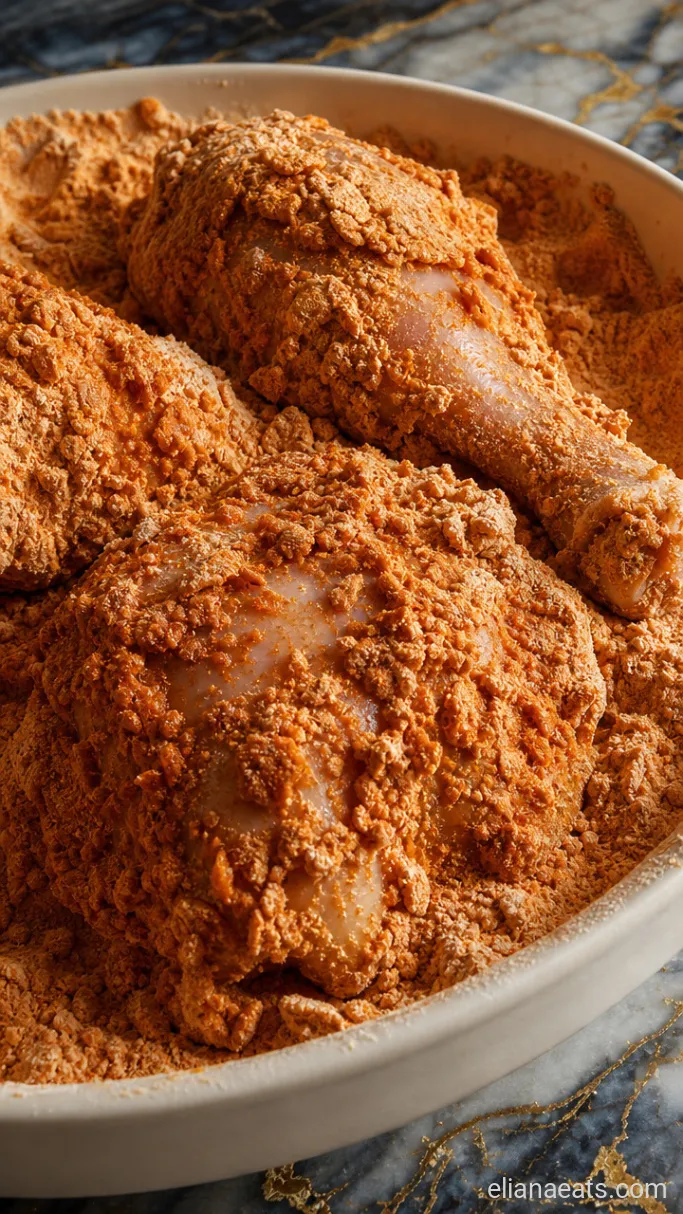
Working one piece at a time, lift a chicken piece from the buttermilk and let the excess drip off for a few seconds. Press it firmly into the seasoned flour on both sides, then dip it back into the buttermilk for 5 seconds, then press it into the flour a second time. Set it on a wire rack while you coat the rest.
The double dredge is the step that builds the thick, uneven crust. Press down hard on the second pass — really squeeze the flour into the surface. You’ll see it clump and grab. Those irregular bits are exactly what you’re going for.
Step 4: Fry the Coated Chicken
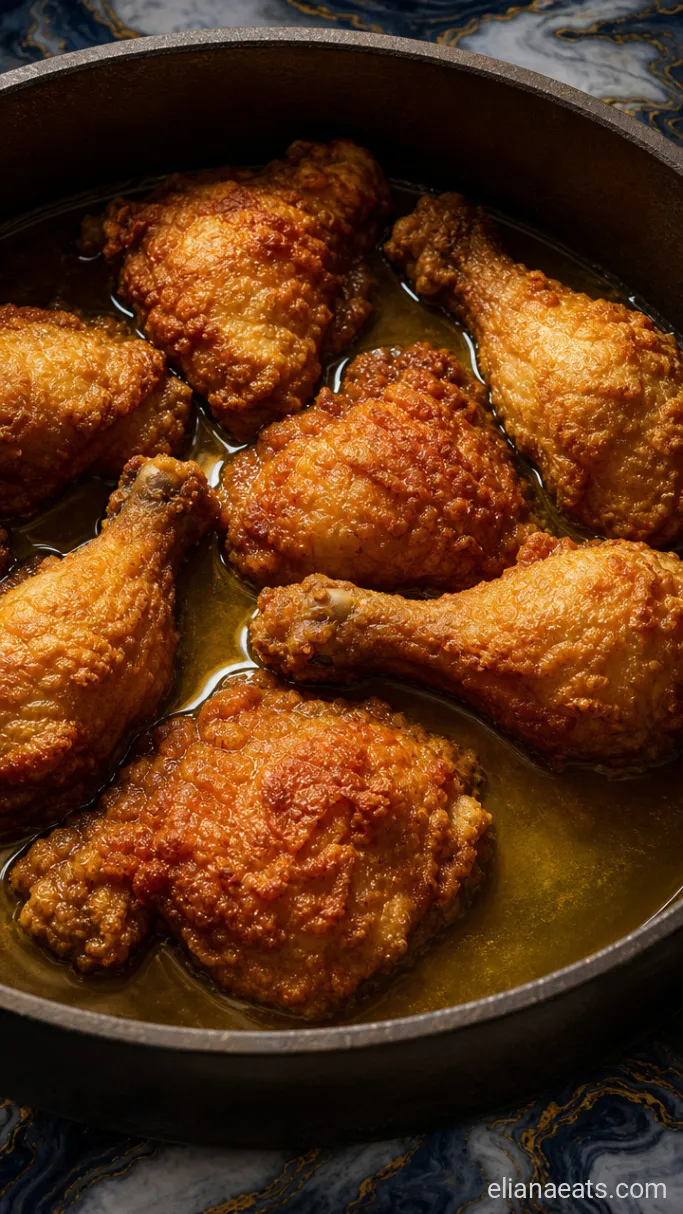
Pour enough vegetable oil into a large heavy-bottomed pot or Dutch oven to reach 3 inches deep, then heat it over medium-high heat to 350°F (175°C). Use a thermometer — the temperature matters more than the heat setting on your stove. Fry the chicken in 2 to 3 batches, never crowding the pot, for 14 to 16 minutes total, turning the pieces once halfway through, until the crust is deep golden-brown and the internal temperature at the thickest part reads 165°F (74°C).
Between batches, let the oil come back to 350°F (175°C) before you add the next batch. Oil that’s dropped to 320°F (160°C) will produce greasy, pale chicken rather than a crisp, dry crust.
Don’t be alarmed if the oil temperature dips when you first add the chicken. That’s normal. Keep the heat on medium-high and it will recover within a minute or two.
Step 5: Drain and Plate the Chicken
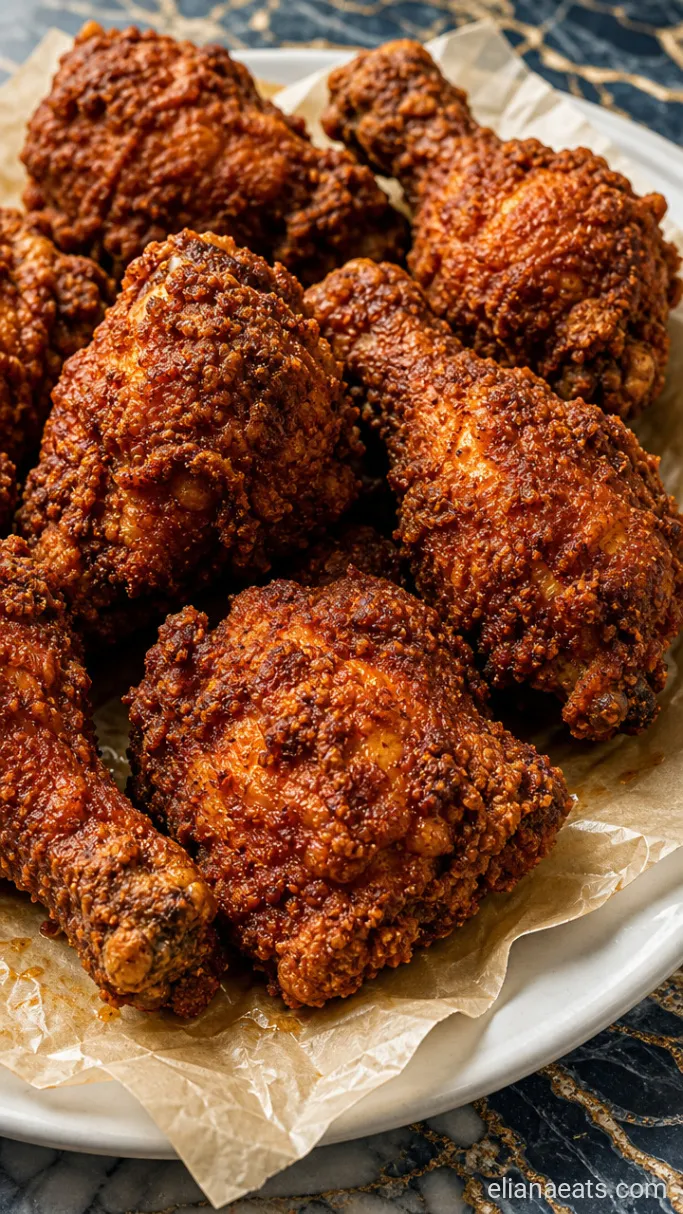
Transfer the fried chicken to a wire rack set over a baking sheet and let it sit for 3 minutes. Then transfer it to a serving plate and apply a small pinch of cayenne across the top as a spicy topping suggestion so the heat is the first thing you taste.
Recipe Tips
- Use a thermometer for the oil. Guessing the oil temperature is the single most common reason fried chicken comes out greasy or undercooked. A cheap clip-on thermometer fixes this immediately.
- Don’t skip the wire rack. Setting hot fried chicken directly on paper towels traps steam underneath and softens the bottom crust. A rack lets air circulate all the way around.
- Let the dredged chicken rest before frying. After the second dredge, let the coated pieces sit on the rack for 10 minutes before they go into the oil. The coating firms up and grips the surface better.
- Dry the chicken slightly before dredging. Pat each piece with paper towels before it goes into the buttermilk soak to help the marinade bond more evenly with the surface.
Cook times by chicken piece (at 350°F / 175°C, turning once halfway):
| Piece | Approximate Fry Time | Internal Temp Target |
|---|---|---|
| Drumstick | 14 to 16 mins | 165°F (74°C) |
| Thigh (bone-in) | 14 to 16 mins | 165°F (74°C) |
| Breast (bone-in) | 16 to 18 mins | 165°F (74°C) |
| Boneless thigh | 12 to 14 mins | 165°F (74°C) |
How To Store
- Refrigerate – Store cooled chicken in an airtight container for up to 3 days. The crust will soften overnight but crisps back up well.
- Reheating – Place pieces on a wire rack over a baking sheet and heat at 375°F (190°C) for 12 to 15 minutes. This restores most of the crunch that the fridge takes away. The microwave will make the crust rubbery, so skip it.
What To Serve With KFC Spicy Chicken
Coleslaw is the obvious pairing, and there’s a reason for it — the cool, creamy dressing cuts through the heat and gives your palate a break between bites. A simple vinegar-based slaw works even better than a mayo-heavy one here because the acidity plays off the spiced crust.
Cornbread is another good call. Its slight sweetness balances the cayenne and white pepper heat in the crust without competing with the chicken’s flavor. Mashed potatoes with a thin, peppery gravy also work well — the mild starch soaks up any extra spice and keeps the meal feeling grounded.
Frequently Asked Questions
Can I use chicken tenders instead of bone-in pieces?
Yes. Tenders will fry in about 5 to 6 minutes at 350°F (175°C) and are good for serving a crowd quickly. The soak and dredge process stays exactly the same.
Can I soak the chicken for longer than overnight?
Try to keep it to 12 hours maximum. Beyond that, the acid in the buttermilk starts to break down the texture of the meat and it can turn slightly mushy rather than tender.
My coating fell off during frying. What went wrong?
The most likely cause is that the oil wasn’t hot enough when the chicken went in. Cold or lukewarm oil lets the coating absorb oil and slip off instead of setting quickly into a crust.
Can I make this recipe gluten-free?
Yes. Swap the all-purpose flour for a 1-to-1 gluten-free flour blend. The crust will be slightly more delicate, so handle the pieces carefully when turning them in the oil.
—
KFC Spicy Chicken Recipe
Ingredients
Method
- Whisk the 2 cups buttermilk and 2 tbsp hot sauce together in a large bowl. Add the 8 chicken pieces, cover, and refrigerate for at least 1 hour or up to overnight.
- Combine the 2 cups flour, 2 tsp cayenne, 2 tsp smoked paprika, 1 tsp garlic powder, 1 tsp onion powder, 1 tsp white pepper, 1 tsp black pepper, 1 tsp oregano, 1 tsp basil, 2 tsp salt, and 1 tsp baking powder in a wide shallow dish and stir until evenly mixed.
- Lift each chicken piece from the buttermilk, let the excess drip off, press firmly into the flour, dip back into the buttermilk, then press into the flour a second time. Set on a wire rack and rest for 10 minutes.
- Heat 3 inches of vegetable oil in a large heavy-bottomed pot to 350°F (175°C). Fry the chicken in 2 to 3 batches for 14 to 16 minutes, turning once halfway through, until the crust is deep golden-brown and the internal temperature reaches 165°F (74°C). Return oil to 350°F (175°C) between batches.
- Transfer to a wire rack for 3 minutes, then plate and finish each piece with a small pinch of cayenne on top.
