
KFC Chicken Tenders Copycat Recipe

That KFC chicken tenders recipe you keep craving is easier to make at home than you’d think. These come out crispy on the outside, juicy inside, and coated in that familiar seasoned breading that made them famous.
The whole thing takes about 35 minutes, and you probably have most of the spices already.
Why I Love This Recipe
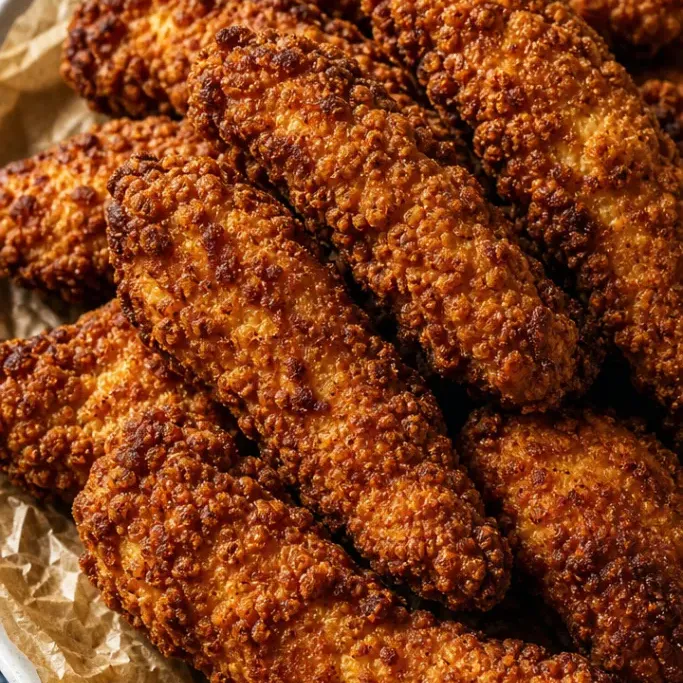
The double-dredge in seasoned flour is what gives these their thick, craggy coating. It shatters when you bite through it, which is exactly what you want.
The spice blend hits that balance of savory and just slightly smoky without being sharp or harsh. It tastes like something that took effort, even though it didn’t.
This is the version I keep coming back to on nights when takeout feels like more trouble than it’s worth.
Recipe Ingredients
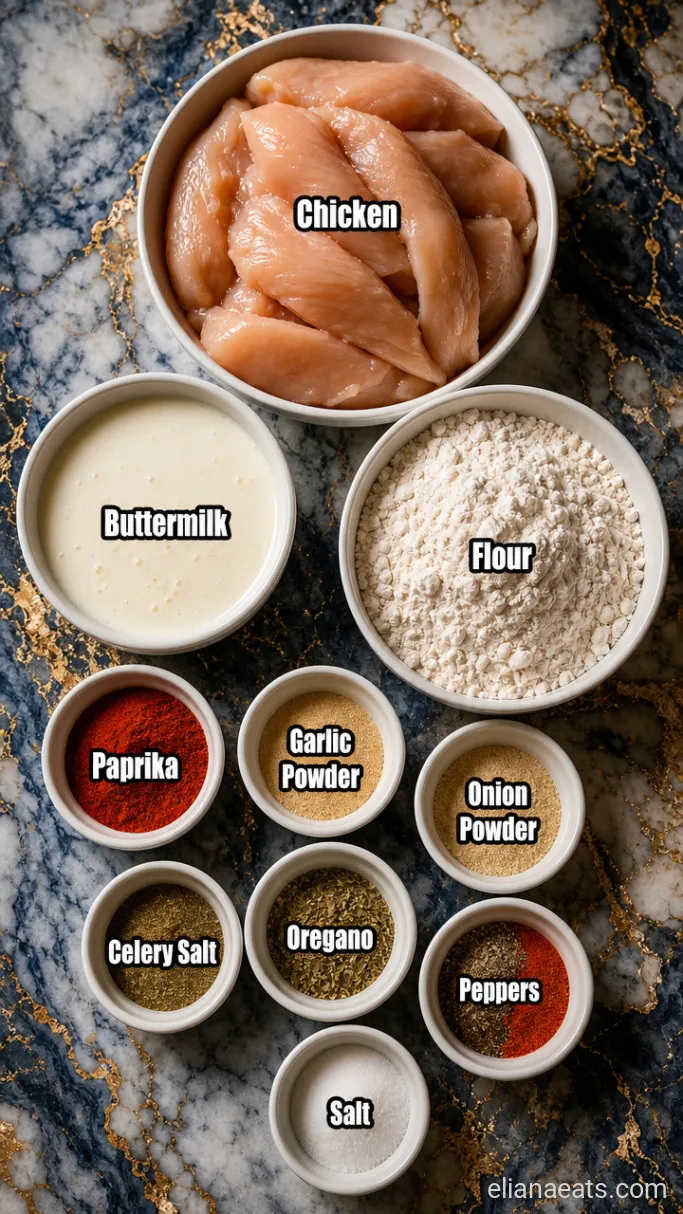
- 1.5 lbs chicken tenderloins – Pre-cut tenders save time; cut chicken breasts into 1-inch strips if you can’t find them
- 1 cup buttermilk – Tenderizes the chicken and helps the coating stick; whole milk plus 1 tbsp white vinegar works as a swap
- 1 large egg – Binds the buttermilk soak and adds a little richness to the coating
- 1.5 cups all-purpose flour – The base of the breading; don’t substitute cake flour
- 2 tsp paprika – Adds color and mild smokiness; smoked paprika works and deepens the flavor
- 1.5 tsp garlic powder – Goes into both the flour and the marinade for layered seasoning
- 1.5 tsp onion powder – Rounds out the savory notes in the crust
- 1 tsp celery salt – One of the closer-kept details of the original; regular salt is a fallback but you’ll notice the difference
- 1 tsp dried oregano – Adds a faint herby background; dried thyme is a fine swap
- 1 tsp black pepper – Freshly ground if you have it
- 0.5 tsp white pepper – Adds a subtle heat that black pepper alone doesn’t quite replicate
- 0.5 tsp cayenne pepper – Gives a gentle kick; reduce to 0.25 tsp for a milder batch
- 1 tsp salt – For the flour dredge; the buttermilk soak gets its own pinch
- Neutral oil for frying – Vegetable, canola, or peanut oil; you need enough to fill a heavy pan 2 inches deep
Variations / Substitutions
- Gluten-free – Swap the all-purpose flour for a 1:1 gluten-free flour blend; the coating will be slightly less craggy but still crisp.
- Air fryer – Spray breaded tenders generously with oil spray and cook at 400°F (200°C) for 12 to 14 minutes, flipping once; they won’t be as deeply golden but still satisfying.
- Extra heat – Double the cayenne to 1 tsp and add 0.5 tsp of chili powder for a spicier crust.
- No buttermilk – Stir 1 tbsp white vinegar into 1 cup whole milk, let it sit for 5 minutes, and it behaves almost identically.
- Chicken thighs – Boneless skinless thighs cut into strips stay even juicier than breast meat and work perfectly with this breading.
- Dairy-free – Use unsweetened oat milk with 1 tbsp apple cider vinegar in place of buttermilk; the soak still tenderizes well.
If you like this style of coating, the Popeyes Chicken Sandwich Copycat Recipe employs a doubledredged coating technique on a thicker cut.
How To Make KFC Chicken Tenders
Step 1: Soak the Chicken in Buttermilk
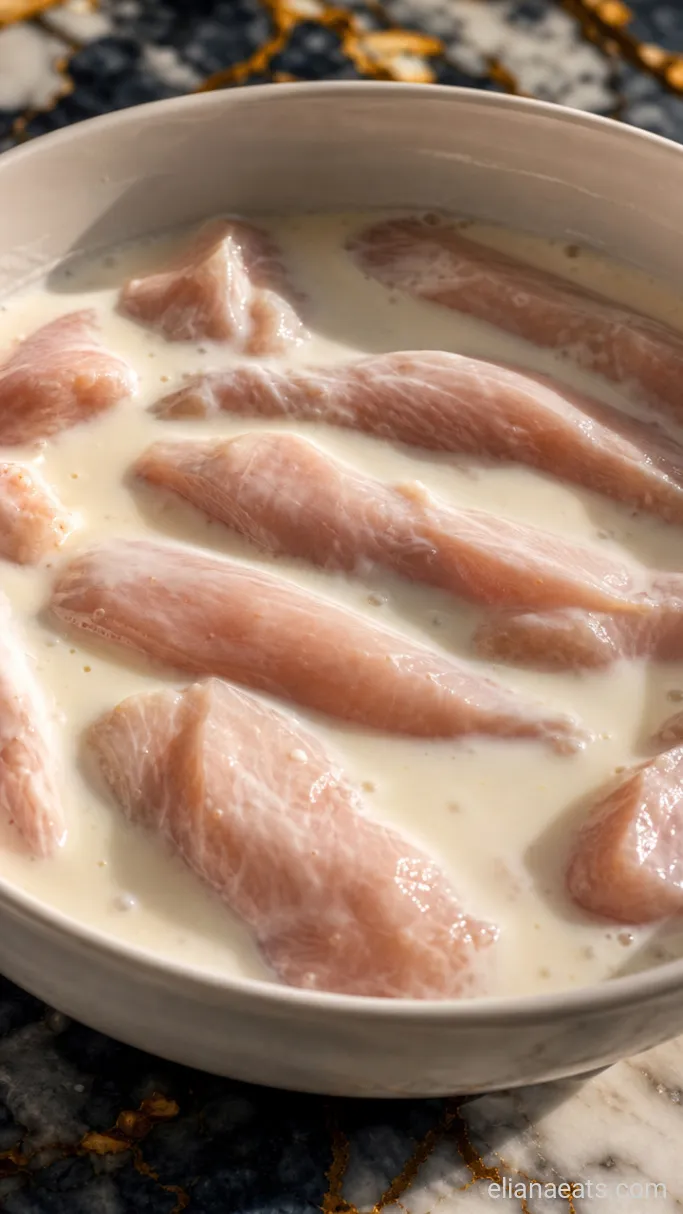
Whisk together the 1 cup buttermilk, 1 large egg, 0.5 tsp garlic powder, and a pinch of salt in a large bowl. Add the 1.5 lbs chicken tenderloins, making sure every piece is submerged, then cover and refrigerate for at least 20 minutes and up to 4 hours.
The soak does two things: the acid in the buttermilk breaks down a little of the protein so the chicken stays tender under high frying heat, and the egg adds body that helps the flour coating grip. Even 20 minutes makes a noticeable difference compared to skipping it entirely.
Don’t rinse the tenders when they come out of the soak. You want that wet coating on the surface because it’s what makes the flour stick and form those uneven, craggy bits.
Step 2: Mix the Seasoned Flour
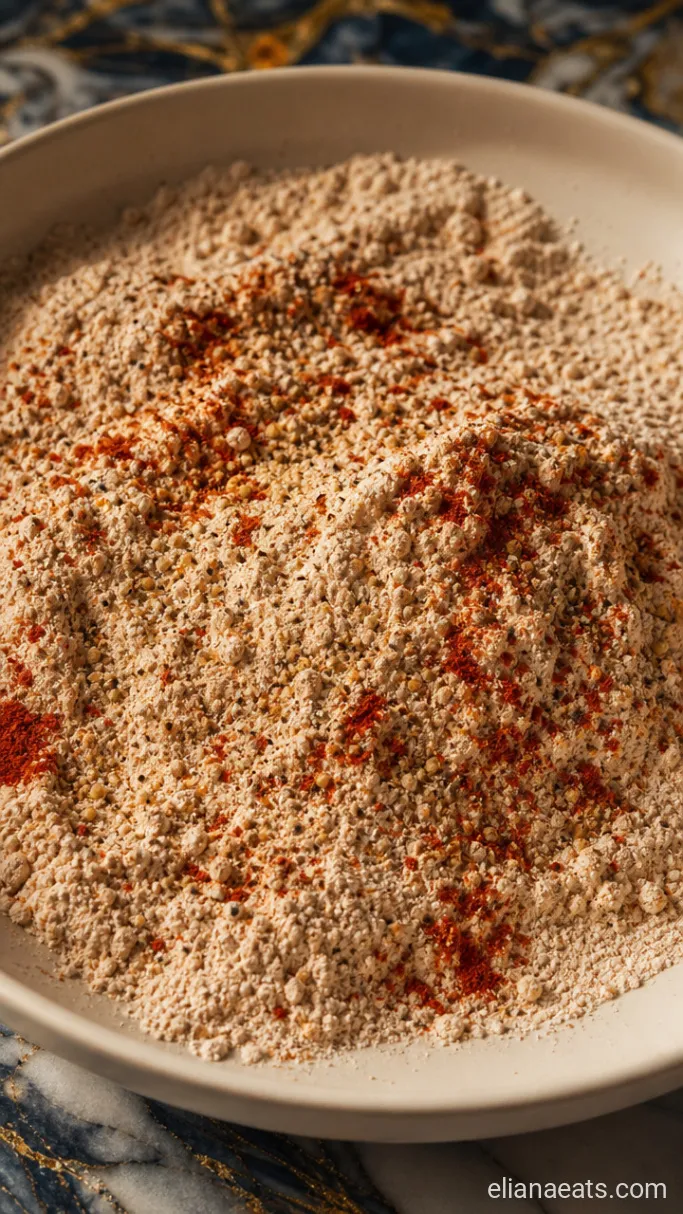
Whisk together the 1.5 cups all-purpose flour, 2 tsp paprika, 1 tsp garlic powder, 1.5 tsp onion powder, 1 tsp celery salt, 1 tsp dried oregano, 1 tsp black pepper, 0.5 tsp white pepper, 0.5 tsp cayenne pepper, and 1 tsp salt in a wide, shallow bowl or rimmed plate. Stir it thoroughly so no clumps of spice are sitting in one spot.
Taste a pinch of the dry mix. It should smell warm and savory with a faint kick. If it tastes flat, add a small extra pinch of salt and stir again before you start dredging.
Step 3: Dredge the Tenders
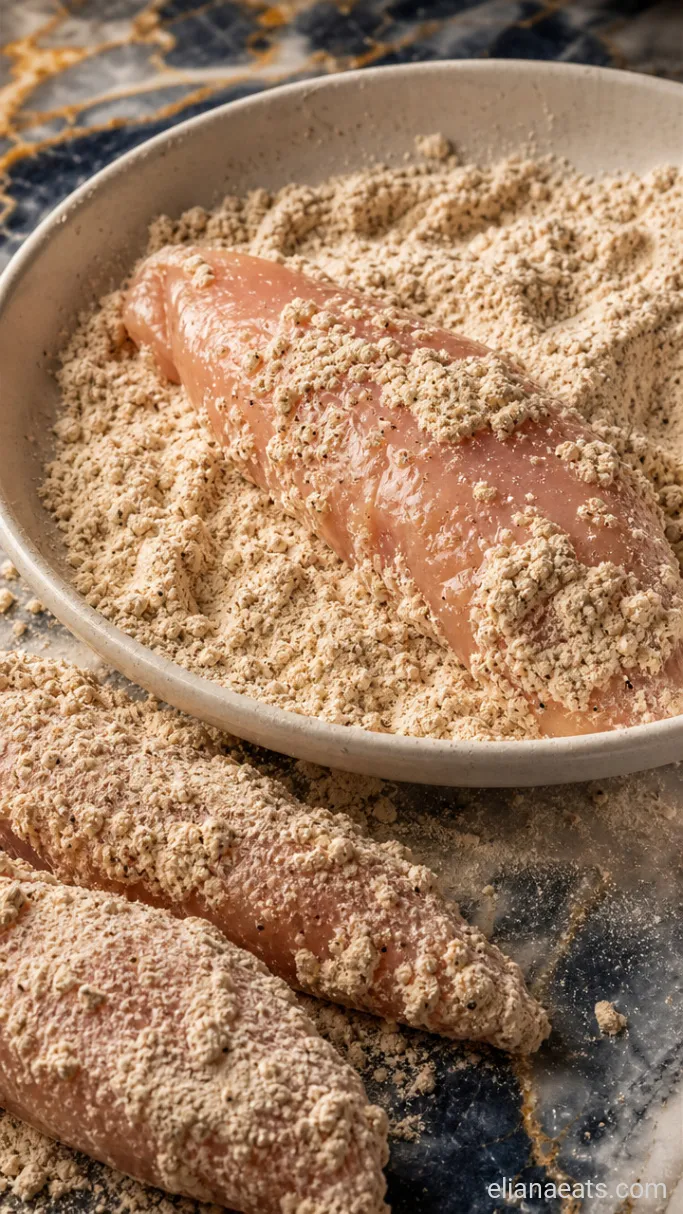
Lift a tender out of the buttermilk soak, let the excess drip off for a second, then press it firmly into the seasoned flour. Flip it, press again, then shake gently. Set it on a wire rack or a clean plate. Repeat with all the remaining tenders, then go back and dredge each one a second time through the flour, pressing firmly so the coating builds up on the surface.
That second pass through the flour is the whole game. It creates the thick, uneven crust that gets those deep brown ridges during frying. After the second dredge, let the tenders rest on the rack for 5 minutes before they go into the oil — this helps the coating hydrate and set so it doesn’t fall off in the pan.
Step 4: Fry the Chicken Tenders
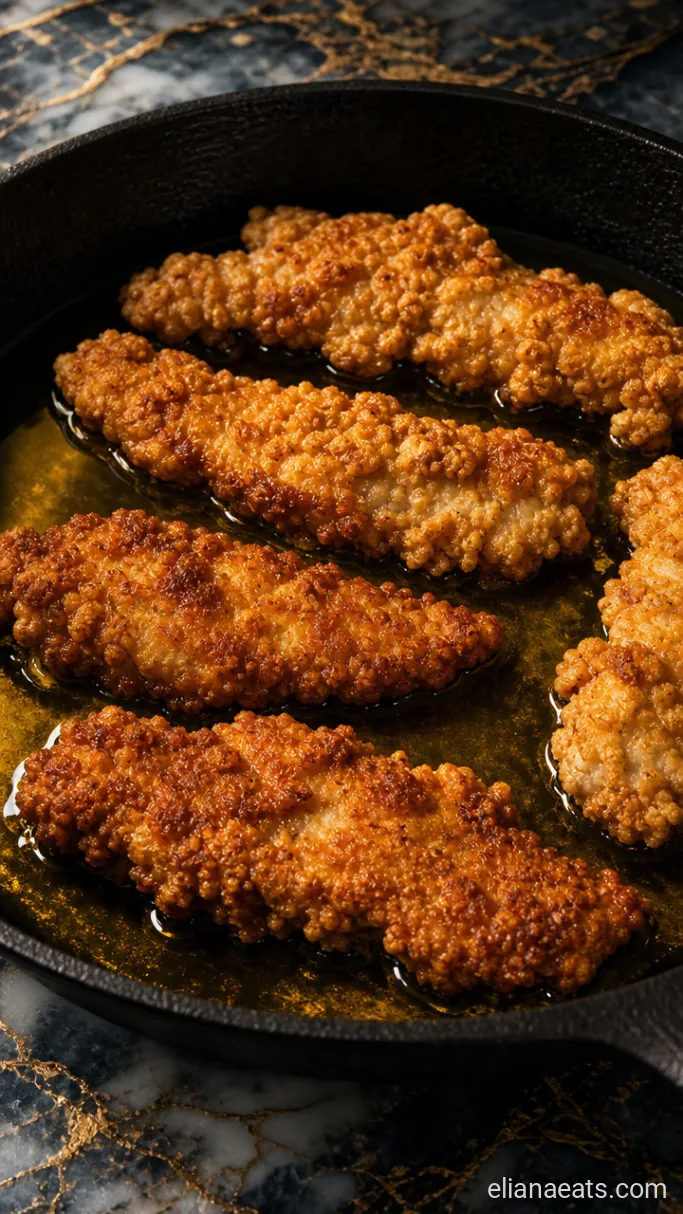
Pour enough neutral oil into a heavy-bottomed pan or Dutch oven to reach 2 inches deep, then heat over medium-high until it hits 350°F (175°C). Cook in batches of 4 to 5 when frying the tenders, never crowding the pan, for 3 to 4 minutes per side, until the coating is deep golden brown and the internal temperature of the chicken reads 165°F (74°C), an essential step in cooking chicken tenders.
The oil temperature will drop a bit when the cold chicken goes in. That’s normal. Keep the heat at medium-high and it will recover within the first minute. If the crust is browning too fast before 3 minutes, the oil is too hot; pull the pan off the heat for 30 seconds and it will come down quickly.
Between batches, let the oil return to 350°F (175°C) before adding the next round. A thermometer makes this easy. Tenders fried in oil that’s dropped too low come out greasy rather than crisp.
Step 5: Drain and Plate the Tenders
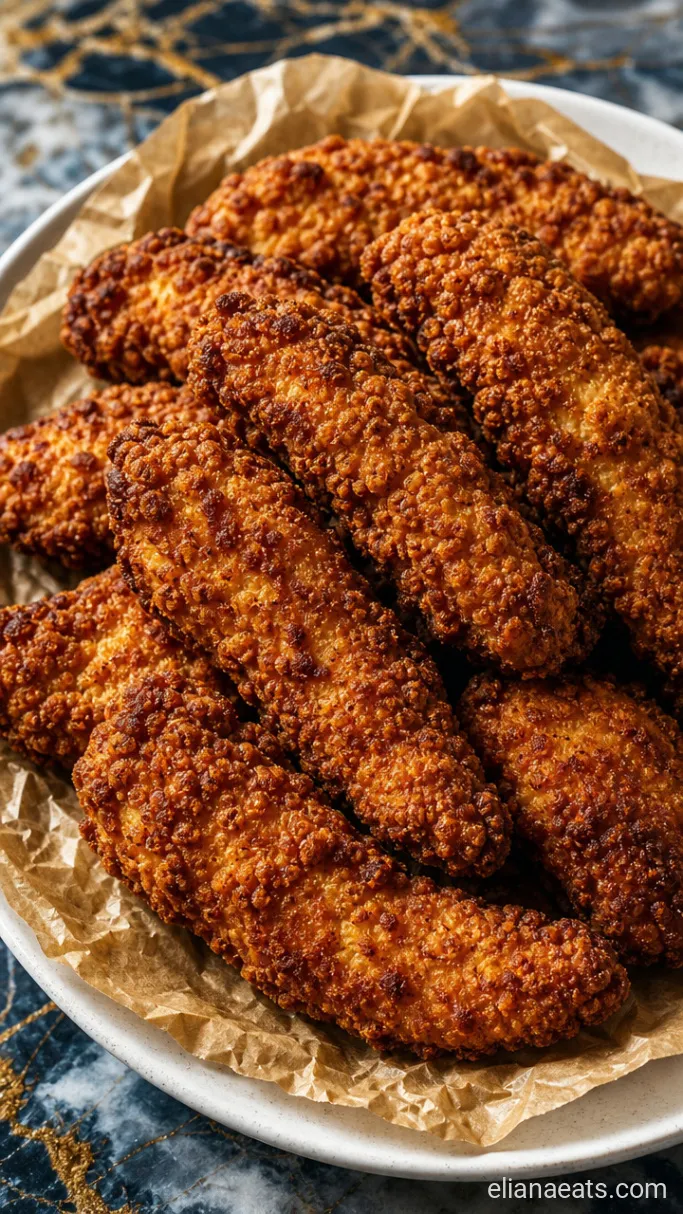
Transfer the cooked tenders to a wire rack set over a sheet pan, not a plate lined with paper towels. Let them rest for 2 minutes so steam can escape and the crust stays crisp rather than going soft. Then pile them onto a serving plate and add whatever dipping sauce you’re going with.
Arrange them loosely so they overlap slightly, rough coating facing up. The crust will be amber and deeply ridged, and a squeeze of lemon over the top right before serving brightens everything.
Recipe Tips
- Choose even-sized pieces. If you’re cutting your own strips from a chicken breast, aim for pieces that are roughly the same thickness so they all finish cooking at the same time.
- Don’t skip the wire rack. Resting the tenders on a wire rack instead of paper towels after frying keeps the bottom crust from steaming and going soggy.
- Check the oil before each batch. The most common reason homemade fried chicken comes out greasy is starting a new batch before the oil has returned to 350°F (175°C). Give it 1 to 2 minutes between rounds.
- Use a Dutch oven if you have one. Its thick walls hold heat steadily, which means less temperature fluctuation as you fry.
Cook times by thickness and cut:
| Chicken thickness | Oil temp | Time per side |
|---|---|---|
| Thin strips (under 0.75 inch) | 350°F (175°C) | 2 to 3 minutes |
| Standard tenderloins (0.75 to 1 inch) | 350°F (175°C) | 3 to 4 minutes |
| Thick breast strips (over 1 inch) | 325°F (165°C) | 4 to 5 minutes |
How To Store
- Refrigerate – Store cooled tenders in an airtight container for up to 3 days.
- Reheating – Reheat on a wire rack in a 375°F (190°C) oven for 10 to 12 minutes. The microwave will soften the crust significantly, so the oven is worth the extra few minutes.
What To Serve With KFC Chicken Tenders
A creamy coleslaw works well here because the cool, lightly tangy slaw cuts through the richness of the fried crust without competing with the spices. Mashed potatoes with a simple gravy are the other natural match, since the mild, starchy base lets the seasoning on the tenders stay front and center. If you want something lighter, a crisp green salad with a vinegar-forward dressing balances the fatty coating and keeps the meal from feeling heavy.
Frequently Asked Questions
Can I bake these instead of frying them?
Yes, but the crust won’t be as thick or crunchy. Bake on a greased wire rack at 425°F (220°C) for 18 to 20 minutes, flipping once halfway through.
Can I make the seasoned flour ahead of time?
Yes. Mix the flour and spices and store in an airtight container for up to 2 weeks. It’s a solid time-saver if you plan to make these again soon.
Why is my coating falling off during frying?
The most likely cause is skipping the 5-minute rest after dredging. That short rest lets the flour absorb some of the moisture from the buttermilk soak, which anchors the coating before it hits the hot oil.
Can I freeze the cooked tenders?
Yes. Freeze in a single layer on a sheet pan until solid, then transfer to a zip-top bag for up to 2 months. Reheat straight from frozen at 375°F (190°C) for 15 to 18 minutes on a wire rack.
—
KFC Chicken Tenders Recipe
Ingredients
Method
- Whisk together the buttermilk, egg, 0.5 tsp garlic powder, and a pinch of salt. Submerge the chicken tenderloins, cover, and refrigerate for at least 20 minutes.
- Combine the flour, paprika, remaining 1 tsp garlic powder, onion powder, celery salt, oregano, black pepper, white pepper, cayenne, and salt in a wide shallow bowl and stir well.
- Lift each tender from the soak, let the excess drip off, and press firmly into the seasoned flour twice. Rest the dredged tenders on a wire rack for 5 minutes.
- Heat 2 inches of neutral oil in a heavy pan to 350°F (175°C). Fry in batches of 4 to 5 for 3 to 4 minutes per side until deep golden and the internal temperature reaches 165°F (74°C). Return the oil to 350°F (175°C) between batches.
- Transfer the cooked tenders to a wire rack for 2 minutes, then pile onto a serving plate with a squeeze of lemon.
