
IHOP Buttermilk Pancakes Easy Copycat Recipe

That stack of thick, fluffy IHOP buttermilk pancakes is one of the most-copied diner recipes out there, and this version gets you remarkably close without leaving the house. It comes together in about 20 minutes, start to finish, which makes it a real option on a busy weekend morning.
The batter is simple, but a couple of small details make all the difference. Get those right and you will have a stack worth actually being proud of.
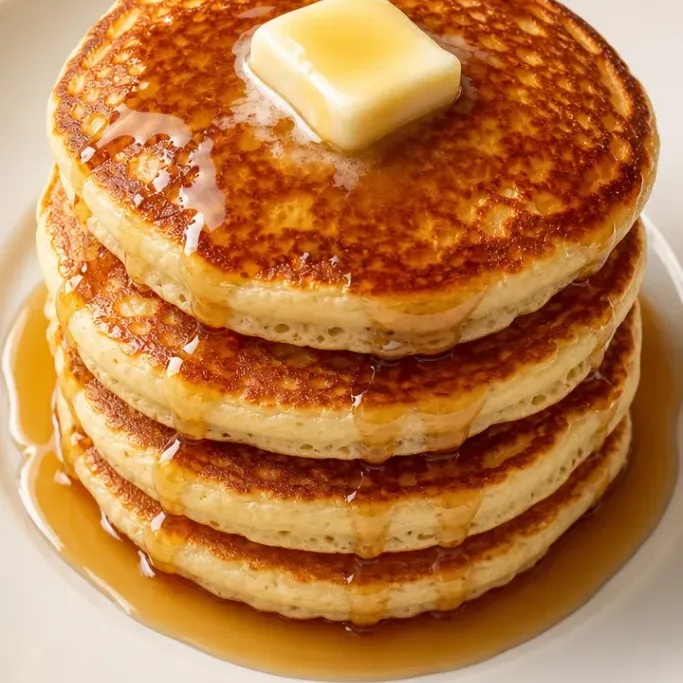
Why I Love This Recipe
The edges go slightly crisp while the center stays soft and a little custardy, which is exactly what separates a good pancake from a forgettable one. The buttermilk does real work here: its acidity reacts with the baking soda to create lift, and it adds a faint tang that keeps the flavor from tasting flat.
This is the version I keep coming back to on weekend mornings when I want something that feels like a treat without a long cleanup.
Recipe Ingredients
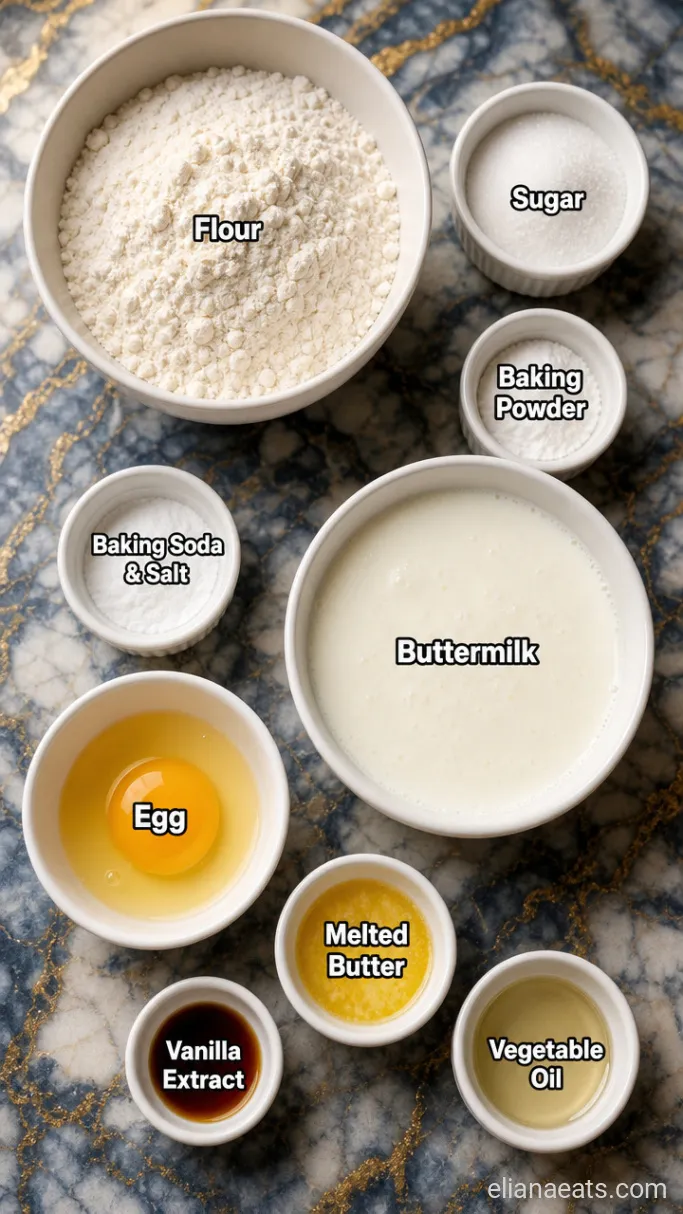
- 1 cup all-purpose flour – Spoon and level it; scooping packs the cup and makes pancakes dense
- 1 tbsp granulated sugar – Just enough to help browning without making the pancakes sweet
- 1 tsp baking powder – Works with the buttermilk for rise
- 1/2 tsp baking soda – The second leavener; do not skip it if you are using real buttermilk
- 1/2 tsp salt – Balances the sweetness and sharpens the flavor
- 1 cup buttermilk – Full-fat gives the best result; see Variations for a quick swap
- 1 large egg – Binds the batter and adds structure
- 2 tbsp unsalted butter, melted – Adds richness and helps the edges crisp
- 1 tsp vanilla extract – Rounds out the flavor; IHOP uses it and it matters
- 1 tbsp vegetable oil – For greasing the pan between batches
Variations / Substitutions
- No buttermilk – Stir 1 tbsp of white vinegar into 1 cup of whole milk, let it sit for 5 minutes, and use it the same way; the tang and lift are comparable.
- Dairy-free – Use a plant-based milk soured with 1 tbsp apple cider vinegar and swap the butter for melted coconut oil; the pancakes will be slightly thinner but still good.
- Brown butter – Melt the 2 tbsp butter in the pan until it smells nutty and turns amber, about 3 minutes, then let it cool slightly before adding it to the batter; the flavor gets noticeably richer.
- Add-ins – Fold in 1/3 cup fresh blueberries or mini chocolate chips after the batter is mixed; add them gently so you do not deflate the batter.
- Extra fluffy – Separate the egg, whisk the white to soft peaks, and fold it in last; the pancakes puff more and stay tall longer on the plate.
- Lemon ricotta twist – Swap 1/4 cup of the buttermilk for whole-milk ricotta and add 1 tsp lemon zest for a thicker, almost cake-like texture.
If you enjoy diner-style breakfast recipes, you might also like a Copycat IHOP French Toast Recipe.
How To Make Buttermilk Pancakes
Step 1: Whisk the Dry Ingredients
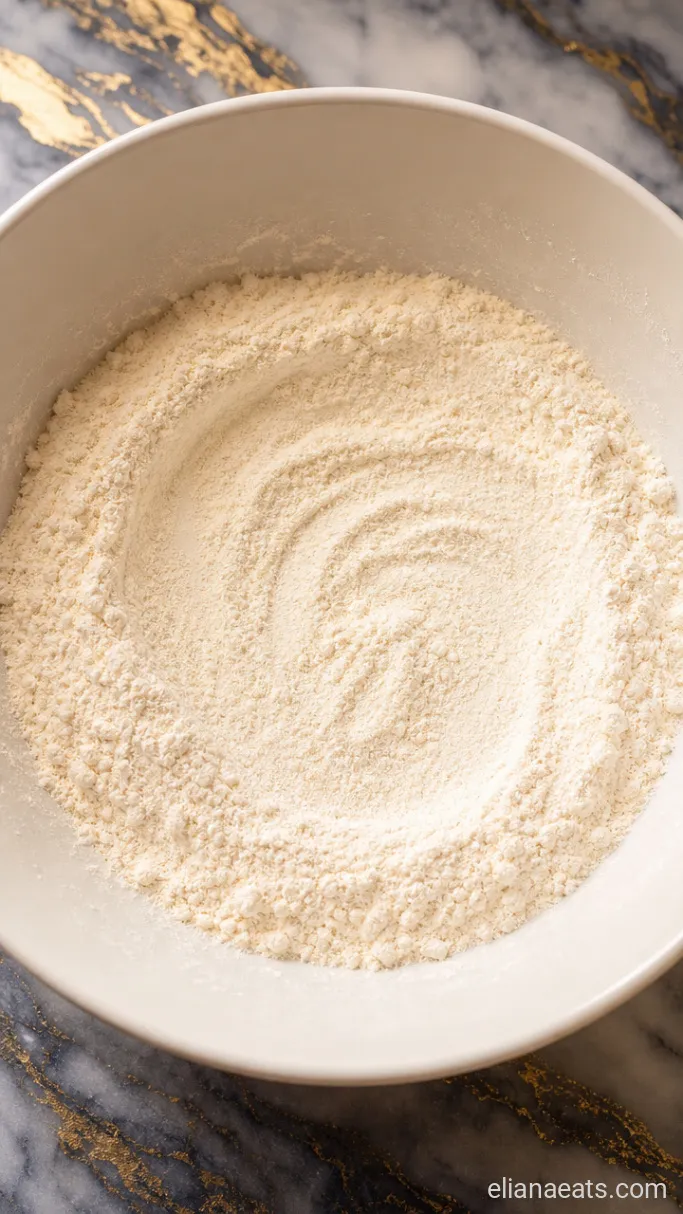
In a large bowl, whisk together the 1 cup all-purpose flour, 1 tbsp granulated sugar, 1 tsp baking powder, 1/2 tsp baking soda, and 1/2 tsp salt. Take 20 seconds to do this properly. Evenly distributed leavener means even rise across every pancake.
The mixture should look uniformly pale with no visible clumps of baking soda. If you see any white lumps, break them up with the whisk before moving on.
Step 2: Combine the Wet Ingredients
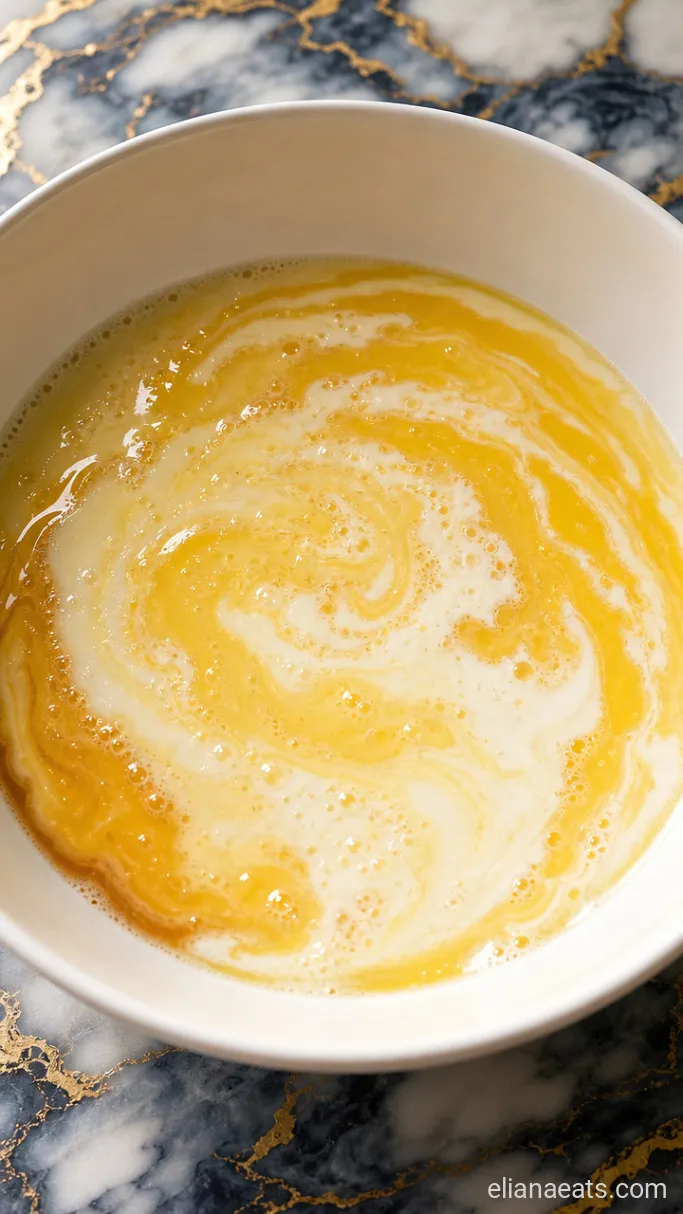
In a separate small bowl or large measuring cup, whisk together the 1 cup buttermilk, 1 large egg, 2 tbsp melted unsalted butter, and 1 tsp vanilla extract until the egg is fully broken up and the mixture looks smooth, about 30 seconds.
The melted butter may form small threads when it hits the cold buttermilk. That is fine. It will incorporate fully once the wet and dry come together.
Step 3: Fold the Batter
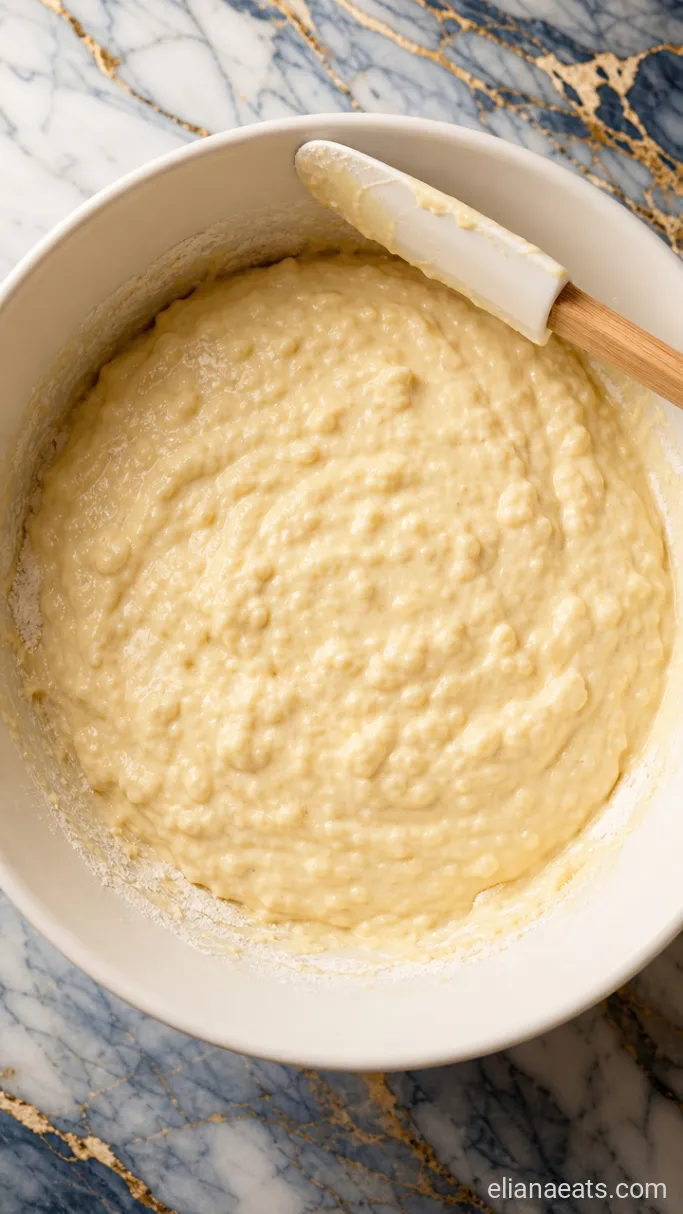
Pour the wet ingredients into the dry and stir with a fork or rubber spatula until just combined, about 10 to 12 strokes. Stop when you no longer see dry flour, even if the batter still looks lumpy.
Lumps are your friend here. Overmixed batter develops gluten, and gluten turns pancakes chewy and flat. A few visible lumps in the batter disappear completely on the griddle.
Step 4: Cook the Pancakes
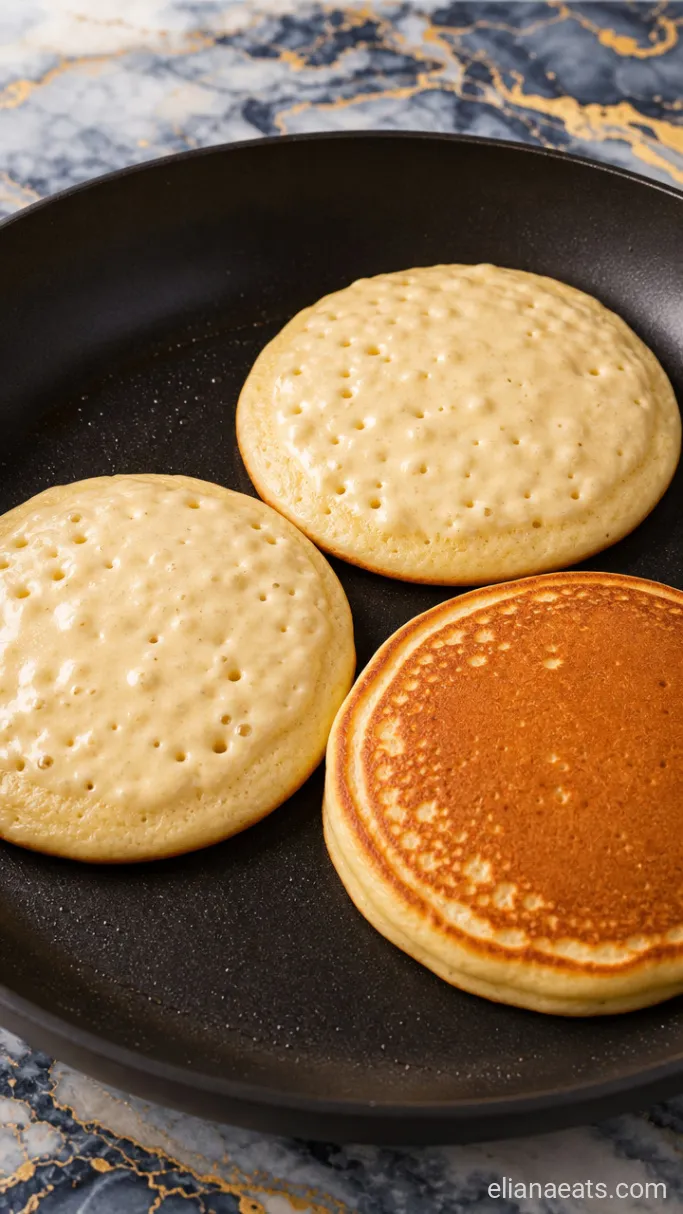
Heat a large non-stick skillet or griddle over medium heat for 2 minutes, then brush with a thin layer of the 1 tbsp vegetable oil. Ladle about 1/3 cup of batter per pancake onto the pan. Cook for 2 to 3 minutes on the first side, until bubbles form across the surface and the edges look set and dry.
Flip once and cook for another 1 to 2 minutes on the second side, until the bottom is deep golden brown. Adjust the heat if the pancakes are browning too fast; medium-low works better on thinner pans.
If the first pancake comes out pale or greasy, that is normal. It is the test pancake. Every experienced cook sacrifices the first one.
Step 5: Stack, Garnish, and Serve
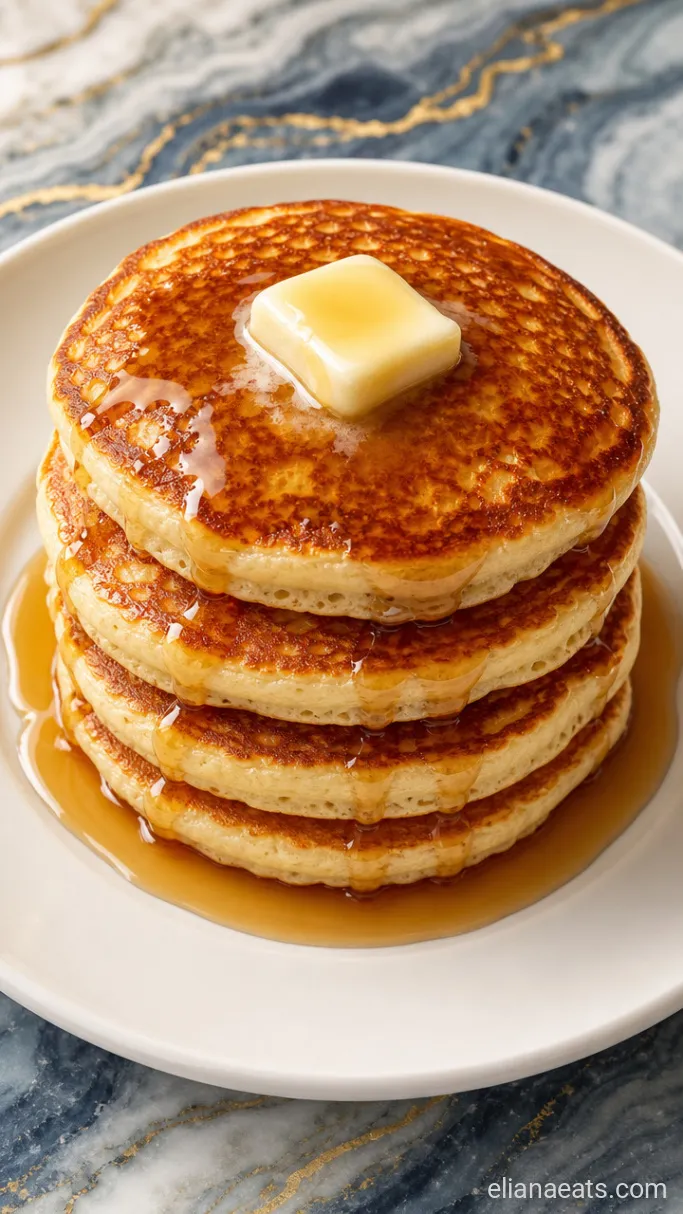
Stack 3 pancakes per plate, lay a small pat of cold butter on top so it starts to melt down the sides, and finish with a pour of warm maple syrup. Serve immediately while the edges are still slightly crisp.
Recipe Tips
- Rest the batter. Let it sit for 5 minutes after mixing while the pan heats up. The leaveners start working and the flour fully hydrates, which gives you a slightly taller pancake.
- Keep finished pancakes warm. Place them in a single layer on a baking sheet in a 200°F (93°C) oven while you finish the batch. Stacking them on a plate traps steam and softens the edges.
- The right heat matters more than anything. If your pan is too hot, the outside chars before the center cooks through. If it is too cool, the pancakes spread thin and go pale. A drop of water should skitter and evaporate in about 2 seconds on a properly heated surface.
- Use a 1/3-cup measure as your ladle. It gives you consistently sized pancakes that cook evenly and look good on the plate.
Griddle times vary by pan material and thickness:
| Pan Type | Heat Setting | Time Per Side |
|---|---|---|
| Non-stick skillet | Medium | 2 to 3 min / 1 to 2 min |
| Cast iron | Medium-low | 3 to 4 min / 2 min |
| Electric griddle | 375°F (190°C) | 2 to 3 min / 1 to 2 min |
How To Store
- Refrigerate – Stack cooled pancakes with a small square of parchment between each one, seal in an airtight container, and refrigerate for up to 3 days.
- Reheating – Warm them in a toaster on a medium setting for about 90 seconds; it revives the crisp edges better than the microwave does. A microwave works in a pinch at 20-second intervals but the texture goes softer.
What To Serve With Buttermilk Pancakes
Crispy bacon or breakfast sausage links are the obvious move, and the saltiness genuinely cuts through the richness of the butter and syrup so the whole plate feels balanced rather than one-note. A simple fruit salad with sliced strawberries and a little orange juice works well alongside because the brightness offsets the starchiness of the pancakes. If you want to make it more of a spread, a soft scrambled egg adds protein without competing for attention on the plate.
Frequently Asked Questions
Can I make the batter the night before?
You can mix the dry and wet ingredients separately the night before and store them covered in the fridge, then combine them in the morning. Mixing them together and resting overnight deflates the leaveners and the pancakes will be noticeably flatter.
Why are my pancakes coming out gummy in the middle?
The heat is most likely too high. A hot pan cooks the outside fast while the center stays raw; dropping to medium or medium-low and adding 1 extra minute on the first side usually fixes it.
Can I freeze these?
Yes. Let them cool completely, then freeze in a single layer on a baking sheet for 1 hour before transferring to a zip-lock bag. They keep for up to 2 months and go straight from freezer to toaster.
Can I double the recipe for a crowd?
Doubling works without any adjustments to the ratios. Just mix in a larger bowl and plan for about 30 minutes of cooking time total if you are working with one pan.
Buttermilk Pancakes Recipe
Ingredients
Method
- Whisk together the flour, sugar, baking powder, baking soda, and salt in a large bowl until evenly combined.
- In a separate bowl, whisk the buttermilk, egg, melted butter, and vanilla extract until smooth.
- Pour the wet ingredients into the dry and fold together with about 10 to 12 strokes until just combined and no dry flour remains; leave the batter lumpy.
- Heat a non-stick skillet or griddle over medium heat for 2 minutes, brush with vegetable oil, and cook 1/3-cup portions of batter for 2 to 3 minutes per side until deep golden brown and bubbles have set on the surface.
- Stack 3 pancakes per plate, top with a pat of cold butter, and serve immediately with warm maple syrup.
