
Chipotle Pork Carnitas Copycat Recipe

This copycat Chipotle pork carnitas recipe gives you that same juniper-and-bay-scented, crispy-edged pulled pork at home, for a fraction of the cost. It’s a slow braise that mostly takes care of itself, which makes it a solid choice for a weekend cook that pays off all week.
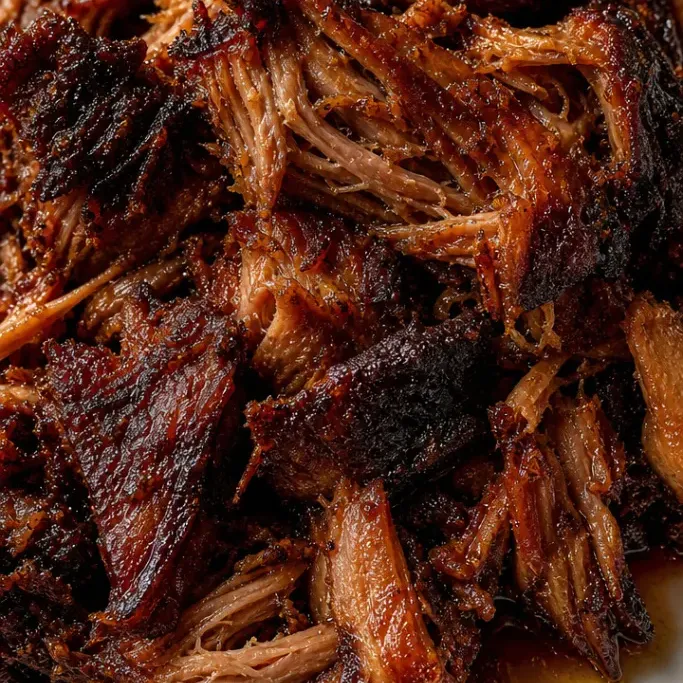
The pork shoulders low and slow in a seasoned braise, then gets crisped under the broiler for those slightly charred, salty edges. That contrast of tender interior and crunchy bits is what makes it worth making.
Why I Love This Recipe
The braising liquid is simple, but the juniper berries and bay leaves do something specific: they give the pork that piney, slightly floral note that makes Chipotle’s version taste distinct from standard pulled pork.
What I keep coming back to is how the broiler step transforms it. Without it, you just have soft pulled pork. Two minutes under high heat and you get those dark, crispy edges that make it actually interesting.
It reheats well, too. The pork stays juicy in its own braising fat, so leftovers on day three taste about the same as day one.
Recipe Ingredients
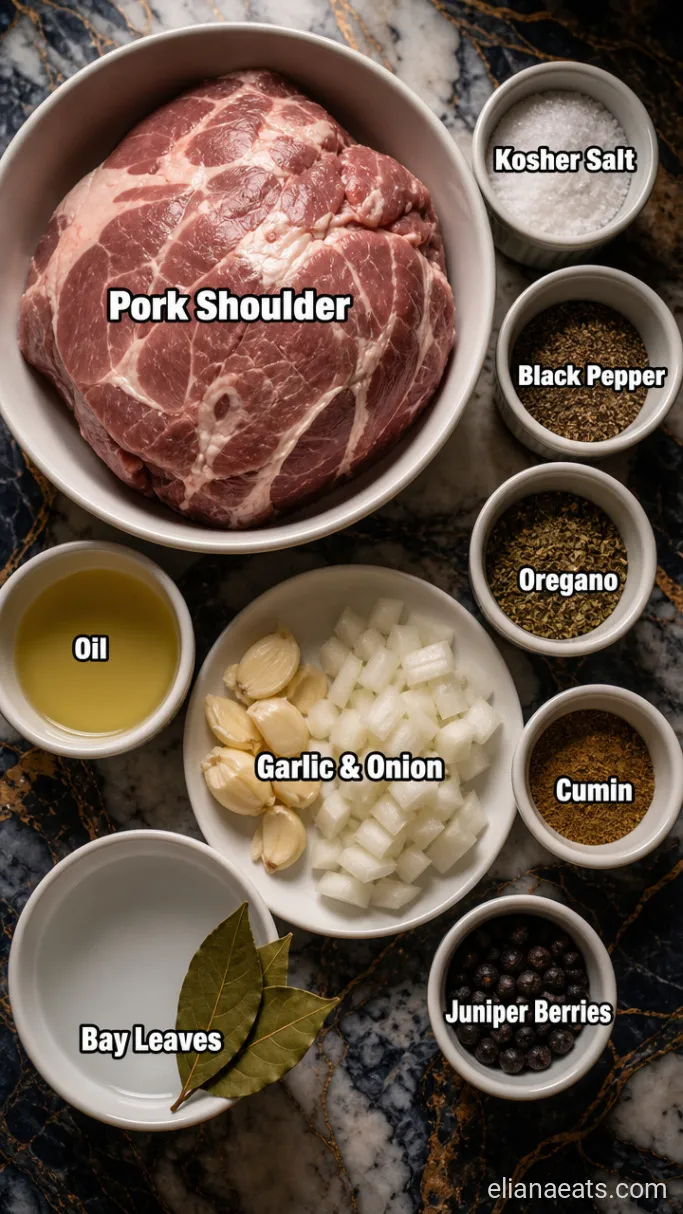
- 3 lbs boneless pork shoulder (pork butt) – Well-marbled cuts braise better and stay juicier; avoid lean loin
- 1 tbsp kosher salt – Seasons throughout; table salt works but use 2 tsp instead
- 1 tsp black pepper – Freshly cracked if you have it
- 1 tsp dried oregano – The piney, slightly bitter flavor is key here
- 1/2 tsp ground cumin – Adds warmth and depth to the braise
- 4 cloves garlic, smashed – Smashed releases more flavor than minced in a long braise
- 2 bay leaves – Fresh or dried both work; core to the Chipotle flavor profile
- 1 tsp dried juniper berries, lightly crushed – The most important Chipotle-specific ingredient; find them in the spice aisle or online
- 1/2 medium white onion, roughly chopped – Roughly chopped is fine; it’ll cook down completely
- 1 cup water – Combined with the rendered fat, it forms the braising liquid
- 2 tbsp vegetable oil – For searing; any neutral oil works
Variations / Substitutions
- Pork loin instead of shoulder – It will work but will be noticeably drier and less rich; add an extra tablespoon of oil to the braising liquid.
- No juniper berries – Add 1 extra bay leaf and a small sprig of fresh rosemary to approximate the piney note; the flavor won’t be identical but it gets close.
- Chicken thighs – Swap in 2.5 lbs bone-in, skin-on thighs and reduce the braise time to 1.5 hours at 300°F (150°C); shred and broil the same way.
- Make it spicy – Stir 1 chipotle pepper in adobo sauce into the braising liquid before it goes into the oven.
- No fresh garlic – Use 1 tsp garlic powder added to the dry rub; the flavor is milder but serviceable.
- Dairy-free – This recipe is already dairy-free with no changes needed.
If you like this, the Chipotle Chicken Copycat Recipe follows almost the same method and is worth trying next.
How To Make Chipotle Pork Carnitas
Step 1: Sear the Pork
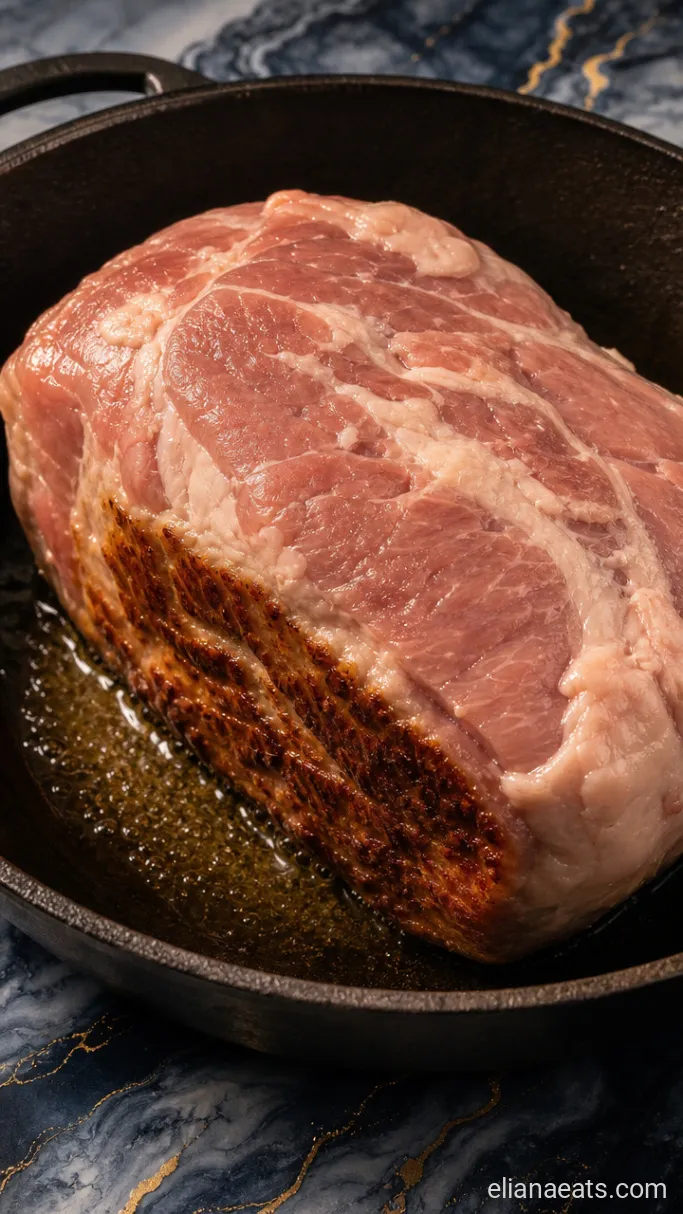
Preheat your oven to 300°F (150°C), then get your heaviest oven-safe pot on the stove over medium-high heat. Cut the 3 lbs pork shoulder into 2 large chunks and pat them completely dry with paper towels. Rub the 1 tbsp kosher salt, 1 tsp black pepper, 1 tsp dried oregano, and 1/2 tsp ground cumin all over every surface of the pork. Add the 2 tbsp vegetable oil to the hot pot, and once it shimmers, lay the pork in carefully. Sear for about 4 minutes per side without moving it, until each surface is a deep mahogany brown.
You want real color here, not just a light tan. That crust is where most of the salty, slightly smoky flavor comes from. If the pork sticks when you try to flip it, give it another minute; it’ll release when it’s ready.
Don’t skip the drying step. Wet meat steams instead of sears, and you’ll end up with a gray exterior that won’t develop the same depth of flavor after braising.
Step 2: Build the Braising Liquid
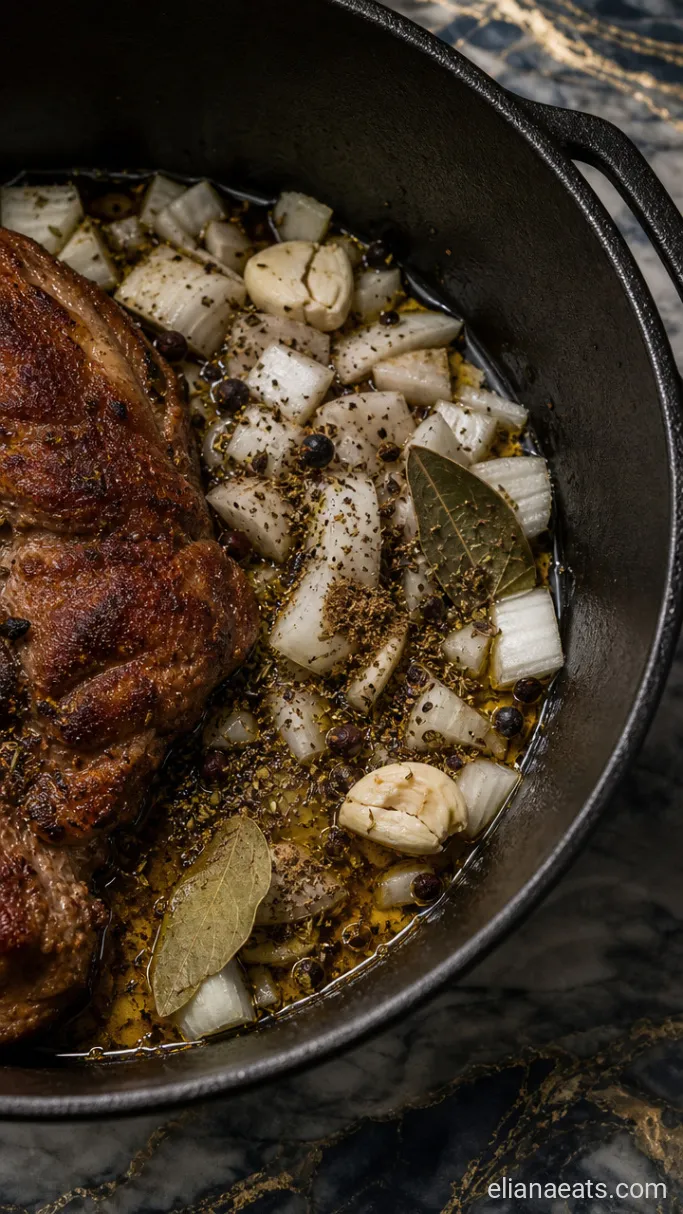
Remove the seared pork to a plate and reduce the heat to medium. Add the 4 smashed garlic cloves and 1/2 chopped white onion to the same pot and stir for about 2 minutes, until the onion is softened and starting to turn translucent. Pour in the 1 cup water, then drop in the 2 bay leaves and the 1 tsp lightly crushed juniper berries. Scrape up any browned bits stuck to the bottom of the pot.
The liquid will smell sharply herbal and savory. Those dark bits on the pot bottom are flavor, so make sure they’re fully dissolved into the liquid before you return the pork.
Step 3: Braise the Pork
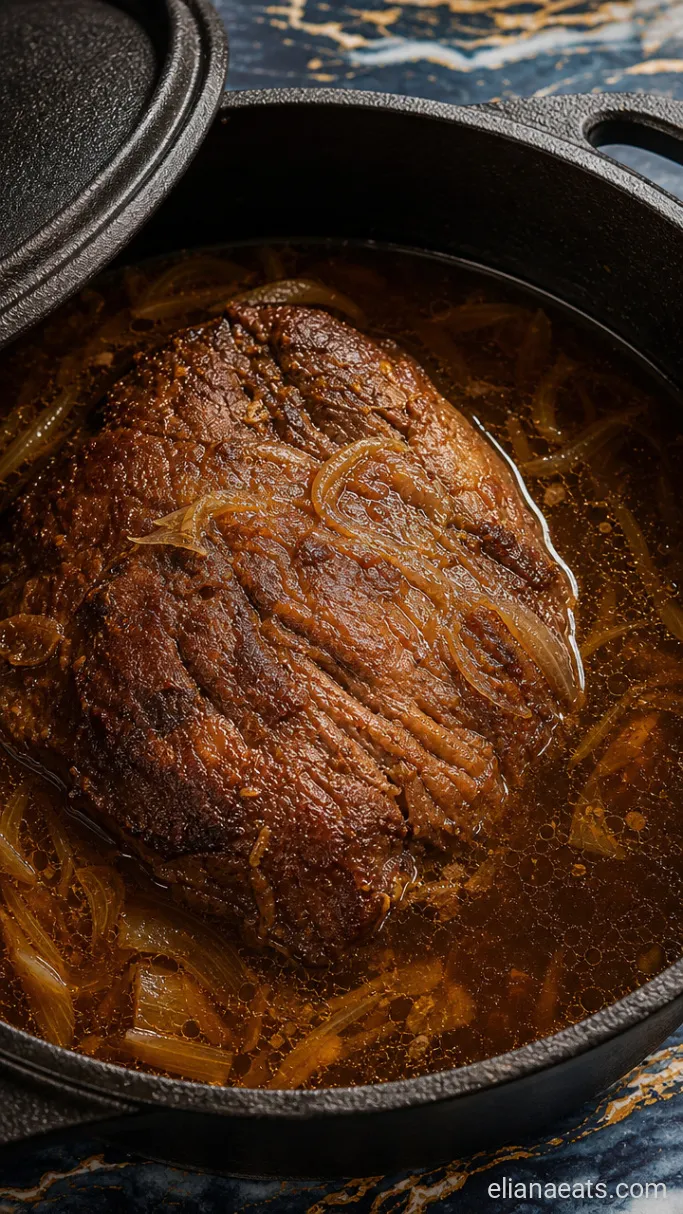
Nestle the seared pork back into the pot, along with any resting juices from the plate. The liquid should come about a third of the way up the pork, not cover it. Put the lid on and transfer the pot to the preheated 300°F (150°C) oven. Braise for 2.5 to 3 hours, until the pork is tender enough to pull apart easily with two forks.
The pork is done when it offers almost no resistance and the grain starts to separate on its own. If you press a chunk with a fork and it holds its shape firmly, give it another 30 minutes.
Don’t be alarmed if there isn’t much liquid left at the end. The pork renders its own fat and that’s what you want: concentrated, sticky braising juices rather than a watery broth.
Step 4: Shred the Pork
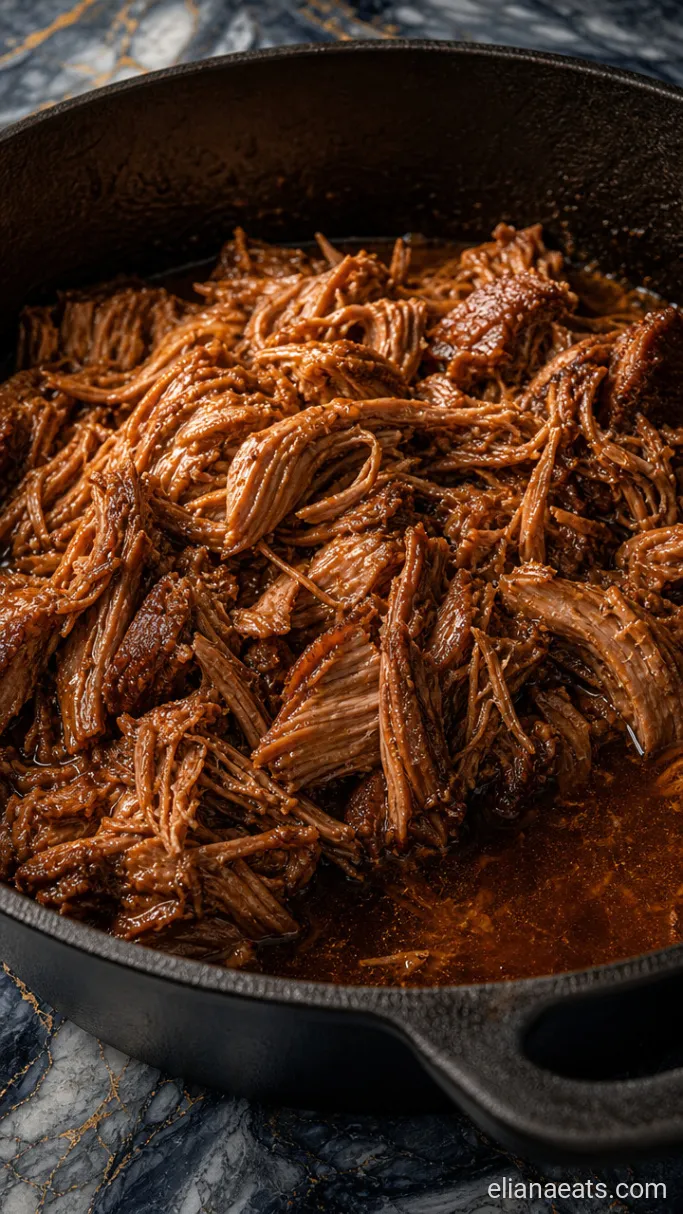
Transfer the pork to a large rimmed baking sheet and discard the bay leaves and juniper berries. Pull the pork into rough chunks and strips using 2 forks, keeping the pieces varied in size. Pour about 2 to 3 tbsp of the braising liquid from the pot over the shredded pork and toss to coat, then spread everything into a single layer across the baking sheet.
You want some smaller shaggy bits alongside larger chunks. The small pieces crisp faster under the broiler and give you that textural contrast in every bite. Don’t pile the pork up or it will steam rather than crisp.
Step 5: Broil and Plate the Carnitas
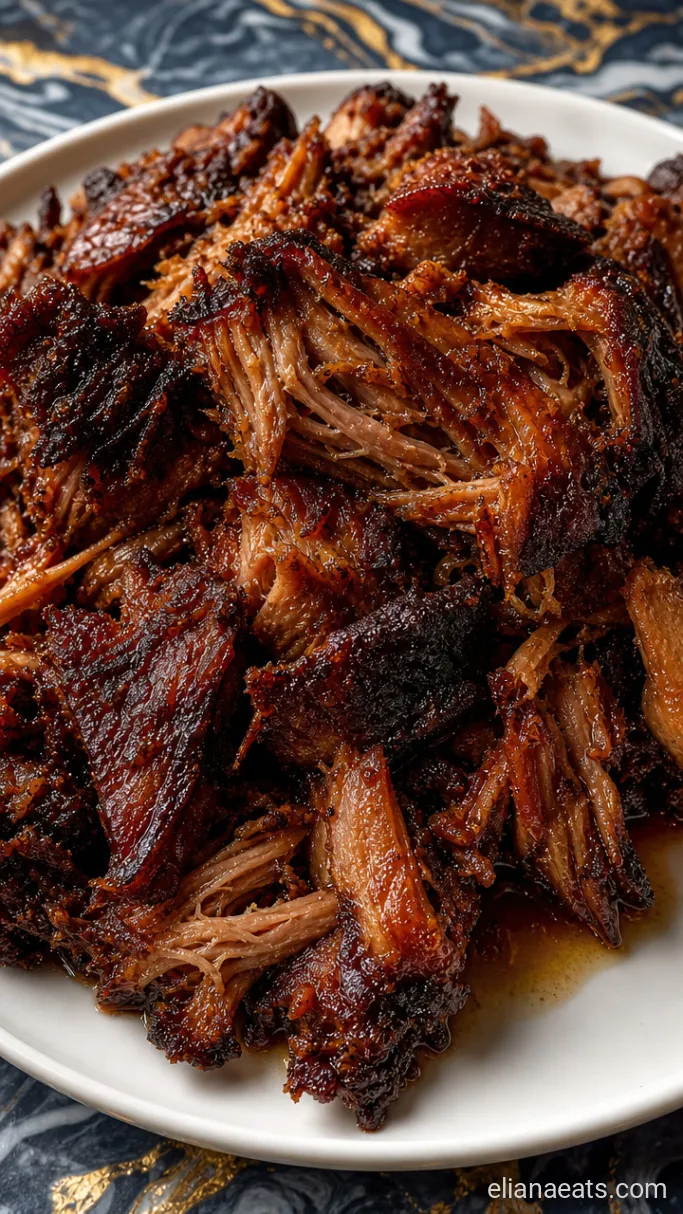
Set your broiler to high and position the rack 6 inches from the element. Slide the baking sheet in and broil for 3 to 5 minutes, watching closely, until the edges and thinner pieces turn dark brown and crispy. Pull the sheet out, give the pork a quick toss to expose any pale pieces, then broil for another 2 to 3 minutes if needed.
Transfer the carnitas to a warm serving platter and spoon any remaining braising juices over the top. Finish with a small handful of roughly chopped fresh cilantro and a squeeze of fresh lime over everything, then serve immediately while the crispy edges are still hot.
Recipe Tips
- Buy the right cut. Pork shoulder (also sold as pork butt or Boston butt) has enough intramuscular fat to stay juicy over a long braise. A leaner cut will dry out.
- Crush the juniper berries lightly. You just want to crack them open so they release their oils into the liquid. Grinding them to powder makes the flavor too strong and slightly medicinal.
- Don’t open the oven during the braise. Every time you lift the lid, you add roughly 15 minutes to the cook time. Trust the process and check once at the 2.5-hour mark.
- Save the braising liquid. After you’ve pulled the pork, strain the remaining liquid and refrigerate it. It makes an excellent base for a quick black bean soup or a rice cooking liquid the next day.
- Broiler timing varies by oven. Some broilers run very hot. Stay at the oven for the entire broiling phase; the difference between crispy and burnt is about 90 seconds.
Cook times by pork shoulder weight (at 300°F / 150°C, lid on):
| Weight | Braise Time | Check For Doneness |
|---|---|---|
| 2 lbs | 2 to 2.5 hrs | Pulls apart with light pressure |
| 3 lbs | 2.5 to 3 hrs | Grain separates with forks |
| 4 lbs | 3 to 3.5 hrs | Falls apart with minimal effort |
How To Store
- Refrigerate – Store the carnitas in an airtight container with a few spoonfuls of the braising liquid for up to 4 days. The fat keeps the pork from drying out.
- Reheating – Spread the pork on a baking sheet and reheat at 375°F (190°C) for 10 to 12 minutes, until warmed through. A quick 2-minute broil at the end brings the crispy edges back.
What To Serve With Chipotle Pork Carnitas
Warm flour or corn tortillas are the natural home for this pork. The starchy, slightly charred tortilla acts as a backdrop that lets the salty, herby carnitas come through without competition.
A simple tomato salsa or tomatillo salsa works well because the acidity cuts through the richness of the pork fat. Chipotle’s cilantro-lime rice is worth making alongside it too since the bright lime and herby rice balance the heavy, savory meat in the same bowl.
If you’re building a burrito bowl, a scoop of sour cream adds cool creaminess that softens the saltiness of the broiled bits.
Frequently Asked Questions
Can I make this in a slow cooker instead of the oven?
Yes. After searing and building the braising liquid on the stovetop, transfer everything to a slow cooker and cook on low for 8 hours or high for 5 hours, then shred and broil as directed.
Can I freeze the cooked carnitas?
Yes. Freeze in an airtight container with some braising liquid for up to 3 months. Thaw overnight in the fridge, then reheat and broil as you would fresh leftovers.
How do I know if I’ve used enough salt?
Taste a small piece of pulled pork before the broiling step. Carnitas should taste noticeably salty, since you’re eating it inside a tortilla or bowl that isn’t seasoned. If it tastes flat, sprinkle a pinch of kosher salt directly over the shredded pork on the baking sheet before broiling.
Can I use bone-in pork shoulder?
Yes, and it’s actually a good choice since the bone adds a bit more flavor to the braising liquid. Add 30 to 45 minutes to the braise time and remove the bone before shredding.
Chipotle Pork Carnitas Recipe
Ingredients
Method
- Preheat oven to 300°F (150°C). Cut the pork shoulder into 2 large chunks, pat dry, rub with the kosher salt, black pepper, oregano, and cumin, then sear in 2 tbsp vegetable oil over medium-high heat, about 4 minutes per side, until deep brown on all surfaces.
- Remove the pork to a plate. In the same pot over medium heat, cook the 4 smashed garlic cloves and 1/2 chopped white onion for 2 minutes. Pour in the 1 cup water, add the 2 bay leaves and 1 tsp crushed juniper berries, and scrape up all the browned bits from the bottom.
- Return the pork and any resting juices to the pot. The liquid should reach about one-third up the sides of the pork. Cover and braise in the oven at 300°F (150°C) for 2.5 to 3 hours, until the pork pulls apart easily with two forks.
- Transfer the pork to a large rimmed baking sheet and discard the bay leaves and juniper berries. Shred the pork into varied chunks with 2 forks, pour 2 to 3 tbsp of the braising liquid over the top, and spread into a single layer.
- Broil on high with the rack 6 inches from the element for 3 to 5 minutes, toss, and broil for another 2 to 3 minutes as needed until the edges are dark and crispy. Transfer to a warm serving platter, spoon over any remaining braising juices, scatter the fresh cilantro on top, and serve with lime wedges.
