
Applebee’s 4 Cheese Mac and Cheese (Easy Copycat Recipe)

Applebee’s 4 cheese mac and cheese is one of those dishes that shows up on the menu and immediately makes everything else harder to order. It’s creamy, sharp, and rich without being heavy, and this copycat version gets you there in about 30 minutes on a weeknight.
The secret is using four cheeses that actually do different jobs: sharp cheddar for bite, Gruyère for nuttiness, fontina for that stretchy pull, and Parmesan to sharpen the whole thing. Together they make a sauce that coats every piece of pasta.
Why I Love This Recipe
This is the version I keep coming back to when I want pasta that feels like an actual meal, not just a side. The sauce is glossy and clings to the shells without being gluey.
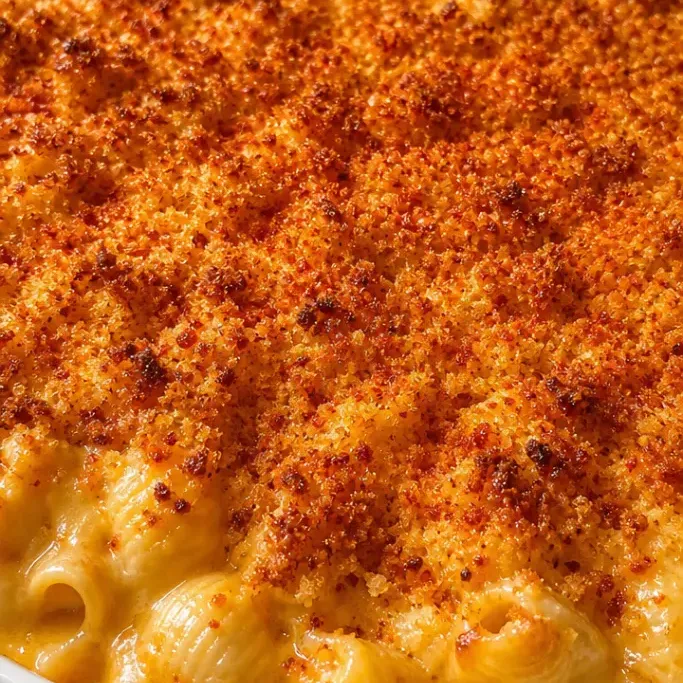
The broiled breadcrumb top adds just enough crunch to contrast the soft pasta underneath. It goes from fine to overcooked fast under the broiler, so the timing cue in the steps matters.
Recipe Ingredients
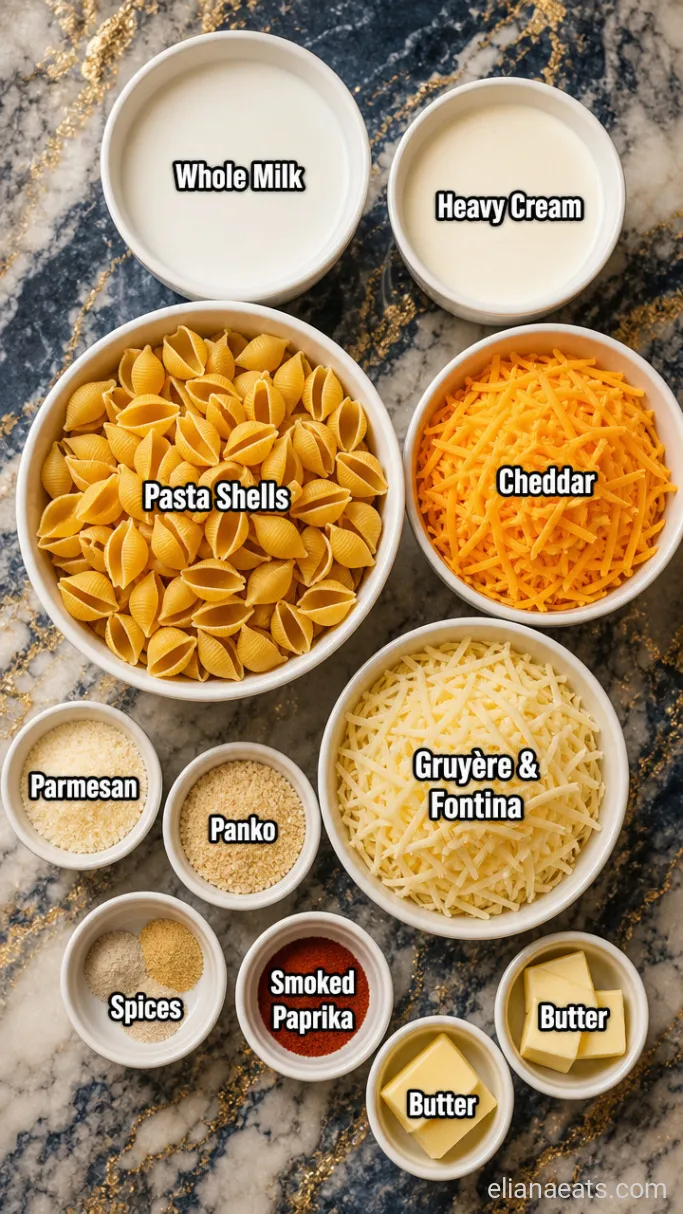
- 8 oz medium pasta shells – shells hold the sauce inside them better than elbows
- 2 tbsp unsalted butter – the fat base for the roux; unsalted so you control the salt
- 2 tbsp all-purpose flour – thickens the cheese sauce; don’t skip it or the sauce will break
- 1 cup whole milk – whole milk keeps the sauce stable and rich
- 1 cup heavy cream – adds body; you can sub half-and-half but the sauce will be thinner
- 1 cup sharp cheddar, shredded – sharp gives you the most flavor per ounce; pre-shredded works but freshly grated melts cleaner
- ½ cup Gruyère, shredded – nutty and complex; Swiss cheese is a workable swap
- ½ cup fontina, shredded – the main source of stretch; provolone is the closest substitute
- ¼ cup Parmesan, finely grated – adds a salty, savory depth; the real stuff from a wedge is worth it here
- ½ tsp garlic powder – background warmth; not optional
- ½ tsp dry mustard powder – sharpens the cheese flavor without tasting like mustard
- ½ tsp kosher salt, plus more to taste – season as you go
- ¼ tsp white pepper – white pepper keeps the sauce looking clean; black pepper works too
- ¼ tsp smoked paprika – goes on top before broiling for color and a mild smoky note
- ¼ cup panko breadcrumbs – for the broiled crust; panko stays crunchier than regular breadcrumbs
- 1 tbsp unsalted butter, melted – tossed with the panko so it browns evenly under the broiler
Variations / Substitutions
- Swap fontina for provolone – you get a similar melt and mild flavor, though the sauce will be slightly less creamy.
- Swap Gruyère for Swiss – it works fine and is easier to find; the nuttiness is a little milder.
- Swap heavy cream for half-and-half – the sauce will be thinner but still tasty; avoid skim milk since the sauce can turn grainy.
- Make it spicy – stir ¼ tsp cayenne into the sauce with the other spices, or add a few dashes of hot sauce at the end.
- Make it gluten-free – use your favorite gluten-free pasta and swap the flour for a 1:1 gluten-free flour blend; the roux behaves nearly the same.
- Add protein – grilled or rotisserie chicken stirred in at the end turns this into a complete meal.
If you like cheesy pasta bakes, Panera Bread Mac and Cheese Copycat Recipe is worth a look next.
How To Make 4 Cheese Mac and Cheese
Step 1: Boil the Pasta Shells
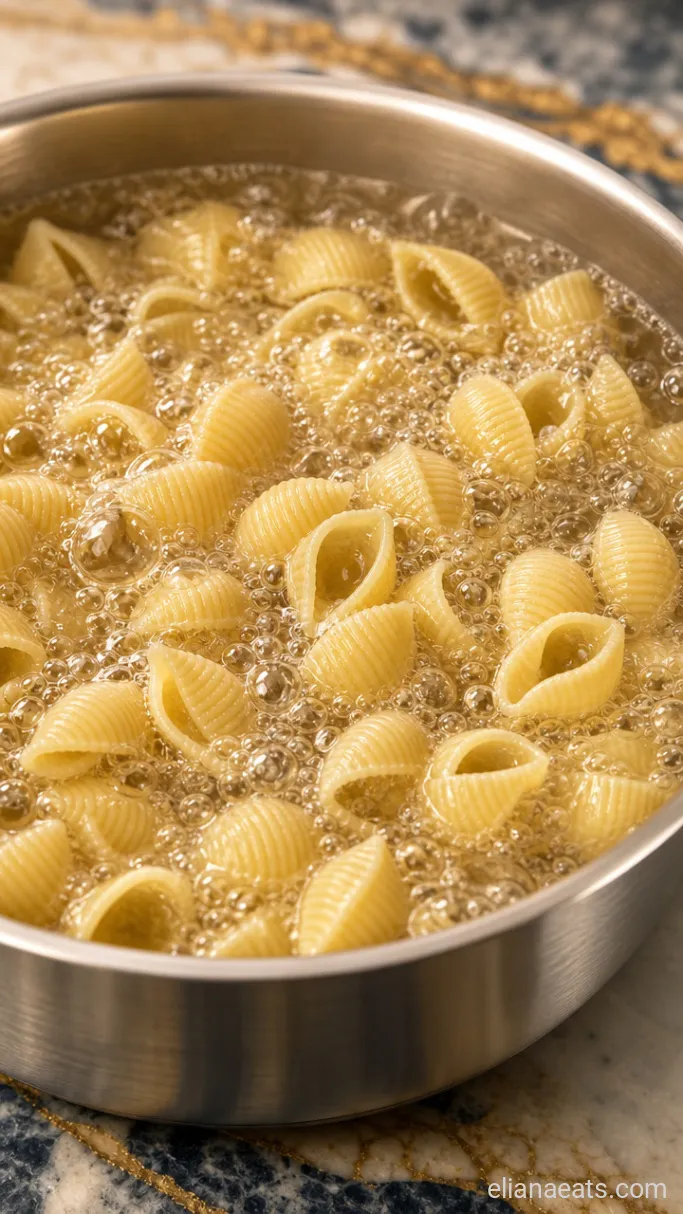
Bring a large pot of well-salted water to a boil. Add the 8 oz pasta shells and cook them 1 to 2 minutes less than the package directions, so they finish just shy of al dente. They’ll keep cooking in the sauce, and you don’t want them soft.
Drain and set aside. Don’t rinse them; the surface starch helps the sauce stick.
Step 2: Build the Roux
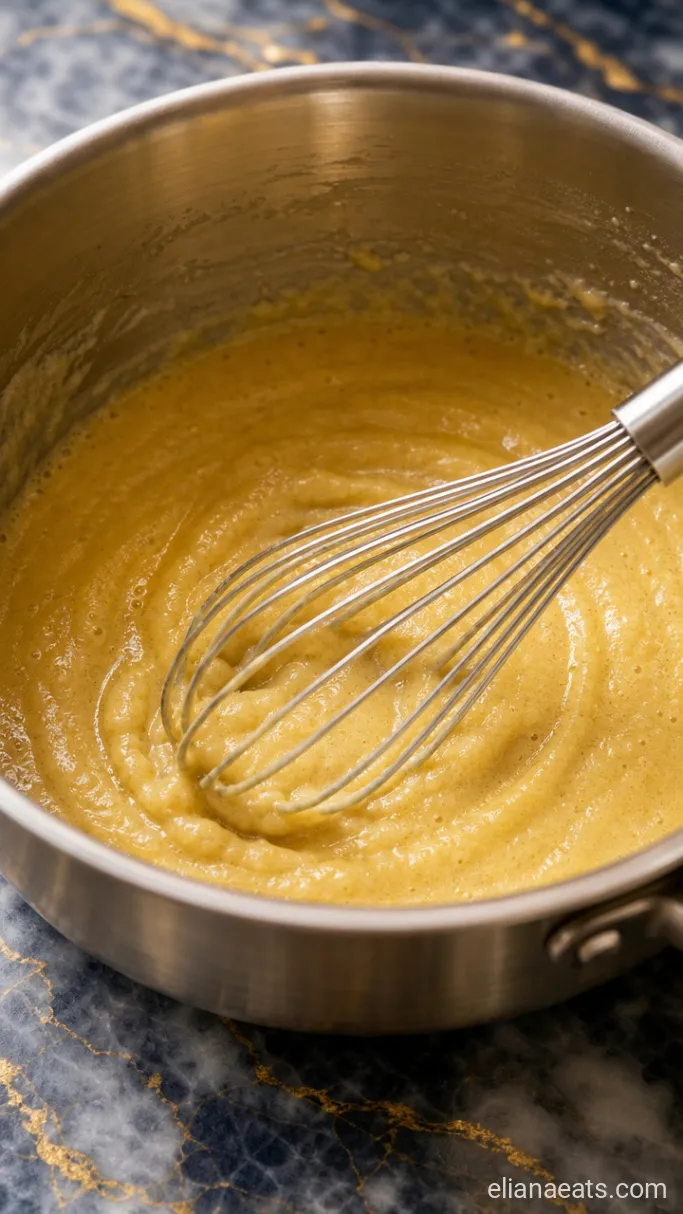
Melt the 2 tbsp unsalted butter in a large, heavy-bottomed saucepan over medium heat. Once it’s foaming, add the 2 tbsp all-purpose flour and whisk constantly for about 1 minute, until the mixture turns a pale blonde and smells faintly nutty.
Keep the heat at medium, not higher. If the roux browns too fast it picks up a bitter edge that comes through in the finished sauce.
Step 3: Whisk in the Milk and Cream
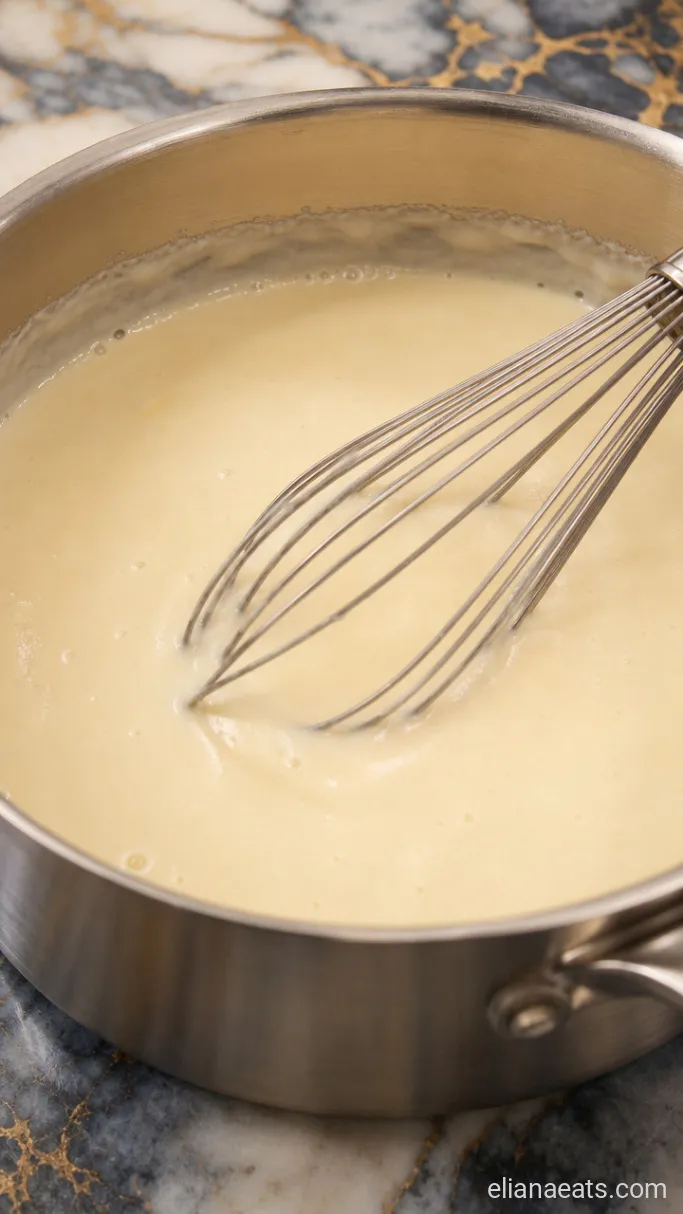
Pour in the 1 cup whole milk in a slow, steady stream while whisking, then add the 1 cup heavy cream the same way. Keep whisking and bring the mixture to a gentle simmer over medium heat, about 3 to 4 minutes, until it thickens enough to coat the back of a spoon.
This is the moment the sauce commits to its final texture. If it looks thin at 3 minutes, give it another 30 seconds rather than cranking the heat up.
Step 4: Melt in the Cheeses
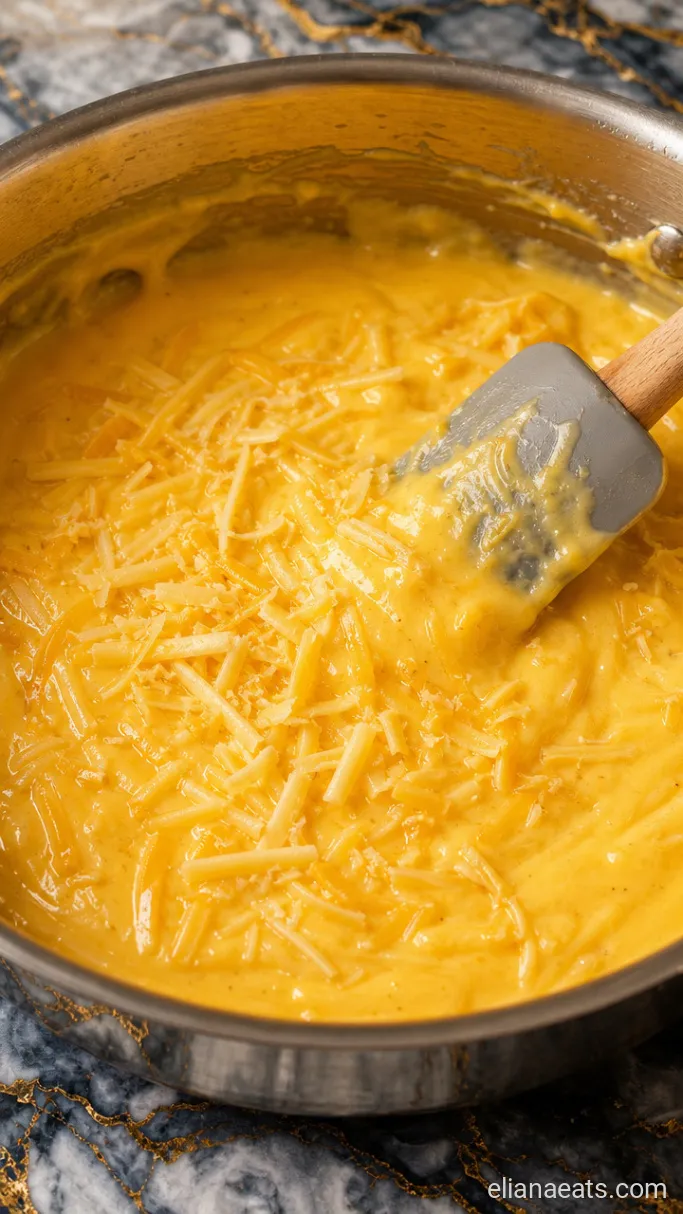
Turn the heat down to low. Add the 1 cup sharp cheddar, ½ cup Gruyère, and ½ cup fontina in two or three handfuls, stirring between each addition until each batch melts before adding the next. Stir in the ¼ cup Parmesan last, then add the ½ tsp garlic powder, ½ tsp dry mustard powder, ½ tsp kosher salt, and ¼ tsp white pepper.
The sauce should be smooth, glossy, and coat a spoon thickly. If it looks stringy or broken, the heat is too high; pull the pot off the burner for 30 seconds and stir gently.
Step 5: Coat the Pasta
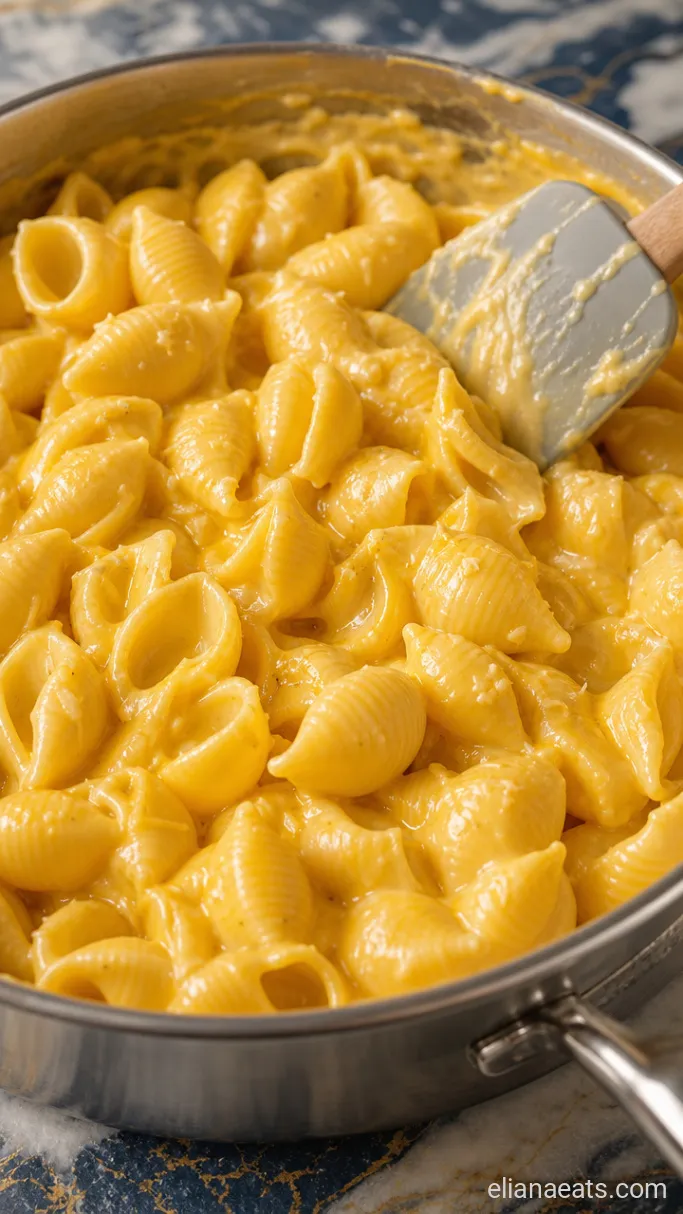
Add the drained pasta shells to the cheese sauce and fold everything together with a spatula until every shell is evenly coated. Taste for salt and adjust now, before it goes under the broiler. Transfer the mixture to a lightly buttered oven-safe skillet or baking dish.
Step 6: Broil the Topping and Serve
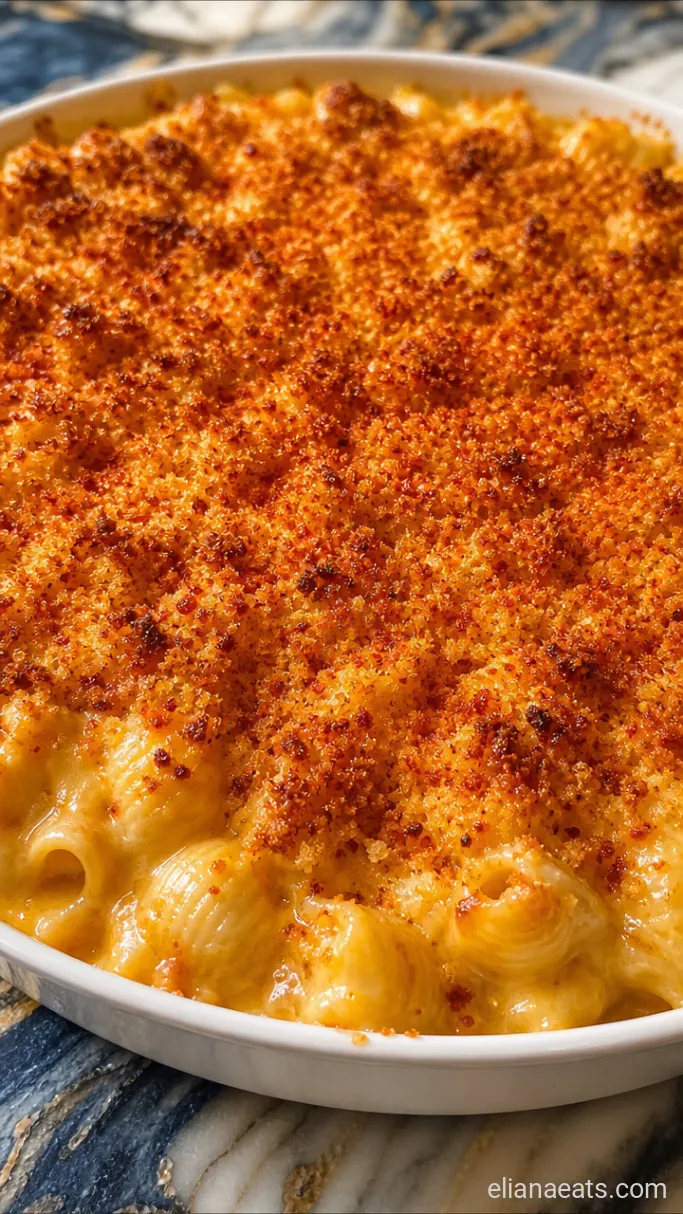
Position your oven rack about 6 inches from the broiler element and turn the broiler to high. Toss the ¼ cup panko breadcrumbs with the 1 tbsp melted butter, spread the mixture evenly over the pasta, and dust the top with the ¼ tsp smoked paprika. Broil for 2 to 3 minutes, watching the whole time, until the breadcrumbs are deep golden brown.
Spoon into bowls right away and serve it while the top is still crackling.
Recipe Tips
- Grate the cheese fresh if you can. Pre-shredded cheese is coated in anti-caking starch, which makes the sauce slightly grainy. A box grater takes about 3 minutes and the difference is noticeable.
- Keep the heat low when melting the cheese. High heat causes proteins in the cheese to seize and the sauce goes from silky to grainy fast. Once you add the cheese, low and slow is the right approach.
- Don’t walk away from the broiler. Panko goes from golden to burnt in under a minute. Stay at the oven door the whole time it’s under the heat.
- Make the sauce first if you’re meal prepping. The cheese sauce keeps in the fridge for up to 3 days. Reheat it gently over low heat with a splash of milk, then cook fresh pasta and combine before broiling.
Broil times vary by broiler strength, so use the color as your guide:
| Breadcrumb color | Broil time (approx.) | Action |
|---|---|---|
| Pale, no color | Under 2 minutes | Keep watching |
| Light golden | 2 to 2.5 minutes | Almost there |
| Deep golden brown | 2.5 to 3 minutes | Pull it out now |
| Dark brown at edges | 3+ minutes | On the edge; remove immediately |
How To Store
- Refrigerate – Store leftovers in an airtight container for up to 3 days. The sauce thickens considerably once cold.
- Reheating – Reheat on the stovetop over low heat with a splash of whole milk, stirring until the sauce loosens and the pasta is warmed through, about 5 minutes. The microwave works in a pinch but the sauce can separate slightly; stir well halfway through.
What To Serve With 4 Cheese Mac and Cheese
A crisp, lightly dressed green salad cuts through the richness of the cheese sauce in a way that bread on its own doesn’t. Grilled or pan-seared chicken strips laid on top turn the bowl into a proper dinner without much extra work. If you want something on the side with a bit of crunch and acidity, coleslaw with a vinegar-based dressing balances the fat in the sauce better than a creamy version would.
Frequently Asked Questions
Can I make this ahead and reheat it in the oven?
Yes, but hold the breadcrumb topping until right before broiling. Assemble the pasta and sauce in the baking dish, refrigerate for up to 24 hours, then bring it to room temperature for 20 minutes before broiling.
Why did my cheese sauce turn grainy?
The heat was too high when the cheese went in. Grainy sauce usually can’t be fully fixed, but whisking in an extra splash of warm cream over very low heat sometimes smooths it out enough.
Can I use a different pasta shape?
Yes. Cavatappi and rigatoni both hold sauce well. Avoid thin pasta like spaghetti or angel hair; you need something with ridges or a hollow center to catch the sauce.
Can I double the recipe for a crowd?
Yes. Double every ingredient and use a 9×13-inch baking dish. The broil time stays the same since the depth of the breadcrumb layer doesn’t change, only the surface area.
—
4 Cheese Mac and Cheese Recipe
Ingredients
Method
- Boil the pasta shells in salted water for 1 to 2 minutes less than package directions. Drain but do not rinse.
- Melt 2 tbsp butter in a large saucepan over medium heat, add 2 tbsp flour, and whisk for 1 minute until pale and nutty.
- Slowly whisk in 1 cup whole milk and 1 cup heavy cream, then simmer over medium heat for 3 to 4 minutes until the sauce coats a spoon.
- Reduce heat to low. Stir in 1 cup cheddar, ½ cup Gruyère, and ½ cup fontina in batches until melted, then stir in ¼ cup Parmesan, ½ tsp garlic powder, ½ tsp mustard powder, ½ tsp salt, and ¼ tsp white pepper.
- Fold in the drained pasta, taste for salt, and transfer to a buttered oven-safe skillet or baking dish.
- Toss ¼ cup panko with 1 tbsp melted butter, spread over the pasta, dust with ¼ tsp smoked paprika, and broil on high 6 inches from the element for 2 to 3 minutes until deep golden brown. Serve immediately.
